
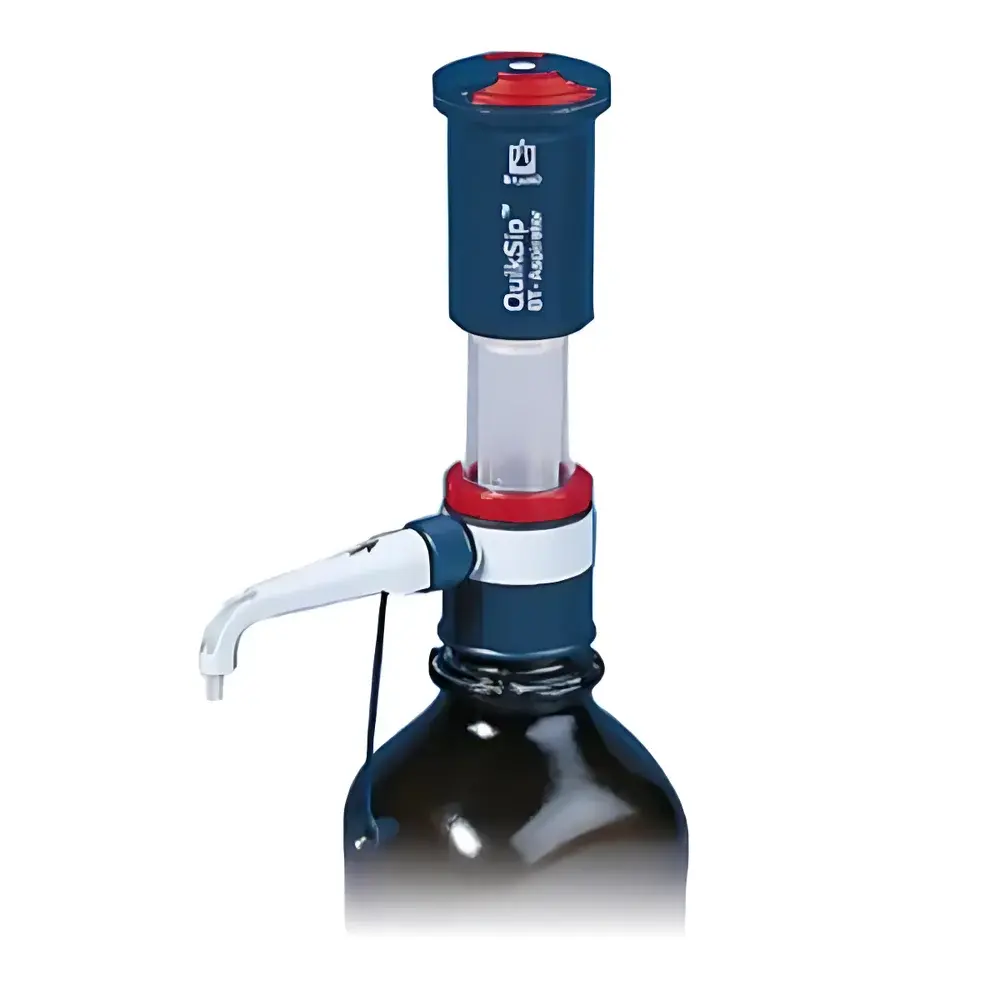
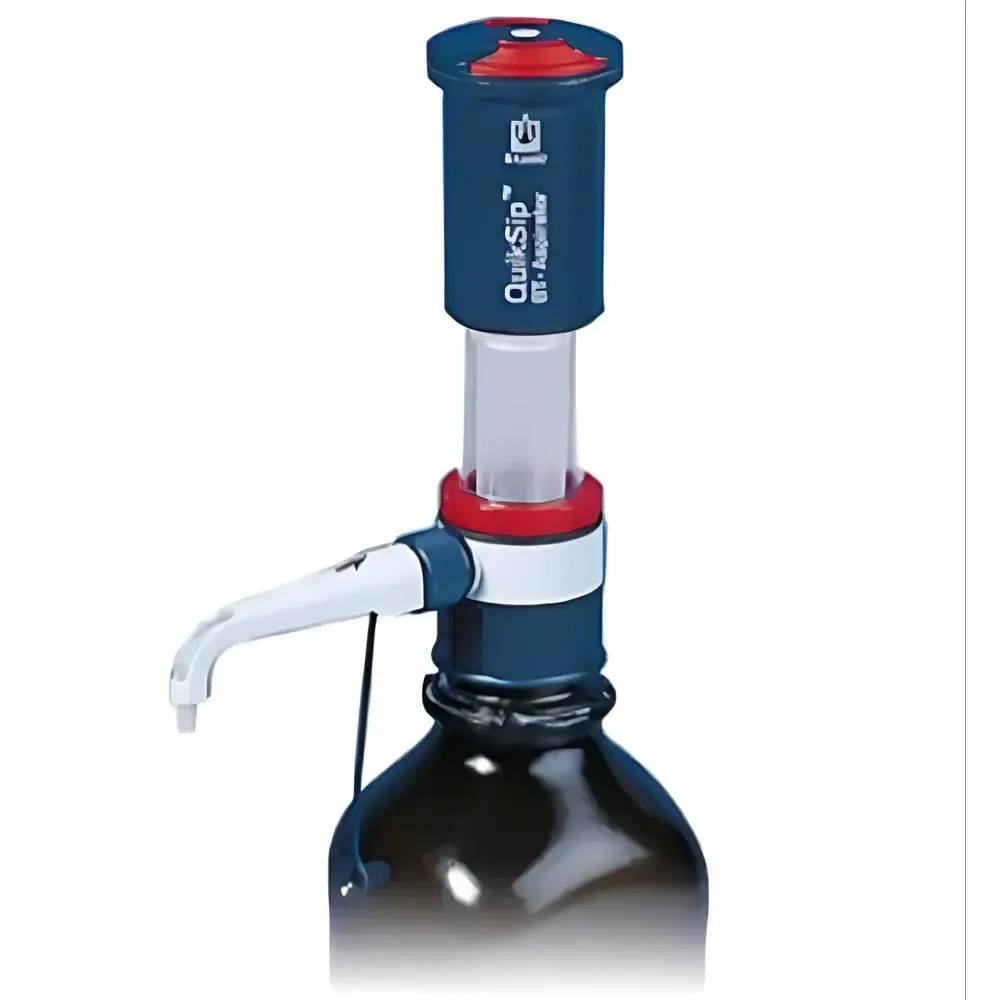
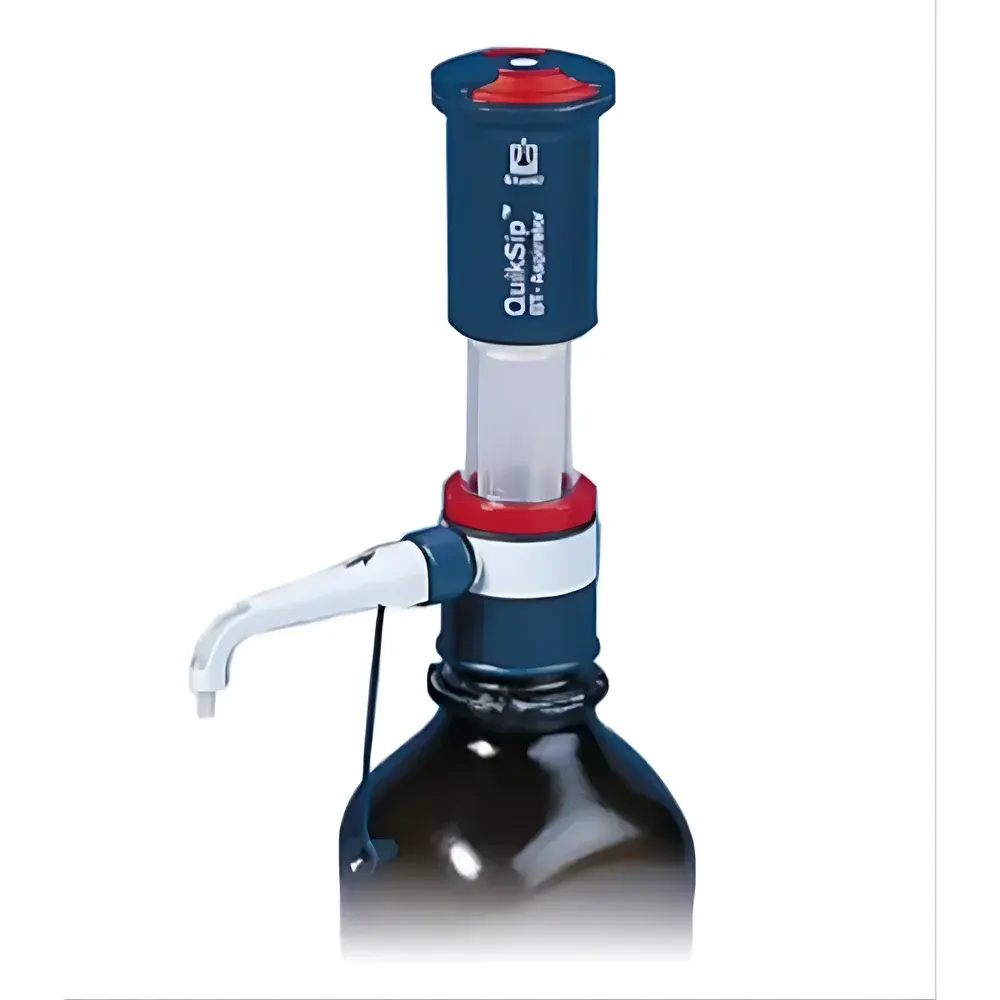
BRAND QuikSip Bottle-Top Vacuum Aspirator Model 4723150
| Brand | BRAND® |
|---|---|
| Origin | Germany |
| Manufacturer Type | Authorized Distributor |
| Origin Category | Imported |
| Model | 4723150 |
| Price | Upon Request |
| Ultimate Vacuum | Not Specified by Manufacturer |
| Maximum Pumping Speed | Not Specified by Manufacturer |
| Dimensions | Approx. 180 × 100 × 50 mm |
Overview
The BRAND QuikSip Bottle-Top Vacuum Aspirator Model 4723150 is an ergonomically engineered, hand-operated vacuum liquid aspiration system designed for rapid, controlled removal of supernatants, culture media, wash buffers, and other aqueous or polar liquid phases in bioscience, clinical diagnostics, food safety testing, and pharmaceutical quality control laboratories. Unlike conventional vacuum manifold systems requiring external vacuum pumps, compressed air sources, or electrical power, the QuikSip operates via a manually actuated piston-driven vacuum chamber integrated directly into the bottle-top housing. This mechanical vacuum generation principle—based on positive displacement and sealed chamber evacuation—ensures immediate, pulse-controlled aspiration without risk of backflow, aerosol generation, or cross-contamination. Its design prioritizes operator safety, procedural reproducibility, and compatibility with standard GL-threaded reagent bottles (e.g., GL 45), enabling seamless integration into existing liquid handling workflows without infrastructure modification.
Key Features
- Single-stroke aspiration capacity up to 25 mL per activation—optimized for precise, repeatable supernatant removal from cell culture flasks, Petri dishes, and centrifuge tubes.
- Integrated finger-controlled cell-culture unit with tactile feedback valve mechanism—enables real-time adjustment of vacuum intensity and duration without releasing grip.
- No external vacuum source required: fully self-contained mechanical vacuum generation eliminates dependency on central vacuum lines, oil-free pumps, or compressed air networks.
- Autoclavable components compliant with DIN EN 285: the cell-culture unit, aspiration tip, and all fluid-path PP/PE connectors withstand steam sterilization at 121 °C and 2 bar (absolute) for ≥15 minutes, supporting GLP/GMP-aligned aseptic technique.
- Modular configuration options: available as single-channel (Model 4723150) or 8-channel parallel aspirator (Model 4723160), facilitating scalability from benchtop R&D to high-throughput sample preparation.
- Ergonomic housing dimensions (180 × 100 × 50 mm) and balanced weight distribution reduce hand fatigue during extended use; non-slip surface texture ensures secure handling under wet or gloved conditions.
Sample Compatibility & Compliance
The QuikSip 4723150 is validated for use with low-viscosity aqueous solutions, buffered saline, cell culture media (e.g., DMEM, RPMI), ethanol/water mixtures, and mild polar solvents (e.g., ≤70% isopropanol). It is not intended for highly viscous liquids (>100 mPa·s), volatile organic solvents (e.g., chloroform, acetone), or corrosive acids/bases. All wetted parts—including the piston seal, aspiration tubing, and GL-thread adapters—are constructed from chemically resistant polypropylene (PP) and polyethylene (PE), ensuring compatibility with common laboratory disinfectants and sterilization cycles. The device conforms to DIN EN ISO 13485:2016 (medical device quality management) and supports compliance with FDA 21 CFR Part 11 when used in conjunction with electronic lab notebooks that capture manual operation logs. Documentation includes CE marking per Directive 2014/30/EU (EMC) and 2014/35/EU (LVD).
Software & Data Management
As a manually operated, non-electronic instrument, the QuikSip 4723150 does not incorporate embedded firmware, digital interfaces, or data logging capabilities. Its operational integrity relies on mechanical precision and user training—not software validation. However, its consistent stroke volume and tactile feedback support standardized SOP execution, enabling traceability through paper-based or LIMS-integrated procedural records. Laboratories implementing ALCOA+ principles may document usage frequency, sterilization cycles, and maintenance history using BRANDED calibration and service logs (available upon request from authorized distributors). No firmware updates, cybersecurity protocols, or remote diagnostics apply.
Applications
- Supernatant decanting in adherent and suspension mammalian cell culture workflows.
- Rapid buffer exchange in ELISA plate washing and immunoprecipitation protocols.
- Removal of excess reagents during histopathology tissue processing and IHC staining.
- Media aspiration from microtiter plates in microbiological assay development (e.g., MIC testing).
- Controlled liquid transfer in food allergen extraction and PCR prep stations where electrical equipment poses contamination or spark hazards.
- Emergency aspiration during biosafety cabinet operations where vacuum hose routing compromises containment integrity.
FAQ
Is the QuikSip 4723150 compatible with non-GL45 bottle necks?
No—only GL 45 (45 mm thread diameter) and optionally GL 32 or S 40 adapters (included) are supported. Adapters for non-standard threads require third-party machining and void warranty.
Can the aspirated liquid be recovered or measured volumetrically?
The device is designed for disposal-only aspiration; it lacks a calibrated collection reservoir. For quantitative recovery, integrate with a separate graduated waste bottle or use gravimetric methods.
What maintenance is required between autoclave cycles?
Inspect O-rings for deformation or cracking before each sterilization; replace piston seals annually or after 500 autoclave cycles—BRAND part number 4723170.
Does the QuikSip meet ISO 8573-1 for compressed air purity?
Not applicable—the system contains no pneumatic components and requires no compressed air input.
Is there a serviceable filter to prevent liquid ingress into the vacuum chamber?
Yes—a hydrophobic PTFE membrane filter (BRAND part 4723180, 0.2 µm pore size) is installed upstream of the piston chamber and must be replaced after each liquid contact event or every 100 strokes, whichever occurs first.



