
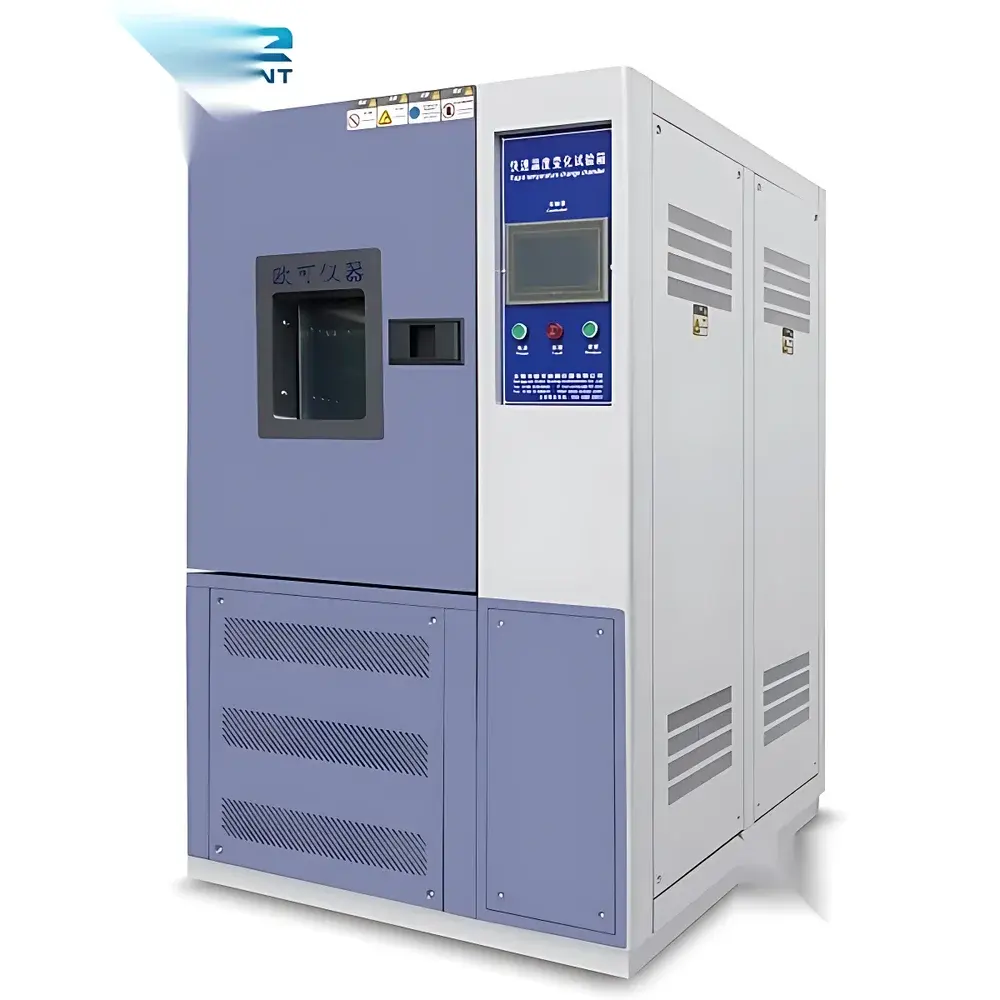
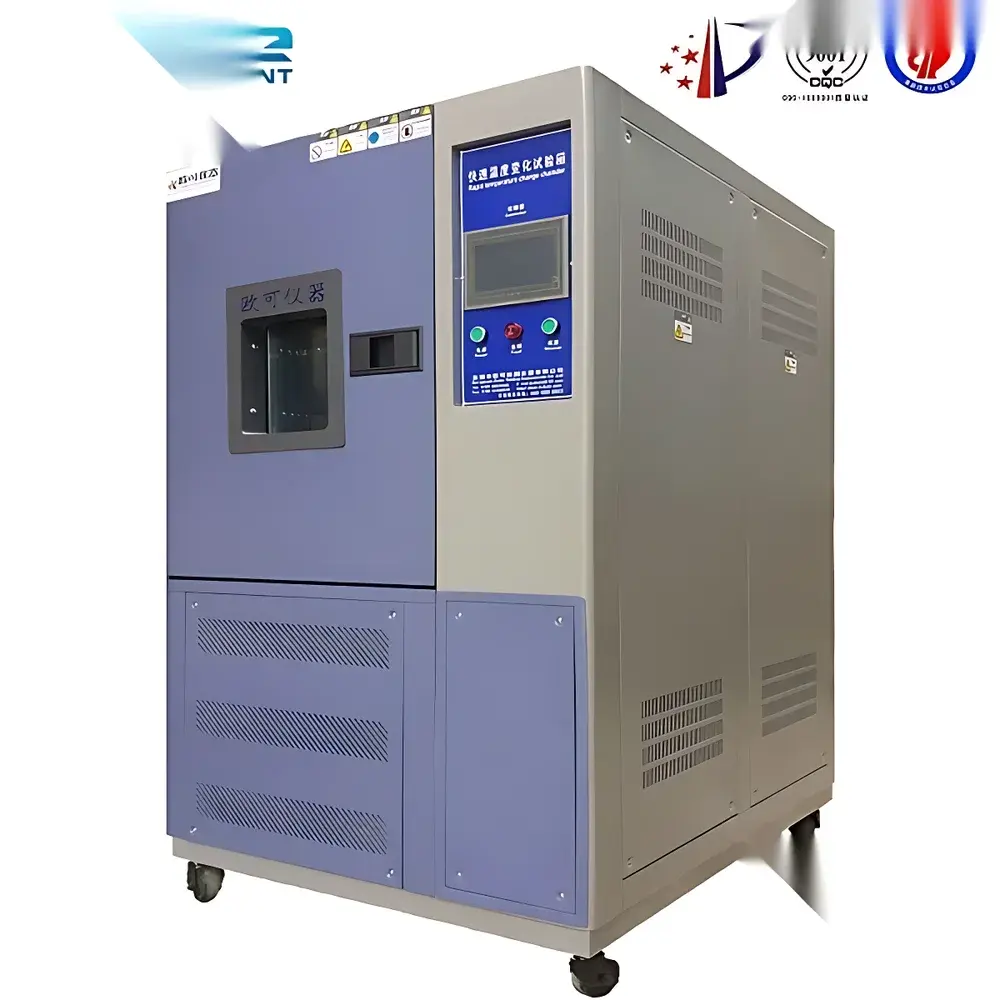
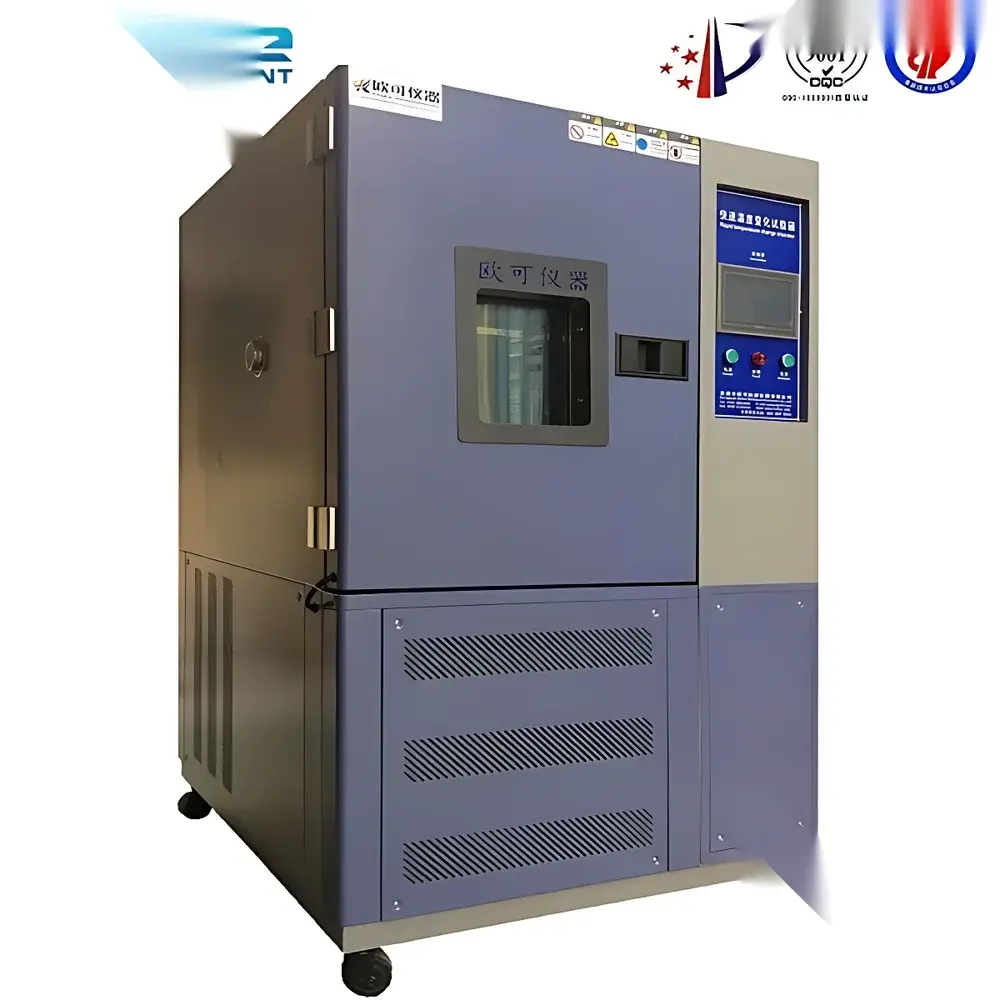
Other Brands Quick Temperature & Humidity Cycling Chamber
| Brand | Other Brands |
|---|---|
| Origin | Imported |
| Manufacturer Type | Authorized Distributor |
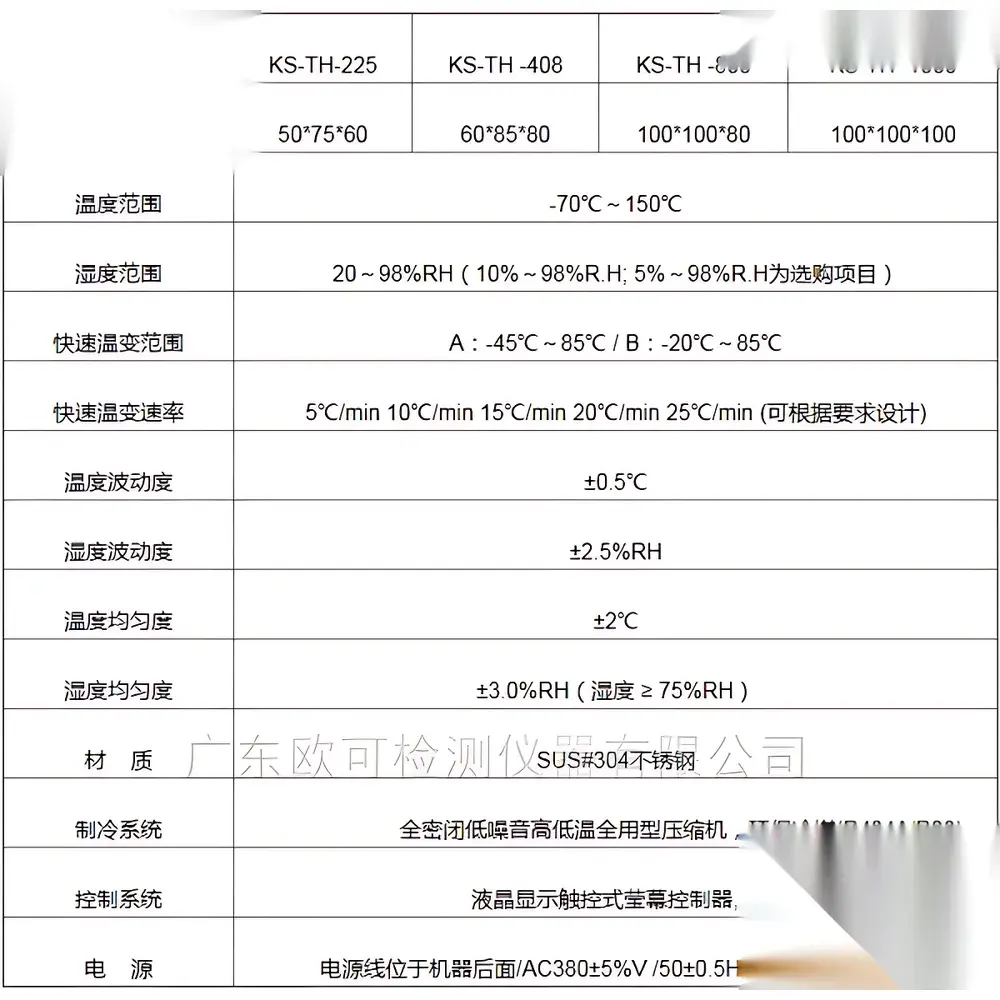
| Temperature Range (Hot Zone) | +80°C to +200°C |
| Temperature Range (Cold Zone) | −10°C to −70°C |
| Operational Test Range | −40°C to +150°C |
| Temperature Control Accuracy | ±2°C |
| Temperature Resolution | 0.01°C |
| Hot Zone Ramp Rate | ≤40 min (from 25°C to 150°C) |
| Cold Zone Ramp Rate | ≤100 min (from 25°C to −70°C) |
| Test Zone Temperature Recovery Time | 3–5 min |
| Internal Dimensions (W×H×D) | 600 × 500 × 500 mm |
| External Dimensions (W×H×D) | 1500 × 2100 × 2250 mm |
| Construction | Dual-chamber (hot/cold) + test chamber |
| Inner/Outer Material | SUS#304 stainless steel (mirror-finished) |
| Insulation | High-density glass wool + rigid polyurethane (PU) foam |
| Condensation Prevention | K-type thermocouple-based anti-sweat system |
| Seals | High-tensile elastomeric packing rated for −200°C to +400°C |
| Actuation | Pneumatic hot/cold zone isolation valves |
| Accessories | Two adjustable stainless-steel test trays |
Overview
The Quick Temperature & Humidity Cycling Chamber is a dual-zone, forced-air environmental stress screening (ESS) system engineered for rapid thermal transition testing of electronic components, aerospace hardware, automotive modules, and polymer-based assemblies. Unlike single-chamber thermal shock systems, this instrument employs physically isolated high-temperature and low-temperature reservoirs—each independently conditioned—alongside a dedicated test chamber where the specimen remains stationary. Thermal cycling is achieved by pneumatically actuating insulated transfer gates between zones, enabling precise, repeatable transitions without mechanical handling or sample displacement. The architecture supports both MIL-STD-810H Method 503.6 (thermal shock) and IEC 60068-2-14 (change of temperature) protocols, with programmable dwell times, ramp rates, and cycle counts. Humidity control—though not specified in base configuration—is optionally integrated via steam injection and desiccant drying modules compliant with IEC 60068-2-30 (damp heat, cyclic).
Key Features
- Dual-reservoir design with independent hot zone (+80°C to +200°C) and cold zone (−10°C to −70°C), eliminating cross-contamination and thermal inertia lag
- Test chamber maintains stable operational range from −40°C to +150°C with ±2°C control accuracy and 0.01°C digital resolution
- Pneumatically driven isolation gates achieve <5-minute temperature recovery time in the test zone after zone transfer—critical for high-throughput qualification
- Structural integrity ensured by full SUS#304 stainless steel construction (inner and outer walls), mirror-polished for corrosion resistance and ease of cleaning
- Multi-layer insulation combining high-density glass wool and closed-cell rigid PU foam achieves thermal conductivity ≤0.022 W/m·K at −70°C
- K-type thermocouple–based anti-sweat system prevents condensation on viewing windows and internal fixtures during rapid transitions
- High-performance elastomeric seals rated for −200°C to +400°C ensure long-term sealing integrity across extreme thermal gradients
Sample Compatibility & Compliance
This chamber accommodates samples up to 600 mm wide × 500 mm high × 500 mm deep, with two adjustable stainless-steel trays included for flexible load configuration. It is suitable for PCB assemblies, battery packs, optical sensors, encapsulated semiconductors, and molded plastic housings. The system complies with structural and safety requirements of IEC 61000-4-29 (voltage dips), EN 61000-6-2 (immunity), and UL 61010-1 (electrical safety). When equipped with optional humidity control, it meets IEC 60068-2-30 Annex A (cyclic damp heat) and ASTM D4332 (conditioning of plastics). Full audit trails, password-protected parameter locking, and event logging support GLP/GMP environments under FDA 21 CFR Part 11 when paired with validated software.
Software & Data Management
Control is managed via a 10.1-inch industrial touchscreen HMI running embedded Linux OS, supporting up to 99 programmable profiles with 99 segments each. Real-time data—including chamber temperature, zone status, valve position, and alarm history—is logged at user-selectable intervals (1 sec to 60 min) to internal SD card or networked NAS. Export formats include CSV and PDF reports with timestamped metadata. Optional PC-based software enables remote monitoring, multi-chamber synchronization, statistical process control (SPC) charting, and automated report generation aligned with ISO/IEC 17025 documentation standards. All firmware updates are digitally signed and verified prior to installation.
Applications
- Thermal shock validation of automotive ECUs per AEC-Q200 Rev D
- Reliability screening of Li-ion battery cells under accelerated aging cycles
- Qualification testing of avionics enclosures subjected to stratospheric temperature excursions
- Material compatibility assessment of adhesives and conformal coatings per IPC-CC-830B
- Process window definition for reflow soldering equipment calibration verification
- Failure mode analysis (FMA) of MEMS devices exposed to rapid thermal transients
FAQ
What is the difference between two-box and one-box thermal shock configurations?
The two-box (dual-chamber) design isolates hot and cold reservoirs physically, enabling faster transitions and superior temperature stability. In contrast, one-box systems rely on internal air redirection—slower, less precise, and prone to thermal overshoot.
Can this chamber perform humidity-controlled thermal cycling?
Yes—when fitted with optional steam humidification and desiccant dehumidification modules, it supports IEC 60068-2-30 compliant cyclic damp heat testing.
Is the controller compliant with FDA 21 CFR Part 11?
The base HMI does not include electronic signature or audit trail features; however, the optional PC software package provides full Part 11 compliance including role-based access, electronic signatures, and immutable audit logs.
What maintenance is required for pneumatic actuation systems?
Pneumatic valves require quarterly inspection of seal integrity and annual replacement of filter-regulator-lubricator (FRL) elements. Compressed air supply must be oil-free and dew-point controlled to −40°C.
How is traceability ensured for calibration records?
Each unit ships with NIST-traceable calibration certificates for all primary temperature sensors. Field recalibration is supported using external reference probes connected via IEEE 1451.2-compliant interface ports.



