
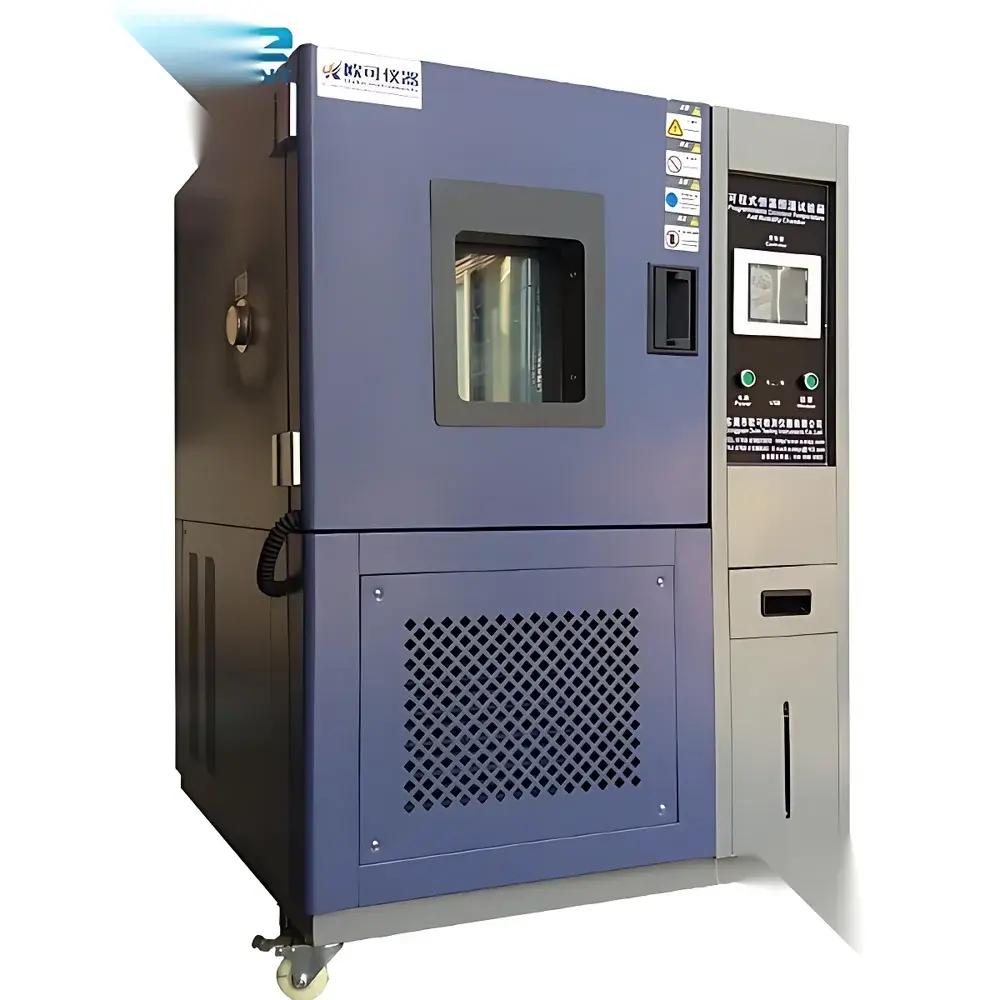
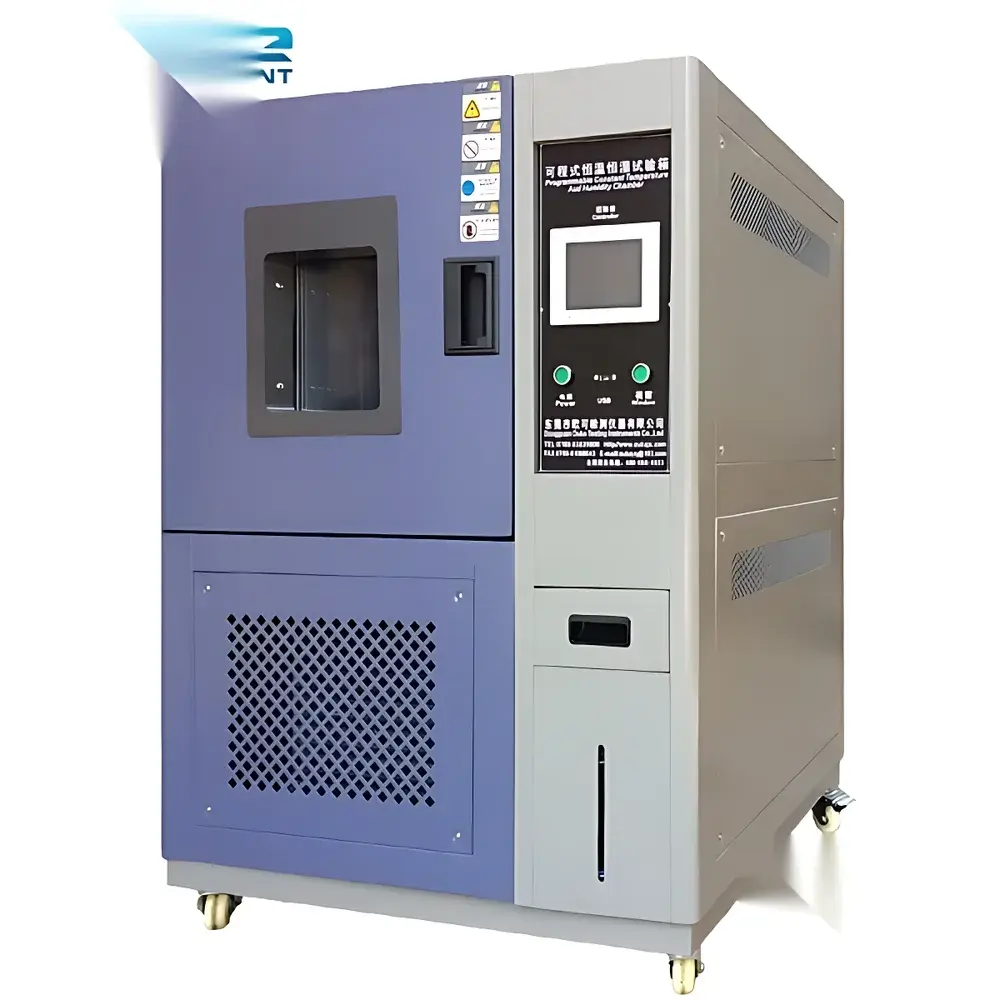
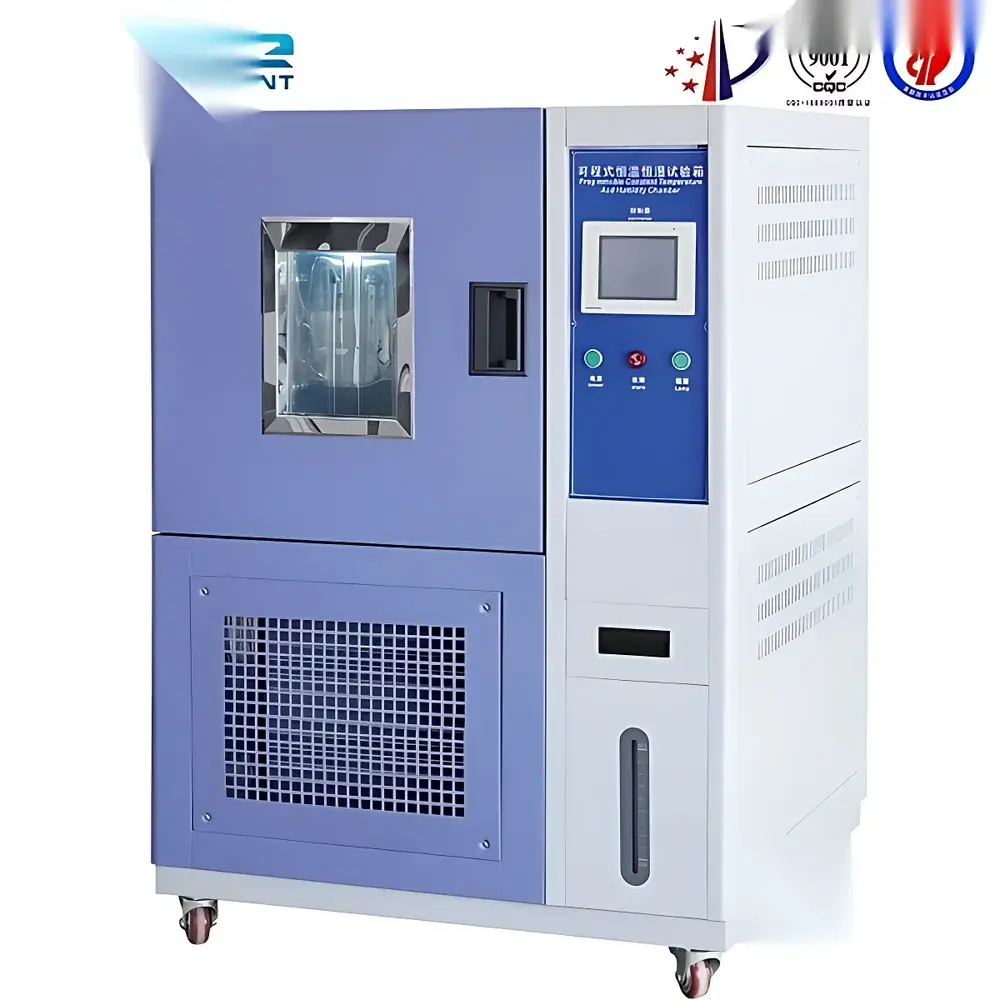
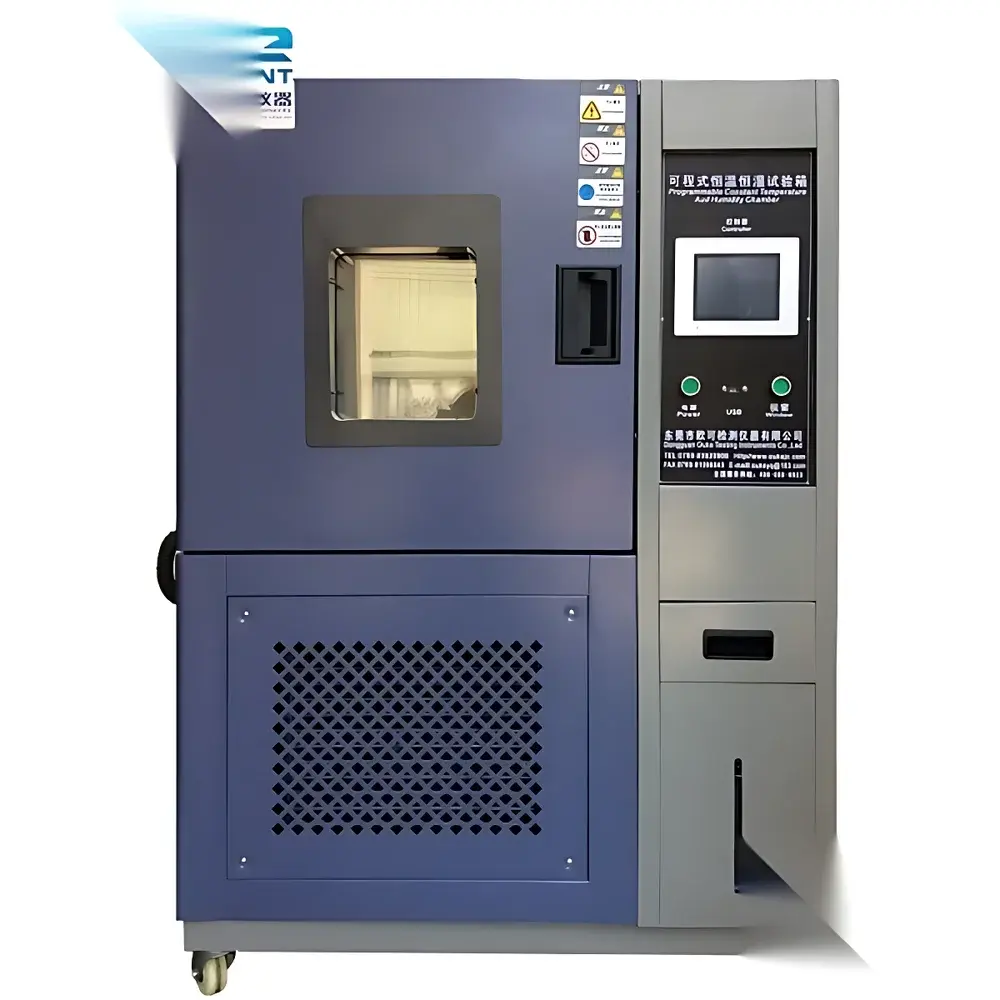
Other Brands OK-TH Series Pharmaceutical Temperature and Humidity Controlled Environmental Test Chamber
| Brand | Other Brands |
|---|---|
| Origin | Imported |
| Manufacturer Type | Authorized Distributor |
| Temperature Range | -70 °C to +150 °C (selectable models) |
| Humidity Range | 20–98 %RH (optional 5–98 %RH) |
| Uniformity | ±0.5 °C / ±2.5 %RH |
| Stability | ±2 °C / +2–3 %RH |
| Resolution | 0.1 °C / 0.1 %RH |
| Heating Rate | ~4.0 °C/min |
| Cooling Rate | ~1.0 °C/min |
| Internal Volume | 80–1000 L (6 models) |
| Construction | SUS#304 Stainless Steel |
| Refrigeration System | Hermetic Dual-Stage Compressor with R404A/R23 Eco-Friendly Refrigerants |
| Controller | Touchscreen LCD with English/Chinese Interface |
| Standards Compliance | IEC 60068-2-1 (Cold), -2-2 (Dry Heat), -2-30 (Cyclic Humidity), -2-78 (Steady-State Humidity), GB/T 2423.1–2423.4, GJB 150.3–150.4 |
Overview
The OK-TH Series Pharmaceutical Temperature and Humidity Controlled Environmental Test Chamber is a precision-engineered climatic chamber designed specifically for stability testing of pharmaceutical products in accordance with ICH Q1A(R3), USP <1151>, and WHO TRS Annex 2 requirements. It operates on a forced-air convection principle with dual independent control loops for temperature and relative humidity—ensuring high reproducibility and long-term operational stability across defined test profiles. The chamber’s robust architecture integrates a hermetically sealed dual-stage refrigeration system, corrosion-resistant SUS#304 stainless steel interior, and microprocessor-based PID control logic to maintain stringent environmental conditions required for accelerated, intermediate, and long-term stability studies under GLP-compliant laboratory environments.
Key Features
- Multi-tier temperature range options: Standard A (0–150 °C), B (−20–150 °C), C (−40–150 °C), and D (−70–150 °C) — selectable per model to accommodate freeze-thaw cycling and low-temperature formulation validation.
- Humidity control from 20–98 %RH as standard; optional extended range (5–98 %RH) available for highly hygroscopic APIs or moisture-sensitive dosage forms.
- High-accuracy uniformity performance: ±0.5 °C temperature uniformity and ±2.5 %RH humidity uniformity across the entire working volume—validated per ISO 16770 and ASTM E2875.
- Real-time stability metrics: Temperature/humidity resolution of 0.1 °C / 0.1 %RH, supported by internal calibration traceability to NIST-traceable reference sensors.
- Intuitive touchscreen controller with bilingual (English/Chinese) interface, programmable multi-step profiles, data logging (internal SD card + USB export), and password-protected parameter lockdown for audit readiness.
- Structural integrity: Fully welded SUS#304 interior and exterior panels, double-layer insulated door with magnetic seal, and integrated leveling feet with locking casters for flexible lab integration.
Sample Compatibility & Compliance
The OK-TH series accommodates diverse pharmaceutical sample configurations—from blister-packed tablets and vials to bulk powder containers and primary packaging materials—via customizable shelf spacing and optional 50 mm diameter cable/port access. All models are pre-validated against critical international regulatory standards including IEC 60068-2-1 (cold), -2-2 (dry heat), -2-30 (cyclic humidity), and -2-78 (steady-state humidity). They support full compliance with FDA 21 CFR Part 11 when paired with optional electronic signature modules and audit-trail-enabled software packages. Chamber qualification documentation (IQ/OQ/PQ protocols) is provided upon request to facilitate GMP-aligned installation and operational verification.
Software & Data Management
Embedded controller firmware supports up to 100 programmable test cycles with segment-wise ramp/soak parameters, real-time graphing, and automatic deviation alarms. Logged data (timestamped temperature/humidity values at user-defined intervals) can be exported in CSV format for integration into LIMS or statistical analysis platforms (e.g., JMP, Minitab). Optional PC-based software enables remote monitoring, centralized fleet management, and automated report generation compliant with ALCOA+ principles—ensuring data integrity, attributable records, legibility, contemporaneous entry, originality, accuracy, completeness, consistency, endurance, and availability per FDA guidance.
Applications
- ICH-guided stability testing of drug substances and products under long-term (25 °C/60 %RH), accelerated (40 °C/75 %RH), and intermediate (30 °C/65 %RH) storage conditions.
- Excipient compatibility screening under controlled humidity gradients to assess deliquescence, caking, or polymorphic transition risks.
- Primary and secondary packaging integrity evaluation—including moisture vapor transmission rate (MVTR) correlation studies.
- Biological product storage condition mapping for cold chain development and transport simulation.
- Reference standard conditioning prior to analytical assay (e.g., HPLC, dissolution) per USP <1225> method validation guidelines.
FAQ
What ICH stability conditions can this chamber support?
It fully supports ICH Q1A(R3) long-term, accelerated, and intermediate conditions—including optional low-temperature profiles (−40 °C and −70 °C) for biologics and cryopreserved formulations.
Is the chamber suitable for GMP-regulated environments?
Yes—when configured with audit-trail-enabled software, electronic signatures, and validated IQ/OQ/PQ documentation, it meets core requirements of EU Annex 15 and FDA 21 CFR Part 11.
Can internal dimensions be customized for non-standard samples?
Yes—custom internal geometry, additional port configurations, and specialized shelving layouts are available upon engineering review and quotation.
What refrigerant types are used, and are they compliant with current environmental regulations?
R404A (for mid-range models) and R23 (for ultra-low-temperature variants) are employed—both approved under current F-Gas Regulation (EU) No 517/2014 and EPA SNAP program for laboratory-grade equipment.
How is temperature/humidity uniformity verified during qualification?
Per ISO 16770, 9-point sensor mapping is performed across the working volume using calibrated Class A PT100 probes; results are documented in the OQ report with pass/fail thresholds aligned to ±0.5 °C / ±2.5 %RH.
Related Products



