
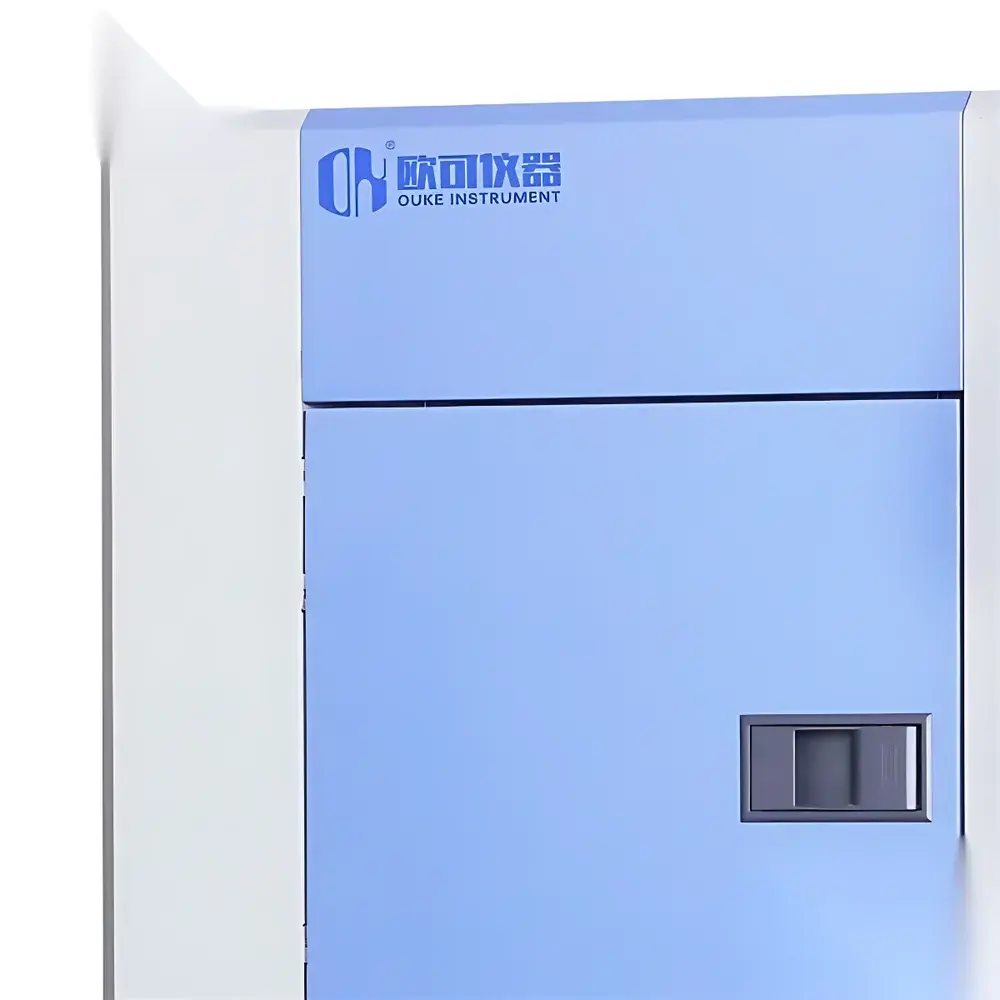
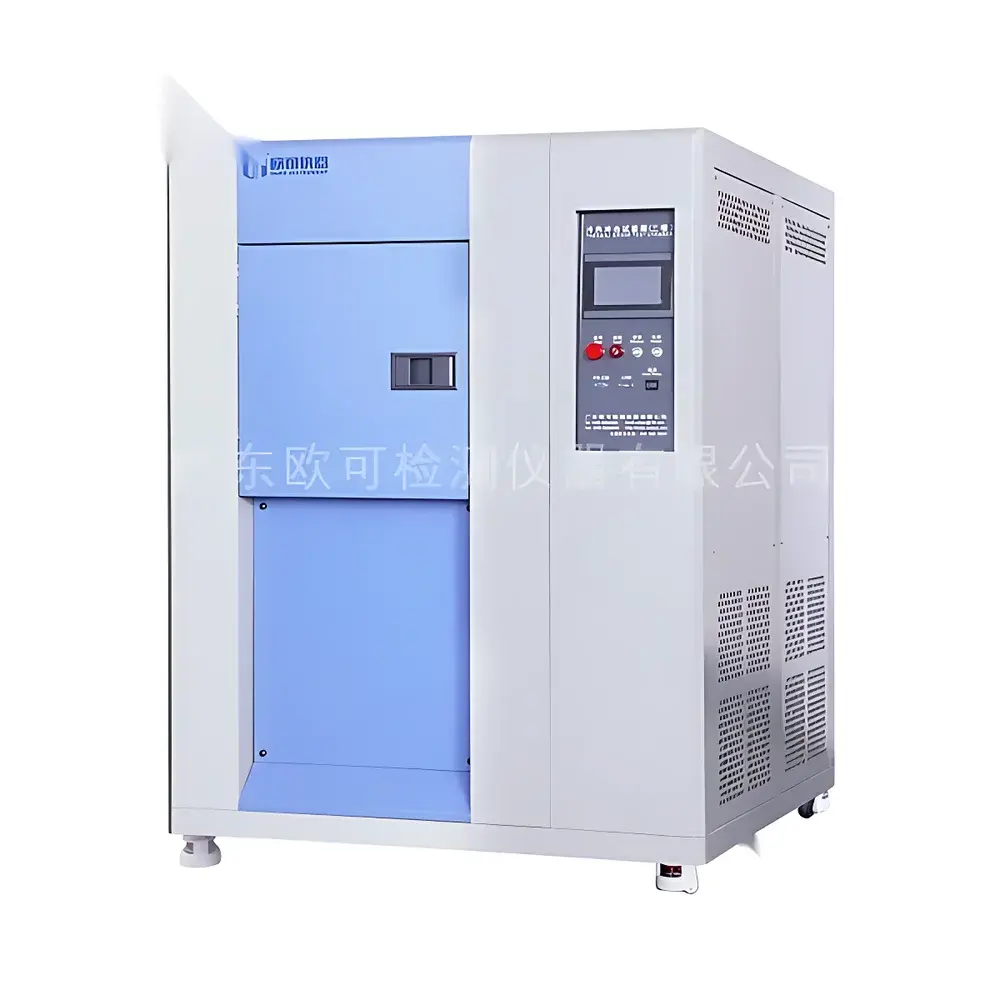
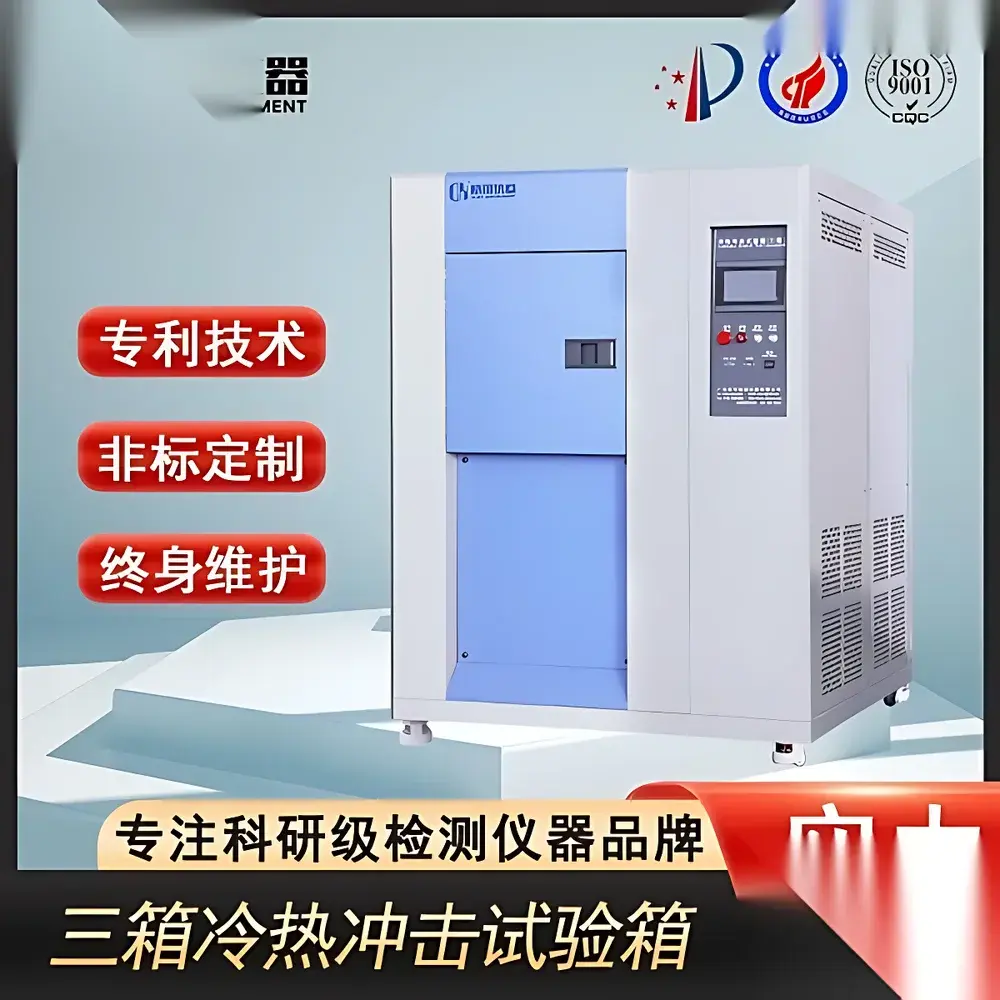
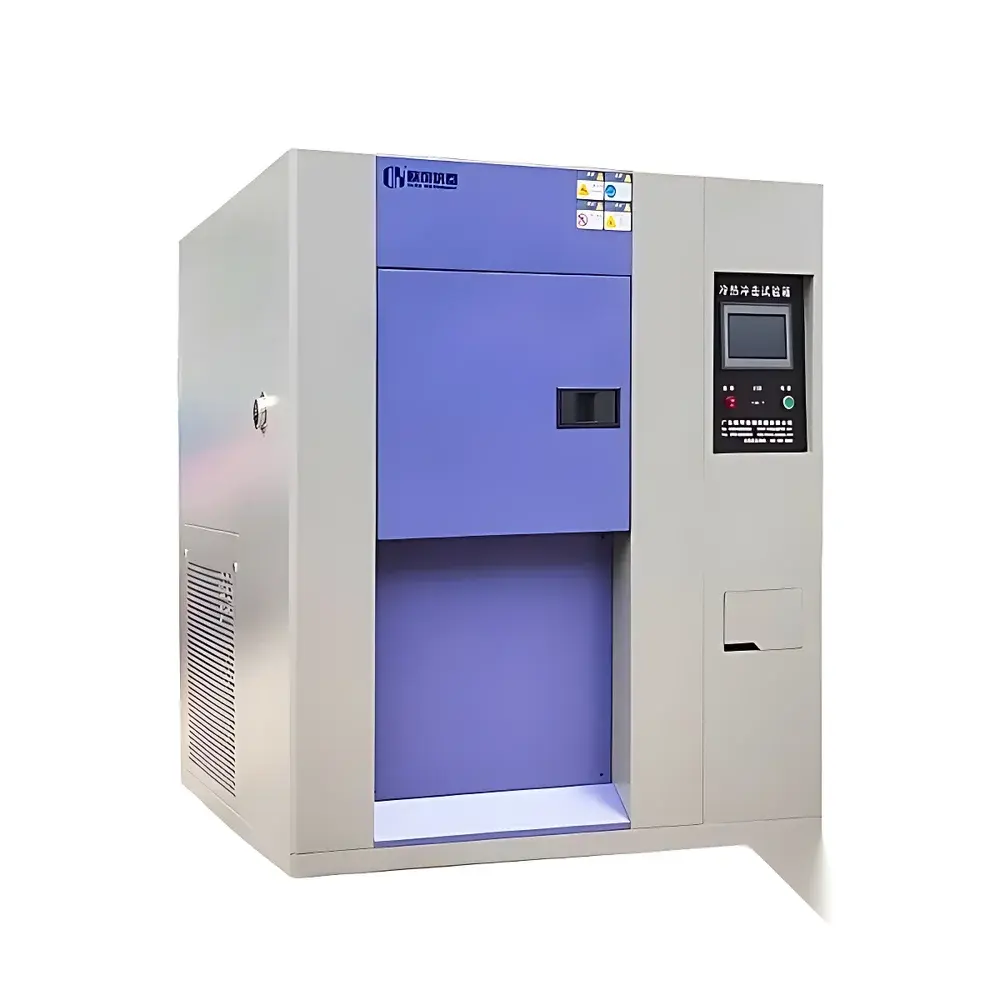
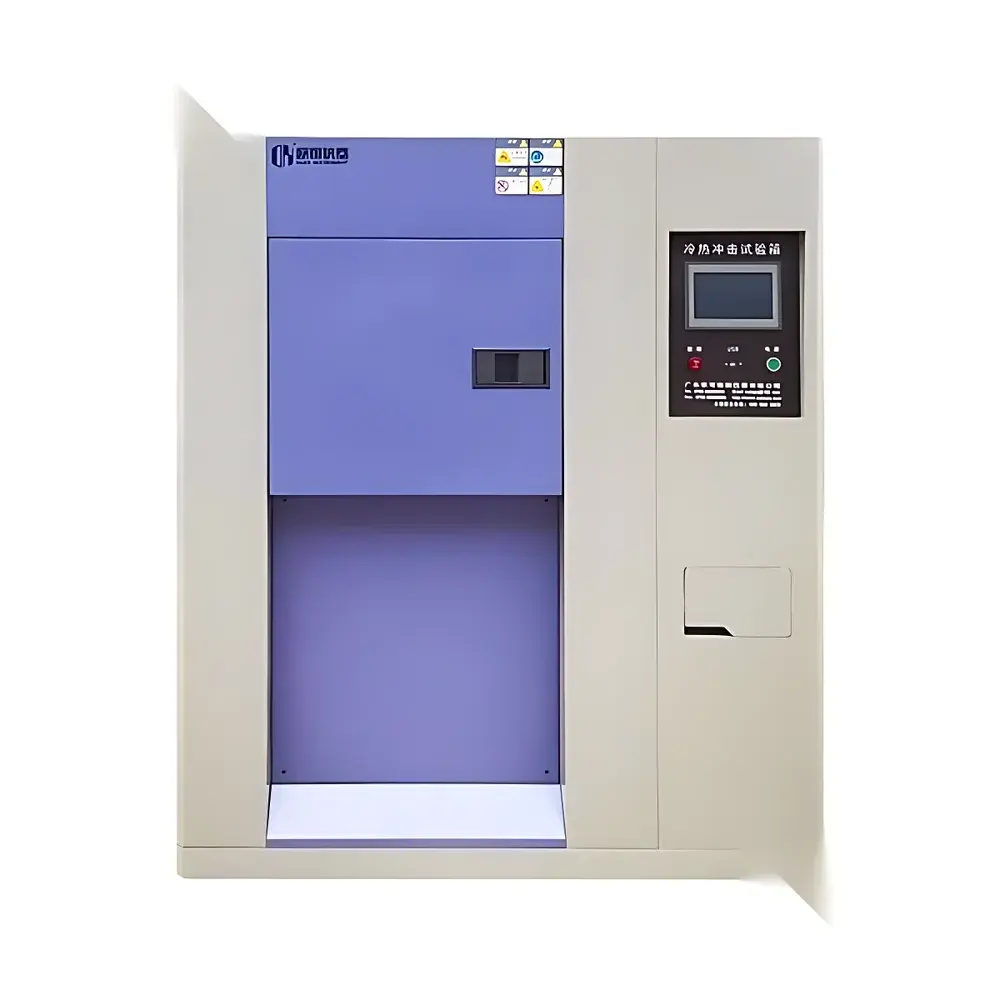
Other Brands OK-TS Series Thermal Shock Test Chamber
| Brand | Other Brands |
|---|---|
| Model | OK-TS–100 / OK-TS–250 / OK-TS–500 / OK-TS–1000 |
| Temperature Range | –70 °C to +150 °C (selectable) |
| Temperature Uniformity | ≤ ±2 °C |
| Temperature Fluctuation | ≤ ±0.5 °C |
| Ramp Rate | ≥2–3 °C/min (heat-up), ≤1 °C/min (cool-down) |
| Interior Material | Stainless Steel (AISI 304) |
| Exterior Material | Powder-Coated Baosteel Cold-Rolled Steel |
| Insulation | High-Density Ultra-Fine Glass Fiber |
| Heating System | Nickel-Chromium Alloy Heaters |
| Cooling System | Finned Multi-Stage Evaporator with Single- or Dual-Stage (Cascade) Refrigeration |
| Compressor | Hermetic Tecumseh/Tecumseh-derived “Tecumseh” (France-sourced) |
| Air Circulation | Single-Circuit, Extended-Shaft Low-Noise Stainless Steel Centrifugal Blower |
| Sealing | High-Performance Silicone Rubber Gasket |
| Viewing Window | Double-Layer Tempered Glass with Interior LED Illumination |
| Control System | Imported High-Precision Digital Display Controller with PID Algorithm and Imported Actuators |
| Compliance | Designed per IEC 60068-2-14, ASTM D5229/D5229M, MIL-STD-810H Method 503.7 |
Overview
The OK-TS Series Thermal Shock Test Chamber is an engineered environmental stress screening (ESS) system designed for rapid, repeatable, and controlled transitions between extreme low- and high-temperature environments. Based on the two-chamber (hot/cold) or single-chamber (BTC—Balance Temperature Control) configuration, it subjects test specimens to abrupt thermal gradients—simulating real-world operational stresses encountered during aerospace component deployment, automotive electronics qualification, semiconductor packaging validation, and military-grade PCB reliability assessment. Unlike conventional temperature cycling chambers, the OK-TS series employs a precisely coordinated refrigeration and heating architecture that enables defined ramp rates (≥2–3 °C/min heating; ≤1 °C/min cooling), minimizing thermal inertia and ensuring traceable thermal history profiles. Its structural integrity, sealed thermal envelope, and calibrated control loop support compliance-driven testing under ISO/IEC 17025-accredited laboratory conditions.
Key Features
- Stainless steel (AISI 304) interior chamber and powder-coated Baosteel exterior ensure corrosion resistance, mechanical rigidity, and long-term dimensional stability.
- BTC (Balance Temperature Control) methodology delivers stable, energy-efficient temperature regulation by dynamically allocating heating capacity in response to load and setpoint deviation—enabling high reproducibility in ±0.5 °C fluctuation and ≤±2 °C uniformity across the working volume.
- Dual-stage (cascade) refrigeration option available for extended low-temperature operation down to –70 °C, utilizing hermetically sealed French-sourced Tecumseh compressors and finned multi-stage evaporators for consistent cryogenic performance.
- Double-layer tempered observation window with integrated LED lighting allows continuous visual monitoring of sample behavior without compromising thermal integrity or introducing external heat leakage.
- High-density ultra-fine glass fiber insulation minimizes thermal bridging and ensures low standby power consumption while maintaining thermal separation between adjacent zones.
- Customizable temperature range selection (–20 °C / –40 °C / –60 °C / –70 °C to +100 °C or +150 °C) supports application-specific protocol alignment with standards such as MIL-STD-810H Method 503.7 and IEC 60068-2-14.
Sample Compatibility & Compliance
The OK-TS chamber accommodates samples ranging from small electronic subassemblies (OK-TS–100: 400 × 500 × 500 mm internal volume) to full-size automotive control units (OK-TS–1000: 1000 × 1000 × 1000 mm). All models feature removable stainless steel shelves, adjustable mounting rails, and cable access ports (with silicone-sealed grommets) to facilitate integration with external data loggers or power supplies. The chamber’s thermal profile repeatability and controller audit trail capability support GLP/GMP-aligned workflows. While not pre-certified, its architecture and component-level traceability enable qualification for FDA 21 CFR Part 11-compliant environments when deployed with validated software extensions and electronic signature modules.
Software & Data Management
Equipped with an imported high-precision digital display controller featuring PID-based algorithmic tuning, the OK-TS series supports up to 99 programmable cycles, segmented ramp/soak profiles, and real-time deviation alarms. Optional RS485/Modbus RTU or Ethernet TCP/IP interfaces allow integration into centralized lab management systems (LIMS) or SCADA platforms. When paired with compliant third-party software, the controller logs timestamped temperature readings at user-defined intervals (1–60 sec), generating CSV-exportable datasets suitable for statistical process control (SPC) analysis and regulatory submission packages. Audit trail functionality—including operator ID, parameter change history, and calibration event logging—is configurable to meet ISO/IEC 17025 documentation requirements.
Applications
- Aerospace: Qualification of avionics enclosures, sensor housings, and composite airframe components per DO-160 Section 4.6 (Temperature Shock).
- Automotive: Validation of ADAS ECUs, battery management systems (BMS), and infotainment modules against ISO 16750-4 and SAE J2380.
- Electronics Manufacturing: Accelerated life testing of solder joints, conformal coatings, and MEMS devices using JEDEC JESD22-A104 and IPC-9701 protocols.
- Medical Devices: Environmental stress screening of implantable electronics and diagnostic analyzers per IEC 60601-1 Clause 11.3.2.
- Research & Development: Material coefficient-of-thermal-expansion (CTE) mismatch analysis, interfacial delamination studies, and phase-change behavior characterization under cyclic thermal loading.
FAQ
What is the difference between BTC and conventional two-zone thermal shock testing?
BTC (Balance Temperature Control) uses a single-chamber design with active heating/cooling modulation to achieve rapid transitions—eliminating mechanical transfer mechanisms and reducing contamination risk. Two-zone systems physically shuttle samples between hot and cold chambers; BTC offers higher spatial consistency and lower maintenance overhead.
Can the OK-TS series be used for humidity-controlled thermal shock testing?
No—this model is strictly a dry thermal shock chamber. Humidity integration requires a separate climatic chamber variant (e.g., OK-TH series) with steam humidification and condensate management subsystems.
Is cascade refrigeration standard or optional?
Cascade refrigeration is optional and required only for operation below –40 °C. Models configured for –20 °C to +150 °C use single-stage refrigeration with optimized compressor duty cycling.
How is temperature uniformity verified and maintained over time?
Uniformity is validated using NIST-traceable Class A PT100 sensors placed at nine standardized locations (per IEC 60068-3-5). Routine verification is supported via built-in sensor mapping routines and external calibration port access.



