
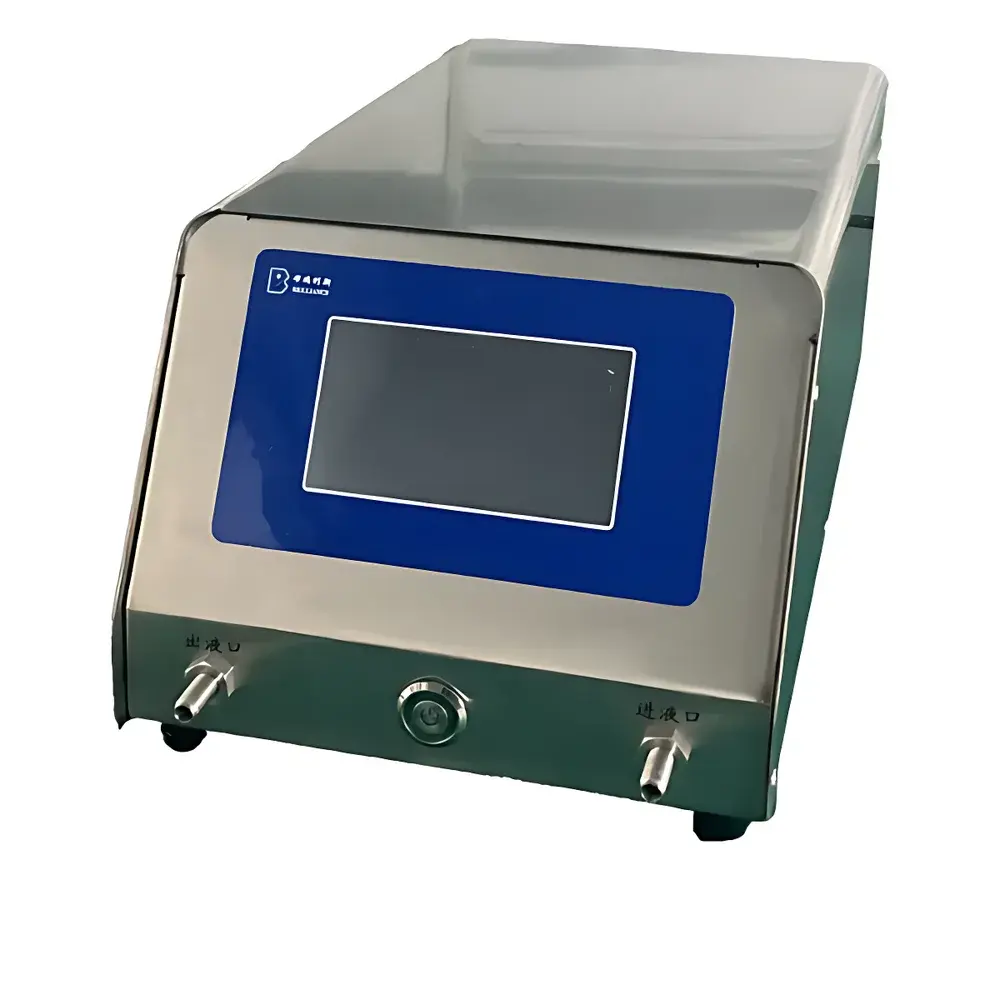
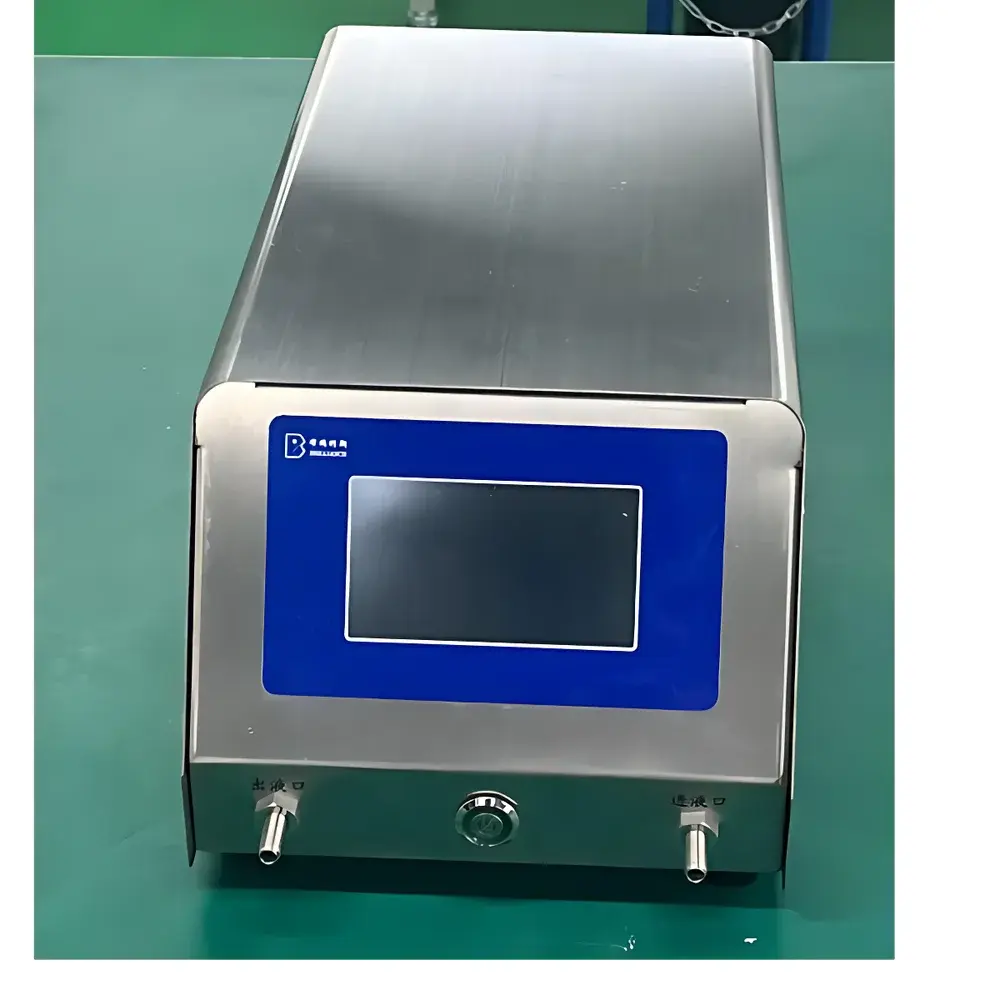
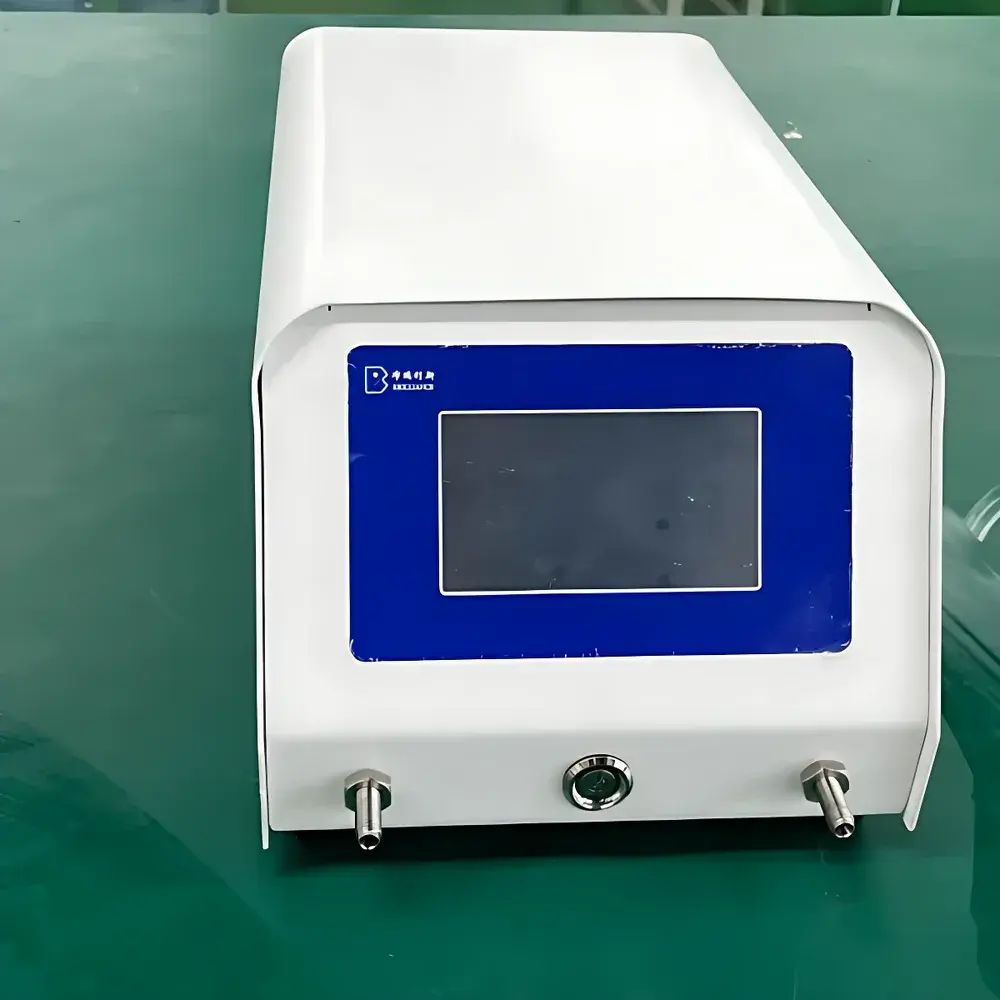
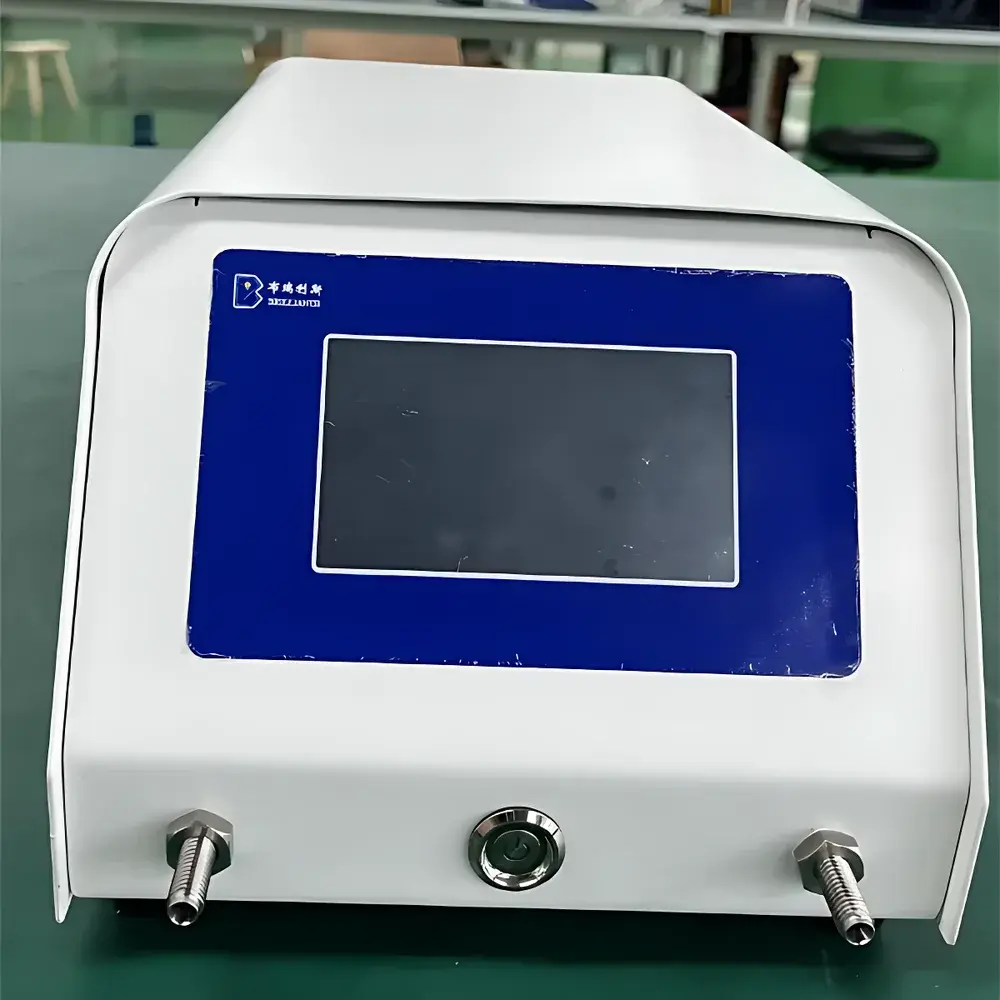
Brilliance Bri-AP Automatic Back Pressure Regulator
| Brand | Brilliance |
|---|---|
| Model | Bri-AP |
| Max Operating Pressure | 350–2000 psi (model-dependent) |
| Control Range | 0–1700 psi |
| Wetted Materials | 316L Stainless Steel / Hastelloy C-276 |
| Control Accuracy | ±1% FS |
| Repeatability | ≤0.5% FS |
| Response Time | ≤2 s |
| Temperature Range | –26 to +80 °C (standard) |
| Interface | 1/8″ Swagelok®-compatible compression fitting |
| Display | 4.3″ capacitive touchscreen HMI |
| Actuation Resolution | 0.06° step angle |
| Compliance | Designed for GLP/GMP-aligned process control environments |
Overview
The Brilliance Bri-AP Automatic Back Pressure Regulator is an electromechanically actuated, closed-loop pressure control device engineered for precise, dynamic back pressure management in analytical, process, and reaction systems. It operates on a proportional-integral (PI) control algorithm, integrating real-time digital pressure transduction with high-resolution stepper motor actuation to maintain setpoint stability under variable flow conditions. Unlike passive or pneumatic regulators, the Bri-AP delivers active pressure regulation—continuously monitoring upstream pressure via a calibrated piezoresistive sensor and adjusting valve orifice position with sub-degree angular precision (0.06° step resolution). This architecture ensures consistent pressure hold across fluctuating flow rates, thermal gradients, and phase transitions—critical for applications such as supercritical fluid chromatography (SFC), high-pressure liquid-phase reactions, and continuous-flow synthesis where pressure integrity directly governs residence time, phase behavior, and product selectivity.
Key Features
- Real-time closed-loop control with ≤2-second response time from setpoint change to stable pressure output
- Dual-material wetted path options: ASTM A312 TP316L stainless steel for general-purpose compatibility; Hastelloy C-276 for aggressive media including chlorinated solvents, H₂S-containing streams, and high-acidity aqueous solutions
- High-fidelity pressure sensing using temperature-compensated, traceable digital transducers with ±1% full-scale accuracy and ≤0.5% full-scale repeatability
- 4.3″ industrial-grade capacitive touchscreen HMI with intuitive menu navigation, real-time pressure trend plotting, and configurable alarm thresholds (e.g., overpressure, communication loss, actuator stall)
- Modular thermal design: standard unit rated for –26 to +80 °C ambient and process fluid exposure; optional high-temperature variant (Bri-AP-HT) supports sustained operation up to +200 °C with ceramic-insulated actuator and extended-range pressure sensors
- Standard 1/8″ Swagelok®-compatible compression fittings for rapid, leak-tight integration into existing tubing manifolds without welding or brazing
Sample Compatibility & Compliance
The Bri-AP is compatible with compressible gases (N₂, CO₂, CH₄), low- to medium-viscosity liquids (acetonitrile, methanol, water, THF), and multiphase mixtures encountered in catalytic hydrogenation or extraction processes. Its 316L and C-276 construction complies with ASTM A240 and ASTM B575 material specifications. The device meets electromagnetic compatibility requirements per IEC 61326-1 (industrial environment) and carries CE marking for conformity with the EU Machinery Directive 2006/42/EC and Low Voltage Directive 2014/35/EU. For regulated laboratories, the firmware supports audit-trail-enabled operation compliant with FDA 21 CFR Part 11 when paired with validated data acquisition software—enabling electronic signatures, user access levels, and immutable event logging for GLP and GMP workflows.
Software & Data Management
The Bri-AP communicates via RS-485 Modbus RTU protocol (standard) or optional Ethernet/IP interface, enabling seamless integration into SCADA, DCS, or LabVIEW-based control platforms. Local configuration and diagnostics are performed via the onboard touchscreen; remote monitoring and parameter adjustment are supported through Brilliance’s open-API RESTful interface (HTTP/HTTPS), allowing integration with LIMS and MES systems. All pressure events—including setpoint changes, alarms, and actuator position logs—are timestamped and stored in non-volatile memory for ≥30 days. Data export is available in CSV format via USB-C port or network transfer, preserving ISO 8601 timestamps and engineering units for traceability.
Applications
- Back pressure regulation in SFC systems to maintain CO₂ density and solvation power during gradient elution
- Pressure stabilization in microreactor and tube-reactor configurations for exothermic catalytic reactions
- Controlled depressurization in high-pressure extraction loops (e.g., supercritical CO₂ extraction of botanical compounds)
- Dynamic headspace pressure control in automated GC sample introduction modules
- Process safety interlocks in pilot-scale hydrogenation reactors requiring fail-safe pressure containment
FAQ
What pressure ranges are supported across Bri-AP model variants?
The Bri-AP series includes eight configurations: AP350S/H (max 350 psi), AP750S/H (max 750 psi), AP1500S/H (max 1500 psi), and AP2000S/H (max 2000 psi), where “S” denotes standard temperature rating (–26 to +80 °C) and “H” indicates high-temperature capability (up to +200 °C).
Is the Bri-AP suitable for corrosive gas service?
Yes—models with Hastelloy C-276 wetted parts are certified for use with HCl, Cl₂, wet SO₂, and other halogenated or acidic process gases per NACE MR0175/ISO 15156.
Can multiple Bri-AP units be synchronized in a single control loop?
Yes—via Modbus master-slave topology or Ethernet/IP explicit messaging, enabling cascade or split-range pressure control strategies across multi-zone systems.
Does the device support analog input for external setpoint modulation?
Yes—0–10 VDC or 4–20 mA analog setpoint input is available as an optional hardware module (Bri-AP-ANALOG), enabling integration with external PID controllers or PLC analog outputs.
What calibration documentation is provided?
Each unit ships with a factory calibration certificate traceable to NIST standards, including as-found/as-left pressure deviation data at five points across the specified control range.



