
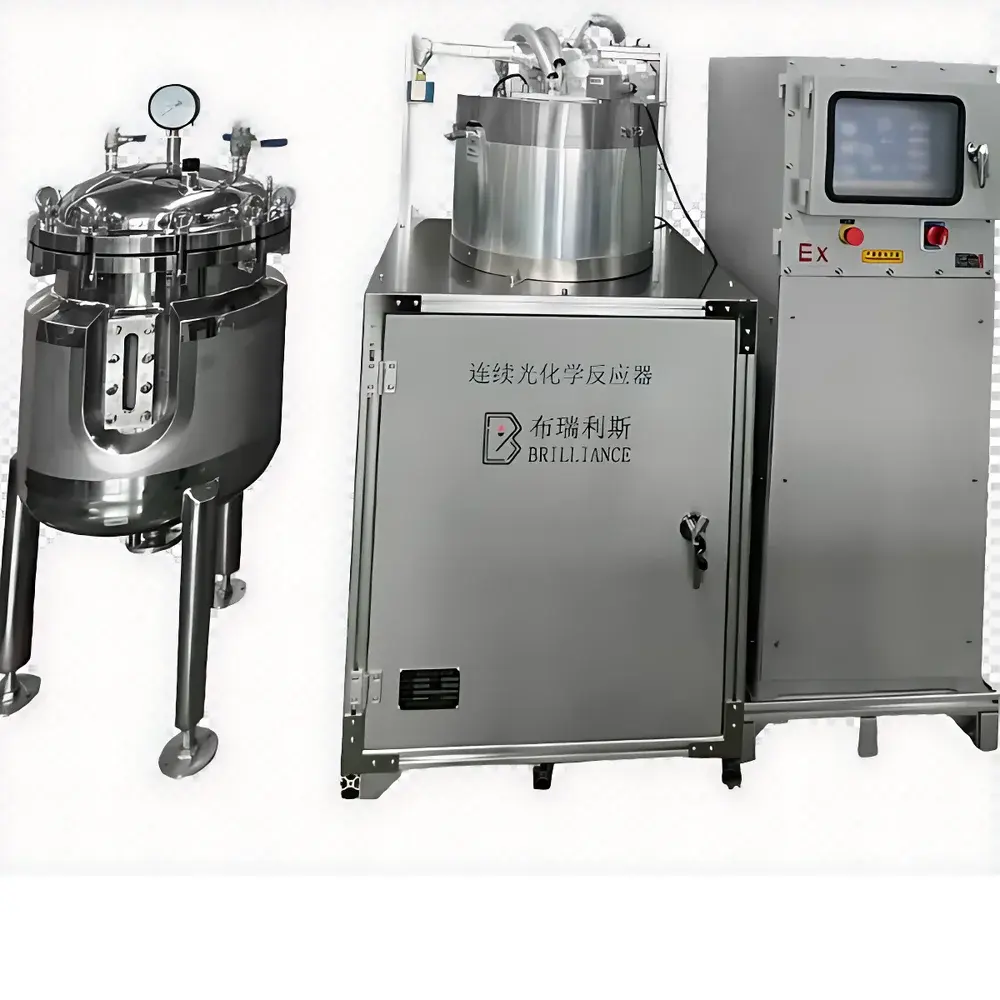
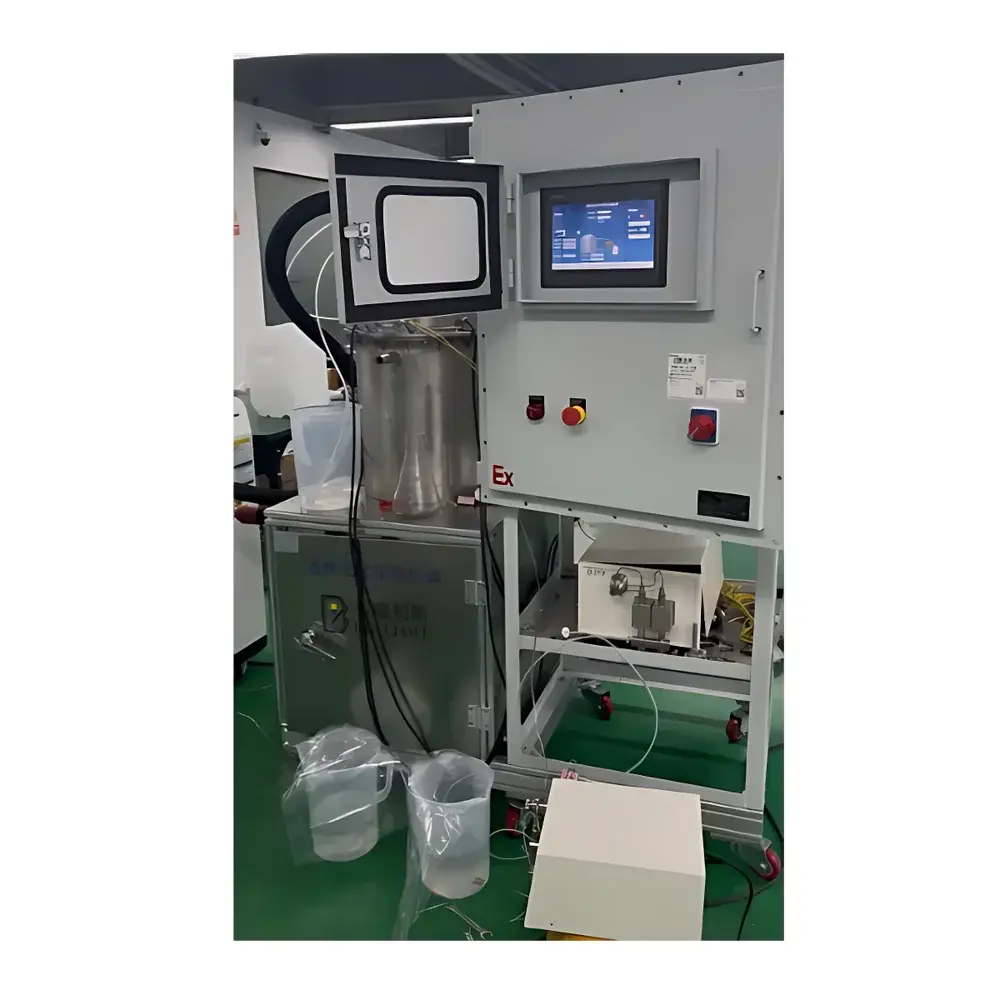
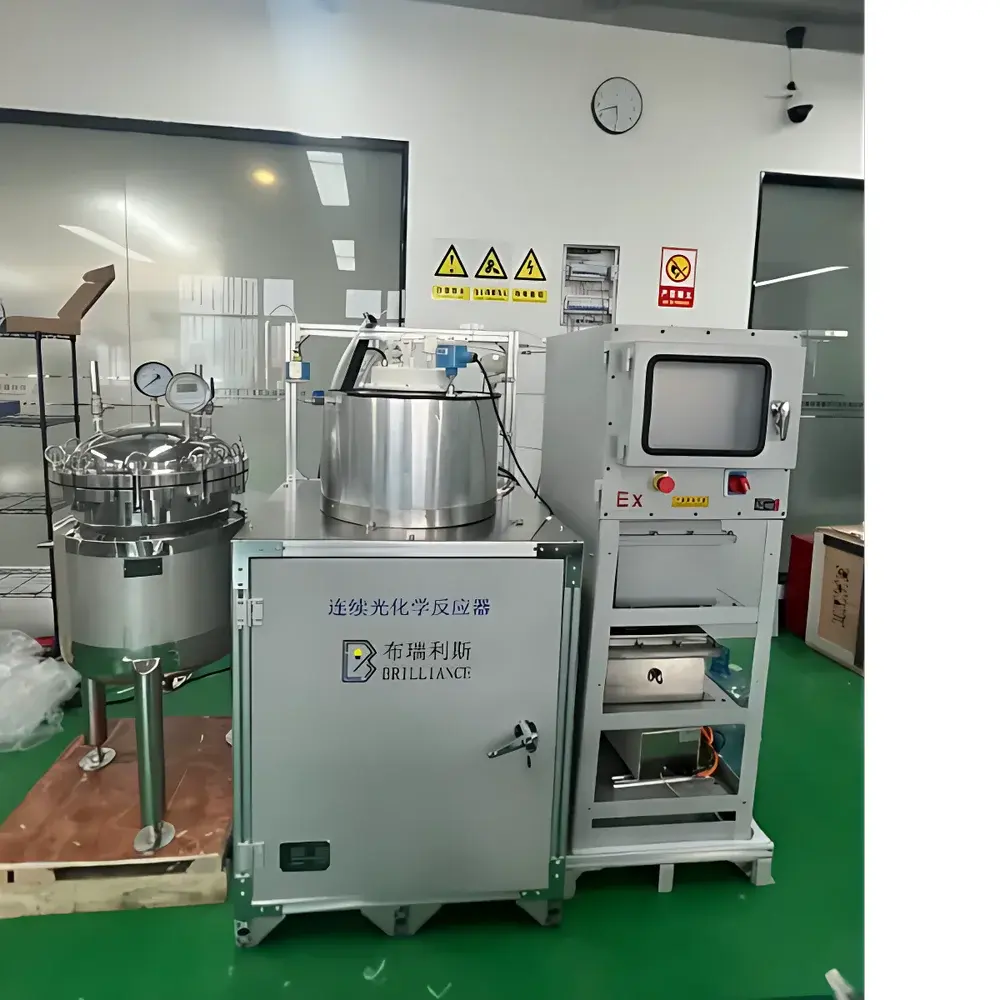
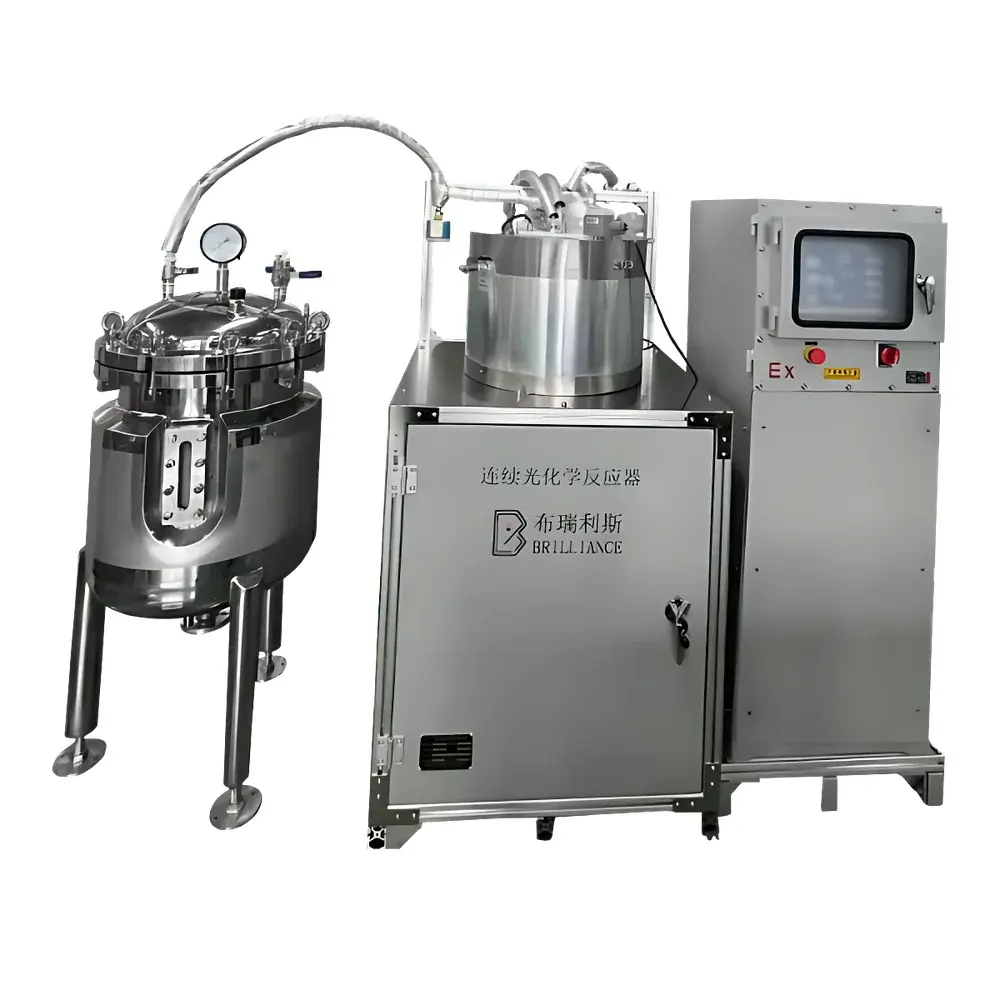
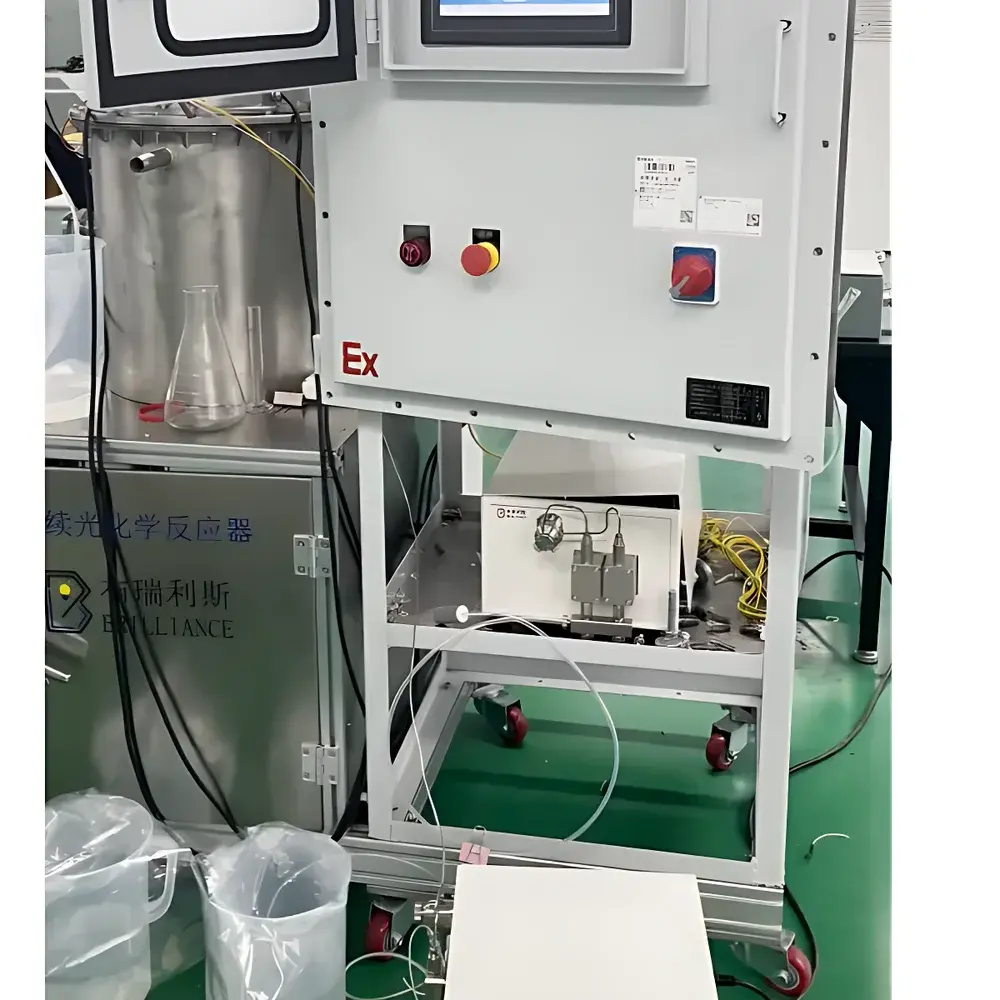
Brilliance Bri-PC-T-D Continuous Photochemical Tubular Reactor (Production-Scale)
| Brand | Brilliance |
|---|---|
| Origin | Zhejiang, China |
| Manufacturer Type | Direct Manufacturer |
| Product Category | Domestic |
| Model | Bri-PC-T-D |
| Instrument Type | Tubular Reactor |
| Reactor Configuration | Coiled-tube (FEP material) |
| Fluidic Interface | 2-inlet / 1-outlet |
| Hold-up Volume | 200 mL to 10 L (customizable via tube ID/length) |
| Pump Type | Precision Plunger Pump (configurable) |
| Wavelength Range | 254–950 nm (custom wavelengths available) |
| Light Source Power | 100–1000 W (customizable) |
| Irradiance Control | Continuously Adjustable |
| Cooling Method | Integrated Water-Cooled Light Housing |
| Temperature Control | Integrated Dual-Range Thermostatic System (−20 °C to +120 °C typical) |
| Electrical Supply | 100–240 VAC, 50/60 Hz |
| Optional Configurations | Multi-pump manifolds, Multi-wavelength lamp modules, Real-time UV-Vis inline monitoring ports |
Overview
The Brilliance Bri-PC-T-D is a production-scale continuous photochemical tubular reactor engineered for safe, scalable, and reproducible photo-driven synthesis under controlled irradiation conditions. Unlike conventional batch photoreactors—where photon flux attenuation, thermal hotspots, and inconsistent residence time distributions limit scalability—the Bri-PC-T-D employs a precisely coiled fluorinated ethylene propylene (FEP) tubular flow path to ensure uniform photon delivery, laminar-to-moderate turbulent flow regimes, and deterministic residence time control. Its core operational principle relies on the integration of high-intensity, spectrally tunable light sources with precision fluidic actuation and active thermal management, enabling first-principles-based reaction engineering for photoredox catalysis, [2+2] cycloadditions, C–H functionalization, and singlet oxygen-mediated oxidations. Designed explicitly for transition from lab-scale discovery to pilot or early-production deployment, the system complies with fundamental process safety requirements for continuous photochemistry—including containment integrity, explosion-proof construction (ATEX-compliant enclosure options), and fail-safe irradiation interlocks.
Key Features
- Optically optimized FEP coil reactor: Chemically inert, UV-transparent (down to 190 nm), pressure-rated up to 10 bar, with customizable internal diameter (1.6–6.4 mm) and total length (1–50 m) to tune residence time (seconds to minutes) and photon fluence.
- Modular multi-wavelength illumination: Interchangeable LED or medium-pressure Hg/Xe lamp modules covering 254 nm (UVC), 365 nm (UVA), 405/450 nm (visible blue), and up to 950 nm (NIR); each module features calibrated irradiance sensors and closed-loop intensity feedback.
- Precision plunger pump system: Dual- or triple-pump configurations available for independent reagent streams; flow rate accuracy ±0.5% FS, pulse dampening integrated, compatible with solvents ranging from hexane to DMF and aqueous acidic/basic media.
- Active thermal regulation: Integrated dual-range circulator (−20 °C to +120 °C) coupled to jacketed FEP coil and lamp housing; temperature stability ±0.3 °C over 8-hour operation.
- Engineered safety architecture: Explosion-proof housing (optional IEC 60079-0 certification), leak-tight Swagelok®/VCR® fluidic connections, redundant optical shutters, and real-time O₂/temperature/pressure fault detection with automatic shutdown.
Sample Compatibility & Compliance
The Bri-PC-T-D accommodates a broad range of photoactive substrates—including aryl halides, diazonium salts, metal complexes (e.g., Ir(ppy)₃, Ru(bpy)₃²⁺), organic dyes (e.g., Eosin Y, Rose Bengal), and photocatalytic nanoparticles—across solvent systems such as acetonitrile, THF, DCM, water, and mixed aqueous/organic phases. All wetted parts conform to USP Class VI and FDA 21 CFR §177.1550 (fluoropolymer compliance). The system supports GLP/GMP-aligned operation through configurable audit trails, electronic signatures (21 CFR Part 11-ready firmware), and traceable calibration logs for flow, temperature, and irradiance sensors. Design documentation aligns with ISO 13849-1 (safety-related control systems) and IEC 61000-6-4 (EMC emissions).
Software & Data Management
The reactor operates via Brilliance PC-React™ v3.2 control software, running on an embedded industrial PC with touchscreen HMI. Software provides synchronized logging of flow rates (mL/min), coil temperature (°C), lamp power (% setpoint), irradiance (mW/cm² at 254/365/450 nm), and pressure (bar) at 1 Hz resolution. Export formats include CSV, HDF5, and direct OPC UA server integration for MES/SCADA environments. Batch records are digitally signed and timestamped; raw sensor data is retained for ≥12 months with automated backup to network storage. Remote diagnostics and firmware updates are supported via TLS-secured HTTPS interface.
Applications
- Pharmaceutical intermediate synthesis: Scalable preparation of chiral lactones, strained heterocycles, and photolabile prodrugs under cGMP-preparative conditions.
- Agrochemical R&D: Continuous generation of reactive intermediates (e.g., carbenes, nitrenes) for selective C–H insertion in pesticide scaffolds.
- Materials chemistry: Controlled polymerization (PET-RAFT), quantum dot surface functionalization, and MOF photo-crosslinking.
- Environmental remediation: Flow-through photocatalytic degradation of micropollutants (e.g., pharmaceuticals, PFAS precursors) using immobilized TiO₂ or g-C₃N₄.
- Academic process intensification studies: Kinetic modeling of photon-limited reactions, quantum yield determination, and residence time distribution (RTD) analysis via tracer experiments.
FAQ
What is the maximum operating pressure for the FEP coil?
The standard FEP tubing is rated for continuous operation up to 10 bar at 25 °C; derating applies above 60 °C per ASTM D1598 specifications.
Can the system be validated for GMP manufacturing?
Yes—IQ/OQ protocols are provided; PQ support includes installation in classified environments (ISO 7/8 cleanrooms) and integration with DeltaV/PCS7 DCS platforms.
Is inline spectroscopic monitoring supported?
Optional fiber-coupled UV-Vis absorption cells (1–10 mm pathlength) can be installed at inlet, mid-coil, and outlet positions with real-time spectral acquisition (190–850 nm).
How is light uniformity across the coil verified?
Each reactor is characterized using NIST-traceable radiometric mapping; axial irradiance variation is ≤±8% over the active coil length under nominal operating conditions.
What maintenance intervals are recommended for lamp modules and pumps?
LED modules require no scheduled replacement (L70 > 20,000 h); Hg/Xe lamps are replaced every 1,000–2,000 h; plunger seals inspected every 500 h of cumulative operation.



