
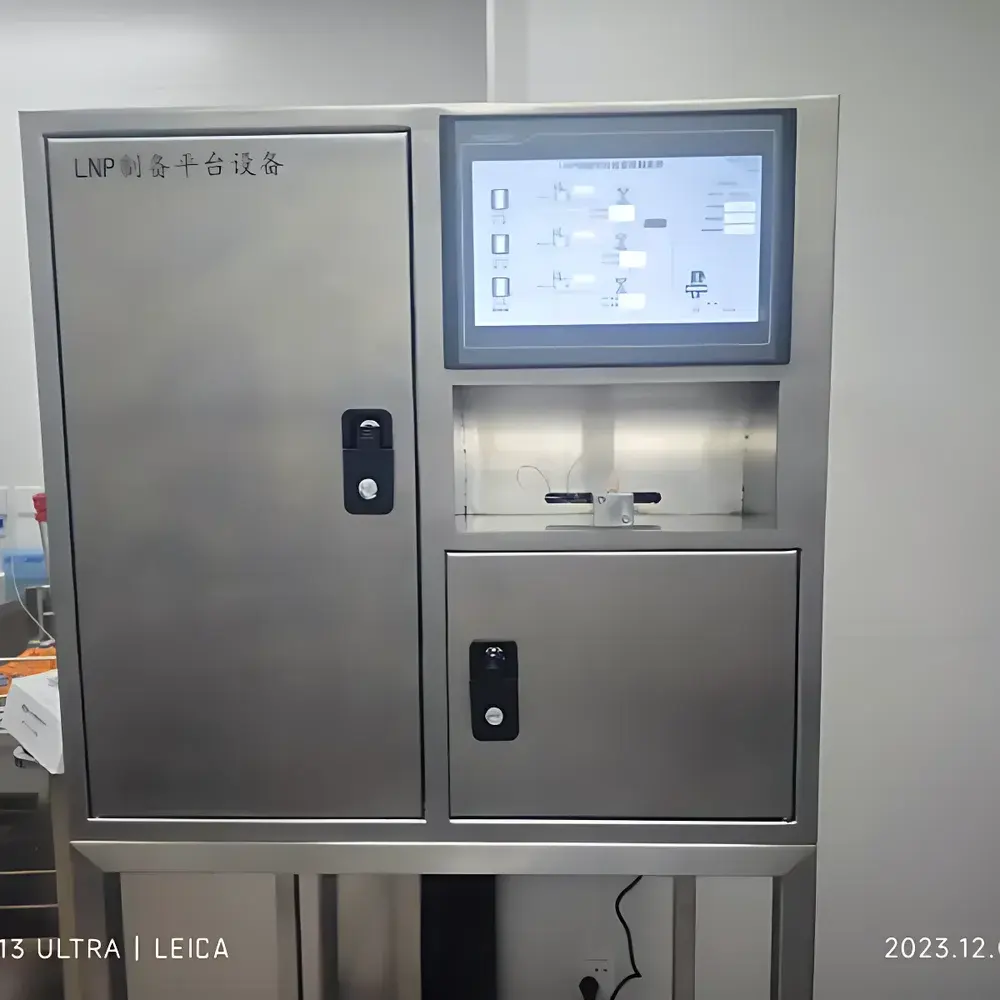
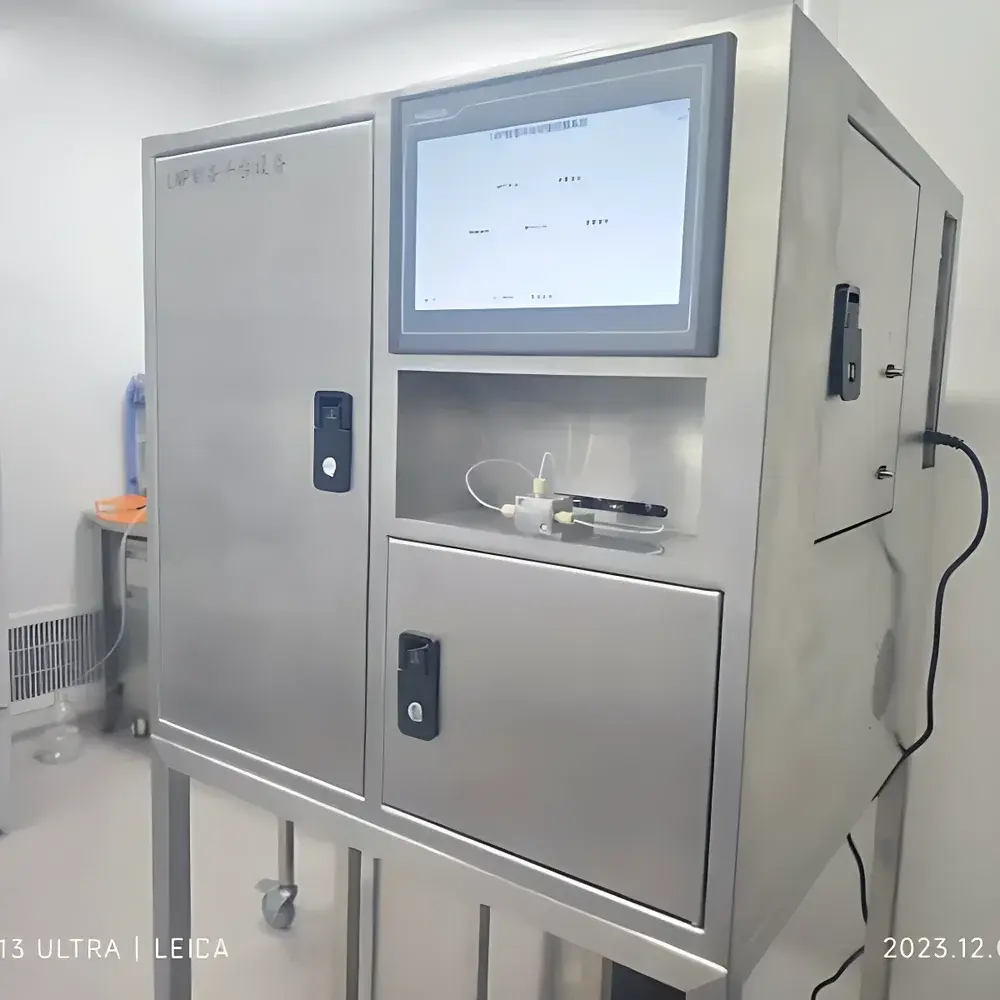
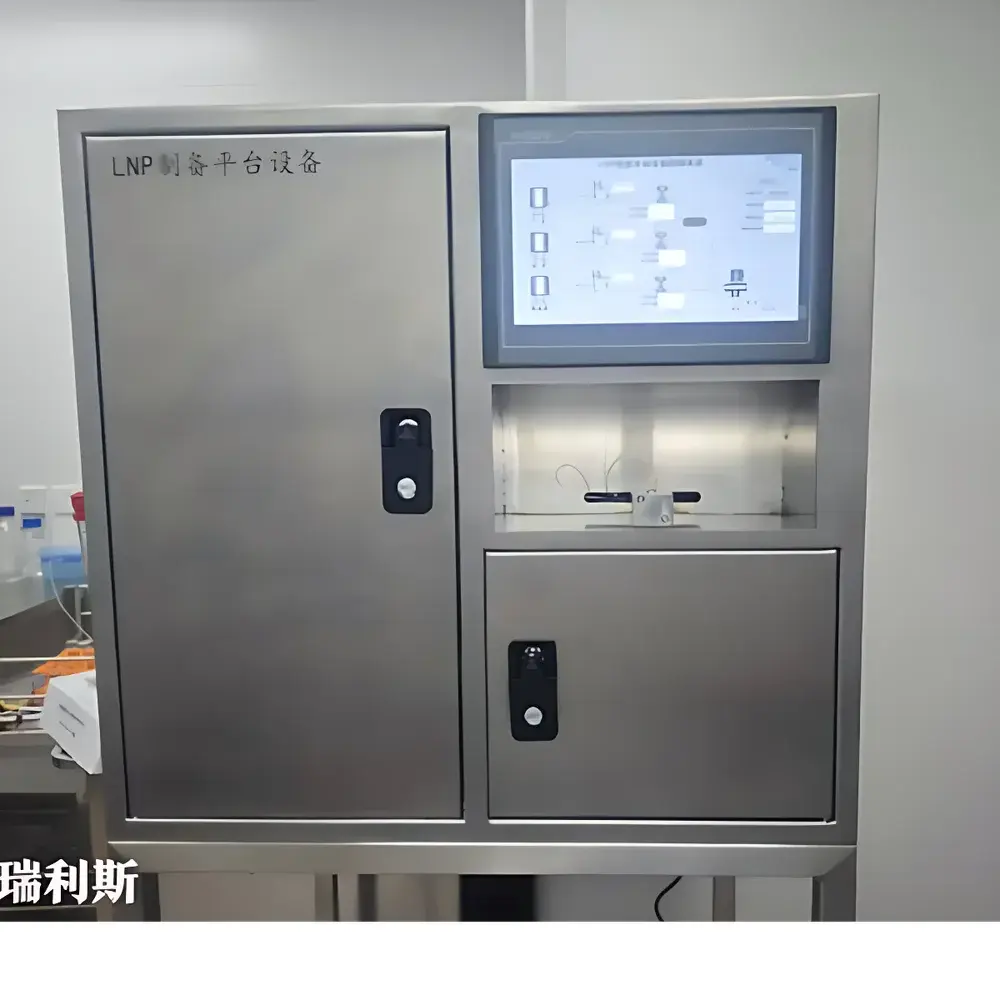
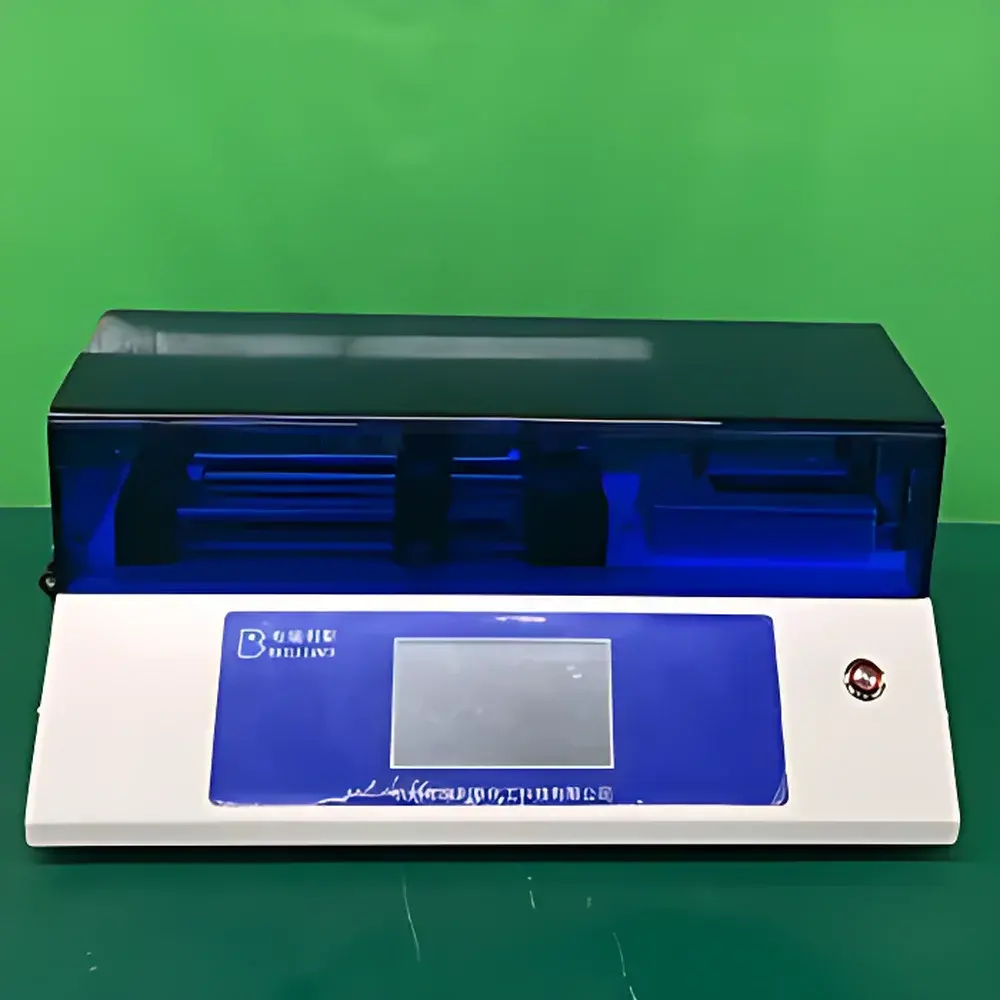
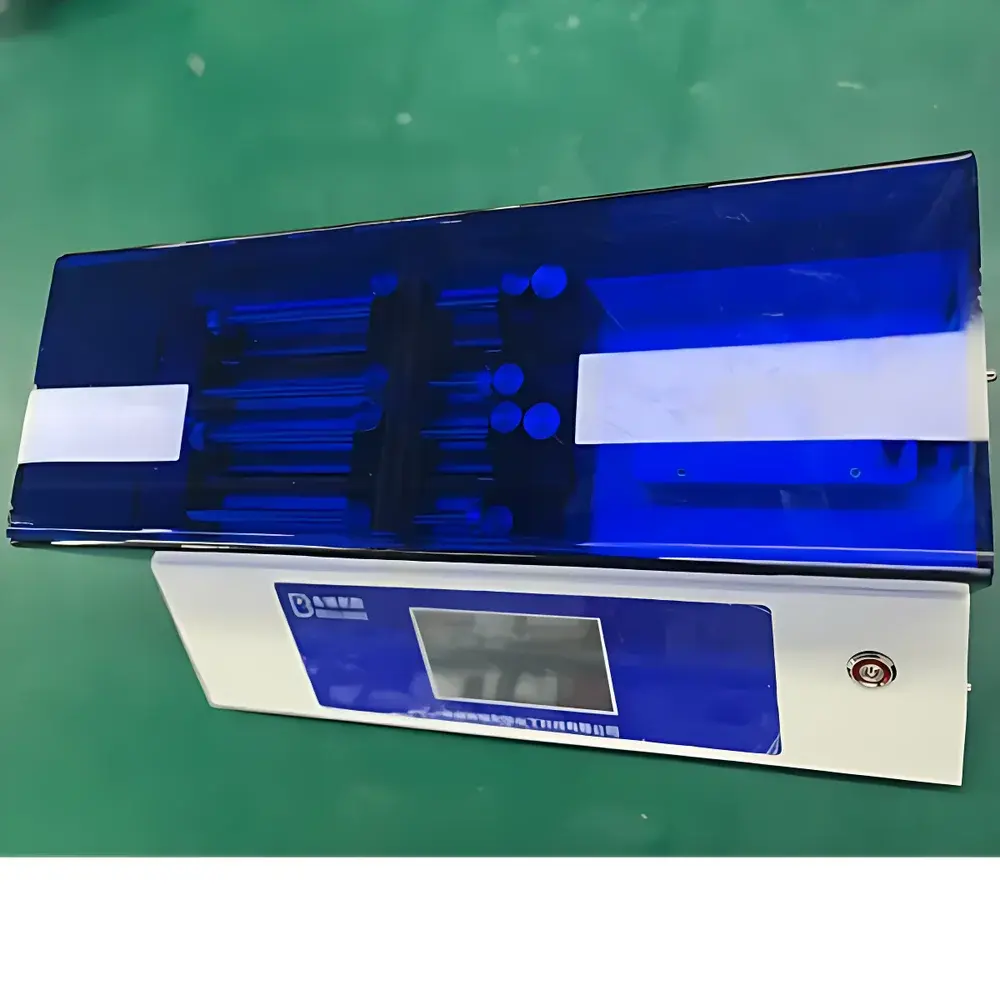
Brilliance Bri-WLK Microfluidic Continuous Biomanufacturing System
| Brand | Brilliance |
|---|---|
| Origin | Zhejiang, China |
| Manufacturer Type | Direct Manufacturer |
| Product Origin | Domestic (China) |
| Model | Bri-WLK |
| Price Range | USD 7,000 – 70,000 |
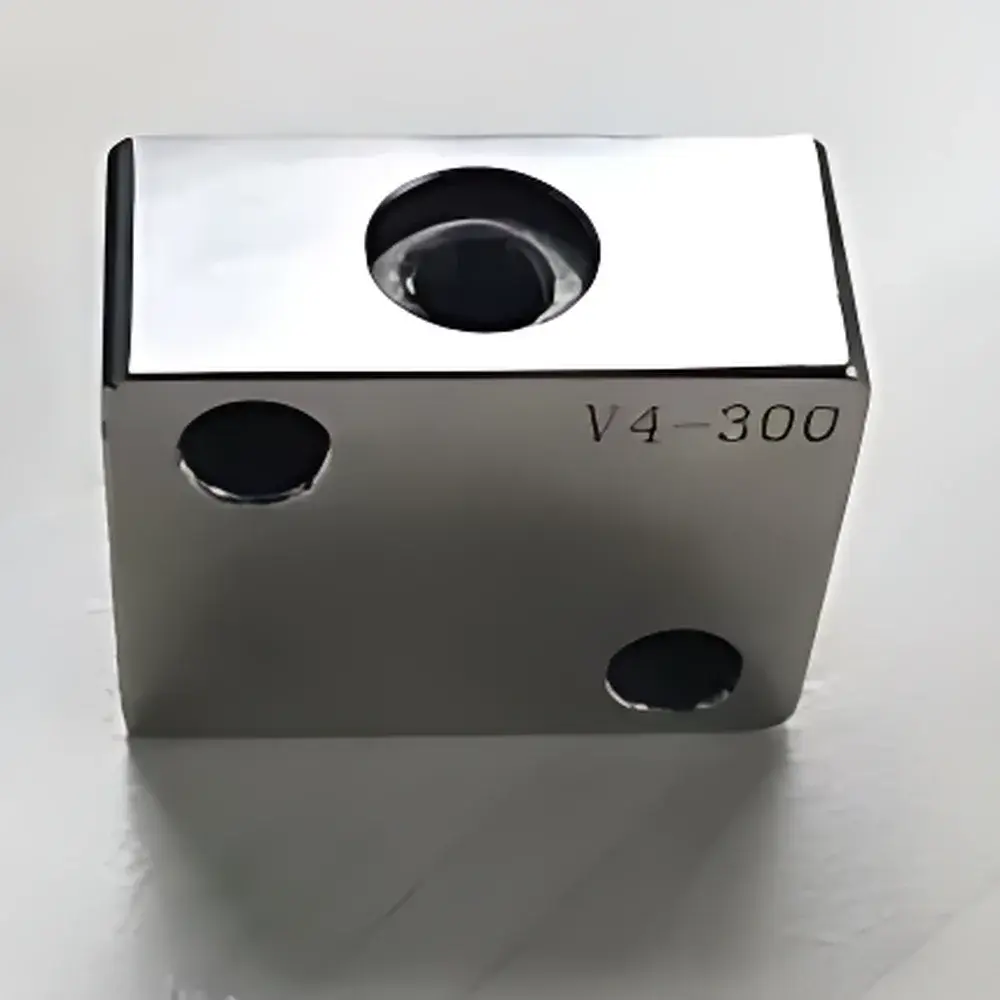
| Chip Substrate Materials | PDMS / Borosilicate Glass / 316L Stainless Steel |
| PDMS Chip Dimensions (mm) | 70 × 20 × 2 |
| Glass Chip Dimensions (mm) | 75 × 19 × 2 |
| Microchannel Width (µm) | 30–700 |
| Nozzle Width (µm) | 30–120 |
| Common Nozzle Widths (µm) | 30, 50, 100 |
| Droplet Diameter Range (µm) | 25–300 |
| Droplet Volume Range (nL) | 0.4–10 |
Overview
The Brilliance Bri-WLK Microfluidic Continuous Biomanufacturing System is an integrated platform engineered for controlled, scalable, and reproducible synthesis of biologics, enzymatic products, and nanoscale therapeutics under continuous flow conditions. It operates on the principles of laminar flow microfluidics and interfacial mass transfer control, enabling precise spatiotemporal regulation of biochemical reactions at the micrometer scale. Unlike batch-based bioreactors, the Bri-WLK system leverages deterministic fluid handling to maintain consistent residence time distribution (RTD), minimize axial dispersion, and suppress concentration gradients—critical factors for high-fidelity biosynthesis of proteins, peptides, mRNA-LNPs, and enzyme-immobilized cascades. Designed for benchtop deployment in academic labs, contract development organizations (CDOs), and early-stage biomanufacturing units, it bridges the gap between discovery-phase microfluidic screening and pilot-scale process development.
Key Features
- Precision multi-channel peristaltic and syringe-based microfluidic pumping, calibrated for volumetric accuracy ≤±1.5% across flow rates from 0.1 µL/min to 5 mL/min.
- Modular chip architecture supporting interchangeable substrates: optically transparent borosilicate glass for real-time microscopy monitoring; biocompatible PDMS for rapid prototyping and surface functionalization; and 316L stainless steel for high-pressure, solvent-resistant operation.
- Integrated on-chip separation modules—including size-exclusion microfilters, electrophoretic deflection zones, and hydrodynamic focusing junctions—enabling inline purification without external centrifugation or chromatography.
- Temperature-controlled reaction zone (range: 4–60 °C, ±0.3 °C stability) with Peltier-based thermal management and embedded RTD sensors for kinetic studies requiring strict thermal profiling.
- Real-time pressure monitoring at inlet/outlet manifolds with digital feedback loop for adaptive flow rate compensation during viscosity shifts or clogging events.
Sample Compatibility & Compliance
The Bri-WLK system accommodates a broad spectrum of biological inputs: whole microbial cells (E. coli, yeast), cell lysates, purified enzymes (e.g., T7 RNA polymerase, Cas9 variants), nucleic acid templates, lipid precursors, and small-molecule co-factors. Its wetted materials comply with USP Class VI and ISO 10993-5 cytotoxicity standards. Chip fabrication adheres to cleanroom-grade protocols (ISO Class 7), ensuring endotoxin levels <0.25 EU/mL for sterile applications. While not certified for GMP manufacturing, the system supports GLP-aligned documentation workflows—including electronic audit trails, user-access logging, and parameter change history—for regulatory submissions under ICH M4 and FDA guidance for early-phase nanomedicine development.
Software & Data Management
The proprietary BriFlow Control Suite (v3.2+) provides intuitive graphical programming of multi-step protocols, including sequential reagent injection, gradient mixing, dwell-time scheduling, and synchronized collection triggers. All operational parameters are timestamped and exported in CSV/JSON formats compatible with LIMS integration. The software supports 21 CFR Part 11-compliant user authentication (role-based permissions), electronic signatures, and immutable data archiving. Optional API access enables integration with upstream automation (e.g., liquid handlers) and downstream analytics platforms (e.g., HPLC, DLS).
Applications
- Continuous synthesis of lipid nanoparticles (LNPs) for mRNA delivery, with tunable polydispersity index (PDI <0.12) via controlled ethanol–aqueous phase mixing.
- Enzyme-catalyzed cascade reactions (e.g., ATP regeneration systems, chiral amine synthesis) with immobilized biocatalysts in packed-bed microchannels.
- Single-cell encapsulation and barcoded library generation for CRISPR screening or scRNA-seq sample prep.
- Rapid formulation screening of peptide–polymer conjugates and protein-polyelectrolyte complexes under physiologically relevant shear conditions.
- Process intensification studies for tech-transfer to larger-scale microstructured reactors (e.g., Corning AFR, Chemtrix systems).
FAQ
Is the Bri-WLK system suitable for GMP production?
No—it is intended for research, process development, and non-clinical manufacturing support. Final drug product synthesis must occur in qualified GMP facilities.
Can I use organic solvents such as chloroform or DMSO with the PDMS chips?
PDMS swells in strong organic solvents; we recommend glass or 316L chips for such applications. Solvent compatibility charts are provided in the technical manual.
What level of training is required to operate the system?
Basic operation requires familiarity with microfluidics fundamentals; full protocol design and troubleshooting are supported by onsite engineer training (included with purchase) and remote video-assisted support.
Are custom chip designs available?
Yes—Brilliance offers collaborative chip co-design services with turnaround times of 4–6 weeks for prototype validation and 8–12 weeks for volume production.
Does the system support real-time UV-Vis or fluorescence detection?
Not natively; however, standardized optical ports (Ø3 mm, 0.5 NA) allow integration with third-party spectrometers or CMOS-based detectors via OEM mounting kits.




