
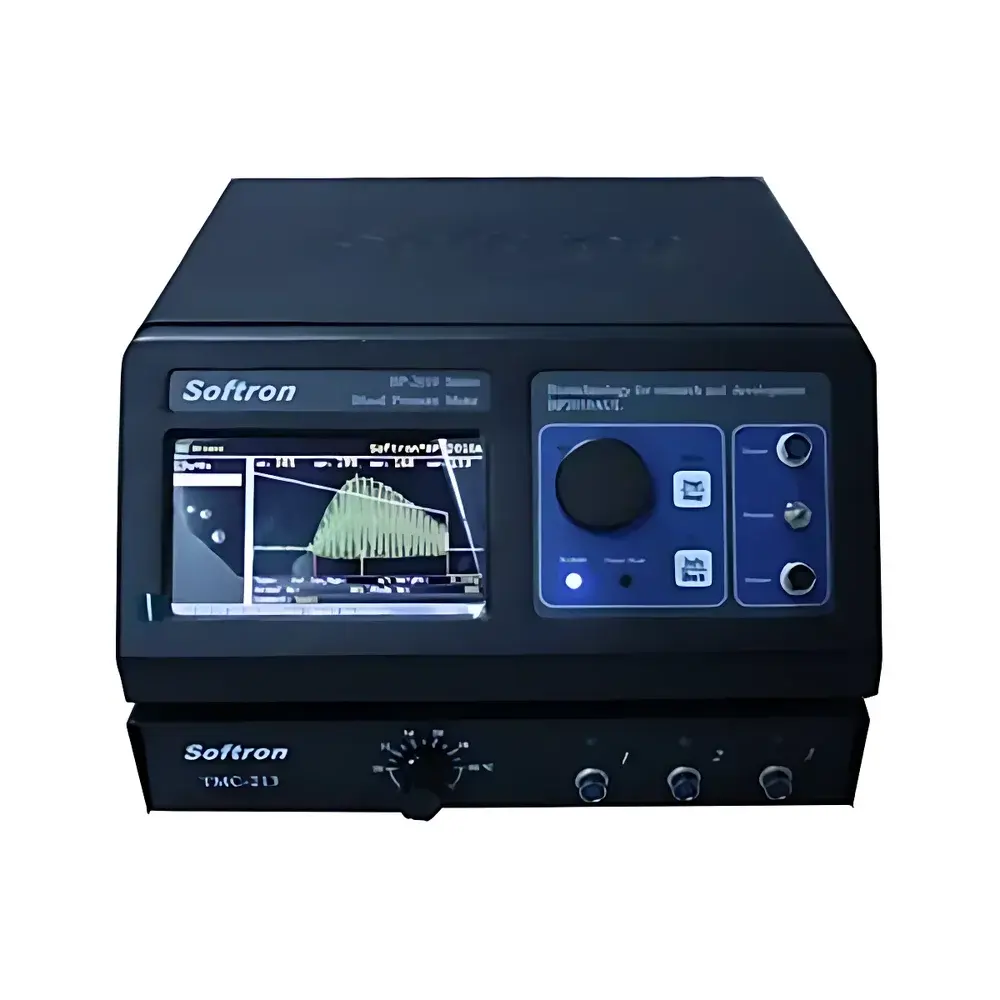
Brookfield BP-2010E Large-Animal Non-Invasive Blood Pressure Monitor
| Origin | Shenzhen, China |
|---|---|
| Manufacturer Type | Authorized Distributor |
| Origin Category | Domestic (PRC) |
| Cuff Model | NO. 10 |
| Pricing | Available Upon Request |
| Animal Size Range | Canine, NHP, Feline, Rabbit, Guinea Pig |
| Measurement Method | Oscillometric (Air-Vibration) |
| Display | High-Contrast LCD with Real-Time Pulse Waveform Monitoring |
| Data Storage | Internal Memory ≥ 100 Sessions |
| Interface | RS-232/USB for PC Communication |
| Software Included | BPView™ Data Management Suite (Waveform Capture, Export, Audit Trail) |
Overview
The Brookfield BP-2010E is a clinical-grade, non-invasive oscillometric blood pressure monitor engineered specifically for large and medium-sized laboratory animals used in preclinical pharmacology, toxicology, and cardiovascular safety assessment studies. It operates on the well-validated air-vibration (oscillometric) principle—detecting cuff pressure-induced arterial pulsations to derive systolic, mean, and diastolic pressures without requiring arterial cannulation or signal calibration. This method ensures high reproducibility across repeated measurements while eliminating procedural stress artifacts associated with invasive techniques. Designed for compliance with GLP-aligned workflows, the BP-2010E supports standardized protocols required by regulatory submissions to the FDA, EMA, and PMDA, particularly in ICH S7B and S9 nonclinical cardiovascular safety evaluations.
Key Features
- High-speed acquisition: Completes full-cycle blood pressure measurement in ≤15 seconds for canine subjects—critical for minimizing restraint time and physiological perturbation during serial dosing studies.
- Multi-species firmware library: Pre-configured algorithms optimized for dog, non-human primate (NHP), rabbit, cat, and guinea pig, accounting for species-specific arterial compliance and pulse amplitude profiles.
- Real-time waveform visualization: Integrated high-resolution LCD displays dynamic oscillometric pulse waveforms throughout inflation and deflation, enabling immediate visual verification of signal quality and artifact rejection.
- Expandable cuff system: Interchangeable cuffs (Models NO.10–NO.13) cover limb circumferences from 3.5 cm to 13.0 cm, supporting longitudinal studies across developmental stages—from juvenile guinea pigs to adult beagles and cynomolgus monkeys.
- Robust data architecture: Stores ≥100 complete measurement sessions onboard, including timestamped pressure values, heart rate, and raw waveform metadata; exportable via USB or RS-232 to secure network drives or LIMS.
- Interoperability design: Compatible with telemetry platforms (e.g., Data Sciences International DSI, Ponemah) for hybrid validation—allowing concurrent comparison of oscillometric and direct arterial pressure under identical physiological conditions.
Sample Compatibility & Compliance
The BP-2010E is validated for use in conscious, restrained, or lightly sedated animals under ISO 10993-compliant handling protocols. Its oscillometric algorithm adheres to ASTM F1485-22 standards for non-invasive blood pressure device performance in animal models. All firmware versions maintain traceable revision history and support audit trail generation per FDA 21 CFR Part 11 requirements when paired with BPView™ software. Device calibration is performed using NIST-traceable manometers at certified intervals; calibration certificates are issued with each unit shipment. The system meets IEC 61000-4 electromagnetic compatibility standards for operation in shared vivarium environments with adjacent imaging or electrophysiology equipment.
Software & Data Management
BPView™ is a Windows-based desktop application providing full waveform interrogation, statistical summarization (mean ± SD, CV%), and batch export in CSV, PDF, and XML formats compliant with CDISC SEND standards. It enforces user role-based access control (RBAC), electronic signatures, and immutable audit logs—including operator ID, session start/end timestamps, cuff selection, and any manual overrides. Raw waveform files retain 1 kHz sampling resolution, enabling post-hoc spectral analysis of pulse contour morphology for advanced hemodynamic interpretation. Data integrity is preserved through SHA-256 hash verification upon import/export cycles.
Applications
- Regulatory toxicology: Core instrument for cardiovascular endpoints in repeat-dose GLP studies per OECD 407 and 422 guidelines.
- Pharmacodynamic profiling: Serial BP monitoring during PK/PD modeling of antihypertensive, vasoactive, or CNS-active compounds.
- Vivarium QC: Routine screening for hypertension in genetically modified rodent colonies or aging NHP cohorts.
- Method validation: Bridging studies comparing oscillometric accuracy against gold-standard intra-arterial catheterization per AHA Scientific Statement on non-invasive BP in animals.
- Educational training: Standardized platform for teaching principles of hemodynamics and ethical refinement in animal experimentation (ARRIVE 2.0 aligned).
FAQ
Is the BP-2010E suitable for unrestrained or freely moving animals?
No—it requires stable limb positioning during cuff inflation. For ambulatory monitoring, integrate with implantable telemetry systems.
Can BPView™ generate FDA-submission-ready reports?
Yes—when deployed in validated environments with 21 CFR Part 11 configuration, it produces ALCOA+ compliant reports including electronic signatures and full audit trails.
What is the recalibration interval recommended for routine GLP use?
Annually, or after 10,000 measurement cycles—whichever occurs first—using an accredited third-party service provider with ISO/IEC 17025 accreditation.
Does the device support automatic averaging of multiple readings?
Yes—configurable 3- to 5-cycle averaging mode with outlier rejection based on standard deviation thresholds is embedded in firmware.
Are cuff models NO.10–NO.13 sterilizable for reuse across animals?
Cuffs are designed for single-animal use per IACUC-recommended hygiene practice; autoclaving is not supported—disinfect with 70% ethanol or approved veterinary-grade agents only.





