
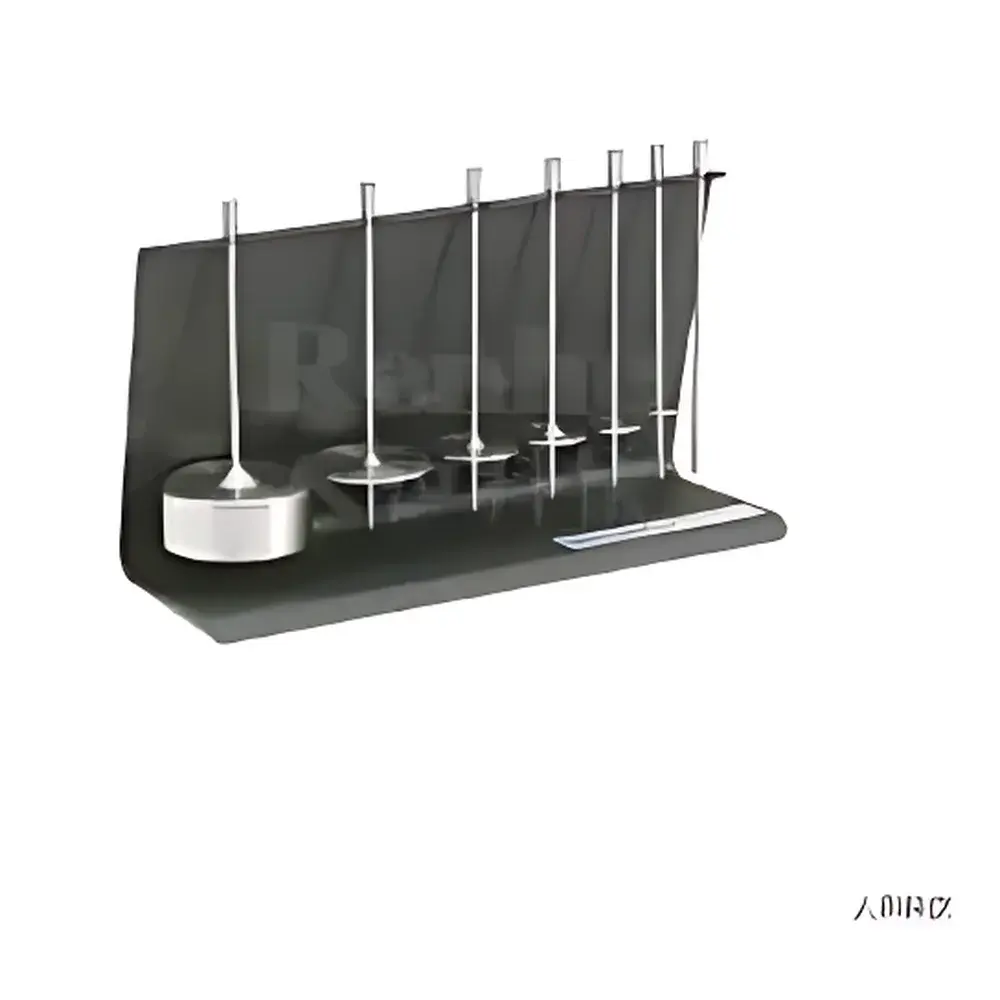
Brookfield DVNext-Compatible Spindles, Sample Cups, and Measurement Chambers
| Brand | Brookfield |
|---|---|
| Origin | USA |
| Manufacturer Type | Authorized Distributor |
| Product Category | Imported |
| Models | LV, RV/HA/HB, UL, DIN, RST, Thermosel, SSA, KU-2, T-Bar, Spiral Adapter, Vane Spindles |
| Material Options | 302/316 Stainless Steel, PTFE-Coated |
| Calibration | Factory-Calibrated Cones & Cups |
| Compliance | ASTM D2196, ISO 2555, USP <911>, FDA 21 CFR Part 11 (Software-Enabled Systems) |
Overview
Brookfield spindles, sample cups, and measurement chambers constitute the core mechanical interface between the rheometer/viscometer and the test material. These precision-engineered components define shear geometry, sample volume, thermal boundary conditions, and torque transmission efficiency—directly governing measurement accuracy, reproducibility, and applicability across fluid classes (Newtonian, pseudoplastic, thixotropic, yield-stress fluids) and regulatory environments. Designed for full compatibility with Brookfield’s DVNext, DV2T, DV3T, and CAP2000+ platforms, each component adheres to strict dimensional tolerances and surface-finish specifications per ISO 3219 and ASTM D1475. Spindle geometries—including coaxial cylinder (CC), cone-and-plate (CP), parallel-plate (PP), vane, and Krebs—enable calculation of absolute shear rate (γ̇), shear stress (τ), and dynamic viscosity (η = τ/γ̇) under controlled rotational or oscillatory motion. All cones and matching cups undergo factory calibration traceable to NIST standards; replacement cones require cup recalibration to maintain certified uncertainty ≤ ±1.0% for viscosity and ≤ ±2.0% for yield stress.
Key Features
- Modular spindle architecture supporting LV (low-viscosity), RV/HA/HB (medium-to-high viscosity), UL (ultra-low volume), DIN (standardized geometry per DIN 53019), RST (rheological stress testing), Thermosel (temperature-controlled), and SSA (small sample adapter) configurations
- Material options include electropolished 302 stainless steel (standard), corrosion-resistant 316 stainless steel, and chemically inert PTFE-coated variants for aggressive solvents or biological media
- Factory-calibrated cone-and-plate assemblies (e.g., CPA-41Z, RCT-50-2) with documented angular tolerance (±0.02°) and radial runout (<5 µm)
- Temperature-integrated cups (e.g., CPA-44PYZ, SC4-13RPY) equipped with Class A RTD sensors (Pt100, ±0.1°C accuracy) compatible with Brookfield’s TC-602 and Thermosel heating systems
- Purge-enabled chambers (PCPA-7YZ, SC4-13RD-100) for moisture-sensitive or oxygen-sensitive samples, featuring dual luer fittings and up to four purge ports
- Disposable aluminum sample chambers (HT-2DB-100, SC4-13RD-100) certified for GLP-compliant single-use workflows in pharmaceutical QC labs
Sample Compatibility & Compliance
These accessories accommodate sample volumes from 0.5 mL (UL series) to 16 mL (Thermosel HT-2), enabling testing of high-value formulations, limited clinical specimens, or volatile solvents. Cone-and-plate geometries (e.g., RCT-75-1, CPA-52Z) provide uniform shear fields ideal for structured gels and polymer melts, while vane spindles (VT-60-30, VT-80-70) minimize wall slip and structural disruption in particulate suspensions. All stainless-steel components meet FDA 21 CFR 178.3570 for indirect food contact. Calibration certificates comply with ISO/IEC 17025:2017 and support audit readiness for GMP (21 CFR Part 211), GLP (OECD 1998), and ISO 9001 environments. Spindle/cup combinations are validated per ASTM D2196 (Krebs units), ISO 2555 (cone-and-plate), and USP (rotational viscosity of pharmaceuticals).
Software & Data Management
When used with Brookfield’s Rheo3000 or PC-based ViscoQC software, these components auto-identify via embedded RFID tags (on select RST and Thermosel spindles) or manual selection in method templates. Software enforces geometry-specific calculation algorithms per ISO 3219 Annex B, applying real-time corrections for end-effect errors, temperature drift, and instrument inertia. Audit trails log operator ID, timestamp, calibration status, and environmental parameters (temperature, humidity) per FDA 21 CFR Part 11 requirements. Export formats include CSV, PDF reports with raw torque/speed data, and XML metadata compliant with LIMS integration (ASTM E1482).
Applications
- Pharmaceutical: Yield stress and thixotropy profiling of topical gels (USP ), suspension stability assessment using vane spindles, and injectable viscosity verification at 25°C/37°C
- Food & Beverage: Consistency grading of sauces and dressings (KU-2 spindles per ASTM D1475), emulsion breakdown kinetics in dairy products using RST coaxial cylinders
- Coatings & Inks: Shear-thinning behavior of acrylic dispersions (RV/HA series), sag resistance evaluation via low-shear-rate ramp tests (0.01–10 s⁻¹) with CPA-42Z
- Chemicals & Polymers: Melt viscosity of thermoplastics (HB series at 180–220°C), crosslinking kinetics of epoxy resins monitored in situ with Thermosel SC4-34 and HT-2 chambers
- Academic Research: Interfacial rheology of protein films using RPT-50 plates, colloidal gel fracture analysis with CCT-14 spindles under controlled stress ramps
FAQ
Do I need to recalibrate my cup when replacing a cone spindle?
Yes. Cone angles and radii are matched during factory calibration. Installing a new cone without returning the cup invalidates traceability; Brookfield requires cup recalibration against the new cone to maintain ±1.0% viscosity uncertainty.
Which spindle geometry is recommended for yield-stress materials like toothpaste or drilling mud?
Vane spindles (VT-series) or coaxial cylinder (CCT-series) geometries are preferred—they minimize pre-shear and capture true yield point via controlled stress ramp protocols per ASTM D3159.
Can I use 316 stainless steel spindles with aggressive solvents like chlorinated hydrocarbons?
Yes. 316 SS offers superior pitting resistance vs. 302 SS in halide-rich environments. For extended exposure, PTFE-coated spindles (e.g., LV-3C-PTFE) provide additional chemical barrier protection.
Are disposable chambers suitable for regulated QC environments?
Yes. HT-2DB-100 and SC4-13RD-100 chambers carry lot-specific CoA documentation and are validated for use in FDA-submitted methods where reusability introduces cross-contamination risk.
How does the UL series achieve accurate measurements with only 0.5 mL sample volume?
The UL-15(E) spindle uses enhanced geometry with optimized aspect ratio and minimized air gap, coupled with high-resolution torque sensor feedback (0.01 µN·m resolution) to maintain signal-to-noise ratio across the 1–1000 rpm range.



