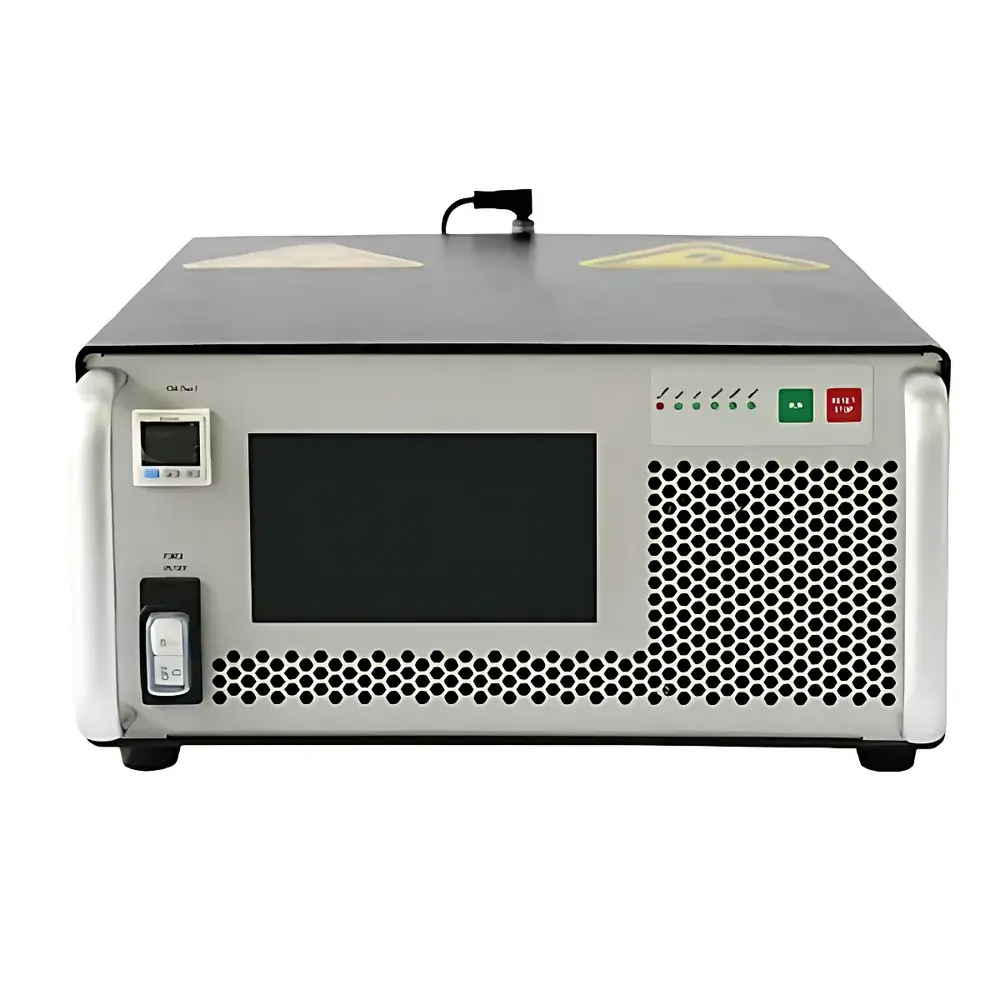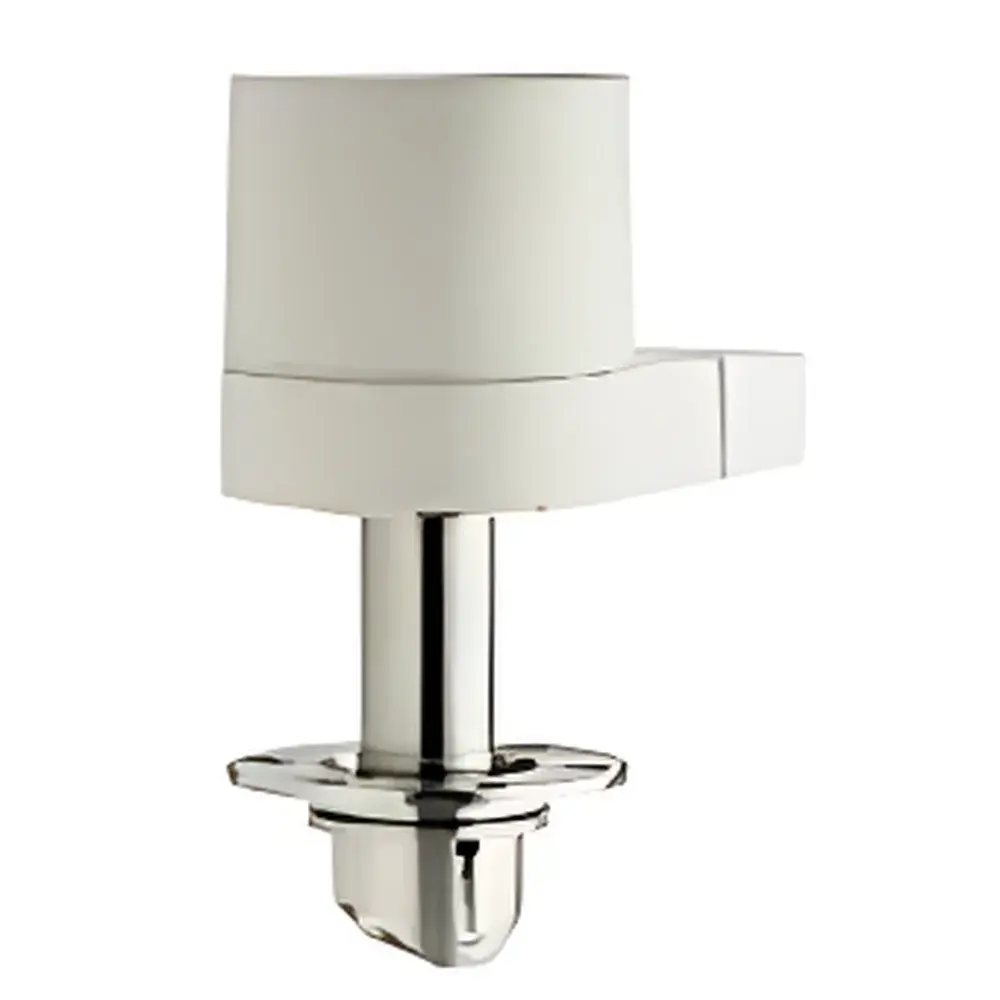
Brookfield PV-100 Online Process Viscometer
| Brand | Brookfield |
|---|---|
| Origin | USA |
| Model | PV-100 |
| Viscosity Range | 2–10,000,000 cP |
| Shear Rate Range | 1×10⁻³–1×10³ s⁻¹ |
| Shear Stress Range | 2–100 Pa |
| Temperature Range | −25 °C to 300 °C |
| Accuracy | ±1.0% of full-scale reading |
| Power Supply | 24 VDC |
| Maximum Process Pressure | 6.4 MPa (930 psi) |
| Output Signal | 4–20 mA |
Overview
The Brookfield PV-100 Online Process Viscometer is an industrial-grade, in-line rheological sensor engineered for continuous, real-time viscosity monitoring in demanding production environments. Unlike batch or handheld viscometers, the PV-100 employs a robust coaxial cylinder (Couette) measurement geometry—where fluid flows between a rotating outer cylinder and a stationary inner spindle—to deliver true shear-controlled viscosity data under dynamic process conditions. This design ensures stable, reproducible measurements across wide shear rate ranges (1×10⁻³ to 1×10³ s⁻¹), making it suitable for both Newtonian and non-Newtonian fluids undergoing time-dependent or shear-thinning/thickening behavior. The instrument is designed for permanent installation directly into pipelines, reactors, or mixing tanks, eliminating sampling delays and human error while supporting closed-loop process control strategies compliant with modern manufacturing quality frameworks.
Key Features
- True in-line measurement architecture with no moving parts exposed to product flow—minimizing maintenance and contamination risk
- High-temperature capability up to 300 °C and pressure rating of 6.4 MPa (930 psi), enabling integration into high-pressure polymerization, asphalt refining, and hot-melt adhesive lines
- Linear 4–20 mA analog output calibrated to user-defined viscosity units (cP, Pa·s, or mPa·s), compatible with PLCs, DCS systems, and SCADA platforms without signal conditioning
- Configurable shear rate operation: users may select fixed or programmable shear rates to match application-specific rheological requirements (e.g., low-shear stability testing for suspensions or high-shear characterization of coatings)
- Stainless steel wetted materials (316 SS standard) with optional Hastelloy C-276 or titanium for aggressive chemical environments including caustics, solvents, and acidic formulations
- IP67-rated electronics housing with intrinsically safe (IS) and explosion-proof (Ex d) variants available for hazardous area classification (ATEX/IECEx Zone 1/21)
Sample Compatibility & Compliance
The PV-100 supports uninterrupted measurement across three broad viscosity classes: low-viscosity liquids (e.g., solvents, juices, base oils), medium-viscosity dispersions (e.g., ceramic slurries, latex paints, dairy emulsions), and high-viscosity pastes and gels (e.g., epoxy resins, sealants, hot-melt adhesives). Its measurement principle conforms to ISO 3219 (rotational viscometry), ASTM D2196 (non-Newtonian fluids), and USP <911> (rheological characterization of pharmaceutical gels). When integrated with validated controllers and audit-trail-enabled software, the system supports FDA 21 CFR Part 11 compliance for electronic records and signatures in regulated industries—including pharmaceutical, food & beverage, and fine chemical manufacturing—under GLP and GMP quality systems.
Software & Data Management
While the PV-100 operates as a stand-alone 4–20 mA transmitter, it is fully interoperable with Brookfield’s optional ViscoLink™ Process Controller and PC-based ViscoView™ software suite. ViscoView provides real-time trend visualization, alarm thresholds (high/low viscosity deviation), statistical process control (SPC) charting (X-bar/R, Cp/Cpk), and automated report generation in PDF or CSV format. All data logging includes timestamped metadata (process temperature, shear rate, sensor status) and supports secure export for regulatory review. Audit trails record all configuration changes, calibration events, and user logins—ensuring traceability required for ISO 9001, IATF 16949, and pharmaceutical quality audits.
Applications
- Real-time viscosity feedback control in polymer extrusion and reaction injection molding (RIM) lines
- Batch consistency verification during solvent-based paint and ink blending operations
- In-process monitoring of thermal stability in hot-melt adhesives and bitumen formulations
- Quality gate enforcement for dairy homogenization and UHT sterilization processes
- Early detection of gelation or phase separation in pharmaceutical suspensions and topical gels
- Optimization of slurry rheology in ceramic tile manufacturing and battery electrode coating lines
FAQ
Is the PV-100 suitable for sanitary applications in food or pharma processing?
Yes—when equipped with tri-clamp sanitary fittings (3A-compliant) and electropolished 316L SS contact surfaces, the PV-100 meets 3-A Sanitary Standards and supports CIP/SIP validation protocols.
Can the instrument measure yield stress or thixotropy?
The PV-100 delivers steady-state viscosity at defined shear rates; for yield stress or time-dependent rheology, pairing with a benchtop rheometer (e.g., Brookfield DVNext) is recommended for complementary characterization.
What calibration documentation is provided?
Each unit ships with NIST-traceable factory calibration certificate covering viscosity, temperature, and output linearity across its full operational range.
Does the PV-100 require periodic recalibration in the field?
No routine recalibration is needed under stable operating conditions; however, annual verification against certified reference oils (ASTM D445) is recommended for critical quality applications.
Related Products