
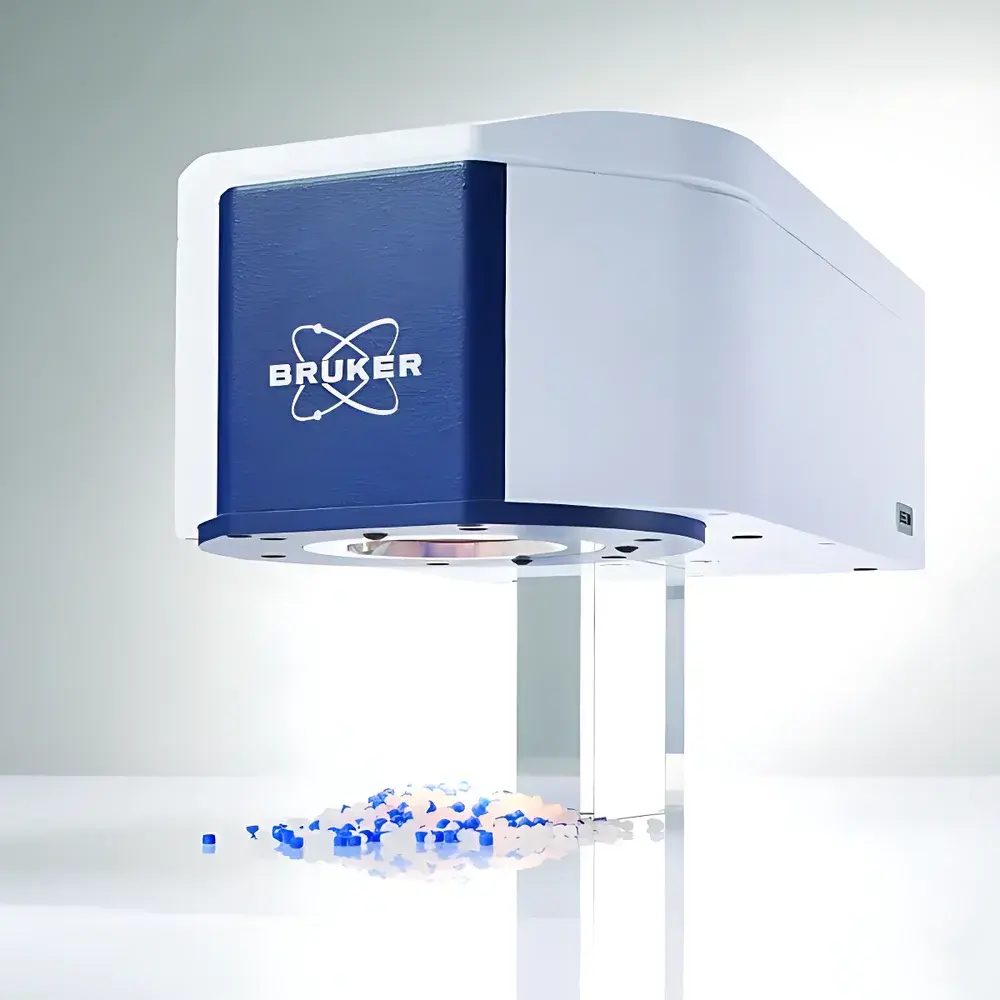
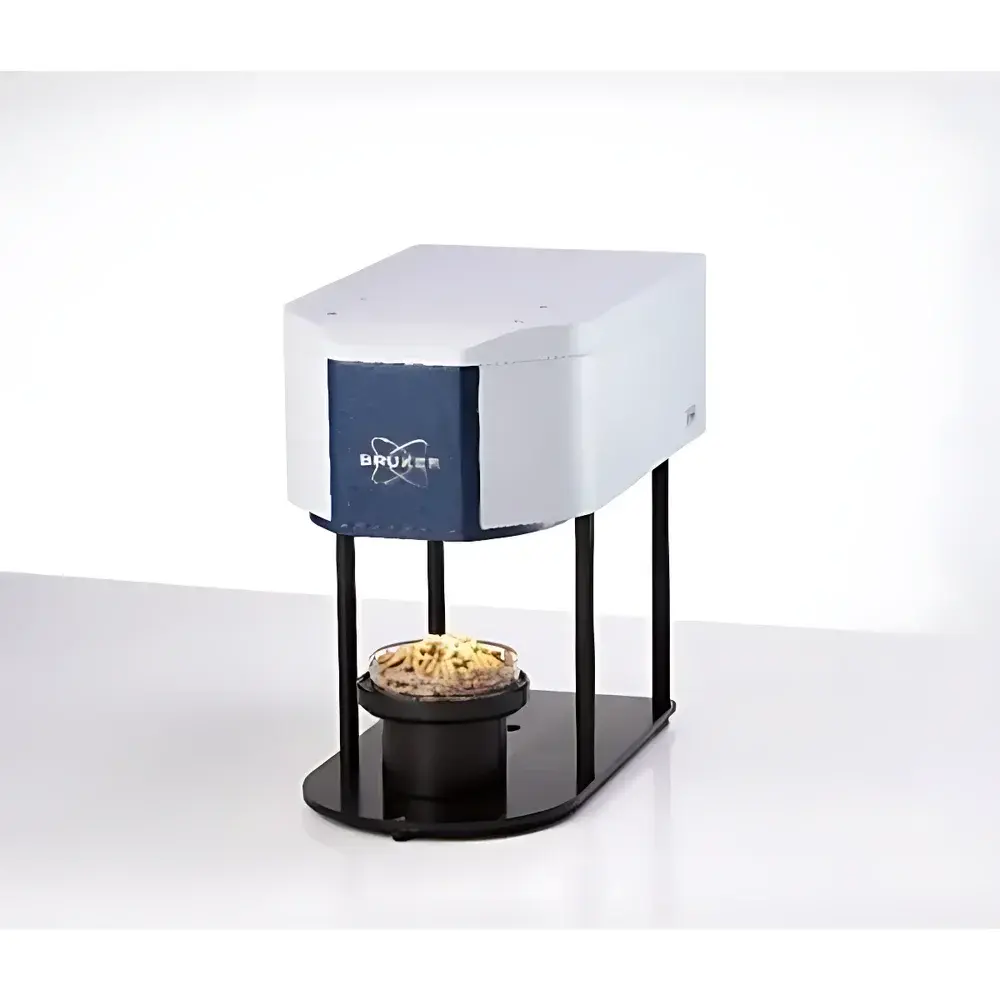
Bruker BEAM Fourier Transform Near-Infrared (FT-NIR) Online Process Analyser
| Brand | Bruker |
|---|---|
| Origin | Germany |
| Instrument Type | Online Process Spectrometer |
| Model | BEAM |
| Design | Single-Channel FT-NIR |
| Sample Interface | In-line / At-line (pipeline, hopper, conveyor-mountable) |
| Optical Principle | Interferometric Fourier Transform Spectroscopy |
| Spectral Range | Typically 10,000–4,000 cm⁻¹ (1,000–2,500 nm) |
| Resolution | ≤4 cm⁻¹ (user-selectable) |
| Detector | Thermoelectrically Cooled InGaAs |
| Measurement Mode | Real-time, Continuous, Non-destructive |
| Compliance | Designed for GMP/GLP environments |
Overview
The Bruker BEAM Fourier Transform Near-Infrared (FT-NIR) Online Process Analyser is an engineered single-channel interferometric spectrometer designed specifically for robust, real-time chemical analysis in industrial process environments. Unlike conventional dispersive or filter-based NIR systems, the BEAM leverages Michelson interferometry to acquire full-spectrum interferograms at high optical throughput (Jacquinot advantage) and precise wavelength calibration (Connes advantage), delivering superior signal-to-noise ratio, long-term photometric stability, and inherent wavenumber accuracy traceable to He–Ne laser referencing. Its architecture eliminates moving grating mechanisms and relies on a solid-state, dynamically aligned interferometer core—optimized for continuous operation under vibration, temperature fluctuation, and dust exposure typical of feed mills, dairy plants, polymer extrusion lines, and pharmaceutical fluid-bed dryers. The system operates in true online mode: fibre-optic coupled probes enable direct in-process measurement without sample extraction, preserving process continuity and eliminating time lags associated with lab turnaround.
Key Features
- Single-channel FT-NIR platform with permanently aligned, vibration-resistant interferometer—no routine recalibration required
- Real-time spectral acquisition at user-configurable intervals (1–30 seconds per spectrum), supporting closed-loop control integration via OPC UA or Modbus TCP
- Modular probe design: Reflectance (diffuse/total) and transmittance configurations for pipeline flow cells, chute-mounted reflectance heads, or conveyor-belt scanning units
- Thermoelectrically cooled InGaAs detector ensures stable dark current and low drift over extended unattended operation (>6 months between validation checks)
- IP65-rated enclosure with NEMA 4X compatibility; optional purge fittings for explosive or high-humidity atmospheres
- Onboard spectral preprocessing (Savitzky–Golay smoothing, multiplicative scatter correction, derivative transformation) to reduce host PC dependency
Sample Compatibility & Compliance
The BEAM is validated for direct analysis of heterogeneous, non-uniform solids and semi-solids—including granular feeds, powdered dairy intermediates, extruded polymer pellets, wet cake from bioreactors, and blended pharmaceutical powders. Its optical interface accommodates variable particle size distribution (10 µm–10 mm), moisture content (2–95% w/w), and surface reflectivity without requiring homogenisation or dilution. Method development follows ICH Q2(R2) guidelines for analytical procedure validation; calibration models are built using representative production lots and verified against reference methods (e.g., AOAC 992.15 for protein, ASTM D7467 for biodiesel ester content). System documentation supports audit readiness for ISO 9001, ISO 17025, and FDA 21 CFR Part 11 compliance when deployed with Bruker’s OPUS/PAS software suite featuring electronic signatures, audit trails, and role-based access control.
Software & Data Management
Control and chemometric modelling are performed using Bruker’s OPUS/PAS (Process Analytical Suite), a validated Windows-based platform compliant with GAMP 5 principles. PAS provides automated model deployment, batch trending, multivariate statistical process control (MSPC) charts, and real-time limit violation alerts. All raw interferograms, processed spectra, prediction results, and metadata (timestamp, operator ID, process tag ID) are stored in a secure, timestamped SQLite or SQL Server database. Data export adheres to ASTM E2500-18 standards for raw spectral data packaging. Optional integration with DeltaV, PI System, or MES platforms enables automatic parameter feeding into DCS logic for adaptive setpoint adjustment—e.g., modulating dryer inlet air temperature based on real-time moisture predictions.
Applications
- Feed Manufacturing: Simultaneous quantification of moisture, crude protein, ether extract, crude fiber, ash, ADF, NDF, and lysine/methionine via PLS regression models trained on >500 reference samples per matrix
- Dairy Processing: Inline monitoring of lactose crystallisation endpoint in whey concentrate, fat/protein ratio in UHT milk streams, and moisture in spray-dried infant formula
- Polymers: Tracking monomer conversion, branching index, and antioxidant depletion in polyolefin reactors using second-derivative spectral regions (e.g., 1,650–1,750 cm⁻¹)
- Pharmaceuticals: End-point detection in fluidised-bed dryers (loss-on-drying correlation), blend uniformity assessment (RSD <3% in 30 s), and API polymorph identification in wet granulation
- Food Snacks: Fat bloom prediction in chocolate coatings, Maillard reaction progress in extruded cereals, and salt distribution homogeneity in seasoned snacks
FAQ
Is the BEAM suitable for hazardous area installation?
Yes—ATEX/IECEx-certified probe variants and purged enclosures are available for Zone 21/22 dust environments and Group IIA/IIB gas classifications.
Can existing laboratory NIR calibrations be transferred to the BEAM?
Partial transfer is possible with spectral standardisation (e.g., piecewise direct standardisation), but field-specific recalibration using process-representative samples is strongly recommended for optimal accuracy.
What maintenance does the BEAM require?
Annual verification of laser wavelength accuracy and detector linearity; quarterly cleaning of optical windows using certified lint-free wipes and spectroscopic-grade isopropanol; no consumables or lamp replacements.
Does the system support PAT framework implementation?
Yes—the BEAM meets all technical criteria outlined in FDA’s PAT Guidance for Industry (2004) and supports Quality-by-Design (QbD) workflows through integrated design space mapping and real-time release testing (RTRT) capability.
How is cybersecurity addressed in the BEAM’s network configuration?
OPUS/PAS supports TLS 1.2 encryption, Windows Active Directory authentication, and configurable firewall rules; firmware updates undergo SHA-256 signature verification prior to installation.






