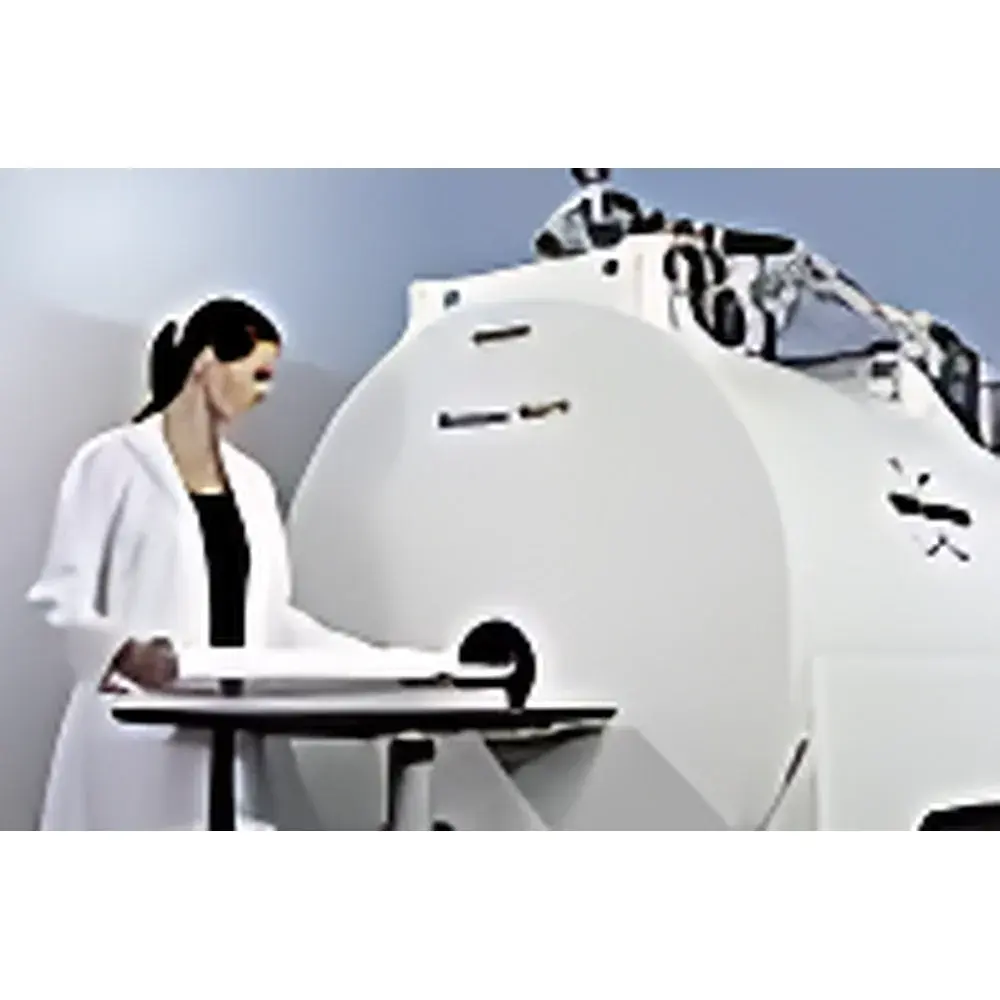
Bruker BioSpec High-Field MRI/MRS Small Animal In Vivo Imaging System
| Brand | Bruker |
|---|---|
| Origin | Germany |
| Manufacturer Type | Authorized Distributor |
| Origin Category | Imported |
| Model | BioSpec |
| Instrument Type | Nuclear Magnetic Resonance (NMR) Imaging System |
| Field Strength Options | 4.7 T, 7.0 T, 9.4 T, 11.7 T, and 15.2 T configurations available |
| Cryogenic Probe Technology | MRI CryoProbe® |
| Magnet Type | Ultra-Shielded Resistive (USR) or Superconducting Magnets |
| Regulatory Compliance | CE-marked, ISO 13485-certified manufacturing processes, compliant with IEC 62304 for medical device software lifecycle management |
Overview
The Bruker BioSpec High-Field MRI/MRS Small Animal In Vivo Imaging System is a preclinical magnetic resonance platform engineered for quantitative, non-invasive structural, functional, and metabolic imaging of rodents and other small animal models. Operating on the physical principles of nuclear magnetic resonance—specifically the detection of radiofrequency signals emitted by hydrogen (1H) and other MR-active nuclei (e.g., 31P, 13C, 19F) under strong static magnetic fields—the system enables high-spatial-resolution anatomical imaging, dynamic contrast-enhanced (DCE) MRI, diffusion-weighted imaging (DWI), perfusion mapping, and localized spectroscopic acquisition (MRS). Its core architecture integrates ultra-stable superconducting magnets (up to 15.2 T), actively shielded gradient systems with slew rates exceeding 200 T/m/s, and cryogenically cooled RF probes (MRI CryoProbe®) that deliver signal-to-noise ratio (SNR) enhancements of 3–4× over conventional room-temperature coils. This combination supports sub-100 µm isotropic in vivo resolution under optimized acquisition protocols—enabling visualization of cortical layers, tumor microvasculature, and hippocampal subfields in murine models.
Key Features
- Modular high-field magnet platforms: configurable at 4.7 T, 7.0 T, 9.4 T, 11.7 T, and 15.2 T, with USR (Ultra-Shielded Resistive) or superconducting designs to balance field homogeneity, temporal stability, and siting flexibility
- MRI CryoProbe® technology: integrated cryocooled RF receiver coils operating at ~25 K, minimizing thermal noise and maximizing SNR for both imaging and spectroscopy
- Multi-nucleus capability: full support for 1H, 13C, 19F, 31P, and 23Na MRS, enabling metabolic flux analysis, hypoxia mapping, and cell tracking via fluorinated tracers
- Dual-mode operation: seamless switching between high-resolution anatomical MRI and dynamic functional or spectroscopic acquisitions without hardware reconfiguration
- Physiological monitoring suite: integrated ECG, respiration gating, temperature regulation (37 ± 0.5 °C), and anesthesia delivery (isoflurane/O2) compatible with longitudinal studies
- Gradient performance: maximum amplitude ≥ 400 mT/m and slew rate ≥ 200 T/m/s (model-dependent), supporting advanced diffusion tensor imaging (DTI) and fast fMRI sequences
Sample Compatibility & Compliance
The BioSpec system accommodates live rodents (mice, rats), ferrets, zebrafish embryos, and ex vivo tissue specimens up to 10 cm in diameter. Animal handling conforms to AAALAC International standards and EU Directive 2010/63/EU requirements for humane experimental design. Hardware and firmware comply with IEC 61000-6-3 (EMC emissions), IEC 61000-6-4 (industrial immunity), and IEC 62304 (medical device software lifecycle). Data acquisition workflows support ALCOA+ (Attributable, Legible, Contemporaneous, Original, Accurate, Complete, Consistent, Enduring, Available) principles for GLP-compliant studies. Optional 21 CFR Part 11-compliant audit trail and electronic signature modules are available for regulated preclinical development programs.
Software & Data Management
Acquisition and reconstruction are managed through ParaVision® 360, Bruker’s unified preclinical imaging platform. It provides vendor-neutral DICOM export, NIfTI-compatible data storage, and built-in tools for motion correction, B0/B1 shimming, and spectral quantification (e.g., LCModel integration for MRS). The software supports automated batch processing, ROI-based quantification, and parametric map generation (ADC, CBF, T2*, metabolite ratios). Raw k-space data is preserved in Bruker’s proprietary format (FID/FIDLIST), ensuring full reproducibility and third-party analysis compatibility (e.g., MATLAB, Python-based NiBabel or MRtrix3 pipelines). Data archiving follows DICOM SR (Structured Reporting) templates aligned with MIAME and MINIMAR reporting guidelines.
Applications
- Oncology: longitudinal tumor volume assessment, necrosis quantification, anti-angiogenic therapy response monitoring, and hyperpolarized 13C-pyruvate metabolic imaging
- Neuroscience: neurodegeneration modeling (e.g., APP/PS1 mice), stroke lesion evolution, functional connectivity (rs-fMRI), and myelin water fraction mapping
- Cardiovascular research: myocardial infarction modeling, cardiac function analysis (ejection fraction, wall thickening), and iron overload quantification
- Metabolic disease: hepatic steatosis grading, pancreatic β-cell mass estimation, and brown adipose tissue activation dynamics
- Immunology & cell therapy: 19F-labeled immune cell trafficking, macrophage polarization assessment via T2* relaxometry
- Toxicology: organ-specific edema detection, renal filtration rate mapping, and hepatobiliary contrast kinetics
FAQ
What magnetic field strengths are available for the BioSpec system?
Standard configurations include 4.7 T, 7.0 T, 9.4 T, 11.7 T, and 15.2 T; field selection depends on required SNR, spatial resolution, spectral dispersion, and siting constraints.
Is the system suitable for longitudinal studies across multiple time points?
Yes—integrated physiological monitoring, automated shimming, and robust motion correction algorithms ensure intra- and inter-session reproducibility essential for longitudinal preclinical trials.
Can the BioSpec acquire both MRI and MRS data in the same session?
Yes—ParaVision® supports interleaved or sequential MRI and MRS protocols without hardware reconfiguration, enabling co-registered anatomical and metabolic datasets.
Does Bruker provide application support for method development?
Yes—Bruker BioSpin offers on-site and remote application specialist support, including pulse sequence optimization, coil selection guidance, and quantitative analysis workflow implementation.
Are regulatory-compliant data handling options available?
Yes—21 CFR Part 11-compliant audit trail, electronic signatures, and role-based access control modules are available as validated software options for GxP-aligned studies.