
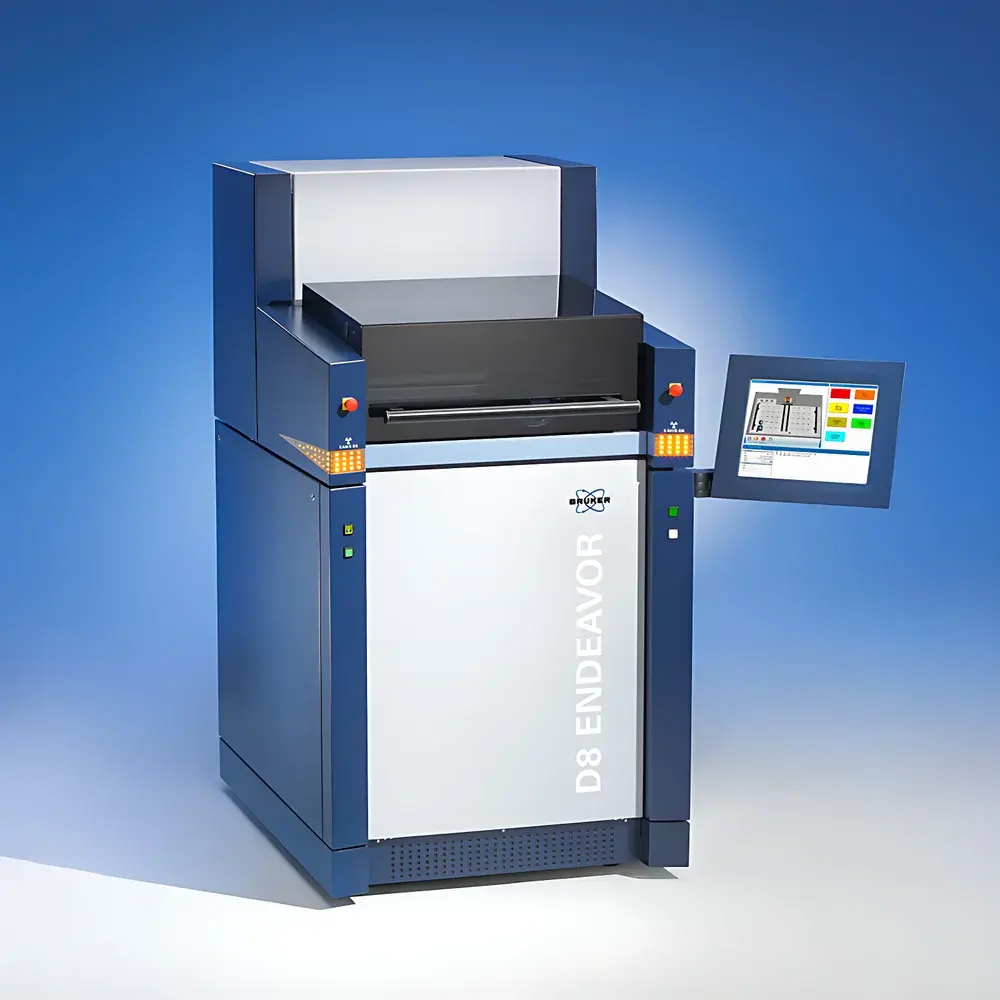
Bruker D8 ENDEAVOR Automated Powder X-ray Diffractometer
| Brand | Bruker |
|---|---|
| Origin | Germany |
| Instrument Type | Powder X-ray Diffractometer |
| Model | D8 ENDEAVOR |
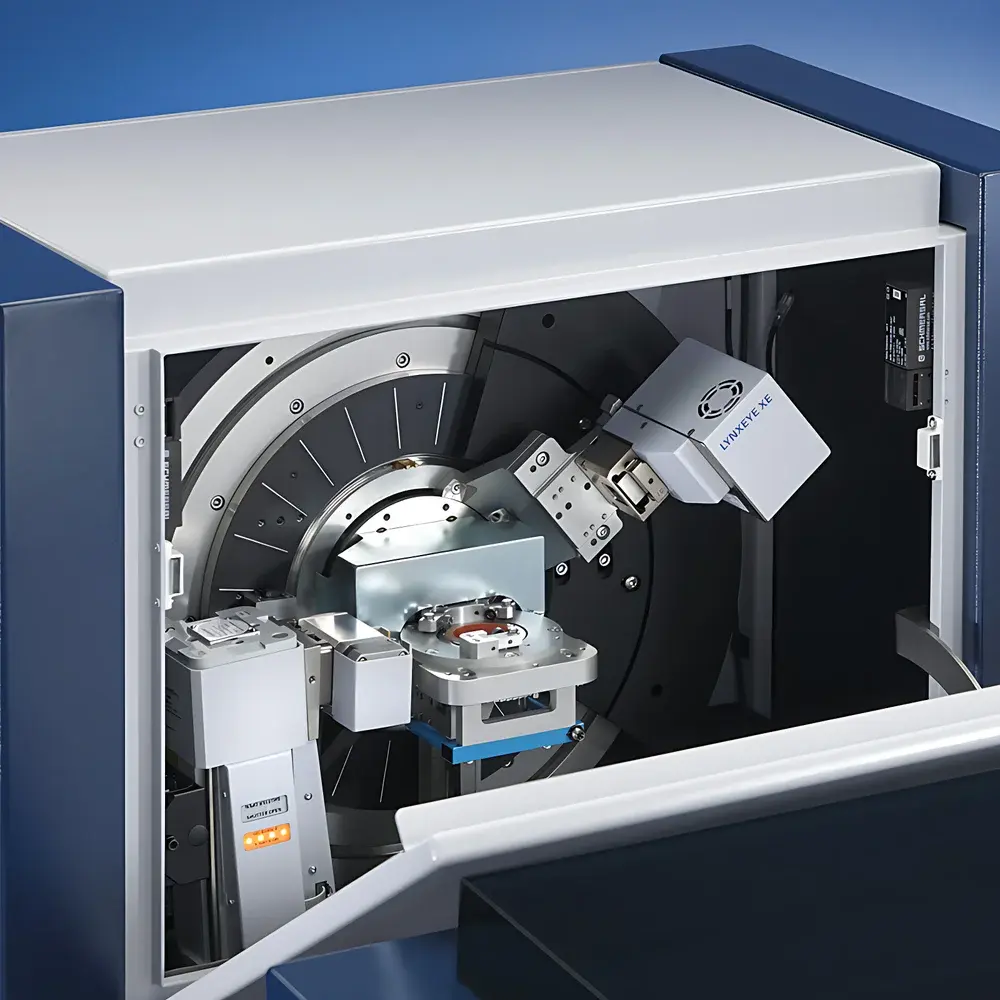
| Detector | LYNXEYE XE-T Energy-Resolving Array Detector |
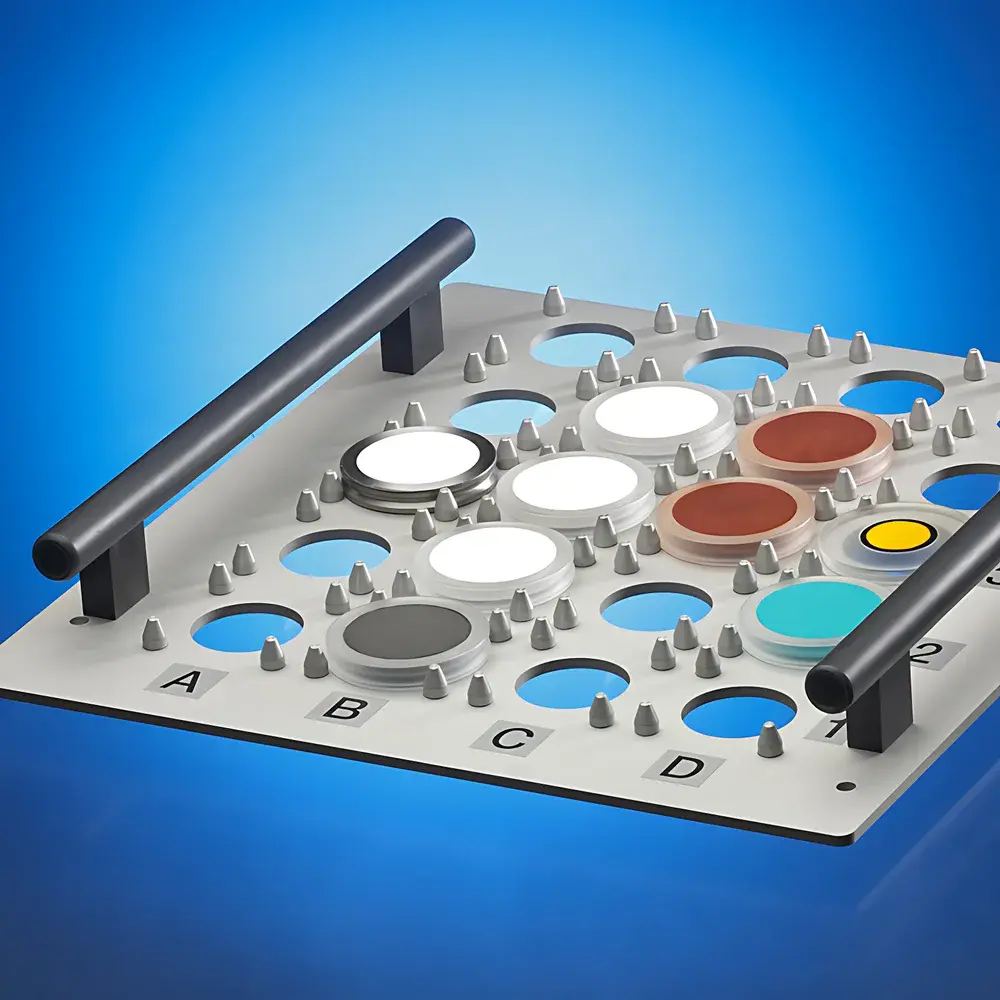
| Sample Handling | 66-position or 72-position automated sample changer (Ø 51.5 mm and Ø 40 mm formats) |
| Automation Modes | Belt-driven or robotic integration |
| Compliance | Designed for GLP/GMP environments with audit-trail-ready software architecture |
| Regulatory Context | Fully compatible with FDA 21 CFR Part 11–compliant data management workflows |
Overview
The Bruker D8 ENDEAVOR is a high-precision, fully automated powder X-ray diffractometer engineered for robust, routine-phase analysis in industrial R&D and quality control laboratories. Based on Bragg’s law and utilizing Cu Kα radiation (λ = 1.5418 Å), the system delivers high-resolution diffraction patterns with exceptional signal-to-noise ratio, enabling reliable identification and quantification of crystalline phases in complex multi-component samples. Its fixed θ–2θ goniometer architecture ensures mechanical stability and long-term angular reproducibility—critical for longitudinal studies and inter-laboratory comparability. The instrument is purpose-built for demanding industrial sectors including cement manufacturing, lithium-ion battery cathode/anode material characterization, aluminum alloy development, and direct reduced iron (DRI) process monitoring, where rapid turnaround, method traceability, and regulatory compliance are non-negotiable.
Key Features
- LYNXEYE XE-T energy-resolving silicon-strip array detector: Delivers high dynamic range, zero dead-time operation, and intrinsic energy discrimination to suppress fluorescence background—particularly advantageous for Fe-, Co-, or Ni-rich samples.
- Integrated air-scatter suppression knife-edge collimator: Minimizes parasitic scattering from ambient atmosphere, enhancing low-angle intensity fidelity and improving detection limits for amorphous humps and weak reflections.
- Dual-format automated sample changers: Supports both 66-position (Ø 51.5 mm) and 72-position (Ø 40 mm) trays, enabling flexible throughput optimization without hardware reconfiguration.
- Modular automation interface: Compatible with belt-conveyor feed systems or robotic arms (e.g., ABB, KUKA, or Universal Robots), allowing seamless integration into centralized lab automation frameworks (LIMS/ELN-connected).
- One-click workflow execution: From sample loading through data acquisition, phase identification (via ICDD PDF-4+ database), Rietveld refinement (TOPAS engine), and quantitative report generation—including uncertainty estimation per phase.
- Thermal and mechanical stability: Precision-machined granite base, active temperature stabilization (±0.1 °C), and vibration-damped optical enclosure ensure measurement repeatability across shifts and seasons.
Sample Compatibility & Compliance
The D8 ENDEAVOR accepts standard 25 mm and 32 mm diameter sample holders, as well as custom geometries (e.g., capillary, transmission, or thin-film stages) via optional accessories. It complies with ISO 17892-12 (geotechnical testing), ASTM E975 (phase analysis of metals), and ASTM C1365 (cement phase quantification). Software validation packages support IQ/OQ/PQ protocols aligned with pharmaceutical and materials certification requirements. All raw data, processing parameters, and metadata are stored in vendor-neutral HDF5 format, ensuring long-term archival integrity and third-party tool interoperability.
Software & Data Management
EVA (Evaluation and Visualization Application) and DIFFRAC.SUITE provide intuitive, role-based user interfaces—from technician-level one-button analysis to expert-mode Rietveld refinement. The system supports full electronic signature capability, time-stamped audit trails, and configurable access controls—meeting FDA 21 CFR Part 11 and EU Annex 11 expectations. Data export options include CIF, XYE, CSV, and XML schemas compliant with ASTM E1358 and ISO/IEC 17025 reporting standards. Integration with laboratory information management systems (LIMS) is achieved via RESTful API or OPC UA protocols.
Applications
- Cement and clinker phase quantification (alite, belite, free lime, gypsum)
- Lithium transition metal oxide cathode stoichiometry and cation mixing assessment
- Aluminum alloy precipitate evolution (η’, GP zones) during aging heat treatments
- Direct reduced iron (DRI) metallization degree and wüstite/magnetite ratio tracking
- Pharmaceutical polymorph screening and excipient compatibility studies
- Geological mineral assemblage mapping in exploration core samples
FAQ
Is the D8 ENDEAVOR suitable for GMP-regulated environments?
Yes—the instrument’s software architecture, electronic signature implementation, and audit trail functionality are validated for use in pharmaceutical and medical device manufacturing under FDA 21 CFR Part 11 and EU GMP Annex 11.
Can I upgrade from manual to full robotic integration post-purchase?
Yes—Bruker provides field-installable automation kits and certified integration support for major robotic platforms, with no impact on existing calibration or type approval.
Does the LYNXEYE XE-T detector require liquid nitrogen cooling?
No—it operates at room temperature using Peltier-based thermal stabilization, eliminating cryogen handling and associated operational downtime.
What databases are included for phase identification?
The system ships with ICDD PDF-4+ (2024 edition), covering over 1.2 million entries, plus optional domain-specific modules (e.g., cement, battery materials, minerals).
How is angular calibration maintained over time?
Automatic daily calibration routines use NIST-traceable Si SRM 640e reference, with drift compensation applied in real time during data collection.






