
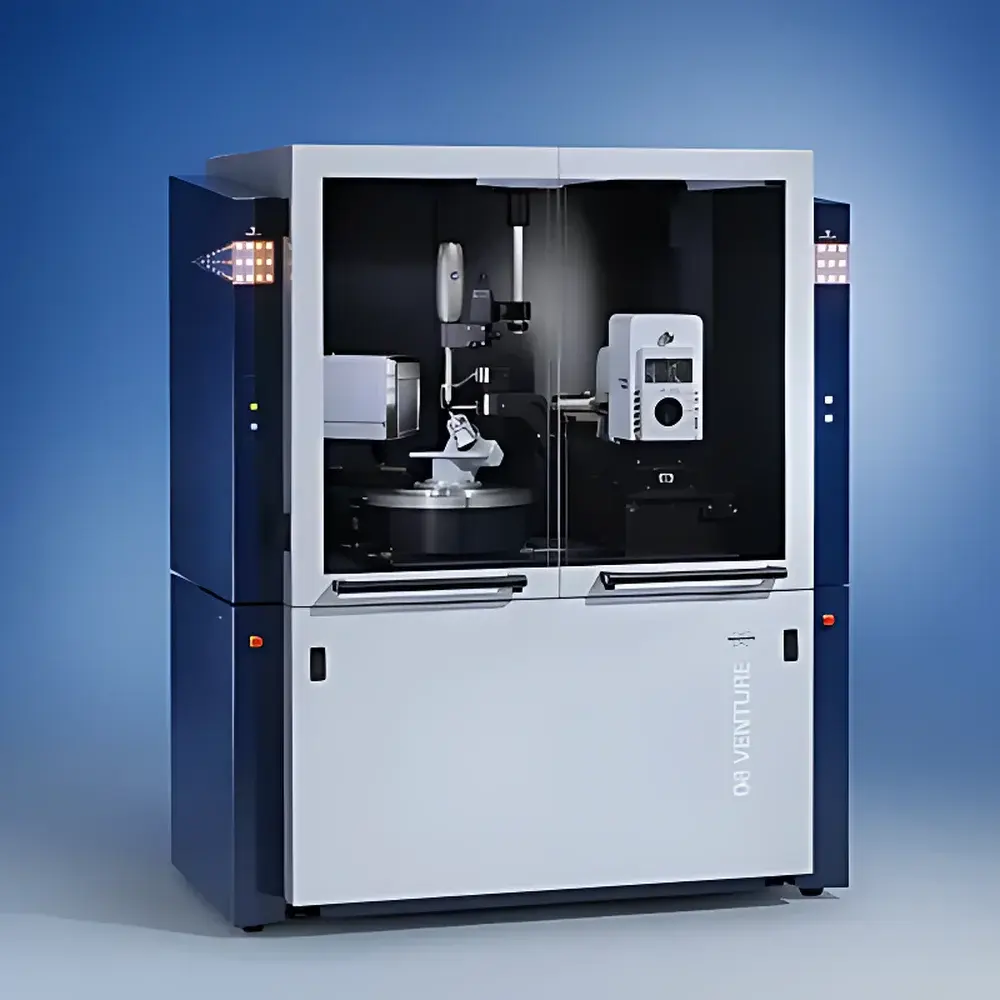
Bruker D8 VENTURE Single-Crystal X-ray Diffractometer
| Brand | Bruker |
|---|---|
| Origin | Germany |
| Model | D8 VENTURE |
| Instrument Type | Single-Crystal X-ray Diffractometer |
| Power | 200 W (0.0002 MW) |
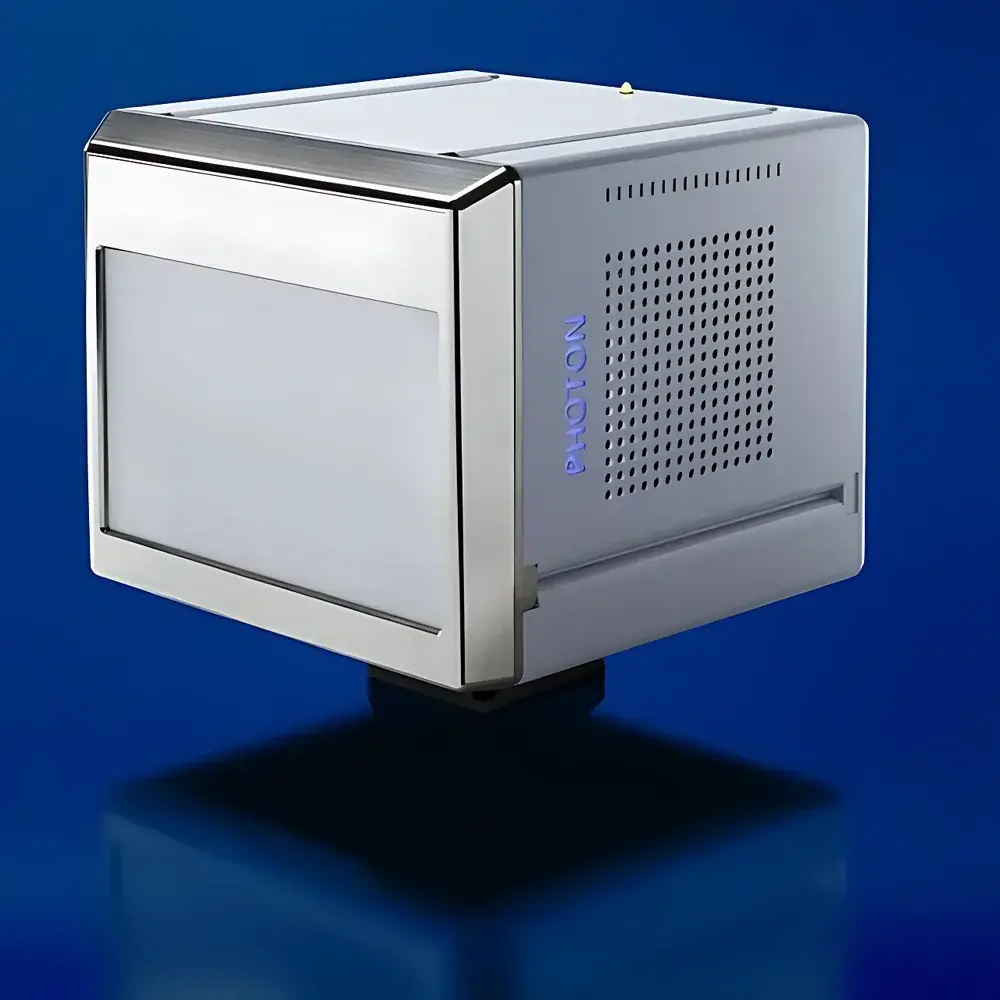
| Detector | PHOTON III MMPAD Hybrid Photon-Counting Detector |
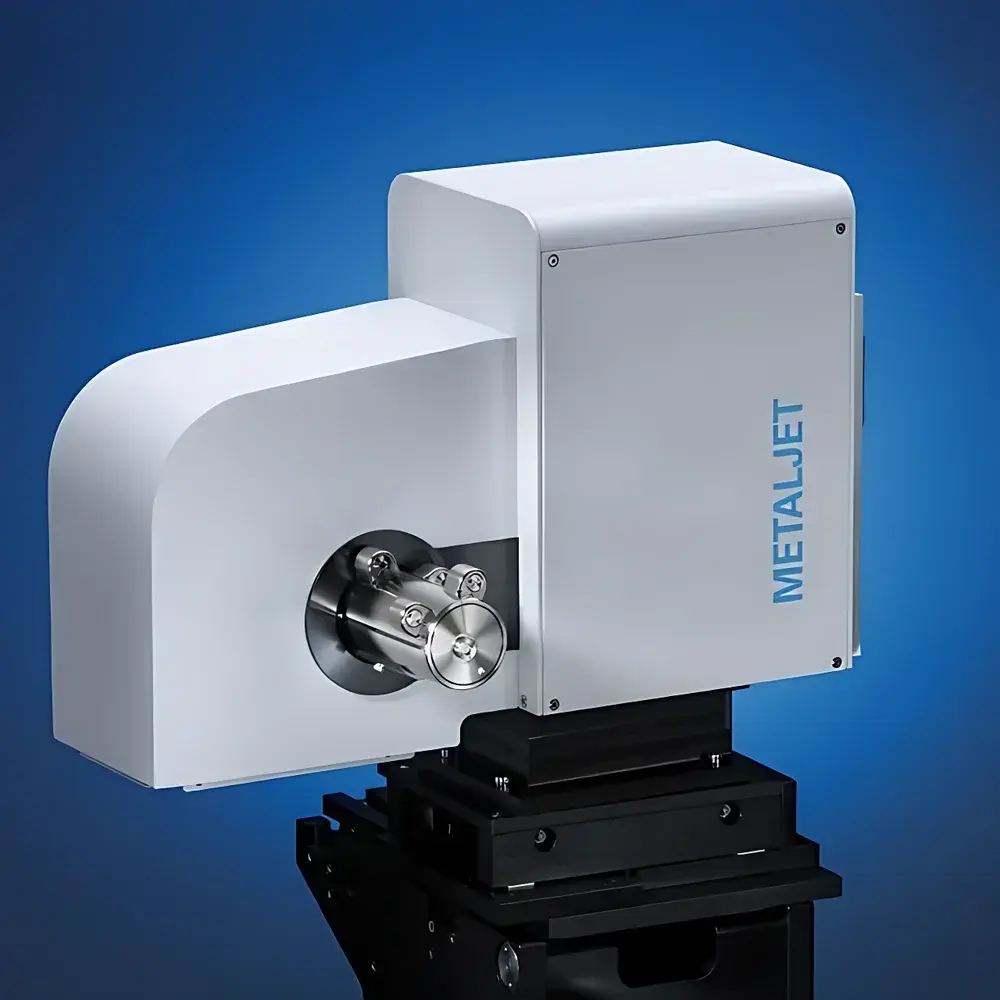
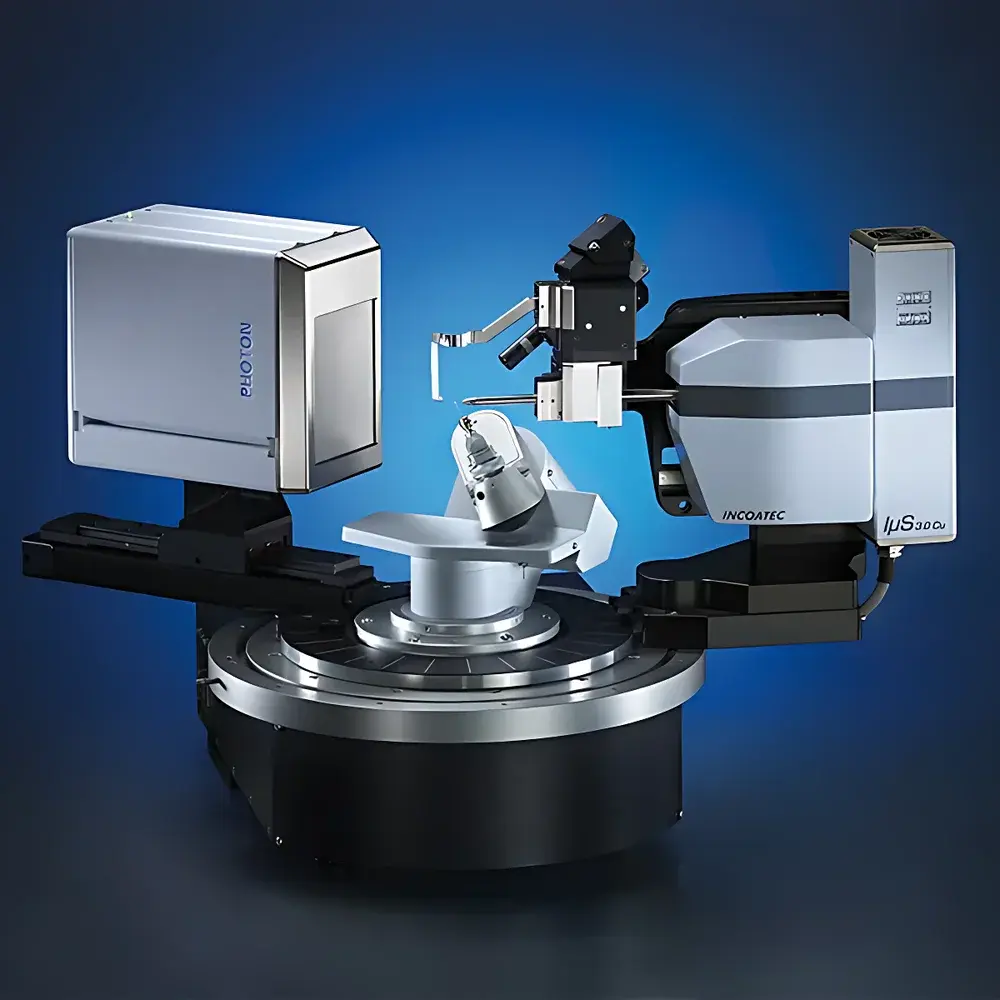
| X-ray Source Options | microfocus sealed-tube (Incoatec IμS 3.0), liquid-metal-jet (MetalJet), dual-target auto-switching |
| Software | APEX4 (successor to APEX3/PROTEUM3) |
| Compliance | Fully compatible with CIF deposition standards, supports IUCr-compliant data reduction and structure refinement workflows |
Overview
The Bruker D8 VENTURE is a high-performance single-crystal X-ray diffractometer engineered for precision structural determination across small-molecule chemistry, organometallics, pharmaceuticals, and macromolecular crystallography—including challenging membrane protein targets such as GPCRs. It operates on the fundamental principle of Bragg diffraction: monochromatic X-rays interact with ordered crystalline lattices, producing a three-dimensional diffraction pattern that encodes atomic-level structural information. The system integrates advanced source technology—including both microfocus rotating anode–equivalent sealed-tube sources (IμS 3.0) and high-brightness liquid-metal-jet (MetalJet) sources—enabling laboratory-based access to synchrotron-like photon flux without beamtime dependency. Its modular architecture supports flexible configuration for both routine and frontier research applications while maintaining strict adherence to crystallographic data integrity standards defined by the International Union of Crystallography (IUCr).
Key Features
- Multi-source capability with automatic dual-target switching: seamless transition between Cu-Kα and Mo-Kα radiation or between sealed-tube and MetalJet sources via software-controlled optics alignment.
- PHOTON III MMPAD hybrid photon-counting detector: large-area (163 mm × 163 mm active area), zero-readout-noise, single-photon sensitivity with frame rates up to 1,000 Hz—optimized for time-resolved and weak-diffraction experiments.
- IμS 3.0 microfocus source: 20,000-hour expected lifetime; delivers performance comparable to rotating anode systems at significantly lower infrastructure cost.
- MetalJet liquid-metal-jet source: Ga/In alloy target delivering up to 5× higher photon flux than conventional microfocus tubes at 200 W power input—ideal for radiation-sensitive crystals and low-dose serial crystallography.
- Intelligent optical path management: motorized component recognition and real-time beam calibration ensure reproducible alignment and minimal user intervention.
- Integrated cryogenic stage compatibility: supports standard Oxford Cryosystems and Bruker Cryojet units for data collection at 100 K, essential for reducing thermal motion and improving R-factors in macromolecular structures.
Sample Compatibility & Compliance
The D8 VENTURE accommodates a broad range of sample formats—from sub-micron crystals mounted on MiTeGen loops to larger single crystals (>1 mm) on glass capillaries or Eulerian cradles. It supports automated crystal screening via optional goniometer-mounted micro-diffraction stages and is fully compatible with industry-standard mounting protocols used in structural genomics pipelines. All data acquisition and processing workflows comply with IUCr CIF (Crystallographic Information File) generation requirements and support direct submission to the Cambridge Structural Database (CSD) and Protein Data Bank (PDB). The system meets GLP-relevant documentation standards through audit-trail-enabled APEX4 software, including full metadata logging (exposure time, temperature, detector distance, beam center, attenuation factors) traceable to ISO/IEC 17025 and FDA 21 CFR Part 11–compliant electronic records when deployed with validated server environments.
Software & Data Management
APEX4—the latest iteration of Bruker’s crystallographic software suite—provides unified control of hardware, real-time data visualization, and integrated structure solution/refinement pipelines. It features automated crystal centering, on-the-fly integration using SAINT++, and direct linkage to SHELXT, SHELXL, OLEX2, and PHENIX. Data management follows FAIR principles: raw frames are stored in vendor-neutral HDF5 format with embedded NeXus metadata; processed intensity files (.hkl) and structure models (.cif, .res) are version-controlled and exportable to LIMS-compatible repositories. Optional modules include TOPAS-Academic for quantitative phase analysis and DIFFRAC.SUITE for cross-platform powder-XRD correlation studies.
Applications
- De novo structure determination of novel organic compounds and metal–organic frameworks (MOFs).
- Polymorph screening and solid-form characterization for pharmaceutical development per ICH Q5A and Q6A guidelines.
- Time-resolved crystallography of photoactive proteins using shutterless data collection and pump-probe triggers.
- High-pressure crystallography using diamond-anvil cells coupled to the goniometer.
- Charge-density analysis via multipole modeling from ultra-high-resolution datasets collected at low temperature.
- Validation of asymmetric synthesis outcomes through absolute configuration assignment via Flack parameter refinement.
FAQ
What X-ray wavelengths does the D8 VENTURE support?
Standard configurations include Cu-Kα (1.5418 Å) and Mo-Kα (0.7107 Å); optional Cr-Kα (2.2909 Å) and Ag-Kα (0.5608 Å) sources are available via custom optical path modules.
Is remote operation supported?
Yes—APEX4 includes secure web-based remote monitoring and control via TLS-encrypted connections; instrument status, queue management, and live diffraction image streaming are accessible through enterprise-grade authentication protocols.
How is detector calibration maintained over time?
PHOTON III employs on-chip reference pixels and periodic automated flat-field correction routines triggered during idle periods; calibration parameters are archived with each dataset and validated against NIST-traceable Si standard measurements.
Can the system be upgraded for time-resolved experiments?
Yes—optional laser excitation modules (e.g., UV/Vis/IR pulsed diodes), fast shutter systems (<100 ns gate time), and time-stamped event-mode data acquisition are fully integrated into the APEX4 timing engine.
Does Bruker provide training and application support?
Comprehensive installation qualification (IQ), operational qualification (OQ), and user training are included with purchase; ongoing application support is delivered by field-based crystallography scientists with PhD-level expertise in small-molecule and macromolecular structure solution.




