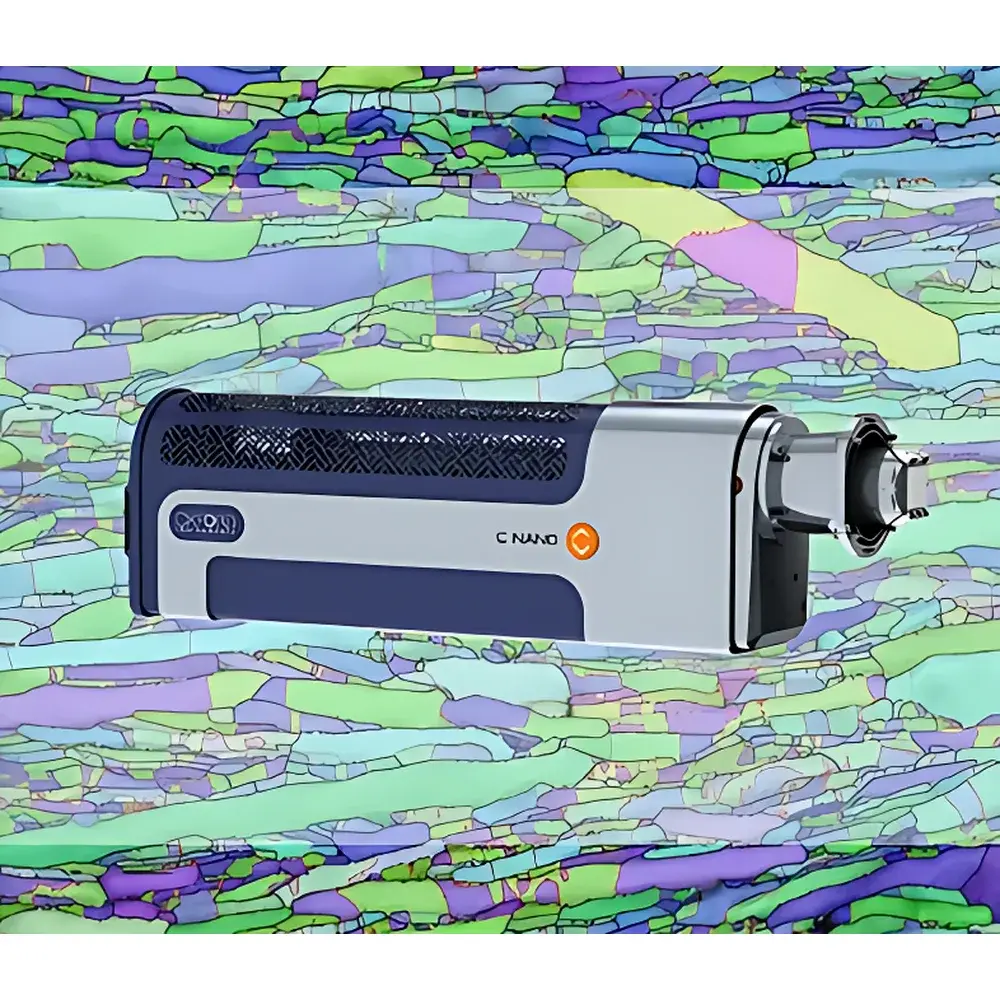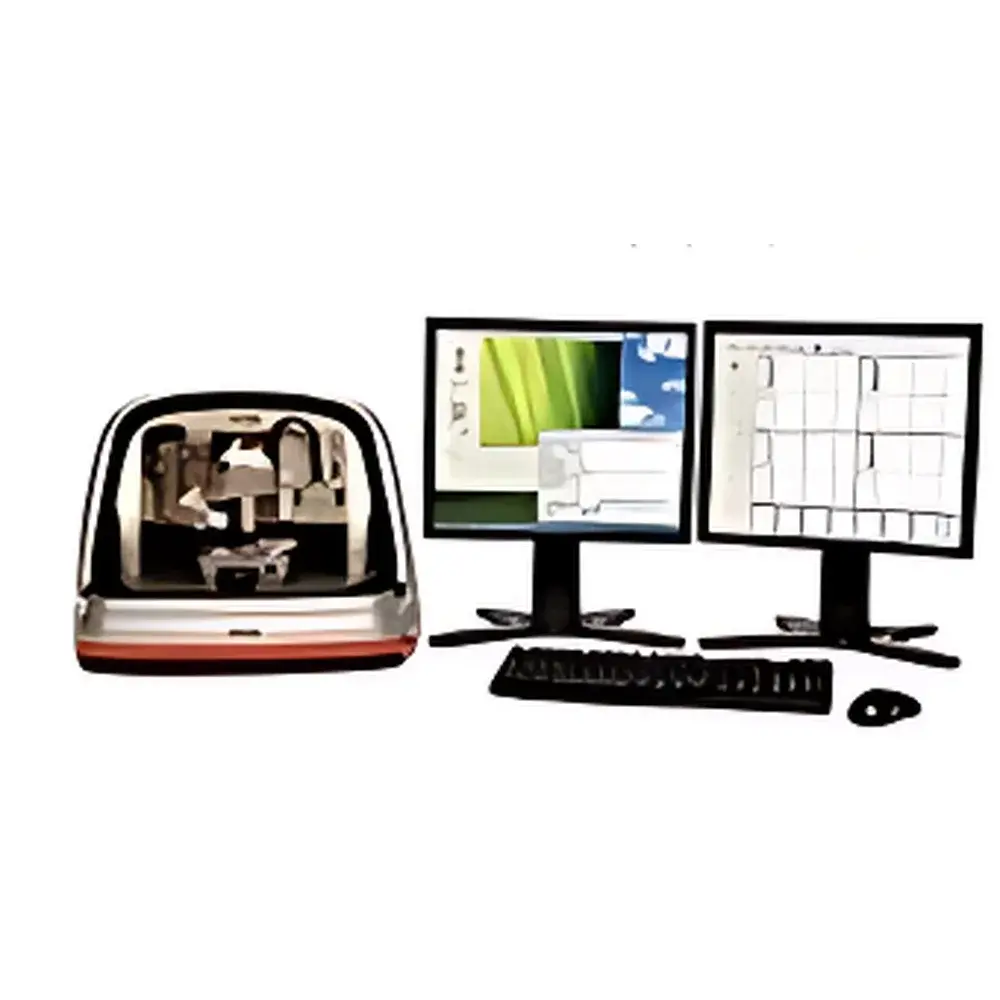
Bruker Dimension Edge Atomic Force Microscope
| Brand | Bruker |
|---|---|
| Origin | Malaysia |
| Manufacturer Type | Authorized Distributor |
| Origin Category | Imported Instrument |
| Model | Dimension Edge |
| Price Range | USD 135,000 – 205,000 (FOB) |
| Instrument Type | Atomic Force Microscope (AFM) |
| Positional Noise (X-Y, Closed-Loop) | ≤0.15 nm RMS at standard imaging bandwidth (up to 625 Hz) |
| Z-Noise (Closed-Loop) | 35 pm RMS at standard imaging bandwidth (up to 625 Hz) |
| Sample Diameter Capacity | 210 mm |
| XY Stage Travel Range | 150 mm × 150 mm |
Overview
The Bruker Dimension Edge Atomic Force Microscope is an engineered platform for high-resolution, quantitative nanoscale surface characterization. Based on the fundamental principle of detecting interatomic forces between a sharp probe tip and a sample surface—via deflection or resonance frequency shift of a microfabricated cantilever—the Dimension Edge delivers sub-angstrom vertical resolution and nanometer-scale lateral fidelity. Its closed-loop piezoelectric scanner architecture eliminates hysteresis and creep errors inherent in open-loop systems, enabling traceable, repeatable topographic and mechanical property mapping under ambient, liquid, or controlled environmental conditions. Designed for both academic research laboratories and industrial R&D environments, the system integrates precision mechanics, low-drift thermal management, and modular sensor electronics to support reproducible measurements compliant with ISO/IEC 17025 metrological requirements.
Key Features
- True closed-loop XY and Z scanning with real-time position feedback, achieving ≤0.15 nm RMS lateral noise and 35 pm RMS vertical noise at standard imaging bandwidths (up to 625 Hz)
- Dual-band Z-sensor design: optimized for high-speed imaging (≥625 Hz) and high-fidelity force spectroscopy (0.1 Hz–5 kHz), delivering 50 pm RMS noise in quantitative nano-mechanical testing
- Open-format sample stage accommodating substrates up to 210 mm in diameter and providing 150 mm × 150 mm motorized travel range with programmable coordinate referencing
- Integrated optical navigation camera with 10× magnification and live overlay of scan area for rapid region-of-interest targeting
- Preset acquisition workflows and guided setup wizards—including auto-tune, auto-approach, and tip qualification routines—reduce operator dependency while maintaining GLP-compliant documentation integrity
- Modular head design supports interchangeable probe holders, environmental enclosures (liquid cells, vacuum-compatible variants), and advanced modes such as PeakForce Tapping®, ScanAsyst®, and electrical characterization modules (CAFM, KPFM, PFM)
Sample Compatibility & Compliance
The Dimension Edge accommodates rigid and soft samples across diverse material classes: conductive and insulating thin films, polymer blends, biological membranes, crystalline semiconductors, MEMS devices, and functional coatings. Its large-stage configuration enables full-wafer inspection (up to 8-inch wafers) and multi-site correlation with optical or SEM reference data. All hardware and firmware comply with IEC 61000-6-3 (EMC) and IEC 61010-1 (safety). Data acquisition and instrument control software meet FDA 21 CFR Part 11 requirements for electronic records and signatures when deployed with optional audit trail and user-role management modules. Routine calibration procedures follow ASTM E2539 (Standard Guide for AFM Measurements) and ISO 25178-603 (Surface texture — Part 603: Metrological characteristics for AFM instruments).
Software & Data Management
NanoScope Analysis v4.x provides comprehensive offline processing, including cross-section analysis, roughness parameter extraction (Sa, Sq, Sz per ISO 25178), grain segmentation, phase deconvolution, and force-distance curve fitting using Hertz, Sneddon, or DMT contact models. Raw data is stored in vendor-neutral .wsx format, fully compatible with third-party analysis platforms (e.g., Gwyddion, MountainsMap®). The software supports batch processing pipelines, script automation via Python API, and direct export to LIMS or ELN systems through configurable metadata tagging (including timestamp, operator ID, environmental log, and calibration certificate references). Audit trails record all parameter modifications, image reprocessing steps, and user login/logout events—essential for ISO 17025 accreditation and internal QA/QC audits.
Applications
- Nanomechanical property mapping of polymer thin films and hydrogels using PeakForce QNM®
- Topographic and phase imaging of self-assembled monolayers (SAMs) and block copolymer domains
- Quantitative adhesion and deformation analysis of MEMS actuators and NEMS resonators
- In situ electrochemical AFM of battery electrode interfaces during cycling
- Mechanical heterogeneity assessment in pharmaceutical tablet coatings and amorphous solid dispersions
- High-resolution morphology characterization of photovoltaic perovskite layers and OLED emissive stacks
- Biological specimen imaging in physiological buffer with minimal tip-induced damage
FAQ
What AFM operating modes are supported natively on the Dimension Edge?
Contact mode, tapping mode (including amplitude-modulation and frequency-modulation variants), and non-contact mode are fully implemented. Advanced modes—PeakForce Tapping®, ScanAsyst®, and electrical modes (CAFM, KPFM, PFM)—require optional probe kits and software licenses.
Is the system compatible with vacuum or liquid environments?
Yes. The base system operates in ambient air; liquid imaging is enabled via standard fluid cells. Vacuum compatibility (≤10⁻⁵ mbar) requires the optional UHV-AFM module with bake-out capability and differential pumping stages.
How is traceability ensured for quantitative height measurements?
All scanners are factory-calibrated using NIST-traceable interferometric standards. NanoScope software embeds calibration metadata into every dataset, and periodic verification can be performed using certified step-height reference gratings (e.g., NIST SRM 2160).
Can the Dimension Edge integrate with existing laboratory automation infrastructure?
Yes. It supports Ethernet-based remote control via TCP/IP, OPC UA server integration for MES/SCADA connectivity, and trigger I/O signals for synchronization with optical microscopy, Raman spectrometers, or load frames.
What training and service options are available internationally?
Bruker offers on-site installation qualification (IQ), operational qualification (OQ), and preventive maintenance contracts with SLA-backed response times. Certified application scientist training is delivered in English, German, Japanese, and Mandarin at regional centers or customer facilities.