
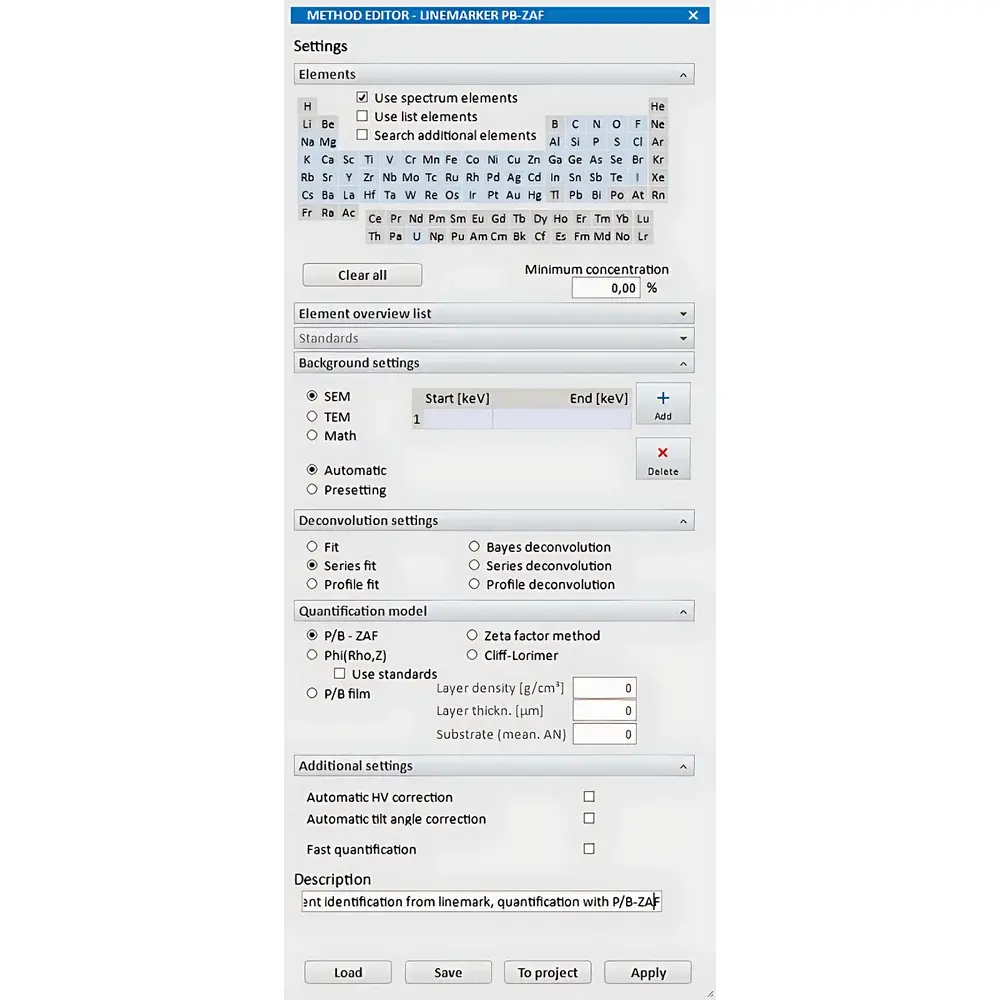
Bruker ESPRIT 2 Multi-Technique Microanalysis Software Suite
| Brand | Bruker |
|---|---|
| Origin | Germany |
| Product Type | Imported Software for Electron Microscopy |
| Model | ESPRIT 2 |
| Price Range | USD 25,000 – 65,000 |
Overview
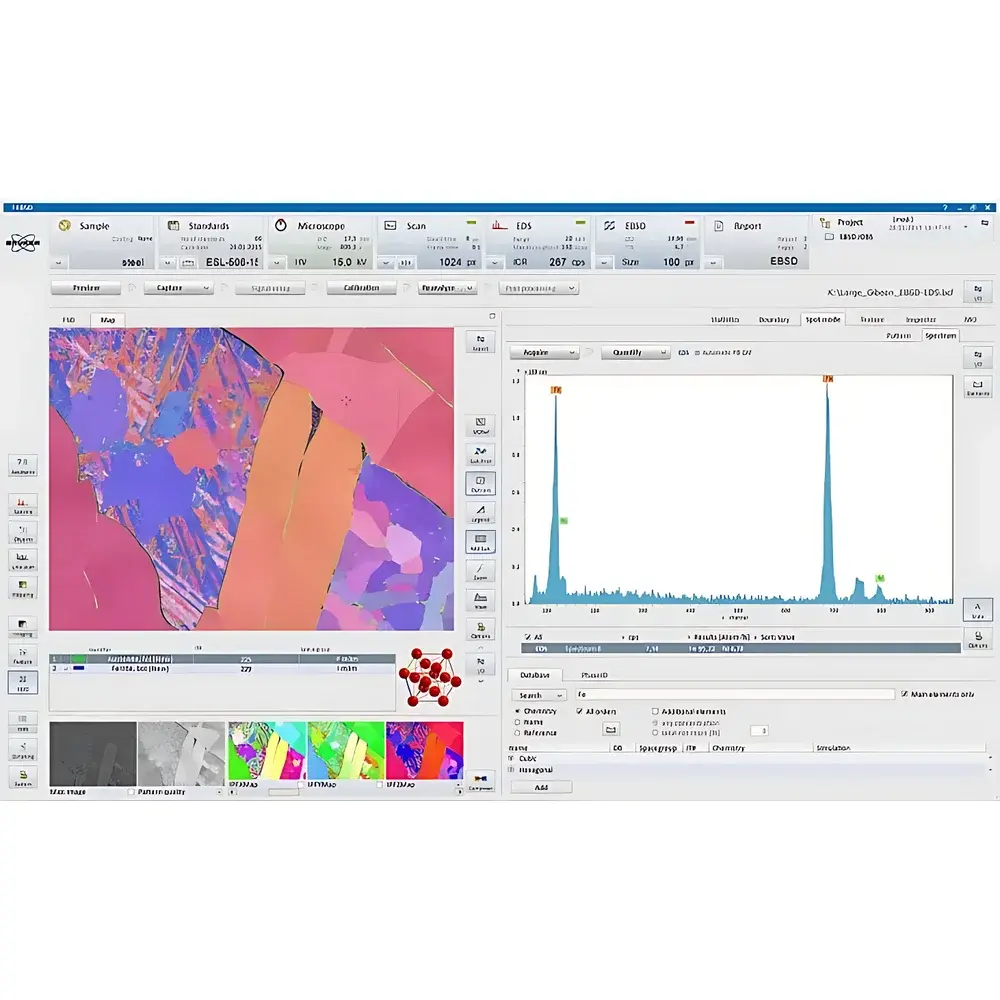
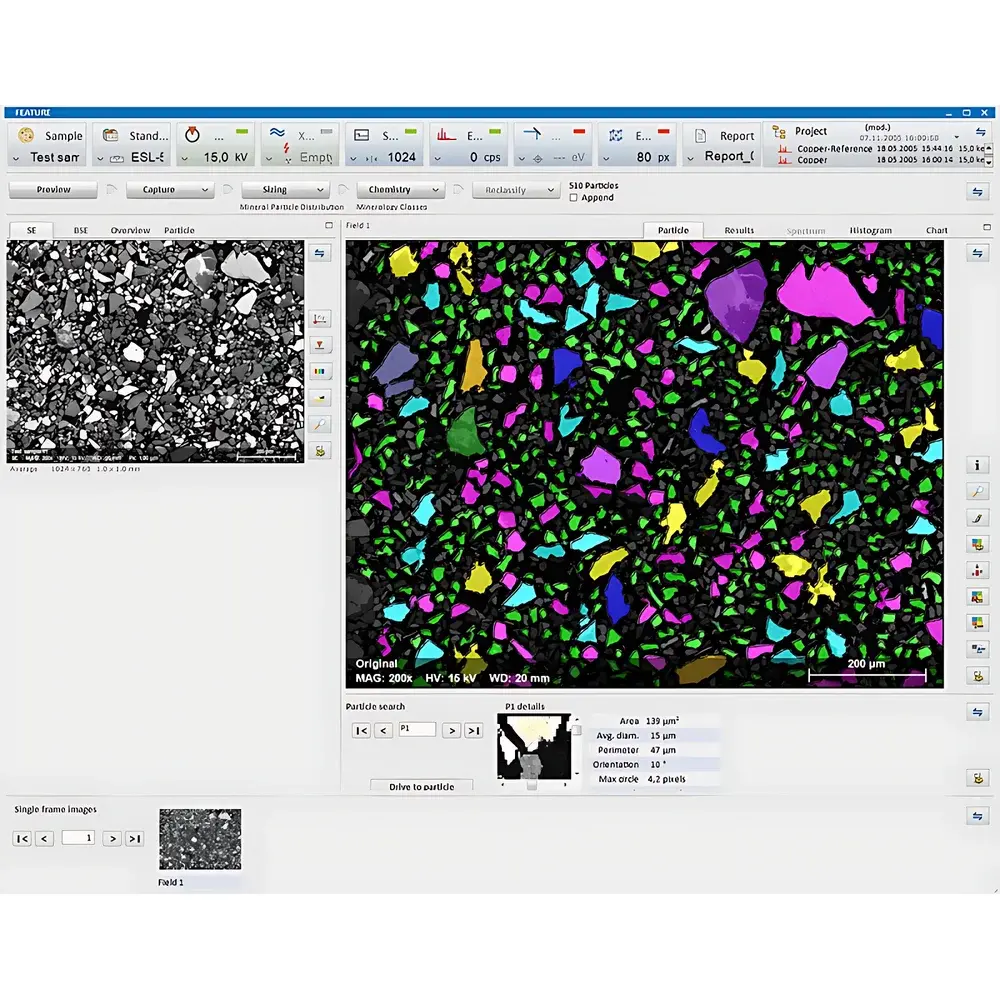
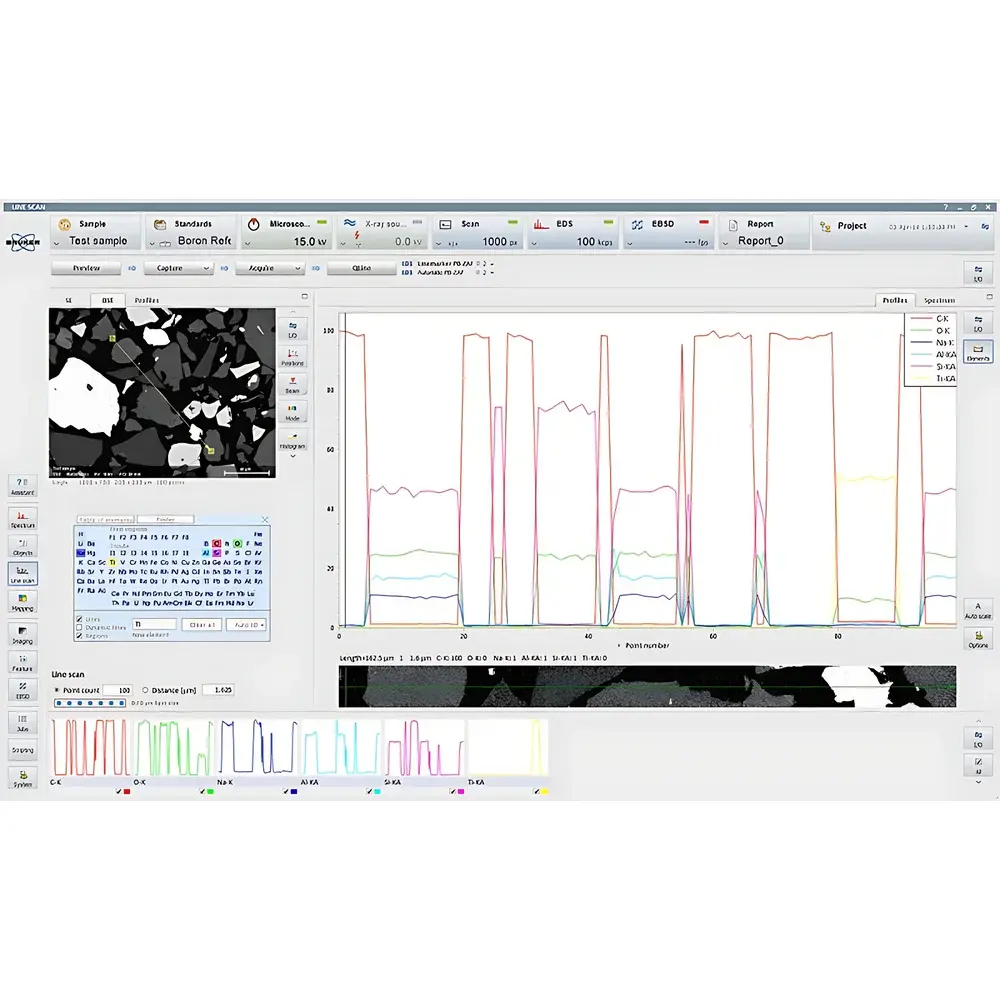
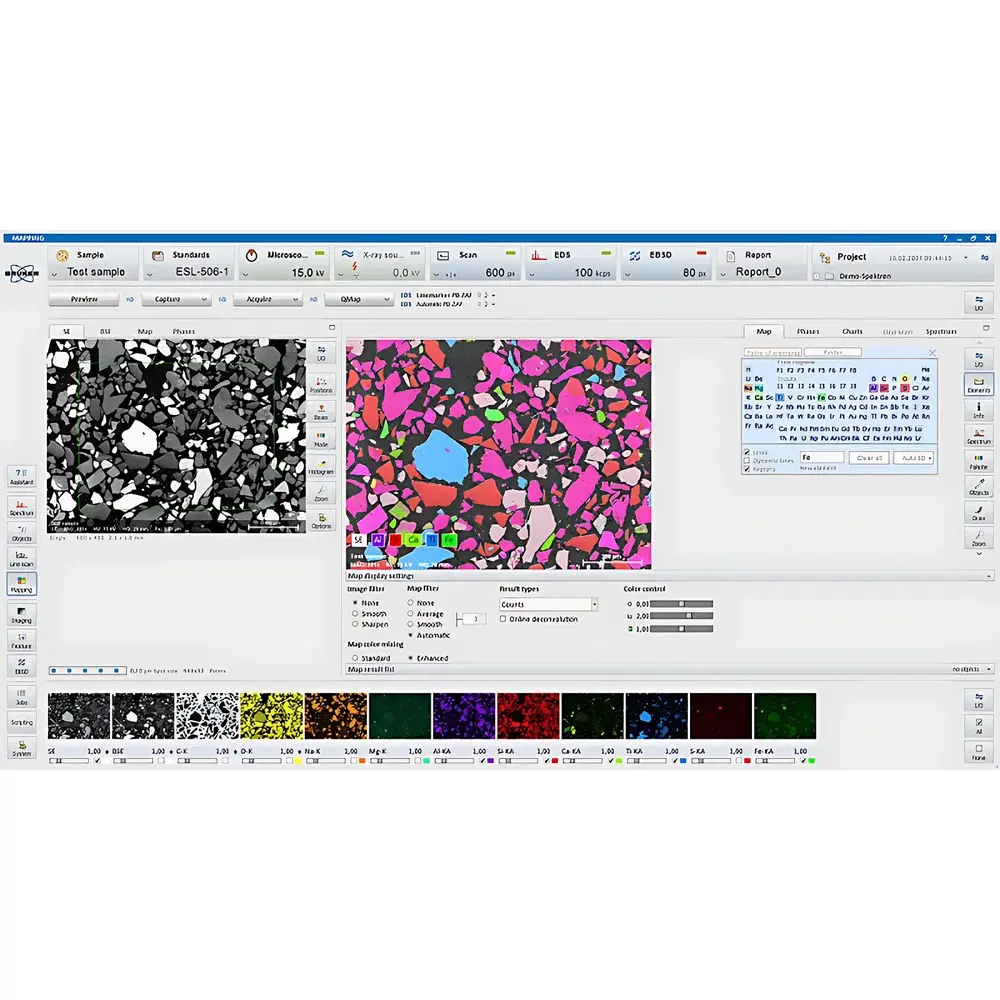
Bruker ESPRIT 2 is a unified, platform-independent software suite engineered for integrated microstructural and compositional analysis in scanning electron microscopy (SEM), transmission electron microscopy (TEM), and scanning transmission electron microscopy (STEM). It natively supports four complementary analytical techniques within a single, coherent graphical user interface: energy-dispersive X-ray spectroscopy (EDS), wavelength-dispersive X-ray spectroscopy (WDS), micro-X-ray fluorescence (μ-XRF) for SEM, and electron backscatter diffraction (EBSD). By consolidating data acquisition, processing, and correlation across these modalities, ESPRIT 2 eliminates workflow fragmentation inherent in legacy multi-software environments. Its architecture is built upon a modular, object-oriented framework that ensures deterministic signal synchronization, spatial registration accuracy at sub-pixel levels, and traceable metadata capture—critical requirements for GLP-compliant materials characterization and failure analysis workflows.
Key Features
- Single-interface operation for EDS, WDS, μ-XRF, and EBSD — enabling real-time method switching without session restart or data export/import cycles
- Spatially registered multi-technique mapping: overlay elemental distributions (EDS/WDS/μ-XRF) with crystallographic orientation (EBSD) on identical scan grids, preserving pixel-to-pixel correspondence
- Context-aware assistant modules: guided workflows for routine quantification (e.g., ISO 14739-1 compliant EDS point analysis), phase identification (EBSD pattern indexing), and standardless matrix correction (ZAF/φ(ρz))
- Advanced expert mode: full parameter control over detector geometry, beam conditions, dwell time per pixel, background modeling (e.g., polynomial vs. iterative top-hat), and dynamic range optimization for high-contrast low-count spectra
- Automated scripting engine (Python 3.9+ API) supporting batch processing, custom report generation (PDF/XLSX), and integration with laboratory information management systems (LIMS)
- Built-in spectral deconvolution using non-negative matrix factorization (NMF) and principal component analysis (PCA) for overlapping peak resolution in complex alloys and heterogeneous ceramics
Sample Compatibility & Compliance
ESPRIT 2 is compatible with Bruker’s QUANTAX EDS, SUPERX WDS, and e-Flash EBSD detector families mounted on FEI/Thermo Fisher, JEOL, and Zeiss SEM/TEM platforms. It accepts standard file formats including .eds, .wds, .h5 (HDF5-based EBSD), and .rpl (Bruker raw pattern library). The software complies with ISO/IEC 17025:2017 requirements for analytical software validation, supports audit trails with user-defined permissions (per ASTM E2500-22), and provides electronic signature capability aligned with FDA 21 CFR Part 11 for regulated environments. All calibration references adhere to NIST-traceable standards (e.g., Cu Kα = 8.047 keV, Si Kα = 1.740 keV).
Software & Data Management
Data are stored in vendor-neutral HDF5 containers with embedded metadata (acquisition date, instrument ID, stage coordinates, beam kV, working distance). Version-controlled project files (.esprj) retain full provenance: raw spectra, processed maps, mask definitions, and analysis history. Integrated database search enables cross-project retrieval of phase libraries, reference spectra, and prior quantification results. Export options include TIFF (8/16-bit), CSV (tabular elemental intensities), and OME-TIFF for interoperability with ImageJ/Fiji and DigitalMicrograph. Backup and restore functions support automated daily snapshots to network-attached storage (NAS) with SHA-256 integrity verification.
Applications
- Metallurgical phase mapping in turbine blade superalloys (γ/γ′ separation via EBSD + Ni/Cr/Al EDS co-localization)
- Contamination root-cause analysis in semiconductor packaging (Cl/Na/Si μ-XRF + Al/Si EDS depth profiling)
- Geological provenance studies combining WDS major-element oxides with EBSD crystallographic fabric analysis
- Biomedical implant corrosion assessment: Ca/P ratio gradients (EDS) correlated with grain boundary misorientation (EBSD)
- Failure analysis of lithium-ion battery cathodes: Mn/Ni/Co distribution heterogeneity (EDS) overlaid on lattice strain fields (EBSD kernel average misorientation)
FAQ
Is ESPRIT 2 compatible with non-Bruker detectors?
Yes — through Bruker’s open detector interface (ODI) protocol, third-party EDS and EBSD systems meeting IEEE 1626-2020 communication standards can be integrated with limited feature parity.
Does ESPRIT 2 support real-time EBSD pattern indexing during acquisition?
Yes — using GPU-accelerated Hough transform algorithms, indexing rates exceed 300 patterns/second on NVIDIA RTX A6000-equipped workstations.
Can quantitative EDS and WDS results be directly compared within the same project?
Yes — ESPRIT 2 applies identical background subtraction, dead-time correction, and absorption correction models across both techniques, enabling statistically valid inter-method comparison per ISO 22309:2021.
What operating systems does ESPRIT 2 support?
Windows 10/11 (64-bit, version 22H2 or later) with minimum 32 GB RAM, 1 TB SSD, and OpenGL 4.6-compatible GPU.
Is software validation documentation provided for GxP environments?
Yes — IQ/OQ/PQ protocols, test scripts, and summary reports are included in the Bruker Validation Support Package (VSP), updated annually per ISO/IEC 17025 clause 7.7.






