
Bruker InsightMR™ Real-Time Reaction Monitoring NMR System
| Brand | Bruker |
|---|---|
| Origin | Germany |
| Model | InsightMR™ |
| Instrument Type | High-Field Online Process NMR Spectrometer |
| Sample Compatibility | Solid-Liquid Hybrid (Flow & Batch) |
| Software Platform | TopSpin®-Based Dedicated Reaction Monitoring Suite |
| Regulatory Context | Designed for GLP/GMP-Compliant Process Analytical Technology (PAT) Environments |
| Integration | Fully Compatible with Bruker Avance™ III/IV NMR Platforms |
Overview
The Bruker InsightMR™ is a purpose-built, high-field nuclear magnetic resonance (NMR) system engineered for real-time, in situ monitoring of chemical reactions under authentic process conditions. Unlike conventional benchtop or offline NMR spectrometers, InsightMR™ integrates a robust flow-cell probehead and a dedicated software framework into a PAT (Process Analytical Technology)-ready architecture. It operates on the fundamental principle of pulsed Fourier-transform NMR, leveraging high-field magnet stability (typically 400–600 MHz, depending on host Avance platform) to deliver quantitative, time-resolved spectral data with high signal-to-noise ratio and chemical shift fidelity. This enables direct observation of transient intermediates, kinetic profiling of reactant consumption/product formation, and identification of side products—all without sample quenching, extraction, or chromatographic separation. The system is not a standalone spectrometer but an analytical module designed for seamless integration into laboratory-scale reactors, continuous flow systems, or pilot-plant environments where reaction understanding directly informs scale-up decisions.
Key Features
- Real-time NMR acquisition during active chemical transformation—supports both stopped-flow and continuous-flow operation modes
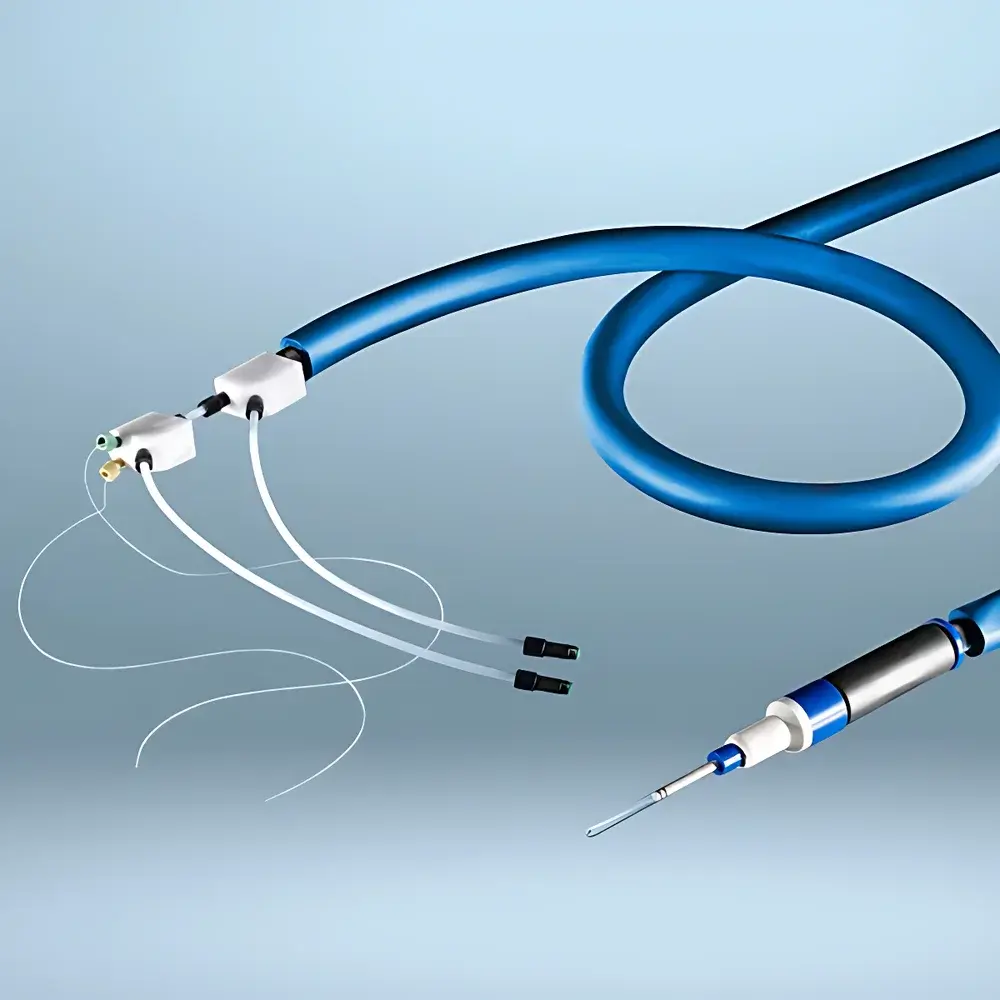
- Dedicated flow-path hardware: chemically inert, temperature-controlled flow cell with optimized RF coil geometry for enhanced sensitivity and minimal line broadening
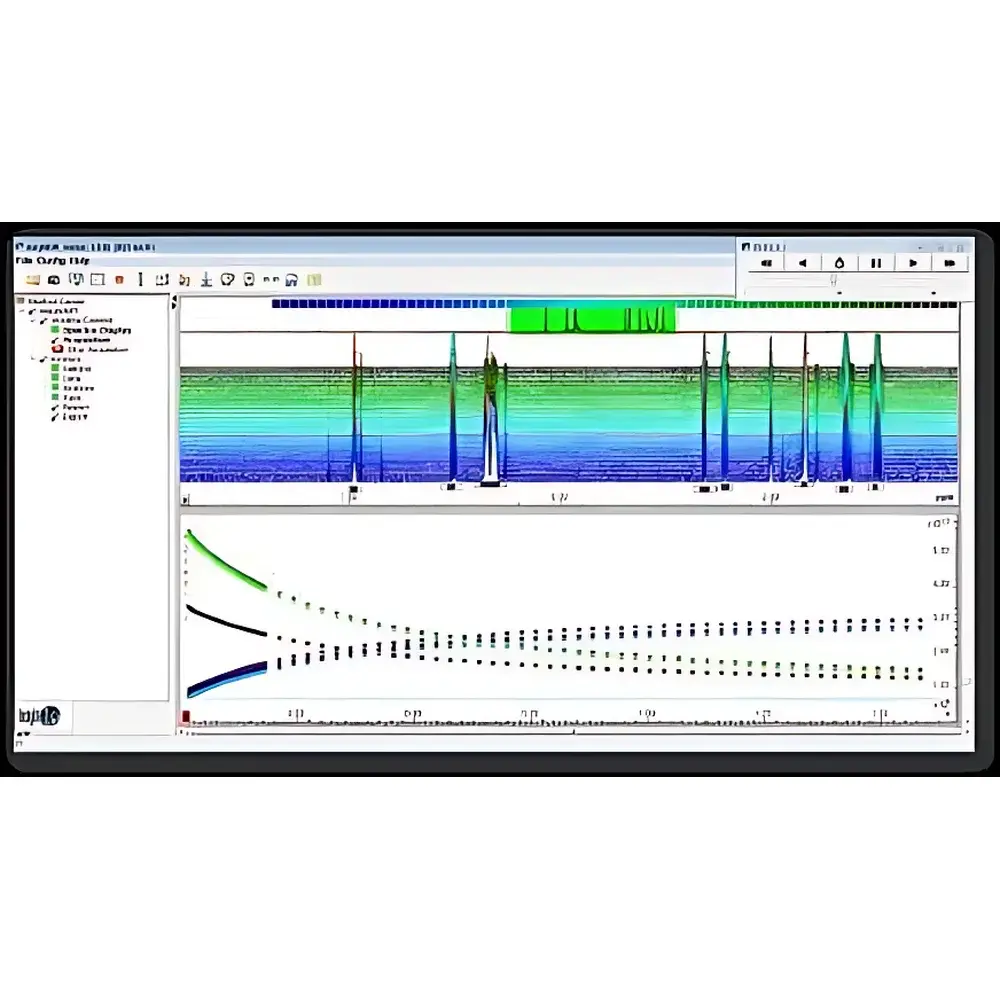
- TopSpin®-based software suite with automated reaction sequence scripting, kinetic model fitting (e.g., first-order, consecutive, parallel mechanisms), and integrated peak integration workflows
- Intuitive graphical interface enabling non-NMR specialists to define sampling intervals, trigger events, and visualize concentration vs. time plots without command-line interaction
- Hardware synchronization with external process controllers (e.g., PLCs, reactor temperature modules) via TTL or Ethernet-based triggers for closed-loop parameter adjustment
- Support for dual-solvent lock and deuterium frequency stabilization to maintain field homogeneity over extended acquisition periods (hours to days)
Sample Compatibility & Compliance
InsightMR™ accommodates heterogeneous sample states—including homogeneous solutions, slurries, and suspension-based reaction mixtures—via its solid-liquid compatible flow path design. The system accepts standard 5 mm NMR tubes for batch-mode validation and integrates with industry-standard 1/16″ or 1/8″ PFA/PEEK tubing for continuous flow applications. All wetted materials comply with USP Class VI and FDA-relevant extractables/leachables guidelines. From a regulatory standpoint, InsightMR™ supports audit-trail-enabled data capture aligned with 21 CFR Part 11 requirements when deployed with validated TopSpin® configurations. Its architecture facilitates adherence to ICH Q5, Q7, and Q8 frameworks, particularly in pharmaceutical development where mechanistic understanding underpins Quality by Design (QbD) initiatives.
Software & Data Management
The InsightMR™ software layer extends Bruker’s TopSpin® environment with proprietary modules for reaction analytics: ReactionMonitor™ for time-series spectral acquisition, KineticsAnalyzer™ for nonlinear regression against user-defined rate laws, and ReportGenerator™ for PDF/CSV export compliant with internal SOPs. Raw FID data, processed spectra, and kinetic parameter tables are stored in Bruker’s native JCAMP-DX and NMR-Data-Exchange (NDE) formats, ensuring long-term archival integrity and third-party tool interoperability (e.g., MATLAB, Python via nmrglue). All user actions—including method edits, calibration updates, and report generation—are logged with timestamp, operator ID, and digital signature where configured—meeting GLP documentation rigor and supporting inspection readiness.
Applications
- Pharmaceutical process development: elucidation of catalytic cycle intermediates in cross-coupling reactions (e.g., Suzuki, Heck)
- API crystallization kinetics: monitoring polymorphic transitions and supersaturation profiles in real time
- Biocatalysis optimization: tracking enzyme-substrate binding and product inhibition dynamics
- Polymerization reaction control: quantifying monomer conversion, branching density, and end-group evolution in step-growth systems
- Electrochemical synthesis: correlating redox state changes with structural evolution in battery electrolyte formulations
- Academic mechanistic studies: validation of DFT-predicted transition states through experimental kinetic isotope effect (KIE) mapping
FAQ
Is InsightMR™ compatible with existing Bruker NMR spectrometers?
Yes—it requires integration with a Bruker Avance™ III or IV console and magnet system (400 MHz and above); no retrofits to superconducting magnet hardware are needed.
Can it operate unattended for multi-hour acquisitions?
Yes—equipped with automatic shimming, solvent lock stabilization, and thermal management, it supports overnight and multi-shift monitoring with minimal intervention.
Does InsightMR™ support quantitative analysis without internal standards?
Yes—using ERETIC2 (Electronic Reference To Access In vivo Concentrations) calibration, absolute molar concentrations can be derived from integral ratios relative to a synthetic electronic reference signal.
What level of NMR expertise is required to deploy InsightMR™ in a QC lab?
Basic training suffices for routine operation; method setup and advanced kinetic modeling benefit from collaboration with an NMR spectroscopist, though preconfigured templates reduce dependency.
How does InsightMR™ differ from conventional in situ IR or Raman PAT tools?
Unlike vibrational techniques limited by overlapping bands and water interference, NMR provides atom-specific resolution, unambiguous structural assignment, and direct quantification—even in complex, multi-component reaction matrices.
Related Products





