
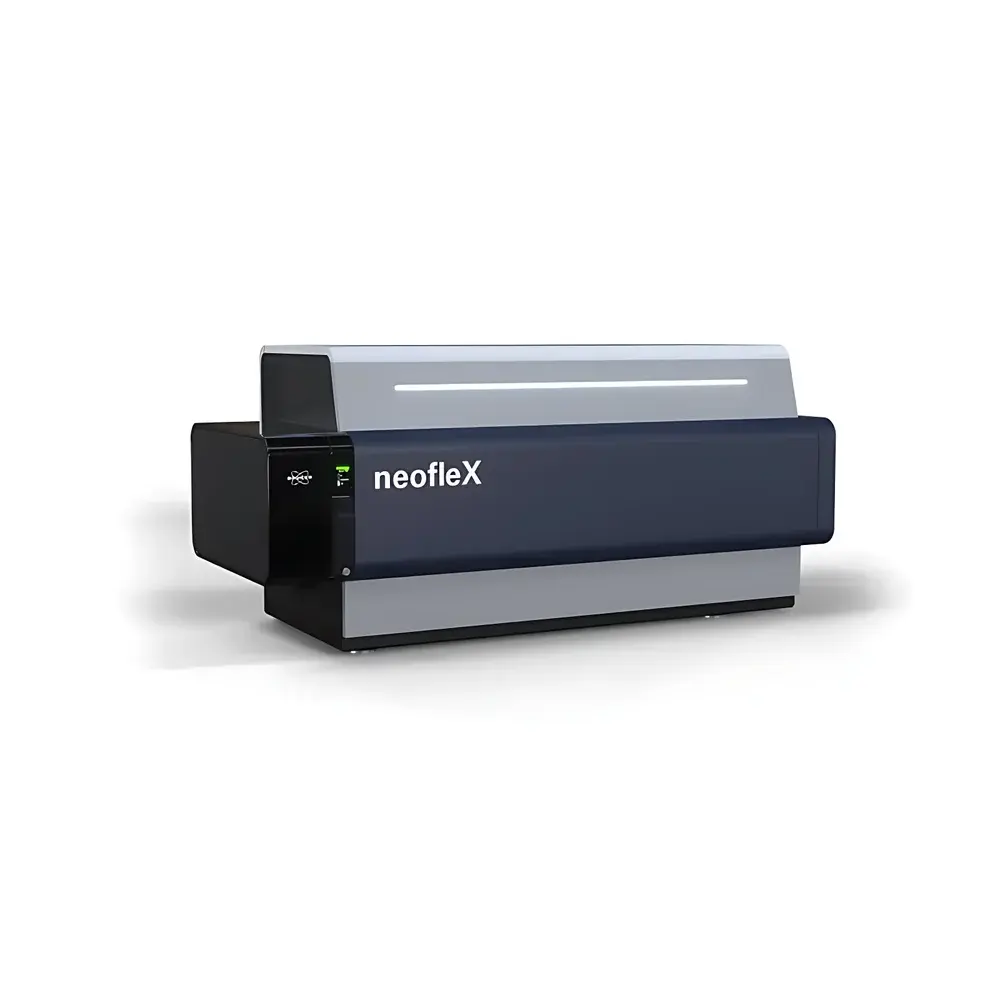
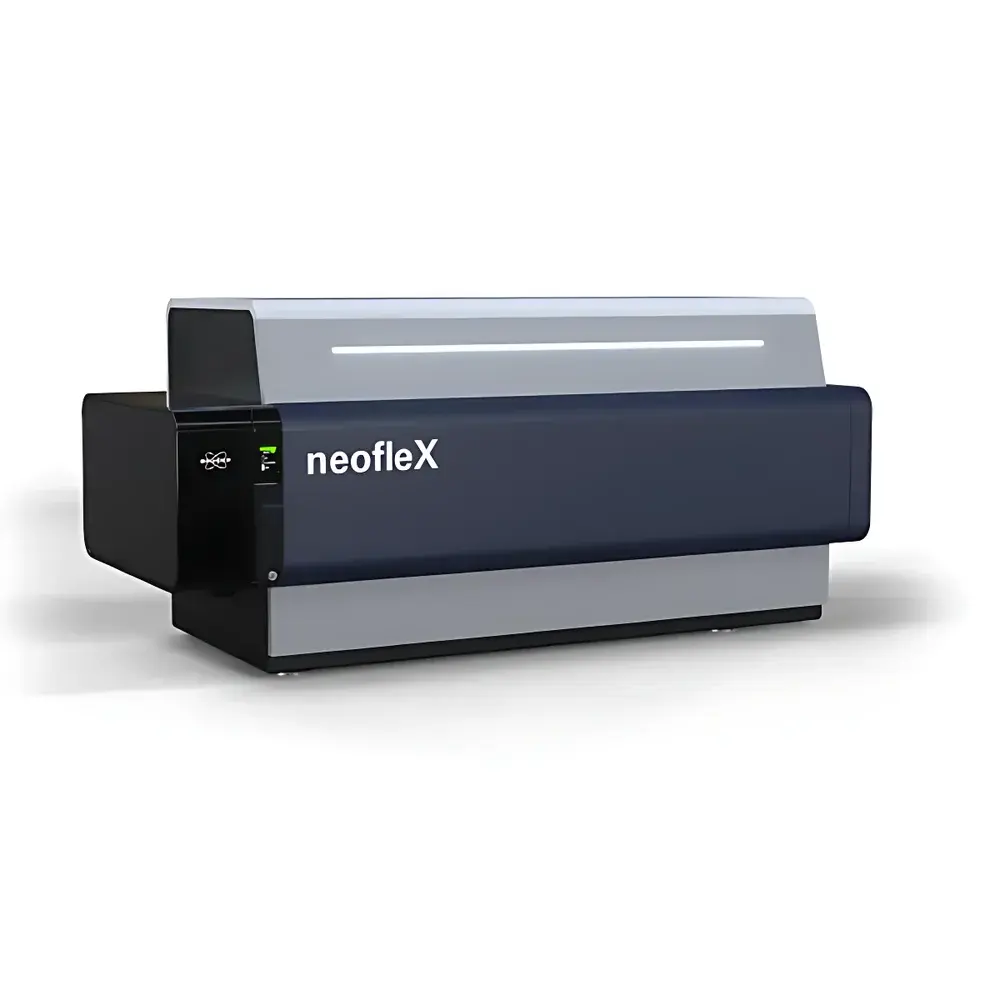
Bruker neofleX™ MALDI-TOF/TOF Spatial Imaging Mass Spectrometer
| Brand | Bruker |
|---|---|
| Origin | Germany |
| Instrument Type | TOF-TOF |
| Application Domain | Universal |
| Model | neofleX™ |
| Category | Biomass Spectrometer |
| Import Status | Imported |
Overview
The Bruker neofleX™ MALDI-TOF/TOF Spatial Imaging Mass Spectrometer is an advanced, co-axial time-of-flight tandem mass spectrometer engineered for high-fidelity molecular imaging of biological tissues. Leveraging matrix-assisted laser desorption/ionization (MALDI) coupled with orthogonal acceleration and dual-stage TOF separation, the system delivers high mass accuracy, robust isotopic resolution, and exceptional sensitivity across a broad m/z range (up to 100,000 Da). Its spatial imaging capability operates at native tissue resolution down to 30 µm, enabling pixel-by-pixel acquisition of untargeted and targeted molecular distributions—including peptides, proteins, lipids, glycans, and metabolites—directly from formalin-fixed paraffin-embedded (FFPE) or frozen sections. Designed for translational spatial biology, the neofleX™ integrates seamlessly into regulated workflows compliant with GLP and GMP principles, supporting biomarker discovery, tumor microenvironment mapping, and spatial multi-omics integration.
Key Features
- Co-axial TOF architecture with enhanced ion transmission efficiency and reduced flight path dispersion
- Integrated TOF/TOF fragmentation for structural elucidation of post-translational modifications (PTMs), sequence variants, and protein isoforms
- Automated SCiLS™ autopilot workflow for parameter optimization, sample tracking, and reproducible imaging run setup—no prior MS expertise required
- Open OME-TIFF data format compliant with FAIR (Findable, Accessible, Interoperable, Reusable) principles and compatible with third-party image analysis platforms
- IntelliSlides® smart conductive slides with embedded barcodes and fiducial markers for automated region-of-interest (ROI) registration and positional calibration
- fleXmatrix® pre-aliquoted MALDI matrix solutions ensuring batch-to-batch consistency in spray- or sublimation-based matrix deposition
- AnchorChip™ target plate technology enabling precise droplet confinement and improved shot-to-shot reproducibility during automated rastering
Sample Compatibility & Compliance
The neofleX™ supports direct analysis of diverse biological specimens including FFPE tissue sections, cryosections, cell monolayers, and microbial colonies without extraction or digestion. It accommodates standard microscope slide formats (e.g., 1″ × 3″) and interfaces with common histopathology staining protocols (H&E, IHC). The system meets essential regulatory expectations for analytical instrumentation used in biopharmaceutical development: raw data integrity is preserved via timestamped audit trails; software modules (SCiLS™ Lab, BioPharma Compass®, OmniScape™) support 21 CFR Part 11-compliant user authentication, electronic signatures, and version-controlled processing methods. All imaging and MS/MS acquisition protocols are documented per ISO/IEC 17025 and ASTM E2918 guidelines for method validation in spatial omics applications.
Software & Data Management
Data acquisition and interpretation are unified under Bruker’s modular software ecosystem. SCiLS™ Lab provides end-to-end spatial data handling—from image registration and spectral preprocessing to multivariate statistical mapping (PCA, t-SNE, clustering) and cross-modal correlation with immunohistochemistry or transcriptomic datasets. BioPharma Compass® enables automated QC of biotherapeutics (intact mAbs, PEGylated proteins, oligonucleotides) using predefined workflows aligned with ICH Q5E and USP <1117>. OmniScape™ delivers top-down proteomics capabilities including de novo sequencing, PTM localization, and C-terminal/Lys-C cleavage site verification—validated against NIST reference standards such as mAb light-chain controls. All software components store metadata in MIAME- and MIAPE-compliant structures, facilitating submission to public repositories like ProteomeXchange or Imaging Mass Spectrometry (IMS) databases.
Applications
- Spatially resolved protein expression profiling in oncology research (e.g., 116-plex HiPLEX-IHC on squamous cell carcinoma)
- Top-down characterization of therapeutic proteins: sequence confirmation, terminal heterogeneity, and modification mapping (e.g., oxidation, deamidation, glycosylation)
- Membrane protein analysis—including hydrophobic fragments often underrepresented in bottom-up workflows
- Rapid impurity screening and lot-release testing for biologics manufacturing
- Multi-omics integration: correlating MALDI imaging data with RNA-seq, spatial transcriptomics (Visium), or digital pathology annotations
- Reaction monitoring in enzymatic assays or chemical synthesis via real-time MALDI sampling
FAQ
What is the spatial resolution achievable with the neofleX™ system?
The system achieves a minimum lateral resolution of 30 µm under standard imaging conditions, scalable to 10 µm with optimized laser focus and stage control.
Does the neofleX™ support quantitative analysis?
Yes—relative quantification is enabled through internal standard normalization, label-free spectral alignment, and SCiLS™-based intensity calibration; absolute quantification requires spiked stable-isotope standards and validated calibration curves.
Can the instrument be used for intact protein analysis above 50 kDa?
Yes—the neofleX™’s high-mass detection mode supports intact analysis of proteins up to ~100 kDa, including PEGylated constructs and fusion proteins, leveraging its extended mass range and optimized reflectron tuning.
Is the software compliant with FDA 21 CFR Part 11 requirements?
SCiLS™ Lab and BioPharma Compass® offer configurable Part 11 functionality—including role-based access control, electronic signatures, and audit trail generation—when deployed in validated environments.
How does IntelliSlides® improve workflow robustness?
IntelliSlides® eliminate manual ROI selection by optically reading pre-etched barcodes and fiducials, enabling fully automated stage positioning, laser calibration, and cross-session alignment—critical for longitudinal or multi-center studies.




