Bruker OPUS 9.0 Spectroscopy Software Suite
| Brand | Bruker |
|---|---|
| Origin | Germany |
| Model | OPUS 9.0 |
| Operating System | Windows 10 / Windows 11 |
| Architecture | Native 64-bit |
| Software Type | FT-IR / NIR / Raman Spectral Acquisition, Processing & Evaluation Platform |
| Validation Support | OVP-X for MPA III |
| User Interface | Modernized GUI with Workflow-Oriented Navigation |
Overview
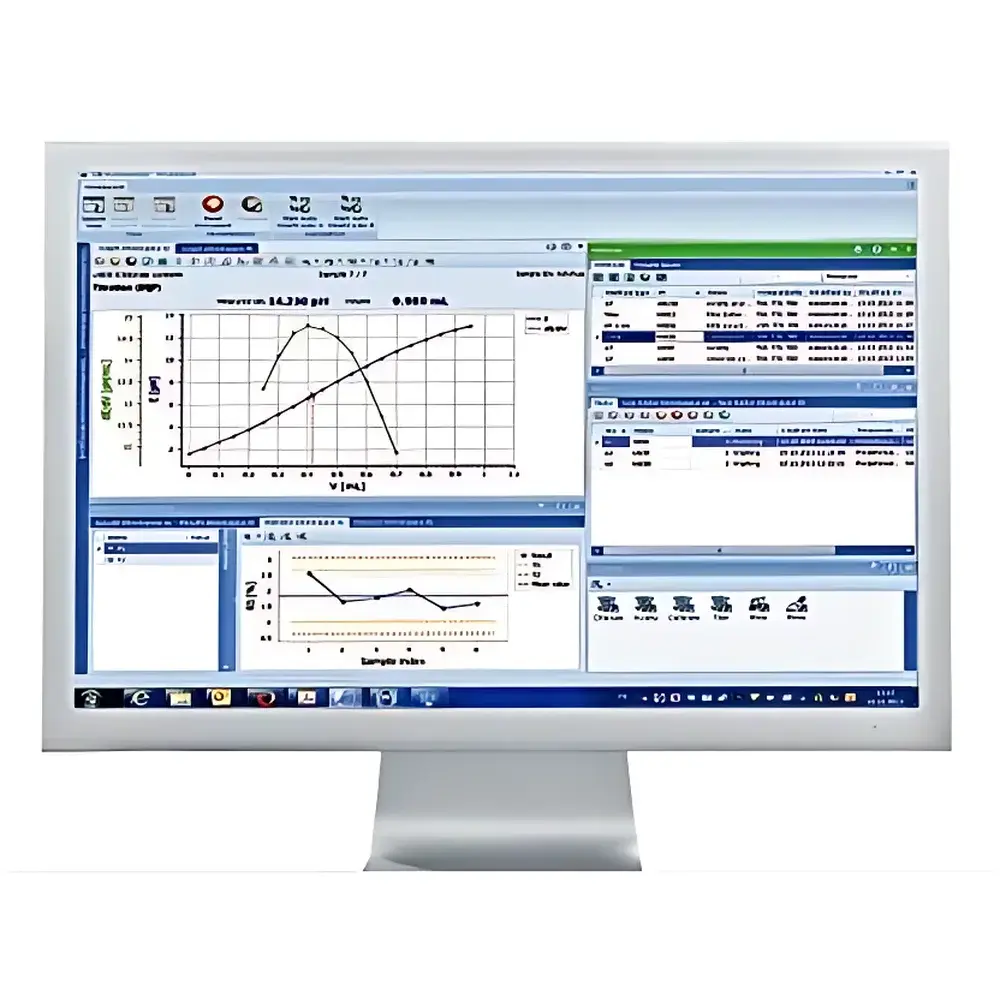
Bruker OPUS 9.0 is a native 64-bit spectroscopic software platform engineered for high-fidelity acquisition, advanced processing, and rigorous evaluation of Fourier Transform Infrared (FT-IR), Near-Infrared (NIR), and Raman spectra. Designed specifically for integration with Bruker’s portfolio of benchtop and microscope-based spectrometers—including Vertex series FT-IR systems, Tensor platforms, QCL-based IR microscopes, and the MPA III multi-purpose analyzer—OPUS 9.0 serves as the central analytical engine in regulated and research-intensive laboratory environments. Its architecture leverages modern Windows 10 and Windows 11 operating systems to maximize memory addressing, parallel computation throughput, and real-time spectral visualization. Unlike legacy 32-bit alternatives, OPUS 9.0 eliminates memory bottlenecks during large dataset handling, multivariate analysis (e.g., PCA, PLS), or time-resolved spectral mapping—enabling reproducible, traceable, and computationally robust workflows essential for method development, quality control, and materials characterization.
Key Features
- Native 64-bit execution optimized for multi-core CPU utilization and ≥16 GB RAM configurations, supporting rapid baseline correction, smoothing, derivative calculation, and peak integration across thousands of spectra.
- Unified spectral workspace accommodating FT-IR, NIR, and Raman data formats—including proprietary .0, .spa, and .srs files—with bidirectional compatibility to ASTM E1421-compliant spectral exchange standards.
- Enhanced microscopy module with automated stage control, hyperspectral image stitching, and pixel-wise spectral library matching for chemical imaging applications (e.g., pharmaceutical tablet layer analysis, polymer domain identification).
- OVP-X (OPUS Validation Package – Extended) certified validation framework for MPA III instruments, providing documented IQ/OQ protocols, audit trail logging, electronic signature support, and compliance-ready documentation aligned with FDA 21 CFR Part 11 and EU Annex 11 requirements.
- Modular add-ons including Quant+ for quantitative calibration modeling (PLS-1/2, PCR), Identify+ for spectral library search (including NIST, SDBS, and user-defined libraries), and Reaction+ for kinetic monitoring via time-series spectral acquisition.
Sample Compatibility & Compliance
OPUS 9.0 supports direct communication with Bruker’s full range of IR and Raman instrumentation—including transmission, ATR, reflectance, and photoacoustic sampling accessories—as well as external devices via standardized OPC UA and TCP/IP interfaces. The software enforces sample metadata capture (operator ID, timestamp, instrument configuration, environmental conditions) at acquisition, ensuring ALCOA+ principles (Attributable, Legible, Contemporaneous, Original, Accurate) for GLP and GMP-regulated laboratories. All spectral processing steps are fully parameterized and scriptable, enabling version-controlled SOP enforcement and re-execution of analysis sequences across instruments and users. Regulatory documentation packages—including URS, FRS, and test scripts—are provided under OVP-X for validated deployment in pharmaceutical, food safety, and forensic labs subject to ISO/IEC 17025 or USP .
Software & Data Management
Data integrity is maintained through hierarchical project structures, encrypted local database storage (.sqlite), and optional integration with enterprise LIMS via HL7 or RESTful API adapters. Audit trails record every user action—including spectrum modification, library search parameters, and report generation—with immutable timestamps and operator authentication. Batch processing supports scheduled acquisition and post-processing pipelines, while the built-in scripting environment (OPUS Script Language, OSL) enables automation of repetitive tasks such as spectral normalization, peak area quantification, or report export to PDF/XLSX with embedded metadata. Backups adhere to 3-2-1 policy recommendations, and all exported reports include digital signatures compliant with e-signature regulations.
Applications
OPUS 9.0 is routinely deployed in pharmaceutical QC labs for raw material identification (USP ), blend uniformity assessment, and counterfeit detection; in polymer R&D for crystallinity index calculation and degradation profiling; in academic spectroscopy for teaching spectral interpretation and chemometric modeling; and in environmental testing for microplastic identification via FT-IR imaging. Its interoperability with third-party chemometrics tools (e.g., MATLAB, Python scikit-learn via .csv/.jdx export) extends its utility in AI-driven spectral classification and predictive modeling initiatives.
FAQ
Is OPUS 9.0 compatible with older Bruker spectrometers?
Yes—OPUS 9.0 maintains backward compatibility with all Bruker FT-IR and Raman systems released since 2010, including Vertex 70, Tensor 27, and SENTERRA II, provided firmware updates are current.
Does OPUS 9.0 support electronic signatures per 21 CFR Part 11?
Yes—when deployed with OVP-X and configured with role-based access control, it meets all technical requirements for electronic records and signatures in regulated environments.
Can custom spectral libraries be imported and managed?
Yes—users may create, edit, and version-control proprietary libraries using the Library Manager, with support for spectral metadata tagging, similarity threshold adjustment, and hierarchical categorization.
Is remote operation supported?
Yes—via secure RDP or Bruker’s optional WebConnect module, enabling off-site instrument monitoring, spectral review, and batch queue management without compromising data security.
What training resources are available?
Bruker provides instructor-led virtual courses, on-demand video modules, comprehensive PDF manuals, and application-specific webinars—all accessible via the Bruker Academy portal upon license activation.
Related Products