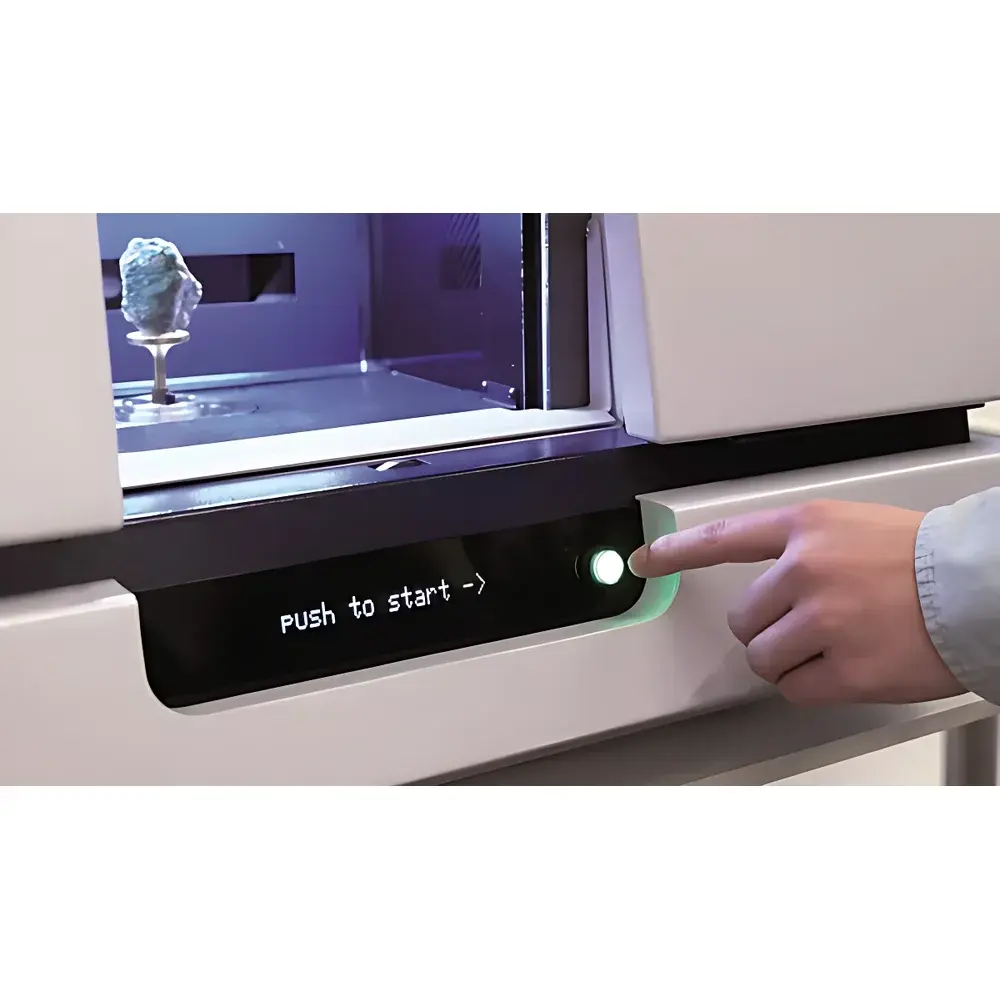
Bruker SKYSCAN 1275 Desktop Micro-CT System for Composite Materials Analysis
| Brand | Bruker |
|---|---|
| Origin | Shanghai, China |
| Manufacturer Type | Authorized Distributor |
| Origin Category | Domestic (China-made) |
| Model | SKYSCAN 1275 |
| Service Pricing | USD 5,000–10,000 per scan session |
| Years of Service Experience | 3 |
Overview
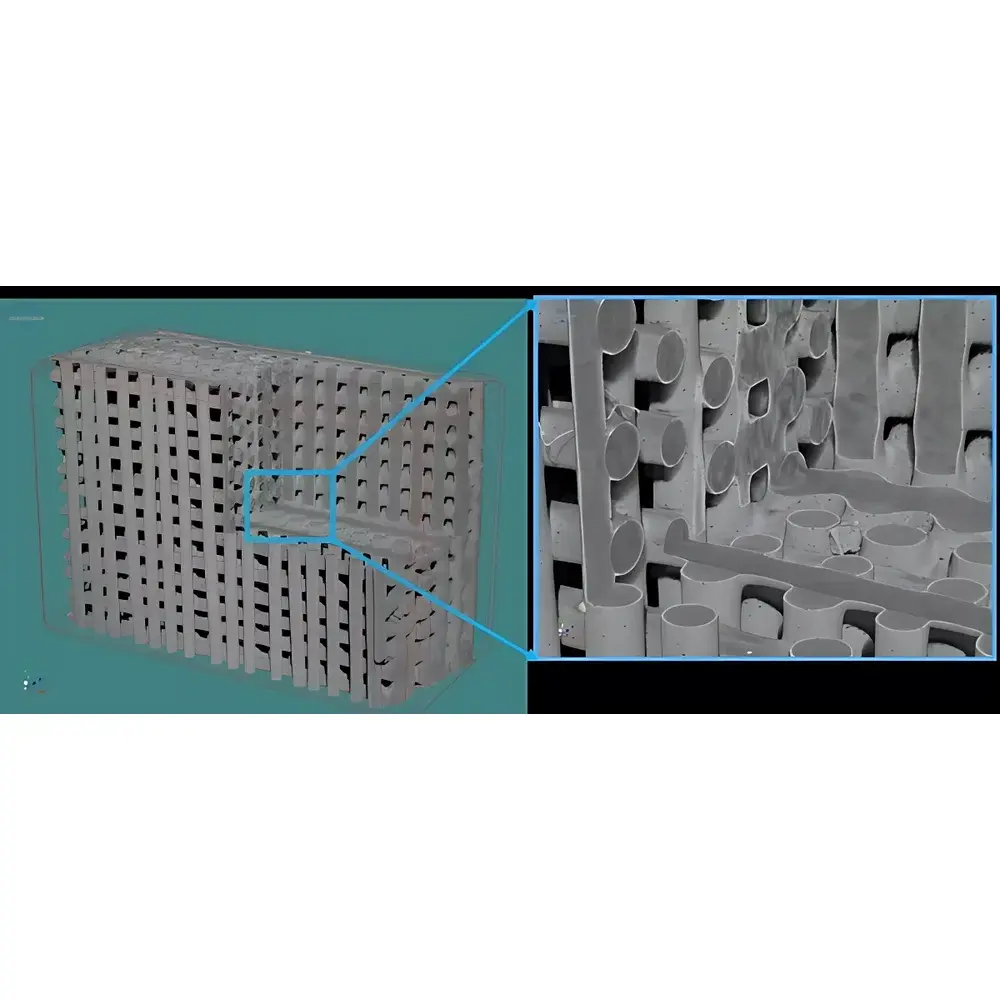
The Bruker SKYSCAN 1275 is a high-performance, benchtop X-ray micro-computed tomography (μCT) system engineered for non-destructive 3D structural characterization of polymeric and composite materials. Based on the physical principle of X-ray absorption contrast imaging, it reconstructs volumetric datasets by acquiring hundreds of 2D projection images across a full 360° rotation, followed by filtered back-projection or iterative reconstruction algorithms. Unlike medical CT systems optimized for human-scale anatomy, the SKYSCAN 1275 operates at micrometer-scale spatial resolution—enabling quantitative analysis of internal architecture without sectioning, embedding, coating, or any destructive sample preparation. Its design prioritizes reproducibility, operational robustness, and compliance-ready data integrity for laboratory environments engaged in R&D, quality assurance, and failure analysis of fiber-reinforced polymers, carbon-fiber laminates, ceramic matrix composites, and porous polymer foams.
Key Features
- Push-Button-CT™ workflow automation: fully integrated sequence covering automatic sample detection, acquisition, reconstruction, and volume rendering—requiring no manual parameter tuning for routine scans
- High-power 100 kV sealed microfocus X-ray source with stable output and >10,000-hour tube lifetime—eliminating filament replacement downtime and associated maintenance costs
- Large-format CMOS flat-panel detector (1944 × 1536 pixels, 3 MP effective resolution) with high dynamic range, low electronic noise, and sub-100 ms readout time
- Sub-5 µm isotropic voxel resolution achievable under optimal geometry; typical scan duration <15 minutes at ≤10 µm resolution for standard composite specimens
- Compact desktop footprint with Class I radiation shielding—fully compliant with IEC 61000-6-3 (EMC), IEC 62471 (optical radiation safety), and local regulatory requirements for laboratory X-ray equipment
- Optional motorized sample changer supporting unattended multi-sample operation over extended periods
Sample Compatibility & Compliance
The SKYSCAN 1275 accommodates samples up to Ø 150 mm × H 150 mm, making it suitable for representative coupons of aerospace-grade composites, battery electrode stacks, additively manufactured polymer parts, and injection-molded thermoplastic components. It supports quantitative morphometric analysis—including fiber orientation distribution (FOD), pore size distribution (PSD), void volume fraction, interfacial delamination mapping, and phase segmentation via dual-energy or material decomposition techniques where applicable. Data acquisition and processing workflows are compatible with GLP/GMP-aligned documentation practices; raw projections and reconstructed volumes retain embedded metadata (scan parameters, timestamps, operator ID) required for audit trails under FDA 21 CFR Part 11 when paired with validated LIMS integration.
Software & Data Management
NRecon, CTAn, and CTVox—Bruker’s native software suite—provide end-to-end processing capabilities from raw sinogram correction to statistical quantification and publication-ready visualization. CTAn implements ISO 10360-compliant measurement protocols for pore network analysis (e.g., ASTM E2834 for porosity in metal powders adapted for polymer matrices). All software modules support batch processing, scripting via Python API, and DICOM export for cross-platform compatibility. Reconstructed volumes are stored in standardized HDF5 format with lossless compression, ensuring long-term archival integrity and interoperability with third-party platforms such as Avizo, Dragonfly, or MATLAB-based custom analysis pipelines.
Applications
- Non-destructive evaluation of fiber misalignment, waviness, and nesting in carbon-fiber reinforced polymer (CFRP) laminates
- Quantitative assessment of resin-rich zones, microcrack propagation, and impact-induced delamination in sandwich structures
- Characterization of pore morphology and interconnectivity in lightweight syntactic foams and filtration membranes
- In situ or time-resolved (4D) monitoring of hygrothermal aging, thermal cycling, or mechanical loading effects on composite microstructure
- Validation of process parameters in automated fiber placement (AFP) and resin transfer molding (RTM) through correlation of simulated vs. measured fiber architecture
FAQ
Is the SKYSCAN 1275 capable of scanning metallic composite components?
Yes—the 100 kV X-ray source provides sufficient penetration for aluminum alloys, titanium alloys, and thin-section steel-reinforced polymer composites. For denser or thicker metallic samples, optional beam hardening correction and dual-energy acquisition protocols are available.
What level of training is required to operate the system independently?
Operators with basic familiarity in materials science or mechanical testing can achieve proficiency within one day using Push-Button-CT mode. Advanced parameter optimization and reconstruction tuning require foundational knowledge of X-ray physics and tomographic principles—covered in Bruker-certified operator training courses.
Does the system support automated defect classification using AI algorithms?
While the base software does not include embedded AI classifiers, reconstructed volumes can be exported to external machine learning frameworks (e.g., TensorFlow, PyTorch) for supervised training of convolutional neural networks targeting void detection, fiber breakage identification, or anomaly segmentation.
How is data traceability ensured for regulated industries?
All acquisitions log operator credentials, instrument configuration, environmental conditions (if sensors are connected), and software versioning. Audit logs and digital signatures can be enabled via optional compliance packages aligned with ISO/IEC 17025 and ISO 9001 quality management frameworks.