
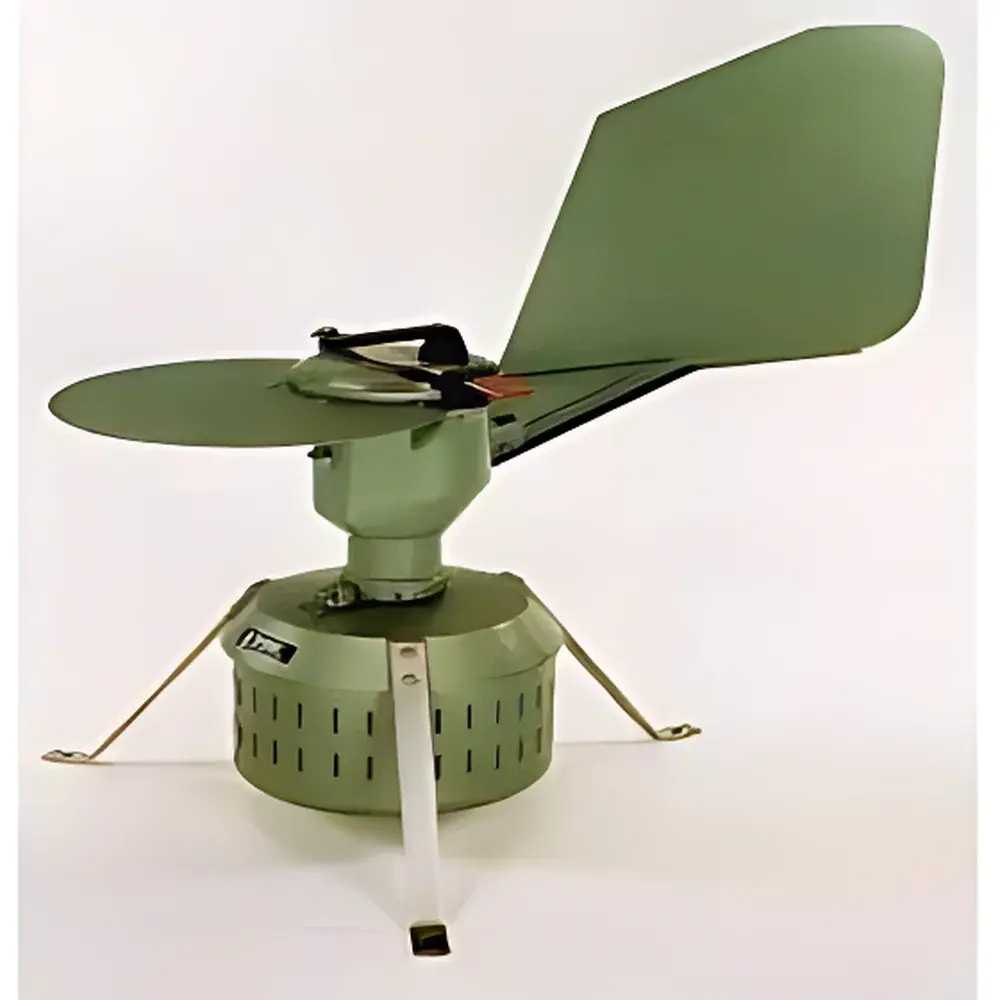
Burkard HIRST Spore Trap
| Brand | Burkard |
|---|---|
| Origin | United Kingdom |
| Model | HIRST |
| Sampling Area | 0.89 m² |
| Airflow Rate | 10 L/min |
| Drum Rotation Speed | 2 mm/hour |
| Standard Orifice | 2 × 14 mm |
| Height | 940 mm |
| Net Weight | 16 kg |
| Gross Weight | 33 kg |
| Packing Dimensions | 57 × 65 × 65 cm |
| Power Options | Mains, Rechargeable Battery, or Hybrid Supply |
| Bearing System | 7-Jewel Precision Clockwork Mechanism |
| Collection Substrate | Adhesive-Coated Polyester Tape (25 m roll) |
| Continuous Unattended Operation | Up to 7 Days |
| Sampling Modes | 24-Hour Continuous or Timed Intervals |
Overview
The Burkard HIRST Spore Trap is a field-deployable, volumetric air sampling instrument engineered for the quantitative collection and spatial-temporal analysis of airborne biological particulates—including fungal spores, pollen grains, and other respirable bioaerosols. Based on the classic Hirst volumetric principle, it draws ambient air through a precisely defined orifice (standard 2 × 14 mm) at a calibrated flow rate of 10 L/min. Particles impact onto a continuously moving adhesive-coated polyester tape mounted on a rotating drum, preserving their position relative to time—enabling direct microscopic enumeration per unit volume of air (e.g., spores/m³/hour). Its mechanical clockwork drive—featuring a 7-jewel bearing system—ensures consistent, low-drift drum advancement (2 mm/hour), critical for maintaining temporal resolution across multi-day deployments without electronic dependency.
Key Features
- Volumetric sampling compliant with ISO 21527-1:2008 and EN 16869-1 for airborne fungal spore monitoring
- Robust, weather-resistant aluminum housing (940 mm height) optimized for outdoor installation on masts or tripods
- Integrated vacuum pump with stable 10 L/min airflow—no external compressors or regulators required
- Passive wind vane alignment ensures dynamic orientation to prevailing wind direction, maximizing particle capture efficiency
- Modular orifice design: standard 2 × 14 mm aperture; optional interchangeable orifices available for specialized particle size cutoffs
- Low-power operation: supports mains supply, rechargeable battery (up to 7 days), or hybrid mode—ideal for remote or off-grid field sites
- Compact footprint (57 × 65 × 65 cm shipping crate) and net weight of 16 kg facilitate rapid deployment and transport
Sample Compatibility & Compliance
The HIRST Spore Trap collects intact, morphologically preserved particles suitable for light microscopy, scanning electron microscopy (SEM), PCR-based identification, and immunological assays. Its adhesive polyester tape substrate (25 m roll, dual-sided option available) provides uniform tackiness across temperature ranges from −10 °C to +40 °C. Collected samples comply with protocols referenced in USP , EU GMP Annex 1 (for cleanroom environmental monitoring), and WHO guidelines for aerobiological surveillance. Data generated supports regulatory submissions requiring traceable, time-resolved bioaerosol exposure records—particularly in agricultural epidemiology, public health forecasting, and clinical allergy research.
Software & Data Management
While the HIRST operates as a standalone mechanical instrument, sample tapes are fully compatible with digital slide scanners (e.g., Zeiss Axio Scan.Z1, Olympus VS200) and image analysis platforms such as ImageJ with custom macros or commercial solutions like SedimentScan. Time-stamped tape positioning allows automated mapping of particle density against UTC timestamps when paired with GPS-synchronized deployment logs. For GLP/GMP environments, laboratory SOPs may integrate barcode-labeled tape segments, audit-trail documentation, and metadata tagging (location, duration, orifice ID, calibration date) in LIMS-compatible formats.
Applications
- Long-term aerobiological monitoring networks (e.g., EAN, NAB, PANDORA)
- Early-warning systems for crop pathogen outbreaks (e.g., Puccinia, Alternaria, Cladosporium)
- Clinical allergen forecasting and pollen season modeling
- Indoor air quality assessment in hospitals, pharmaceutical manufacturing suites, and biotech facilities
- Validation of HVAC filtration efficiency and cleanroom classification (ISO 14644-1)
- Ecological studies on spore dispersal dynamics and climate-driven phenological shifts
FAQ
What is the recommended maintenance interval for the 7-jewel clockwork mechanism?
Annual servicing by an authorized Burkard technician is advised—including cleaning, re-lubrication with synthetic clock oil, and torque verification.
Can the HIRST be used indoors without wind exposure?
Yes—the wind vane is passive and does not impede function; indoor use requires mounting stability and avoidance of turbulent airflow near vents or doors.
Is the adhesive tape compatible with fluorescent staining or DNA extraction?
Polyester-backed tape supports standard acetone-based clearing, lactophenol cotton blue staining, and non-destructive DNA isolation protocols (e.g., Qiagen DNeasy Plant Mini Kit with tape pre-digestion).
How is flow rate accuracy verified and calibrated?
Calibration is performed using a primary standard rotameter or bubble flow meter traceable to NIST; certificate included with each unit and recommended annually.
Does the instrument meet FDA 21 CFR Part 11 requirements?
As a mechanical data-generating device, the HIRST itself does not store electronic records—but sample handling, annotation, and downstream digital analysis workflows can be configured to meet Part 11 compliance via validated LIMS integration.



