
BuzzMac BUZZ-1015 High-Temperature Vacuum Resonant Elastic Modulus Analyzer
| Brand | A2PS/A2 Photonic Sensors |
|---|---|
| Origin | USA |
| Manufacturer Type | Authorized Distributor |
| Category | Imported Instrument |
| Model | BUZZ-1015 |
| Pricing | Upon Request |
| Measurement Principle | Impulse Excitation / Laser Doppler Vibrometry |
| Frequency Range | 0.5 Hz – 2.5 MHz |
| Accuracy | Better than ±1.0% (resonance frequency), ±0.1% typical for fundamental mode identification |
| Test Duration | Seconds per measurement |
| Damping Factor Range | 10⁻⁵ – 10⁻¹ |
| Sample Dimensions | ≤ 200 × 180 × 180 mm (rectangular or cylindrical) |
| Temperature Range | Ambient to 1500 °C (protection limit) |
| Vacuum Level | < 1 × 10⁻² Pa (operational), < 5 × 10⁻⁸ Torr (base pressure) |
| Compliant Standards | ASTM C1259, ASTM E1876, ISO 12680 |
Overview
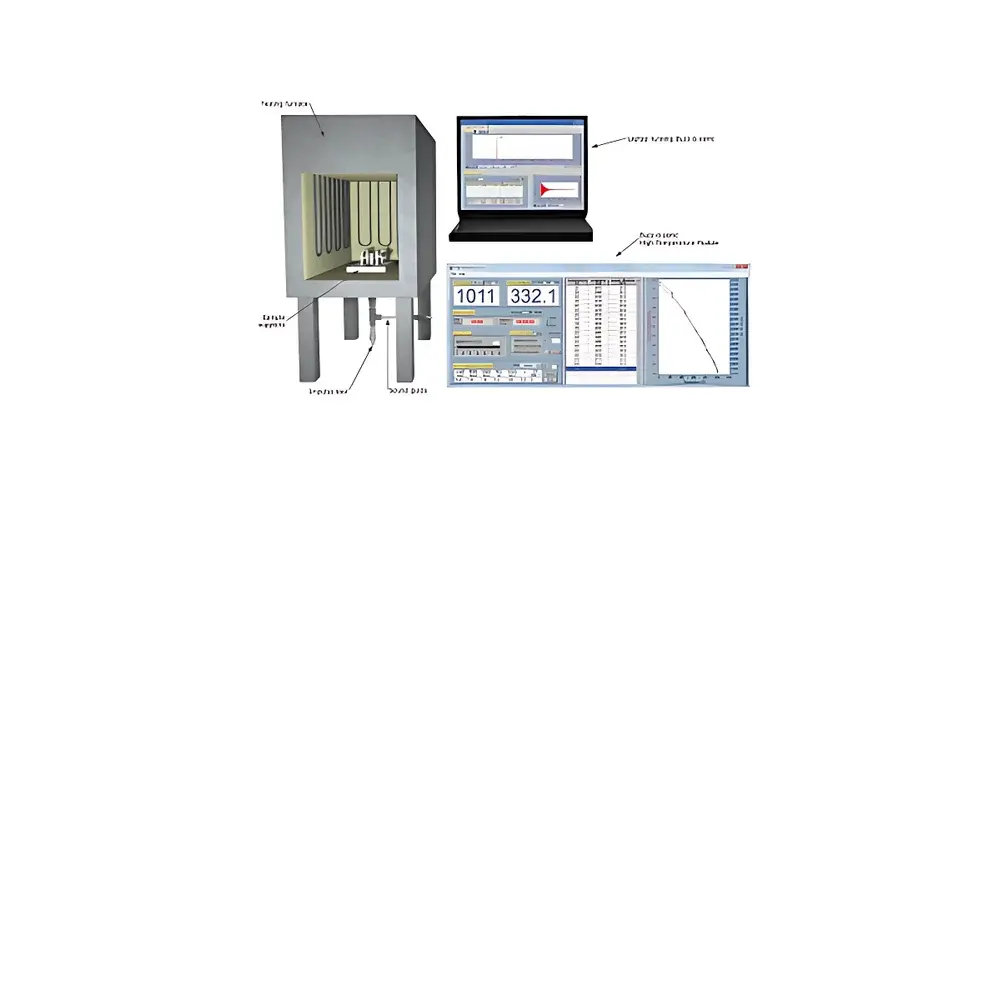
The BuzzMac BUZZ-1015 High-Temperature Vacuum Resonant Elastic Modulus Analyzer is a precision metrology system engineered for non-destructive, in-situ determination of elastic constants—including Young’s modulus, shear modulus, bulk modulus, and Poisson’s ratio—under rigorously controlled thermal and vacuum environments. It operates on the principle of impulse excitation coupled with high-resolution laser Doppler vibrometry: a mechanical actuator induces free vibration in a freely suspended sample, and the resulting resonance spectrum is captured by a Polytec NLV-2500 compact laser vibrometer. The fundamental and higher-order resonant frequencies, combined with geometric dimensions and mass density, are processed via closed-form analytical models derived from classical beam, plate, and cylinder vibration theory (per ASTM E1876 and ISO 12680). This eliminates reliance on contact transducers or complex calibration artifacts, ensuring traceable, geometry-independent results across heterogeneous material classes.
Key Features
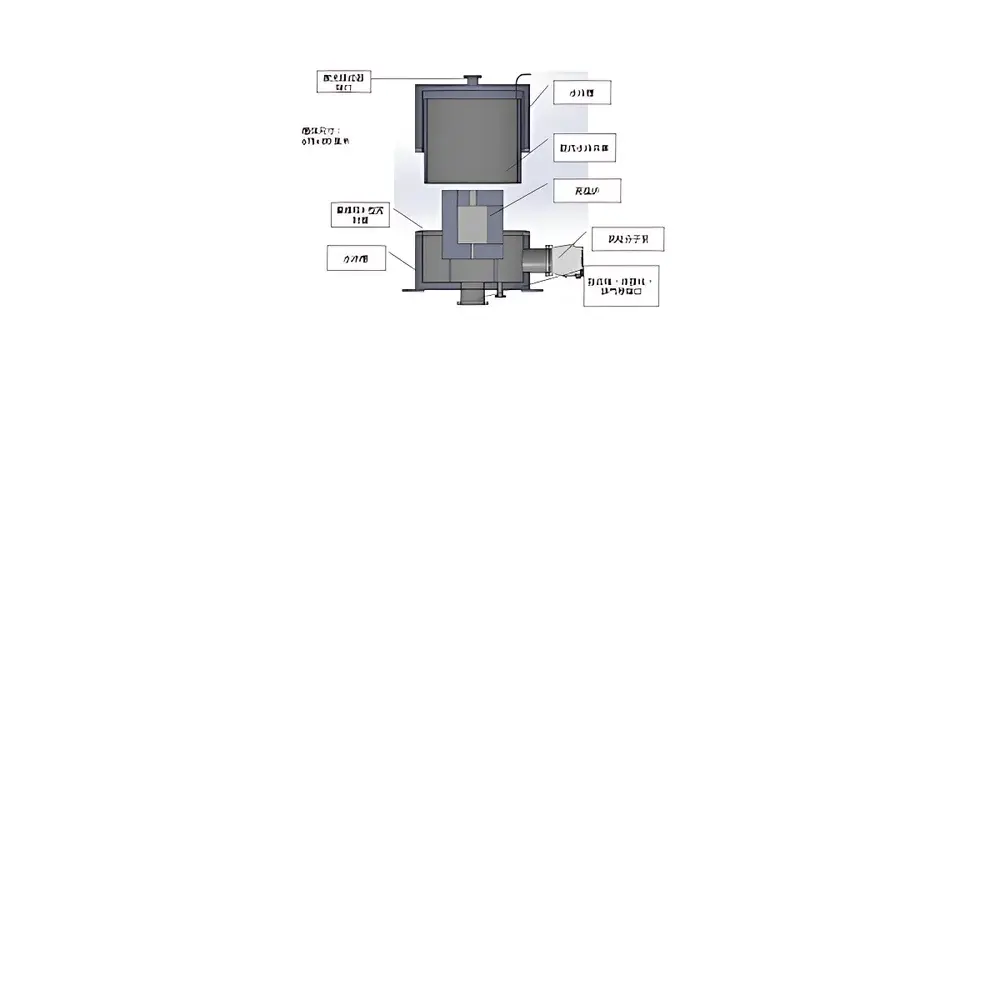
- Integrated high-temperature vacuum furnace with vertical stainless-steel chamber (500 mm diameter, 700 mm total height), water-cooled O-ring seals, and high-purity refractory insulation enabling stable operation up to 1500 °C
- Dual-stage vacuum system: Edwards RV12 rotary vane pump (12 m³/h @ 50 Hz) backed by Edwards nNXT 400D turbomolecular pump (≥400 L/s), achieving base pressures < 5 × 10⁻⁸ Torr
- Polytec NLV-2500 laser Doppler vibrometer with 1.5 µm spot size, 2.5 MHz bandwidth, ±10 m/s velocity range, and fringe-counting displacement decoding (16 gain steps, resolution < 15 pm) — eliminating low-frequency integration drift
- Automated furnace lift mechanism (Buzz-UD1) and precision sample mounting stage (Buzz-SM1) for repeatable positioning under vacuum
- PID-controlled heating with K-type thermocouples, ±0.5 °C temperature stability, overheat protection, and inert gas inlet (N₂/Ar) for reactive atmosphere testing
- Full computer-integrated control via proprietary Buzz-1015 software with real-time vacuum monitoring, thermal ramp profiling, and synchronized data acquisition
Sample Compatibility & Compliance
The BUZZ-1015 accommodates solid, isotropic, or quasi-isotropic elastic materials including metals, superalloys, technical ceramics (Al₂O₃, SiC, ZrO₂), refractory concretes, sintered glasses, geological specimens (granite, basalt), and cementitious composites. Sample geometries include rectangular bars (length ≥ 3× width/height), cylinders (diameter/thickness ≥ 4:1, ideally 10:1–20:1), and thin discs. All measurements adhere to ASTM C1259 (dynamic Young’s modulus of advanced ceramics) and ASTM E1876 (resonant frequencies of metallic materials), supporting GLP-compliant reporting with audit-trail enabled data logging. Vacuum compatibility ensures oxide-free surface conditions and suppression of convective heat loss during high-temperature characterization—critical for validating thermomechanical models in aerospace and nuclear applications.
Software & Data Management
The embedded Buzz-1015 control suite runs on Windows-based industrial PCs (Lenovo ThinkCentre) and provides full instrument orchestration: vacuum pump sequencing, thermal ramp definition, vibrometer parameterization, and synchronous signal capture. Raw time-domain velocity waveforms and FFT-derived resonance spectra are stored in HDF5 format with embedded metadata (timestamp, temperature, pressure, sample ID, operator). Post-processing modules implement ASTM E1876-compliant algorithms to compute elastic moduli using validated eigenfrequency–geometry–density relationships. Export options include CSV, MATLAB .mat, and PDF reports with configurable templates. The software architecture supports 21 CFR Part 11 compliance through user role management, electronic signatures, and immutable audit logs—enabling deployment in regulated QC/QA laboratories operating under GMP or ISO/IEC 17025 frameworks.
Applications
- High-temperature elastic property mapping of turbine blade alloys during thermal cycling fatigue studies
- In-situ modulus degradation analysis of ceramic matrix composites (CMCs) under vacuum annealing
- Quality assurance of refractory linings in metallurgical furnaces via room-to-1200 °C modulus tracking
- Development of low-thermal-expansion glass-ceramics for EUV lithography optics
- Validation of micromechanical models for porous concrete and geopolymers under controlled humidity/vacuum
- Research into anelastic relaxation mechanisms in shape-memory alloys via damping coefficient (Q⁻¹) quantification
FAQ
What measurement standards does the BUZZ-1015 comply with?
ASTM C1259, ASTM E1876, and ISO 12680 for dynamic elastic modulus determination via resonant frequency analysis.
Can the system operate under inert gas instead of vacuum?
Yes—the furnace includes dedicated N₂/Ar inlet ports and pressure regulation capability for controlled-atmosphere testing.
Is sample preparation required beyond dimensional machining?
No surface finishing or electrode deposition is needed; samples must only meet geometric aspect-ratio criteria and be free of macroscopic cracks.
How is temperature uniformity verified inside the hot zone?
Calibration is performed using multiple independent K-type thermocouples embedded in reference ceramic blocks, mapped against external pyrometric readings per ASTM E230.
Does the system support automated batch testing?
Yes—via scriptable API integration and scheduled thermal-vibro test sequences with pass/fail threshold logic.
What maintenance intervals are recommended for the vacuum system?
Edwards RV12 oil changes every 3,000 hours; turbomolecular pump bearing inspection every 15,000 hours; Del-Seal™ metal gaskets replaced after each 10th thermal cycle above 1000 °C.



