
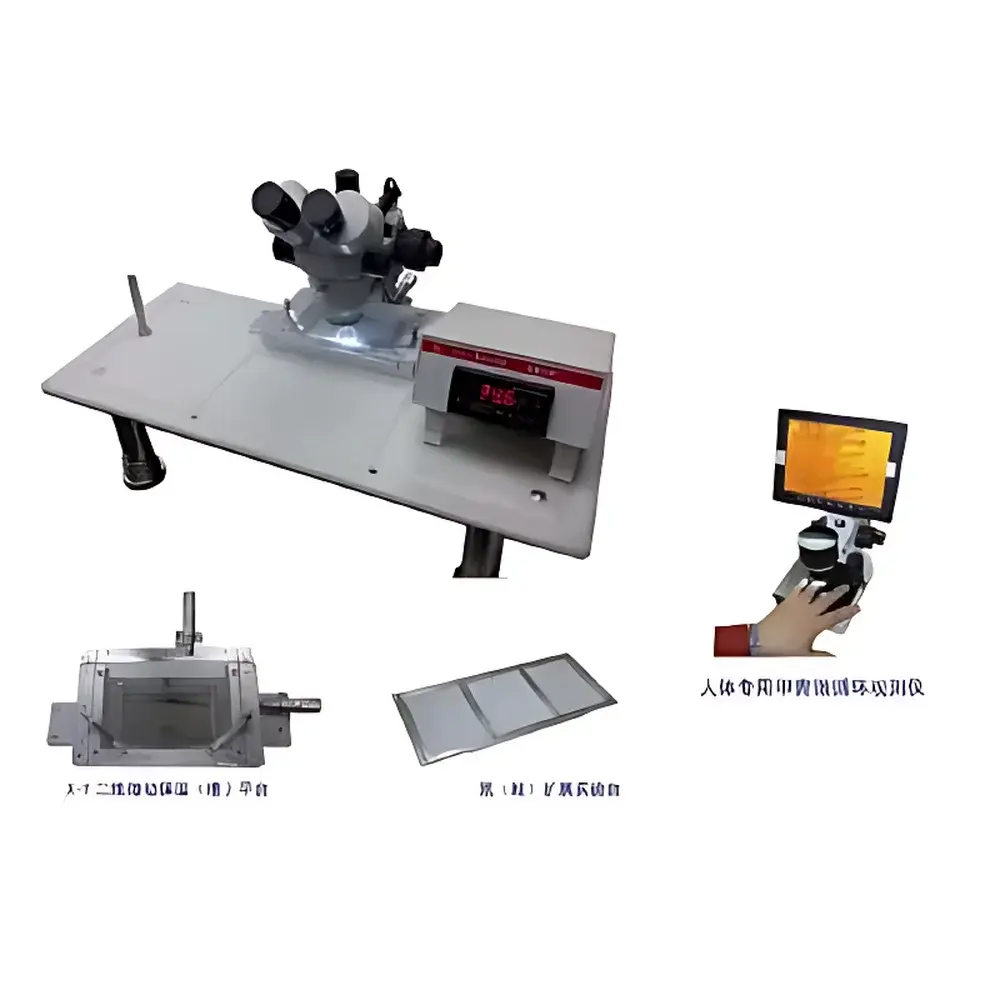
C2008 Microcirculation Image Analysis System
| Origin | Sichuan, China |
|---|---|
| Manufacturer Type | Distributor |
| Origin Category | Domestic |
| Model | C2008 |
| Pricing | Upon Request |
Overview
The C2008 Microcirculation Image Analysis System is a dedicated, research-grade platform engineered for quantitative in vivo microvascular observation and dynamic image-based physiological analysis in small animal models and human nailfold capillaroscopy. Built upon principles of high-resolution optical microscopy, real-time video digitization, and spatial-temporal image metrology, the system enables non-invasive or minimally invasive assessment of microhemodynamic parameters—including vessel diameter, centerline length, branching angle, capillary density, and flow velocity estimation—under controlled thermal and mechanical conditions. Its architecture integrates optical, thermal, mechanical, and computational subsystems to support standardized experimental protocols in vascular biology, pharmacology, inflammation research, and ischemia-reperfusion studies. Designed for compliance with GLP-aligned laboratory practices, the system facilitates reproducible acquisition and traceable quantification of microcirculatory metrics across longitudinal or inter-subject experiments.
Key Features
- High-sensitivity USB 2.0 CCD imaging module (≥3 MP resolution; optional upgrade to 5 MP) with adjustable gain, white balance, and exposure control for low-light microvascular contrast enhancement.
- Long-working-distance stereomicroscope (1–6.5× continuous zoom, 2× auxiliary objective) or monocular microscope (0.6–7× zoom), optimized for surgical access and stable in vivo visualization of mesenteric, cremaster, or dorsal skinfold preparations.
- Dual-heating-element precision temperature controller (±0.1 °C accuracy) integrated with an acrylic-machined, leak-resistant 2D thermoregulated observation chamber—featuring quartz-glass viewing window and pressure plate to preserve tissue viability and minimize mechanical artifact during extended imaging sessions.
- Dedicated modular animal platforms: stainless-steel rabbit stage with fluid drainage trough and collection cup; detachable rodent/frog extension stage with adjustable positioning for optimal mesenteric exposure.
- Stand-alone human nailfold capillaroscopy unit with integrated 8-inch LCD display, motorized XY micro-positioning stage, and anatomically contoured finger mold—physically isolated from animal platforms to ensure biosafety and cross-contamination prevention.
- MPEG-4 encoded video capture at 25 fps with user-selectable resolution (up to full sensor resolution), frame-accurate playback, single-frame grab, and lossless timestamp embedding for temporal correlation with external physiological signals.
Sample Compatibility & Compliance
The C2008 system supports live-animal imaging in Sprague-Dawley rats, New Zealand white rabbits, Xenopus laevis, and murine models under anesthesia-compatible configurations. For human applications, it conforms to ISO 20794-1:2021 guidelines for capillaroscopic device ergonomics and illumination uniformity. All hardware components meet CE-marked electrical safety standards (IEC 61010-1). Software operation supports audit-trail-enabled data handling per FDA 21 CFR Part 11 requirements when deployed with validated installation and user access controls. The system is routinely employed in academic and contract research laboratories conducting studies aligned with NIH-defined microvascular endpoints and adheres to ASTM E2912-13 (Standard Practice for Quantitative Capillary Density Assessment).
Software & Data Management
The proprietary C2008 Analysis Suite (v4.x) runs on Windows 10/11 (64-bit) and includes native support for 24-bit RGB, 8-bit grayscale, and binary image formats. Core modules include: Mesenteric Microcirculation Quantifier (measuring vessel diameter, length, tortuosity, and simulated/actual flow velocity via path-defined curve tracing); Dual-Window Temporal Comparison Engine (synchronized side-by-side playback of segmented video clips from identical acquisition sessions); and optional Medical Image Analysis Extension Pack—comprising modules for immunohistochemical scoring, apoptotic cell detection (TUNEL-based pixel thresholding), glomerular morphometry, bone marrow differential counting, lumen area quantification, AgNOR staining intensity mapping, and DNA ploidy analysis. All measurement logs are exportable in CSV/Excel format with embedded metadata (acquisition timestamp, magnification, temperature, operator ID). Software licensing is enforced via USB hardware dongle with version-controlled update policy.
Applications
- Preclinical evaluation of vasoactive compounds (e.g., NO donors, endothelin antagonists, PDE5 inhibitors) via real-time microvascular reactivity profiling.
- Longitudinal monitoring of microvascular remodeling in diabetic retinopathy, hypertension, and sepsis-induced capillary dropout models.
- Validation of anti-angiogenic therapeutics using quantitative capillary density and perfusion index metrics in tumor-bearing mice.
- Teaching laboratories: demonstration of hemodynamic principles—including Poiseuille’s law derivation, shear stress estimation, and flow heterogeneity analysis—in undergraduate physiology and graduate pharmacology curricula.
- Clinical translational research: standardized nailfold capillaroscopy for early detection of systemic sclerosis, Raynaud’s phenomenon, and connective tissue disease progression.
FAQ
Is the C2008 system compatible with third-party physiological signal acquisition platforms?
Yes—the system supports hardware synchronization with the RM6240 Multi-Channel Physiological Signal Acquisition System via optional PCI Express video capture card and composite video interface, enabling simultaneous waveform-video overlay and time-stamped multimodal data export.
Can video recordings be exported for independent analysis in MATLAB or ImageJ?
All acquired videos are saved in standard AVI containers with MPEG-4 compression; raw frame sequences (TIFF/ BMP) and calibrated measurement datasets (CSV) are fully exportable for downstream processing in open-source or commercial analytical environments.
What thermal stability performance is guaranteed during extended (>2 h) imaging sessions?
The dual-heater controller maintains ±0.1 °C deviation over 4-hour continuous operation at 37 °C, verified by NIST-traceable digital probe calibration reports supplied with each unit.
Does the software support multi-user role-based access control?
Administrative accounts can define operator profiles with configurable permissions for data export, parameter editing, and report generation—supporting institutional requirements for data integrity and accountability in regulated environments.
Are validation documents (IQ/OQ/PQ) available for GxP-compliant deployment?
Yes—upon request, comprehensive installation qualification (IQ), operational qualification (OQ), and performance qualification (PQ) documentation packages are provided, including test protocols, acceptance criteria, and executed reports compliant with ISO 13485 and ICH GCP Annex 11 frameworks.





