
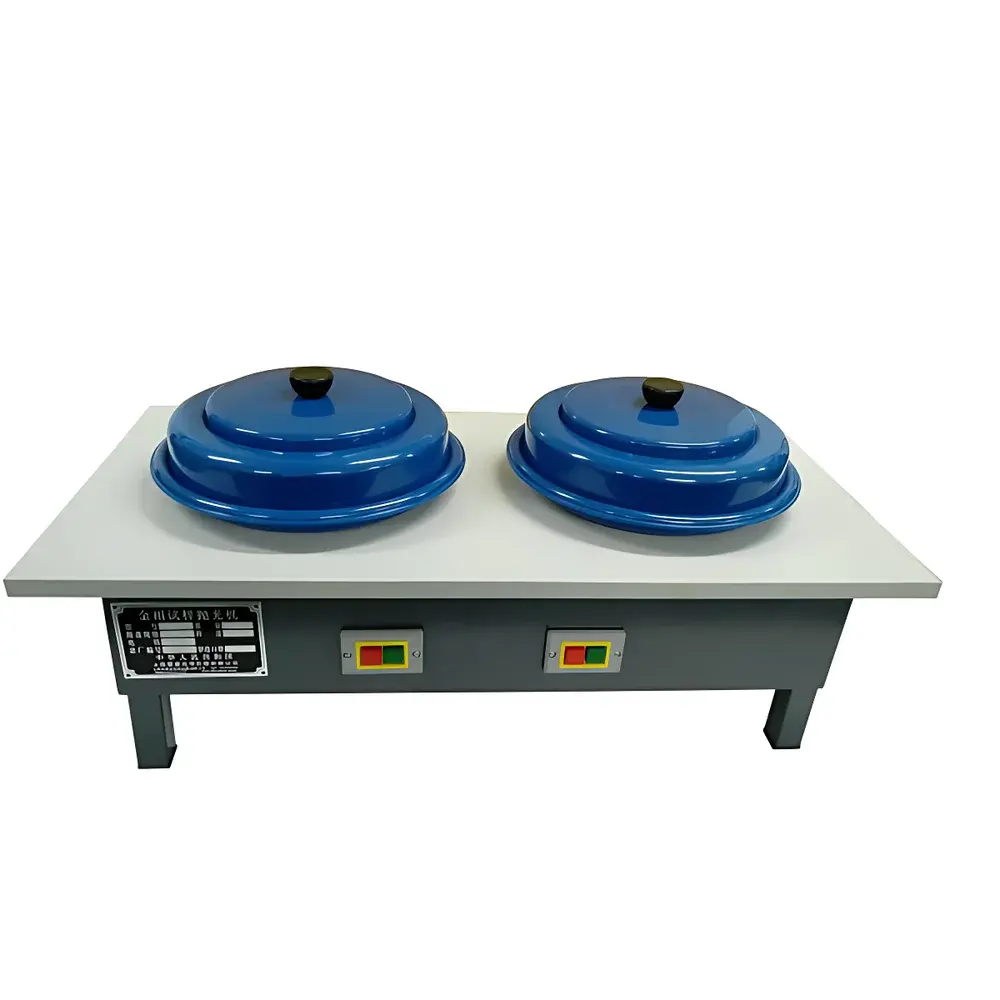
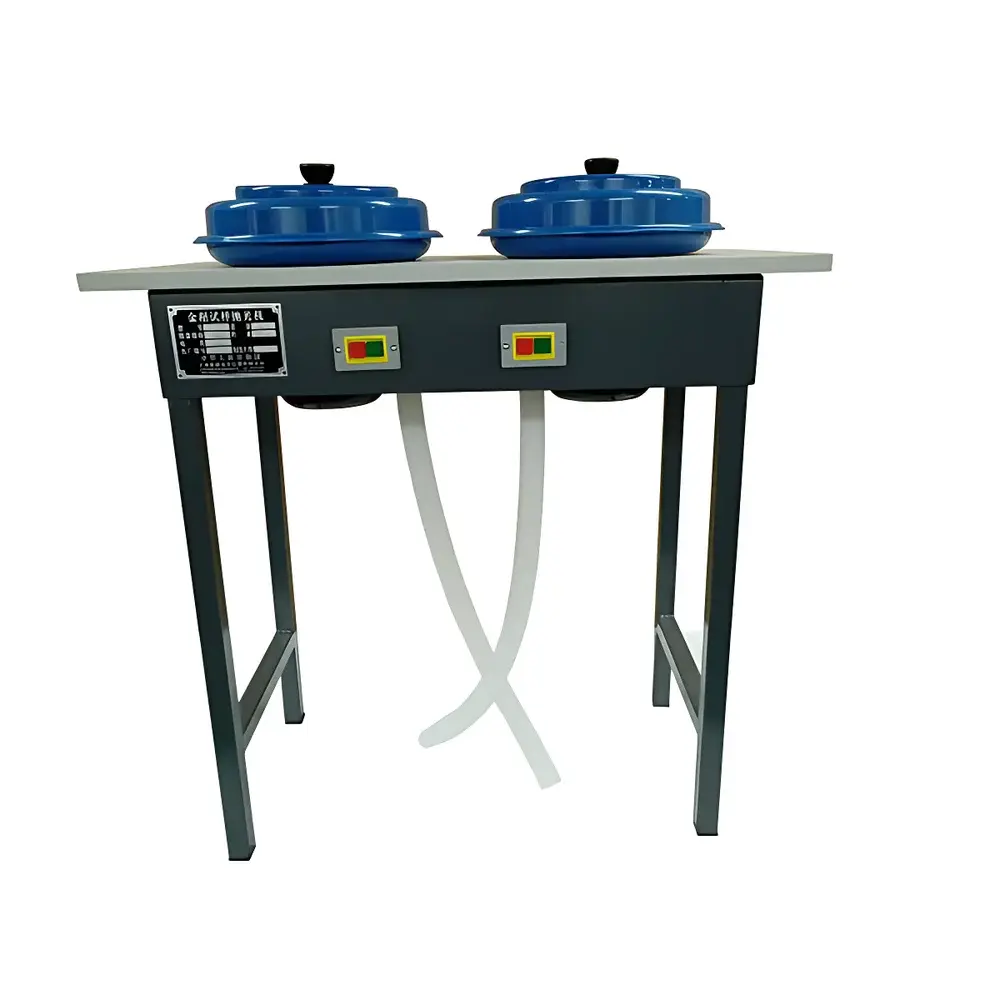
Caikon PG-2 Dual-Disc Vertical Polishing Machine
| Brand | Caikon |
|---|---|
| Origin | Shanghai, China |
| Manufacturer Type | Direct Manufacturer |
| Model | PG-2 / PG-2A |
| Dimensions (L×W×H) | PG-2: 810 × 400 × 920 mm |
| PG-2A | 810 × 400 × 350 mm |
| Number of Polishing Discs | 2 |
| Disc Diameter | 200 mm |
| Rotational Speed | 900 rpm (adjustable to 1400 rpm) |
| Motor | YS7116, 0.2 kW |
| Power Supply | 380 V, 50 Hz |
| Weight | PG-2: 26 kg |
| PG-2A | 23 kg |
Overview
The Caikon PG-2 Dual-Disc Vertical Polishing Machine is a precision-engineered laboratory instrument designed for consistent, high-quality surface preparation of metallurgical, ceramic, and composite specimens prior to microstructural analysis. Operating on the principle of rotational mechanical polishing—where specimens are pressed against rotating abrasive or cloth-covered discs under controlled pressure and lubrication—the PG-2 delivers reproducible surface finishes essential for accurate optical microscopy, SEM imaging, and quantitative metallographic evaluation. Its dual-disc configuration enables simultaneous polishing of two samples or sequential use of coarse and fine abrasives on separate discs, significantly improving workflow efficiency in QC labs, R&D centers, and academic metallography facilities. The machine’s vertical architecture minimizes floor space requirements while maintaining structural rigidity and vibration damping—critical for minimizing edge rounding and subsurface deformation during final polishing stages.
Key Features
- Dual independent 200 mm diameter polishing discs, each driven by a dedicated 0.2 kW induction motor with robust thermal protection and low-noise operation (≤65 dB(A) at 1 m).
- Adjustable rotational speed: standard 900 rpm (optimized for final polishing with diamond suspension or alumina slurries); optionally configurable up to 1400 rpm for aggressive pre-polishing with silicon carbide papers or embedded abrasives.
- Stainless steel column and base construction with anti-corrosion epoxy coating, ensuring long-term dimensional stability and resistance to common polishing lubricants (e.g., water-based coolants, ethanol, and mild surfactant solutions).
- Ergonomic vertical design with height-adjustable specimen holder arm and integrated drip tray—facilitating operator comfort during extended sessions and preventing coolant spillage onto lab benches or flooring.
- Compliance-ready electrical system: CE-marked components, IP20-rated enclosure, and grounding continuity certified per IEC 61000-6-2/6-4 for electromagnetic compatibility in shared laboratory environments.
Sample Compatibility & Compliance
The PG-2 accommodates standard metallographic mounts (up to 30 mm diameter hot-pressed or cold-cured resin mounts), as well as larger custom specimens (max. 50 mm × 50 mm footprint) when secured with optional magnetic or vacuum chucks. It supports all conventional polishing consumables—including woven and non-woven cloths (e.g., napped polyester, synthetic suede), diamond-impregnated pads (1–6 µm), colloidal silica suspensions (pH 9–10), and alumina-based slurries (0.05–3 µm). The machine meets foundational safety and performance benchmarks aligned with ISO 14971 (risk management for medical devices), ASTM E3-22 (Standard Guide for Preparation of Metallographic Specimens), and GB/T 228.1-2021 (Chinese national standard for tensile testing specimen preparation). While not FDA-registered, its design facilitates integration into GLP-compliant workflows through traceable operational parameters and documented maintenance logs.
Software & Data Management
The PG-2 operates as a standalone electromechanical system without embedded firmware or digital interface. However, its mechanical repeatability—validated via inter-laboratory round-robin studies—supports audit-ready documentation when paired with external process control protocols. Users may integrate speed settings, polishing duration, and consumable lot numbers into LIMS or ELN platforms (e.g., LabVantage, Benchling) using manual entry or barcode-scanned SOP templates. Optional analog tachometer output (0–10 V DC proportional to rpm) permits third-party data acquisition for real-time monitoring in ISO/IEC 17025-accredited laboratories requiring continuous parameter logging.
Applications
- Routine preparation of ferrous and non-ferrous alloys (steels, aluminum, titanium, copper) for grain size analysis per ASTM E112 and ISO 643.
- Polishing of brittle ceramics (Al₂O₃, ZrO₂, SiC) and cemented carbides without chipping or pull-out—enabled by balanced torque delivery and low-vibration disc mounting.
- Preparation of geological thin sections and mineralogical samples requiring scratch-free surfaces for cathodoluminescence or electron backscatter diffraction (EBSD).
- QC validation of additive manufacturing parts (e.g., Ti-6Al-4V LPBF builds), where surface integrity directly correlates with fatigue life prediction models.
- Teaching laboratories: intuitive controls and visible mechanical linkage support pedagogical demonstration of material removal mechanics and surface finish evolution.
FAQ
Is the PG-2 compatible with automated polishing arms or robotic sample handlers?
No—the PG-2 is a manually operated unit without motorized Z-axis or programmable motion control. Integration with automation requires third-party retrofitting and is not supported by Caikon’s warranty.
Can the polishing speed be calibrated or certified for metrological traceability?
Yes—speed calibration can be performed using a handheld optical tachometer (NIST-traceable, Class 1 accuracy ±0.1%); Caikon provides a calibration certificate template upon request.
What maintenance intervals are recommended for long-term reliability?
Motor bearings require re-greasing every 1,500 operating hours; disc mounting flanges should be torque-checked quarterly (12 N·m); and coolant lines must be flushed biweekly if aqueous slurries are used.
Does the PG-2 meet requirements for ISO/IEC 17025 accreditation?
While the instrument itself is not accredited, its design enables compliance with clause 6.4.10 (equipment verification) when used with documented calibration records, preventive maintenance logs, and operator competency assessments.
Are replacement polishing discs and mounting kits available globally?
Yes—standard M14-threaded 200 mm aluminum discs and rubber-backed cloth adapters are stocked by authorized Caikon distributors in North America, EU, and APAC regions; lead time averages 2–3 weeks ex-warehouse Shanghai.
Related Products



