
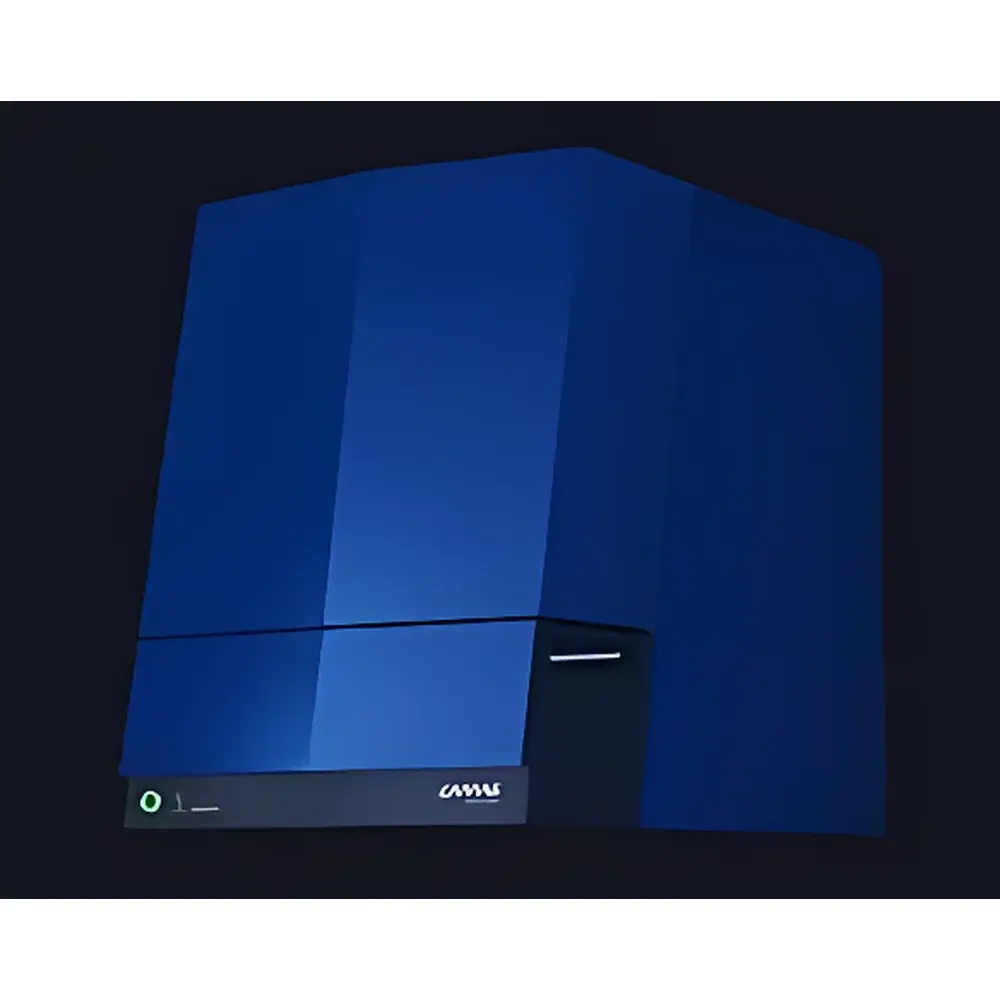
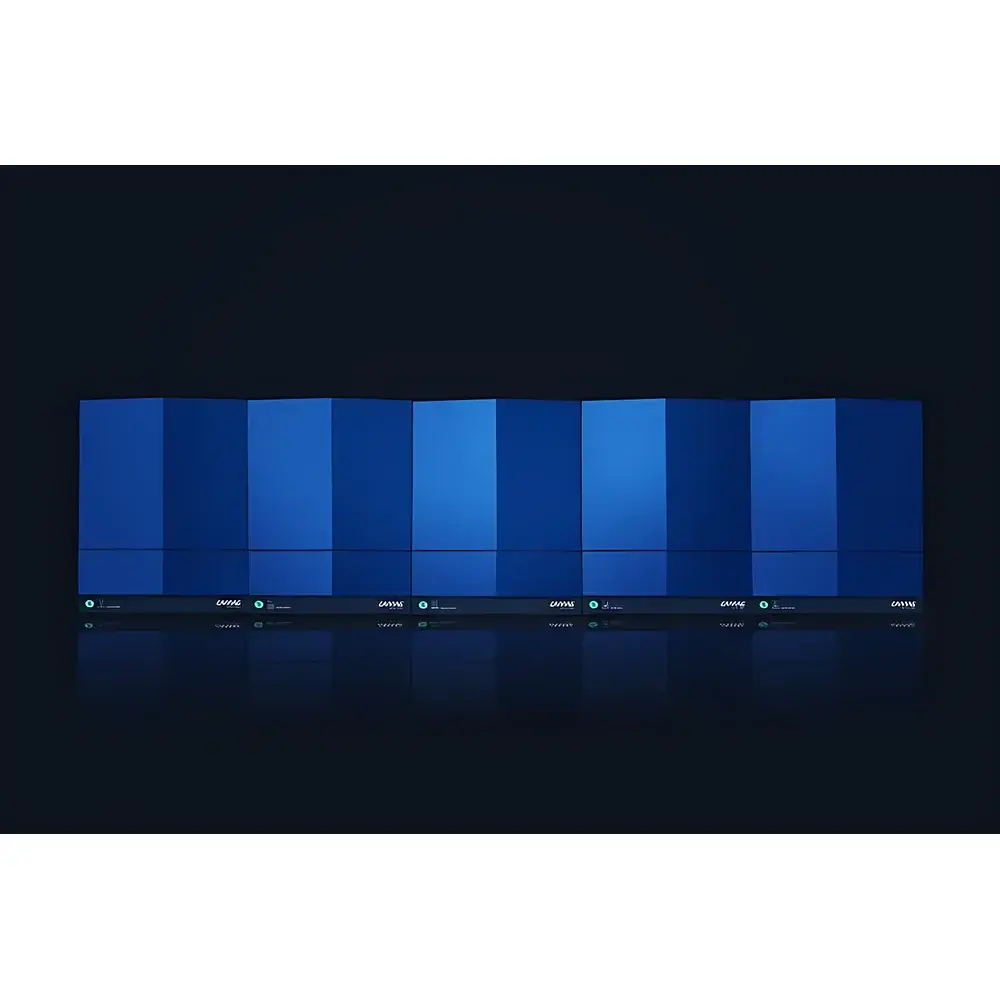
CAMAG HPTLC PRO Automated High-Performance Thin-Layer Chromatography System
| Brand | CAMAG |
|---|---|
| Origin | Switzerland |
| Model | HPTLC PRO |
| Instrument Type | Preparative TLC System |
| Operation Mode | Fully Automatic |
| Sample Capacity | Up to 75 samples per run |
| Plate Capacity | Up to 5 TLC plates simultaneously |
| Solvent Systems | Up to 3 different developing solvents in one sequence |
| Software Compliance | FDA 21 CFR Part 11 compliant |
| Module Dimensions | 384 × 550 × 510 mm (W × D × H) |
Overview
The CAMAG HPTLC PRO Automated High-Performance Thin-Layer Chromatography System represents the world’s first fully integrated, modular platform engineered for end-to-end automation of high-performance thin-layer chromatography (HPTLC). Unlike conventional TLC workflows requiring manual intervention at every stage, the HPTLC PRO implements a deterministic, closed-loop process chain—spanning sample application, solvent development, derivatization, digital imaging, quantitative densitometric analysis, and regulatory-compliant reporting. Its core architecture is grounded in standardized HPTLC methodology as defined by ISO 17025-accredited laboratories and aligned with pharmacopoeial monographs (e.g., USP , Ph. Eur. 2.2.29, and JP 6.07). By eliminating operator-dependent variables—including spotting volume consistency, chamber saturation kinetics, and post-derivatization timing—the system delivers intralaboratory reproducibility (RSD < 3% for peak area across replicate plates) while preserving the inherent methodological flexibility of planar chromatography.
Key Features
- Fully automated, unattended multi-plate sequencing: supports up to five pre-coated silica or specialized stationary-phase plates (e.g., RP-18, NH₂, Diol) per batch, with independent control of development distance, solvent front tracking, and chamber saturation time.
- Modular design with interoperable units: Sample Application Unit (ATS 4), Development Chamber (ADC 2), Derivatization Oven (CD 60), and Scanning Densitometer (TLC Scanner 4) share common mechanical interfaces and communication protocols, enabling both standalone operation and synchronized workflow orchestration.
- In situ coupling capability: Integrated interface for direct hyphenation with mass spectrometry systems (e.g., MALDI-TOF, DESI-MS), permitting localized analyte extraction and ionization from resolved bands without physical scraping—enabling structural confirmation and molecular weight assignment.
- Precision micro-dosing technology: Uses piezoelectric dispensing nozzles with volumetric accuracy ±0.2 µL per spot, supporting serial dilution series, internal standard co-spotting, and gradient application patterns for method development.
- Environmental control integration: Real-time monitoring of temperature (±0.5 °C), humidity (±3% RH), and solvent vapor pressure within the development chamber to ensure thermodynamic equilibrium during migration—critical for reproducible Rf values in multi-solvent gradient runs.
Sample Compatibility & Compliance
The HPTLC PRO accommodates a broad spectrum of sample matrices without prior cleanup or filtration, including crude botanical extracts, fermentation broths, lipid-rich food homogenates, cosmetic emulsions, and polymer leachates. Its open-platform plate format accepts commercially available HPTLC plates (10 × 10 cm, 20 × 10 cm, or 20 × 20 cm) with layer thicknesses from 100 µm to 250 µm and diverse chemistries (silica gel 60 F254, aluminum oxide, cellulose, chiral phases). All hardware and software modules are designed and validated in accordance with ICH Q2(R2) guidelines for analytical procedure validation. The visionCATS software meets FDA 21 CFR Part 11 requirements for electronic records and signatures, including full audit trail logging, user role-based access control, electronic signature capture, and data integrity safeguards (ALCOA+ principles). System qualification documentation (DQ/IQ/OQ/PQ) is provided per GMP/GLP standards.
Software & Data Management
visionCATS v3.x serves as the unified control and evaluation environment for the HPTLC PRO platform. It enables method-driven automation scripting, real-time status visualization of all active modules, and synchronized data acquisition from optical detection (UV/Vis/FL), densitometric scanning, and optional MS output streams. Raw image files (TIFF, 16-bit grayscale) and quantified peak tables (CSV, XML) are stored in a relational database with immutable metadata tagging—including instrument ID, operator ID, environmental logs, and version-controlled method parameters. Batch processing supports statistical comparison across multiple plates (e.g., ANOVA of Rf shifts, PCA of densitogram profiles), and report generation complies with ISO/IEC 17025 clause 7.8.2 for result reporting. Data export formats include PDF/A-2 for archival, SDF for cheminformatics integration, and LIMS-compatible HL7 ADT messages.
Applications
- Pharmaceutical quality control: Identity testing and assay of herbal drug products per WHO TRS 1010 Annex 9; stability-indicating impurity profiling in APIs under ICH Q5C conditions.
- Natural product research: Fingerprinting of polyphenols, alkaloids, and terpenoids in plant extracts; comparative metabolite mapping across cultivars or harvest seasons.
- Food authenticity and adulteration screening: Detection of synthetic dyes in spices, melamine in dairy powders, or unauthorized preservatives in beverages using dual-wavelength reflectance scanning.
- Cosmetic safety assessment: Residual solvent verification in essential oil distillates; heavy metal chelate formation studies via complexometric derivatization.
- Environmental monitoring: Screening of PAHs and PCBs in soil extracts using reversed-phase HPTLC with fluorescence enhancement and spectral deconvolution.
FAQ
Can the HPTLC PRO perform quantitative analysis without calibration curves?
Yes—via relative quantification using internal standard normalization or reference band intensity correction, though absolute quantitation requires bracketing calibrants per ICH Q2(R2) Section 4.2.
Is method transfer from manual TLC to HPTLC PRO straightforward?
Method translation is supported through built-in parameter mapping tools that convert hand-spotted volumes to piezoelectric dispense settings and adjust development times based on chamber geometry and solvent viscosity models.
Does the system support non-destructive detection modes?
Yes—UV absorption at 254 nm and 366 nm, visible reflectance, and fluorescence imaging are fully non-invasive; subsequent derivatization or MS coupling remains possible on the same plate.
How is plate alignment maintained across automated modules?
Each module employs a dual-camera fiducial recognition system calibrated to ISO 10360-7 geometric tolerances, ensuring sub-100 µm positional repeatability between spotting, development, and scanning stages.
Can visionCATS integrate with enterprise LIMS or ERP systems?
Yes—via configurable RESTful API endpoints and ODBC/JDBC drivers; certified connectors exist for Thermo Fisher SampleManager, LabVantage, and Siemens Opcenter Quality.





