
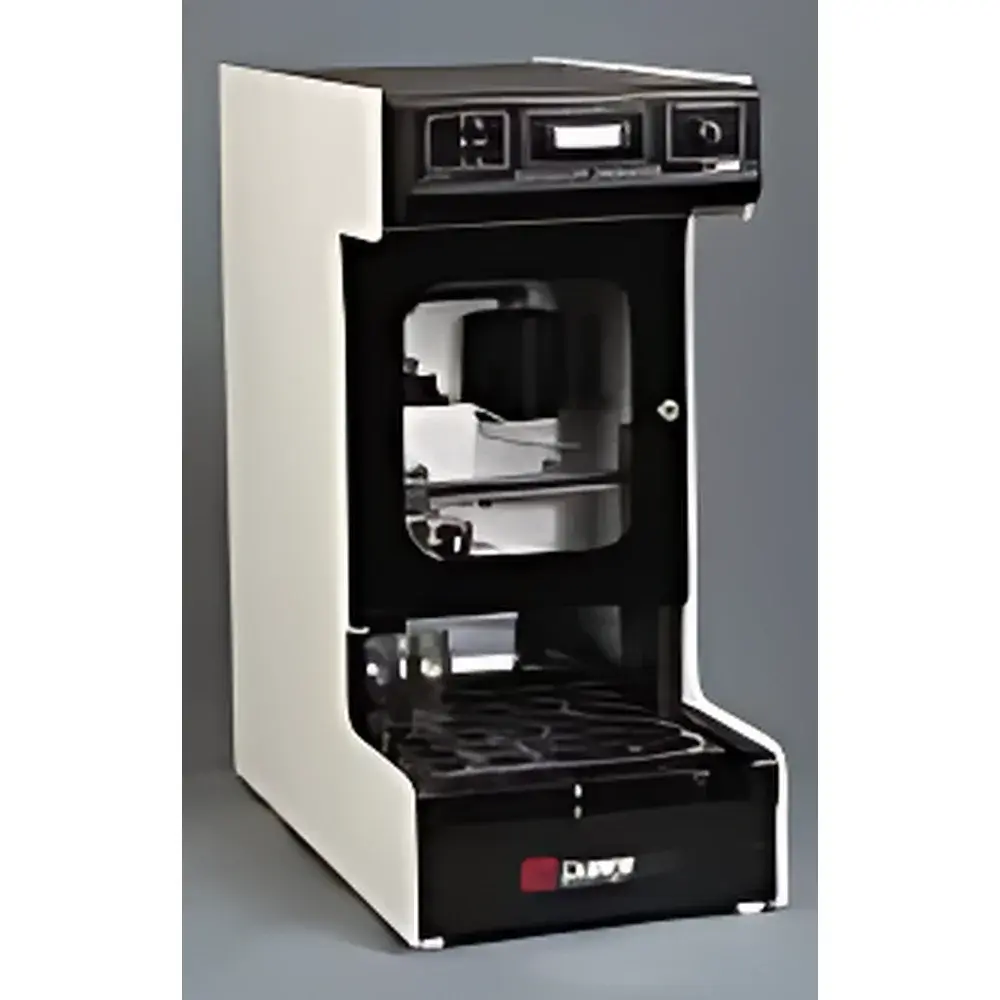
CANNON CCS-2100F Cold Cranking Simulator for Engine Oil Apparent Viscosity Measurement
| Brand | CANNON |
|---|---|
| Origin | USA |
| Model | CCS-2100F |
| Instrument Type | Rotational Viscometer (Cold Cranking Simulator) |
| Temperature Range | −35 °C to −5 °C |
| Temperature Resolution & Accuracy | ±0.05 °C |
| Apparent Viscosity Range | 1,500–27,000 mPa·s |
| Compliance | ASTM D5293, SAE J300-99, GB/T 6538 |
| Cooling Method | Solid-State Thermoelectric (No Refrigerants) |
| Sample Throughput | 30 Samples per Unattended Run |
| Control System | Windows-Based PC with CCS-RA Interface and LIMS-Ready Software |
| Power Supply | 230 V / 50 Hz / 1000 W |
Overview
The CANNON CCS-2100F Cold Cranking Simulator is an automated, thermoelectrically cooled rotational viscometer engineered specifically for determining the apparent viscosity of engine oils at low temperatures—critical for evaluating low-temperature pumpability and cranking performance in internal combustion engines. It operates on the principle of controlled shear-rate measurement under simulated cold-start conditions, applying a defined torque to a rotating spindle immersed in the test oil while maintaining precise thermal equilibrium within the test chamber. Unlike conventional capillary or rotational viscometers, the CCS-2100F replicates the hydrodynamic conditions experienced by engine oil during cranking at sub-zero temperatures, as standardized in ASTM D5293 and SAE J300. Its design eliminates manual intervention after sample loading: once 30 samples are placed on the integrated X-Y sample carousel and assigned identifiers, the system executes full-cycle testing—including temperature equilibration, viscosity measurement, inter-sample cleaning, waste evacuation, and data reporting—without operator supervision.
Key Features
- Fully automated operation with unattended 30-sample batch processing; no real-time operator monitoring required.
- Integrated solid-state cooling module (no CFCs, HFCs, or flammable refrigerants), delivering stable temperature control from −35 °C to −5 °C with ±0.05 °C resolution and accuracy.
- Self-cleaning mechanism using residual test oil—no solvent consumption—enhanced by programmable heating cycles to ensure complete removal of high-viscosity residues from the measurement cavity.
- Modular simulation chamber combining viscosity sensing, vacuum-assisted waste evacuation, and precision-driven spindle actuation in a single compact unit.
- CCS-RA digital interface and proprietary Windows-based software enabling instrument self-calibration, real-time torque-to-viscosity conversion, and traceable audit logs compliant with GLP and FDA 21 CFR Part 11 requirements (when configured with electronic signature and audit trail modules).
- Configurable temperature testing points at 5 °C intervals (−5, −10, −15, −20, −25, −30, −35 °C), each validated against NIST-traceable reference oils included in the standard calibration set (12 certified viscosity standards, CL100–CL740).
Sample Compatibility & Compliance
The CCS-2100F is validated exclusively for engine oils meeting API, ACEA, and ILSAC specifications, including conventional, synthetic, and low-SAPS formulations. It supports direct analysis of neat oils without dilution or pre-filtration, provided samples meet ASTM D5293’s particulate and moisture limits (<0.1% water, <0.05% insolubles). All measurements comply with the mandatory procedural constraints of ASTM D5293 (including specified ramp rates, dwell times, and shear history controls) and SAE J300 viscosity classification requirements for winter-grade oils (e.g., 0W, 5W, 10W). The instrument’s temperature calibration is certified annually (or semiannually per user-defined SOP), eliminating need for repeated point calibration across test temperatures. Full compliance documentation—including factory verification reports, traceable calibration certificates, and method validation summaries—is supplied with each system.
Software & Data Management
The CCS-2100F runs on a dedicated Windows platform (Windows 10 IoT Enterprise recommended; backward-compatible with Windows 7/8.1) hosting the CCS Control Suite—a modular application supporting method setup, run scheduling, real-time monitoring, and post-acquisition analysis. Data files are stored in structured CSV and XML formats, with optional integration into laboratory information management systems (LIMS) via ODBC or HL7 interfaces. Audit trails record all user actions, parameter changes, calibration events, and result modifications with timestamps and operator IDs. Electronic signatures, role-based access control, and encrypted database storage are available to meet GMP/GLP and ISO/IEC 17025 documentation integrity requirements. Historical datasets support trend analysis, statistical process control (SPC), and comparative benchmarking across batches, suppliers, or formulation iterations.
Applications
- Formulation development and QC release testing of multi-grade engine oils for OEM approval (e.g., GM dexos®, Ford WSS-M2C945-A, MB-Approval 229.5).
- Low-temperature performance validation for heavy-duty diesel and gasoline engine lubricants.
- Supporting regulatory submissions requiring ASTM D5293-compliant viscosity data (e.g., EPA Tier 3, EU ACEA licensing).
- Root-cause analysis of cold-start failures, pump cavitation, or delayed oil circulation in field trials.
- Interlaboratory proficiency testing and round-robin studies coordinated under ASTM Committee D02 on Petroleum Products and Lubricants.
FAQ
What standards does the CCS-2100F directly support?
ASTM D5293, SAE J300-99, and GB/T 6538. It is formally recognized by ASTM Committee D02 as a primary reference instrument for cold cranking simulation.
Does the system require external refrigeration or coolant circulation?
No—temperature control is achieved entirely via solid-state thermoelectric modules; no external chiller, glycol loop, or compressed-gas supply is needed.
How is calibration traceability maintained?
Each system ships with a NIST-traceable calibration kit (12 certified reference oils) and a documented calibration certificate valid for one year; requalification follows ASTM D5293 Annex A1 procedures.
Can the CCS-2100F be integrated into a networked QC environment?
Yes—it supports secure Ethernet connectivity, remote diagnostics, and bidirectional LIMS integration with configurable data export protocols and user-access governance.
What maintenance is required between sample runs?
None beyond routine visual inspection of the sample carousel and waste reservoir; the oil-flush cleaning cycle and self-diagnostic routines eliminate daily servicing obligations.



