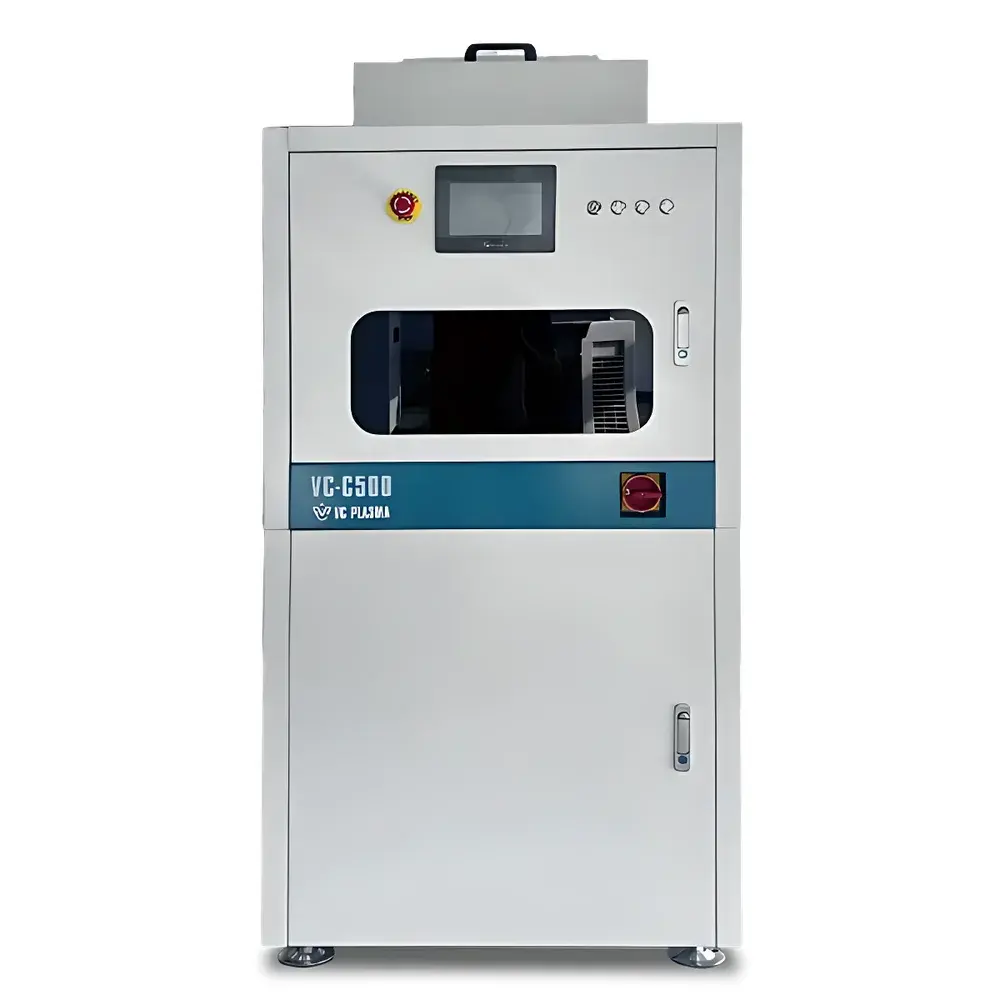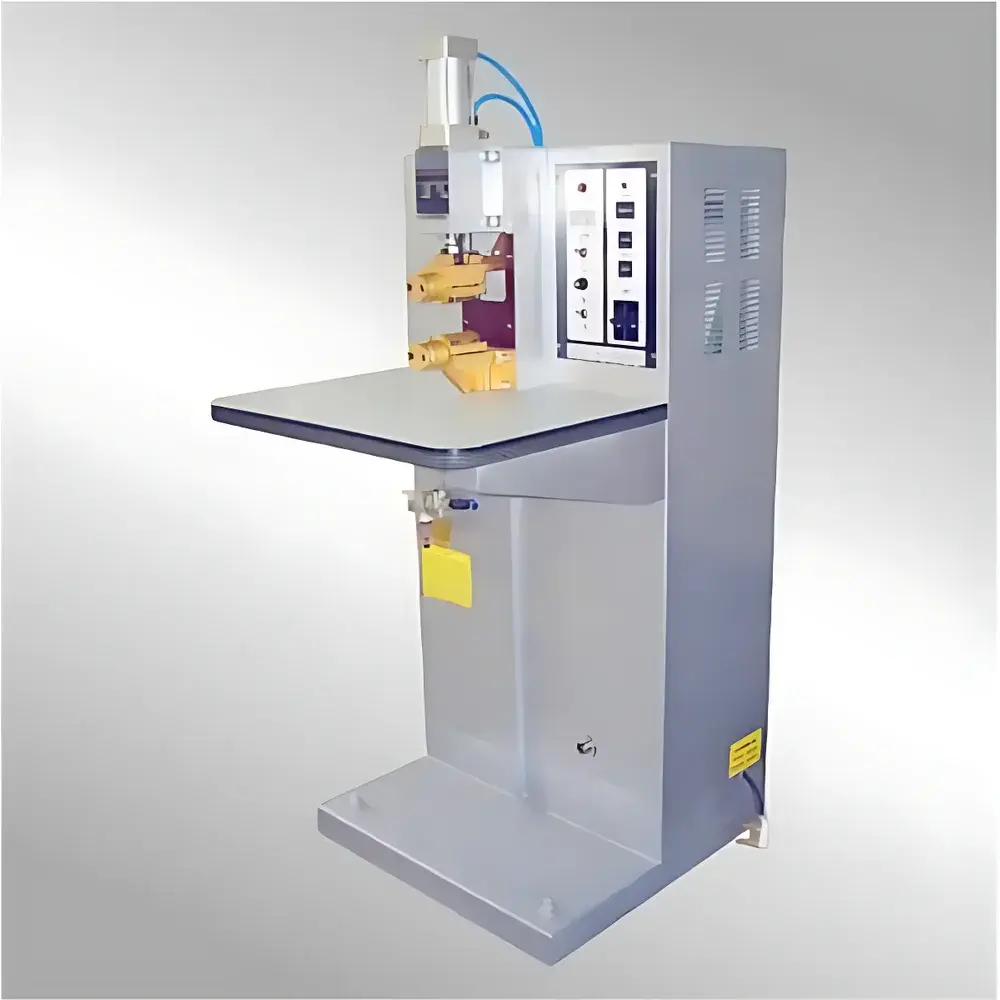
Capacitor Energy Storage Welding Machine PYC500 by Zhengye
| Brand | Zhengye |
|---|---|
| Origin | Guangdong, China |
| Manufacturer Type | Direct Manufacturer |
| Country of Origin | China |
| Model | PYC500 |
| Pricing | Available Upon Request |
Overview
The Zhengye PYC500 Capacitor Energy Storage Welding Machine is an industrial-grade resistance welding system engineered for high-precision, low-heat-input joining of thin-gauge and dissimilar conductive materials—particularly critical in semiconductor packaging, battery cell interconnection, and micro-electronic assembly. Unlike conventional AC or inverter-based welders, the PYC500 operates on a capacitor discharge (CD) principle: electrical energy is slowly charged into a high-efficiency electrolytic capacitor bank and then released in a precisely controlled, sub-millisecond pulse. This results in extremely high peak current (up to several kA), minimal thermal diffusion, and negligible base metal distortion—making it ideal for heat-sensitive components such as lithium-ion battery tabs, copper-aluminum busbar joints, and fine-pitch semiconductor lead frames.
Key Features
- High-energy capacitor bank utilizing CHEMI-CON® high-cycle-life electrolytic capacitors—rated for ≥100,000 charge/discharge cycles with <±2% capacitance drift over lifetime.
- Adjustable energy output range: 500 J to 50,000 J (configurable per application), enabling scalable weld intensity without hardware modification.
- Digital pulse timing control with microsecond-level resolution (±10 µs accuracy), ensuring repeatable weld consistency across production batches.
- Integrated real-time current and voltage monitoring with analog-to-digital sampling at ≥100 kS/s—supporting closed-loop energy regulation and process traceability.
- Robust mechanical architecture featuring hardened tungsten-copper electrodes, pneumatic force control (0.1–5.0 kN adjustable), and ISO 9001-certified structural assembly.
- Low grid demand: average input power ≤1.5 kW during charging; peak line current <8 A @ 220 VAC—reducing facility infrastructure requirements and operational electricity cost by 85–90% vs. equivalent-duty AC welders.
Sample Compatibility & Compliance
The PYC500 accommodates a broad spectrum of conductive materials up to 5 mm thickness—including austenitic stainless steels (304, 316), oxygen-free copper (C10100), pure aluminum (1060, 1100), and silver-plated alloys—without requiring filler metals or shielding gas. It supports reliable welding of dissimilar metal combinations (e.g., Cu–Al, Al–Ni, Cu–Ni), where galvanic compatibility and intermetallic phase formation are mitigated by ultra-short thermal exposure (<15 ms). The system complies with IEC 60204-1 (electrical safety), EN 60974-1 (arc welding equipment safety), and meets electromagnetic compatibility (EMC) requirements per EN 61000-6-3/6-4. For regulated manufacturing environments, optional audit-ready data logging satisfies GLP/GMP documentation needs under FDA 21 CFR Part 11 when paired with validated software modules.
Software & Data Management
The PYC500 integrates with Zhengye’s proprietary WeldControl Suite v3.2—a Windows-based interface supporting recipe management, waveform visualization (I(t), V(t), E(t)), statistical process control (SPC), and CSV/Excel export. All weld events—including energy setpoint, actual delivered energy, electrode force, pulse width, and pass/fail status—are timestamped and stored locally with SHA-256 hashing for integrity verification. Optional OPC UA server integration enables seamless connectivity to MES platforms (e.g., Siemens Opcenter, Rockwell FactoryTalk) and supports automated reporting for ISO/TS 16949 and IATF 16949 quality audits.
Applications
- Lithium-ion battery module assembly: tab-to-cell, busbar-to-terminal, and nickel/copper foil stacking.
- Semiconductor packaging: bonding of lead frames (Cu, Fe–Ni alloys), die attach substrates, and sensor housing interconnects.
- Power electronics: joining of IGBT module terminals, heatsink interfaces, and flexible printed circuit (FPC) terminations.
- Medical device manufacturing: hermetic sealing of titanium–stainless steel housings and miniature electrode assemblies.
- Consumer electronics: micro-welding of USB-C connector contacts, wireless charging coil terminations, and MEMS package lids.
FAQ
What types of materials can be welded with the PYC500?
Stainless steel (up to 5 mm), copper, aluminum, silver, nickel, and their dissimilar combinations—including Cu–Al and Al–Ni joints commonly found in battery and power electronics applications.
Does the PYC500 require external cooling or compressed air?
Yes—continuous operation requires forced-air cooling for the capacitor bank and pneumatic actuation (0.4–0.6 MPa) for electrode clamping. Ambient operating temperature range: 5–40 °C.
Is the system compatible with automated production lines?
Yes—equipped with standard digital I/O (24 V DC), RS-485 Modbus RTU, and optional Ethernet/IP or PROFINET for PLC synchronization and robotic arm handshaking.
How is weld quality verified in real time?
By monitoring instantaneous current and voltage waveforms; deviations exceeding ±3% from nominal energy delivery trigger automatic rejection and log entry.
Can the PYC500 be validated for ISO 13485 or AS9100 compliance?
Yes—Zhengye provides IQ/OQ documentation templates, calibration certificates traceable to NIM (China), and support for third-party validation protocols upon request.