
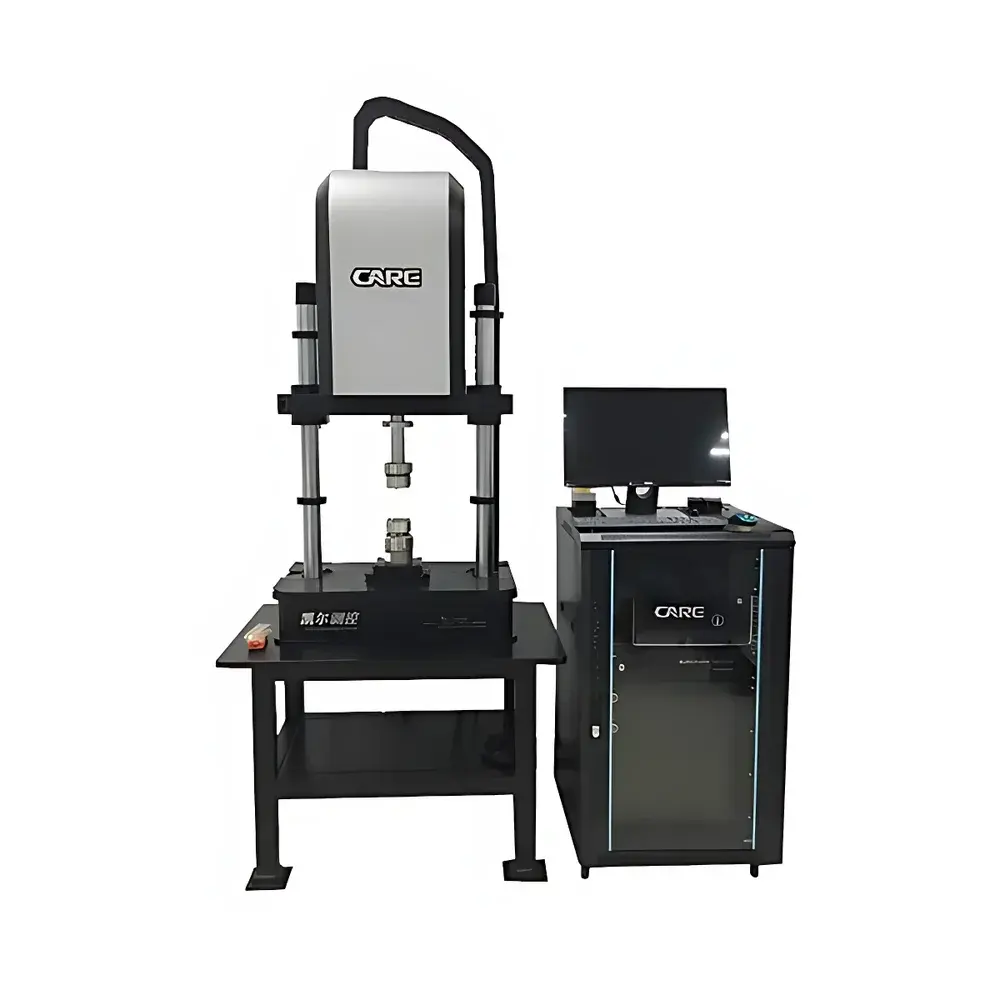
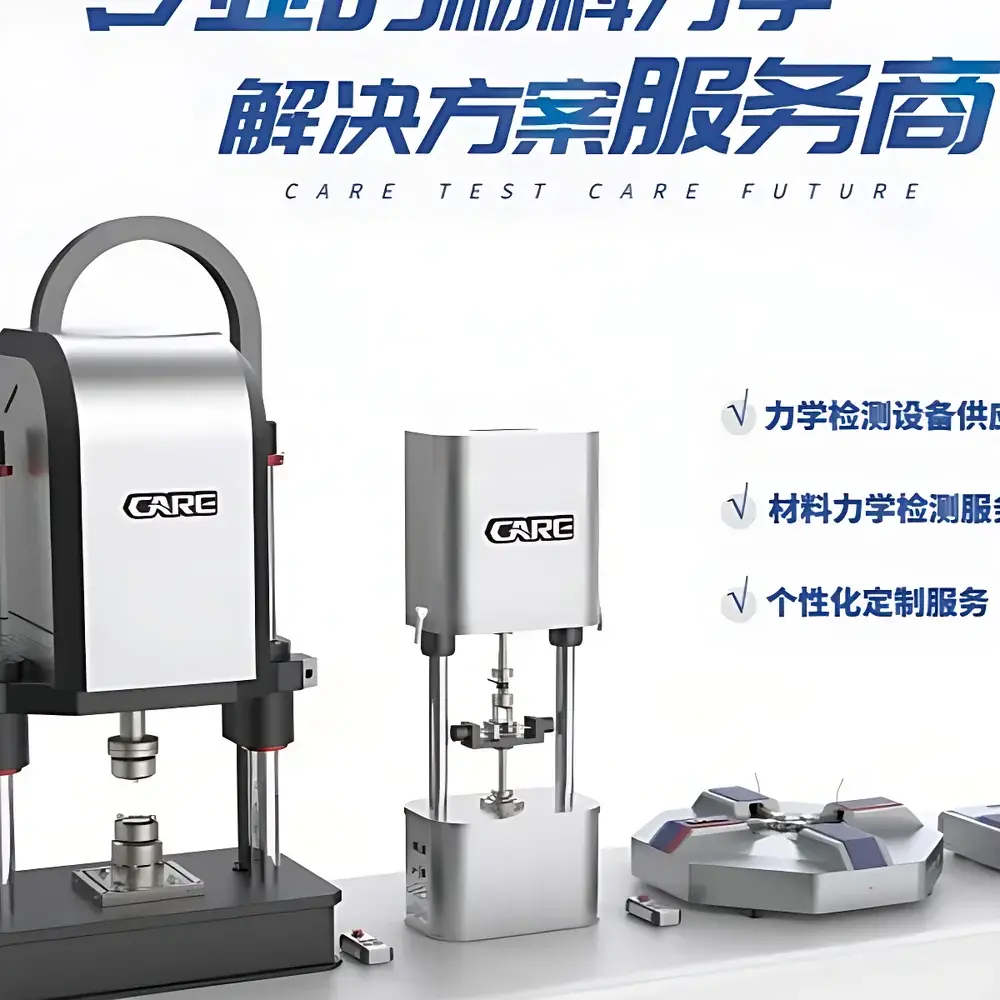
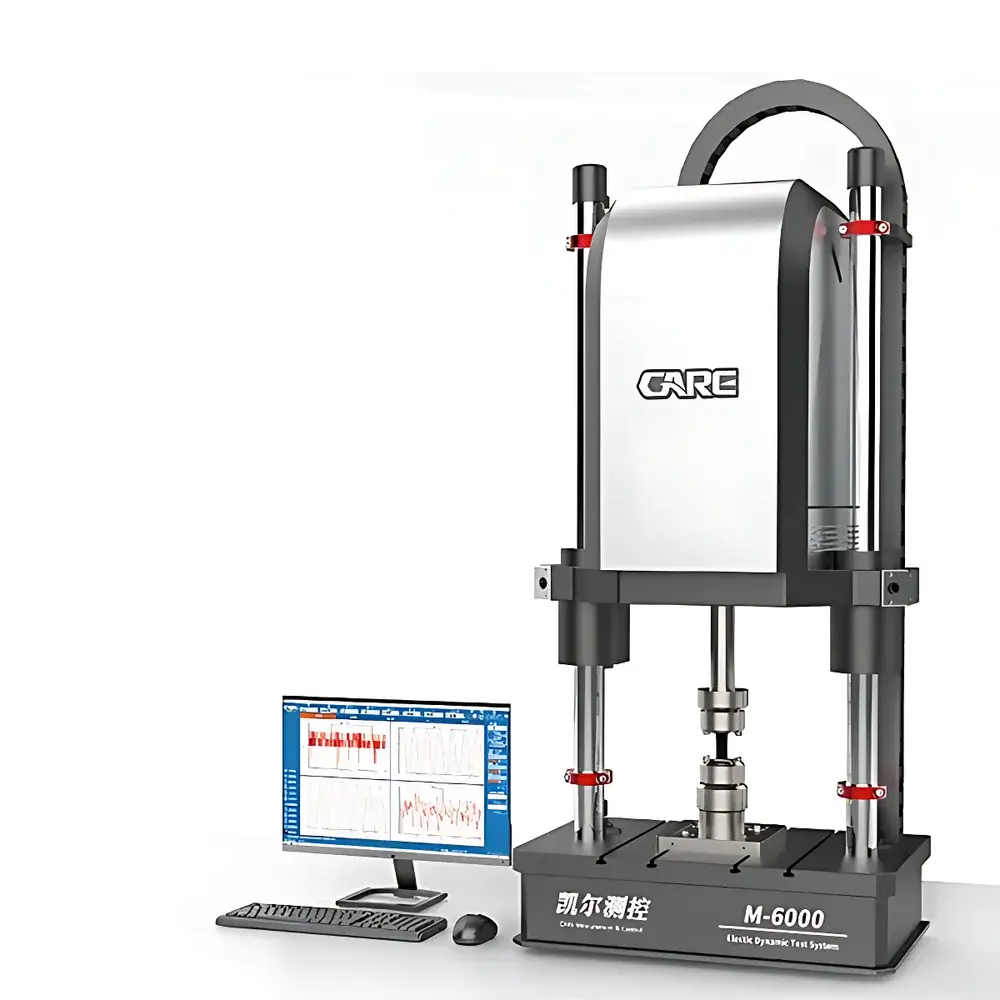
CARE M-3000 Electromagnetic High-Frequency Dynamic Fatigue Testing System
| Brand | CARE |
|---|---|
| Origin | Tianjin, China |
| Manufacturer Type | Original Equipment Manufacturer (OEM) |
| Model | M-3000 |
| Pricing | Available upon Request |
Overview
The CARE M-3000 Electromagnetic High-Frequency Dynamic Fatigue Testing System is an advanced servo-electromagnetic testing platform engineered for high-precision, high-speed mechanical characterization of structural and functional materials under dynamic loading conditions. Unlike traditional hydraulic or electromechanical systems, the M-3000 employs a direct-drive electromagnetic actuator—eliminating gearboxes, belts, hydraulics, and backlash-prone mechanical linkages. This architecture enables true linear force-to-current transduction with sub-millisecond response time, enabling stable sinusoidal, block, ramp, or arbitrary waveform loading up to 100 Hz in both tension and compression modes. The system operates on the principle of Lorentz-force actuation: current passing through voice-coil windings within a high-strength permanent magnetic field generates controllable axial force proportional to input current—ensuring zero hysteresis, minimal phase lag, and exceptional repeatability across millions of cycles. Designed for laboratory-scale R&D, quality control, and standards-compliant validation, the M-3000 supports ISO 1099, ASTM E466, E606, and E2207 fatigue test protocols, and integrates seamlessly into GLP/GMP-regulated environments requiring audit-trail-capable data acquisition.
Key Features
- Direct-drive electromagnetic actuation delivering 0–100 Hz dynamic loading with <1° phase shift at 50 Hz and <2° at 100 Hz
- Backlash-free, zero-hysteresis force generation—no mechanical transmission losses or thermal drift from oil viscosity or gear wear
- High-fidelity closed-loop control using proprietary CARE digital controller and matched amplifier, supporting real-time PID tuning and waveform synthesis
- Integrated high-accuracy load cell (±0.5% FS accuracy, 10,000 Hz sampling) and non-contact displacement sensor (LVDT or optical encoder, ±0.1 µm resolution)
- 10-year warranty on core electromagnetic actuator assembly—validated via accelerated life testing per IEC 60068-2-64
- Modular hardware architecture: optional torsion channel enables simultaneous axial-torsional fatigue testing at up to 50 Hz and ±100 N·m peak torque
- Thermal management system with forced-air cooling and real-time coil temperature monitoring to maintain force linearity across extended duty cycles
Sample Compatibility & Compliance
The M-3000 accommodates specimens ranging from miniature coupons (e.g., ASTM E8/E21 dog-bone geometries ≥ 2 mm gauge width) to full-scale components such as fasteners, weldments, composite laminates, and biomedical implants. Standard grips include pneumatic, wedge, and hydraulic options; custom fixtures are supported via ISO 14224-compliant mounting interfaces. All firmware and controller software comply with IEC 61508 SIL2 for functional safety, and the system meets CE Machinery Directive 2006/42/EC requirements. For regulated industries, optional FDA 21 CFR Part 11-compliant software modules provide electronic signatures, audit trails, and user role-based access control—fully traceable to ALCOA+ principles.
Software & Data Management
CARE TestSuite™ v5.x is the native control and analysis platform—built on a deterministic real-time OS with dual-channel synchronized acquisition (load + displacement + optional strain/torque/temperature). It supports script-driven test sequencing (Python API), automated pass/fail evaluation against user-defined thresholds, and export to ASTM E2003-compliant .tdms or ISO 8601-aligned CSV formats. Raw data is stored with embedded metadata including calibration certificates, environmental logs, and operator credentials. Integration with third-party systems (e.g., LabVIEW, MATLAB, MES platforms) is enabled via OPC UA and RESTful APIs. All software updates undergo regression testing per ISO/IEC 17025:2017 Annex A.3.
Applications
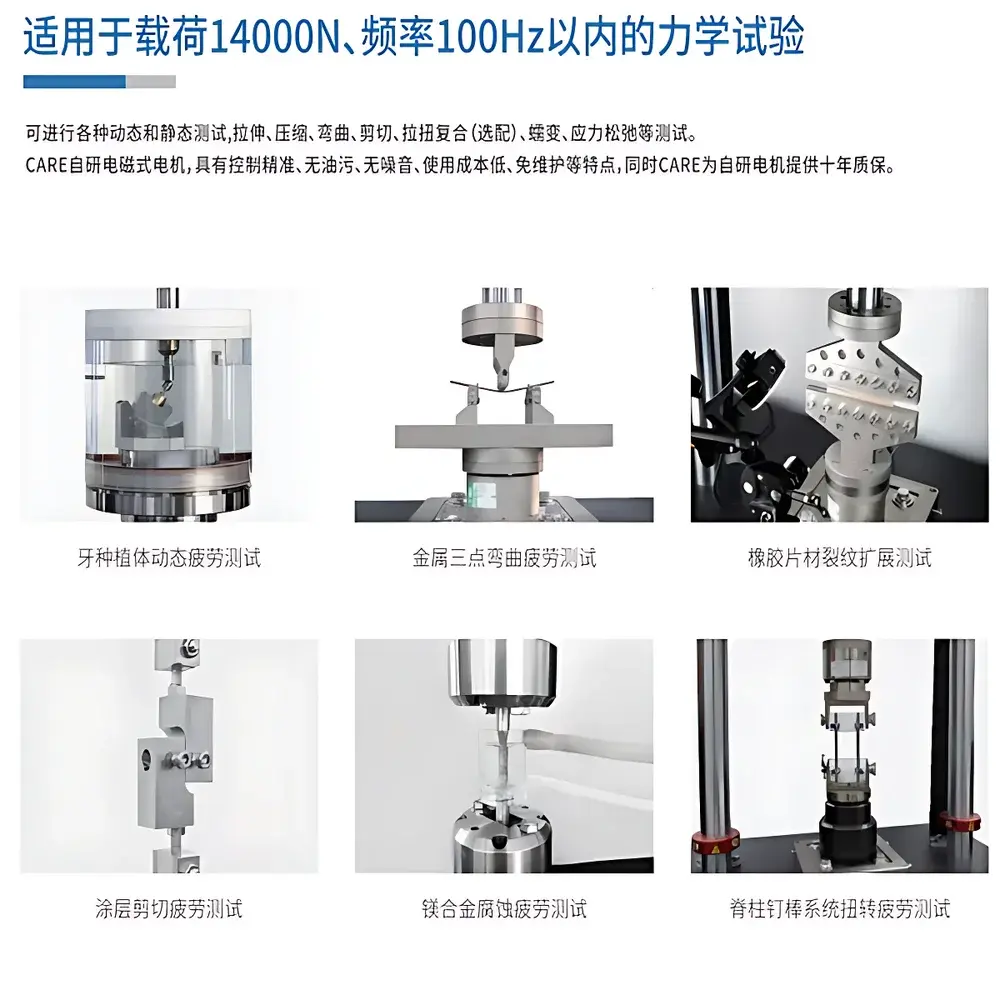
- High-cycle fatigue (HCF) and ultrasonic fatigue (UCF) studies of aerospace alloys (Ti-6Al-4V, Inconel 718) and additively manufactured metals
- Viscoelastic characterization via dynamic mechanical analysis (DMA) mode—storage/loss modulus and tan δ mapping from 0.1 to 100 Hz
- Cyclic creep and stress relaxation quantification under constant load or strain hold conditions
- Crack initiation and propagation testing using compact tension (CT) or single-edge notched bend (SENB) specimens per ASTM E647
- Environmental testing when coupled with chamber-integrated solutions (−70°C to +300°C, RH 10–95%, inert gas purge)
- Biomechanical evaluation of orthopedic devices and polymer scaffolds under physiological loading frequencies
FAQ
What is the maximum achievable frequency in combined axial-torsional mode?
Up to 50 Hz for synchronous axial-torsional waveforms, with independent amplitude and phase control per channel.
Does the system support closed-loop strain control using extensometry?
Yes—via analog or digital input from clip-on, video, or laser extensometers compliant with ASTM E83 Class B-1 or better.
Can test data be exported in formats compatible with statistical process control (SPC) software?
Yes—CSV, XML, and .tdms exports include full metadata; batch reports conform to AIAG SPC guidelines.
Is remote diagnostics and firmware update capability available?
Yes—secure SSH and HTTPS-enabled remote maintenance with role-based authentication and encrypted firmware signing.
What calibration standards does the load cell traceability follow?
NIST-traceable calibration per ISO/IEC 17025, with certificate issued by an ILAC-MRA accredited lab.
Related Products



