
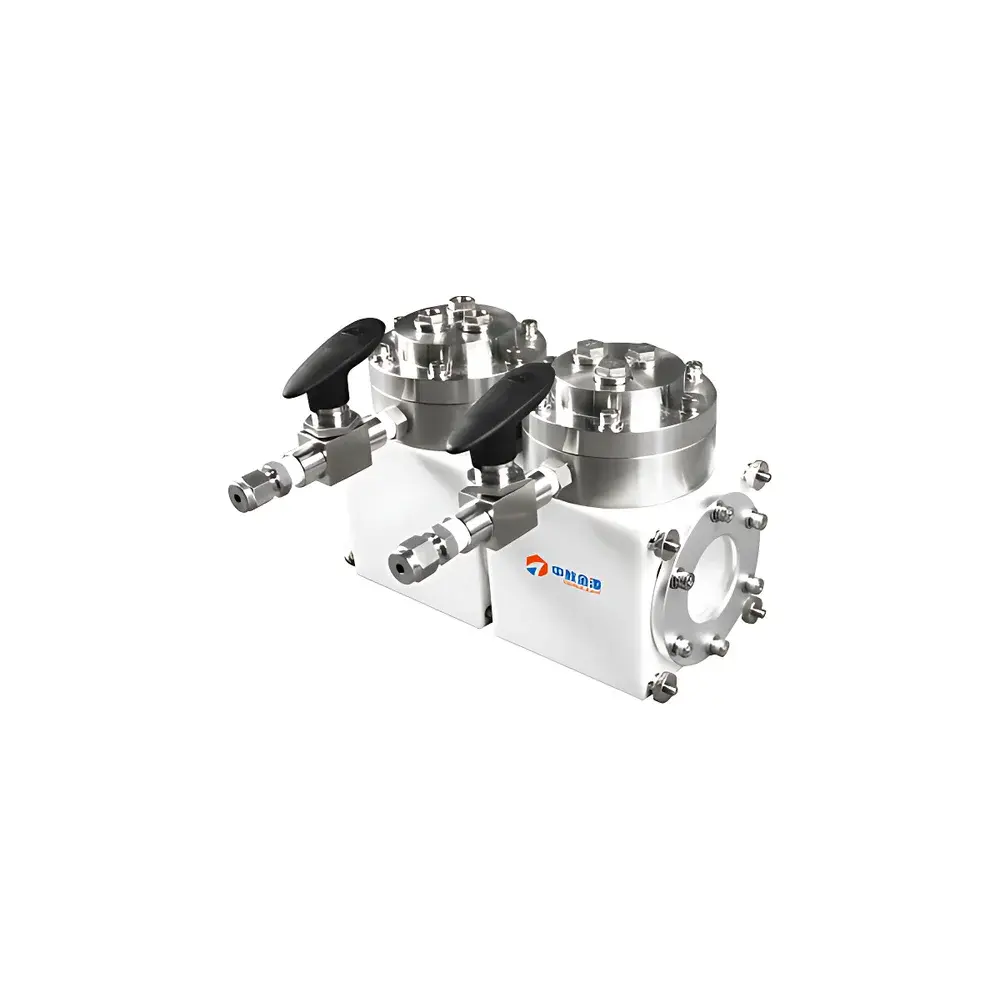
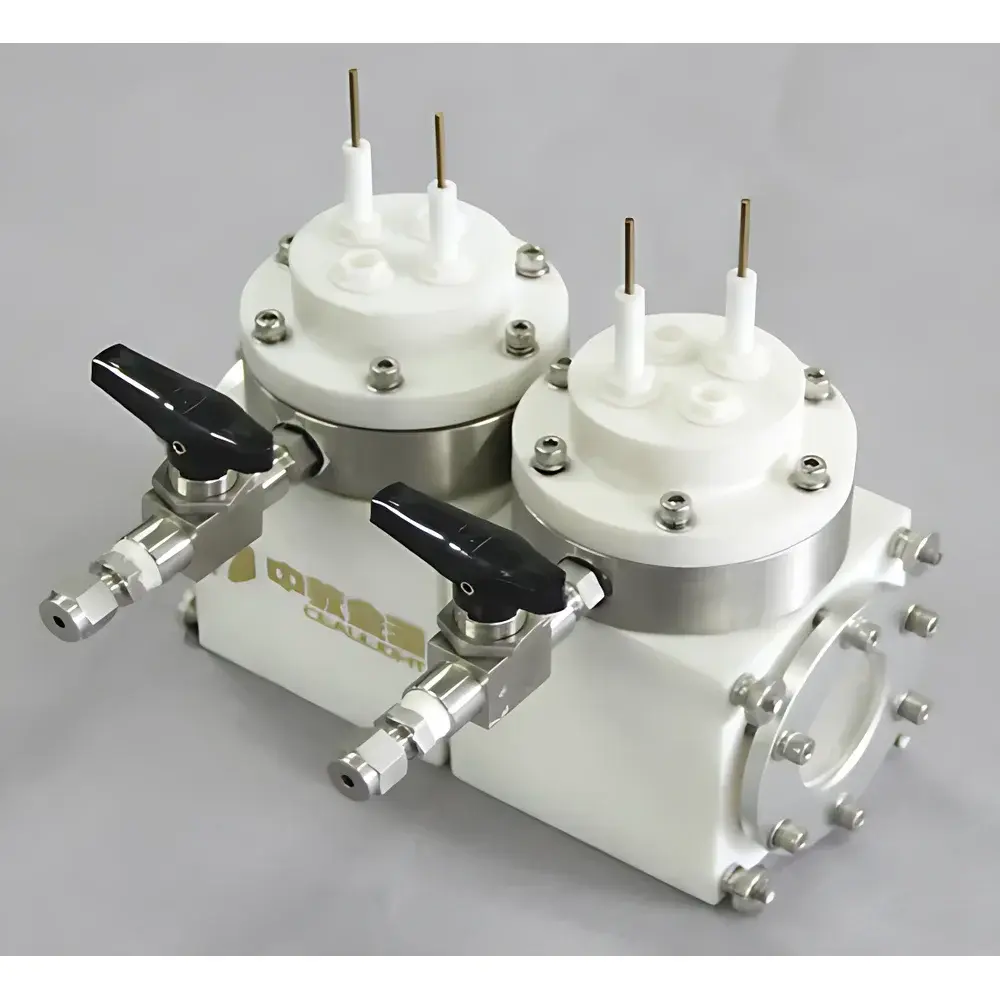
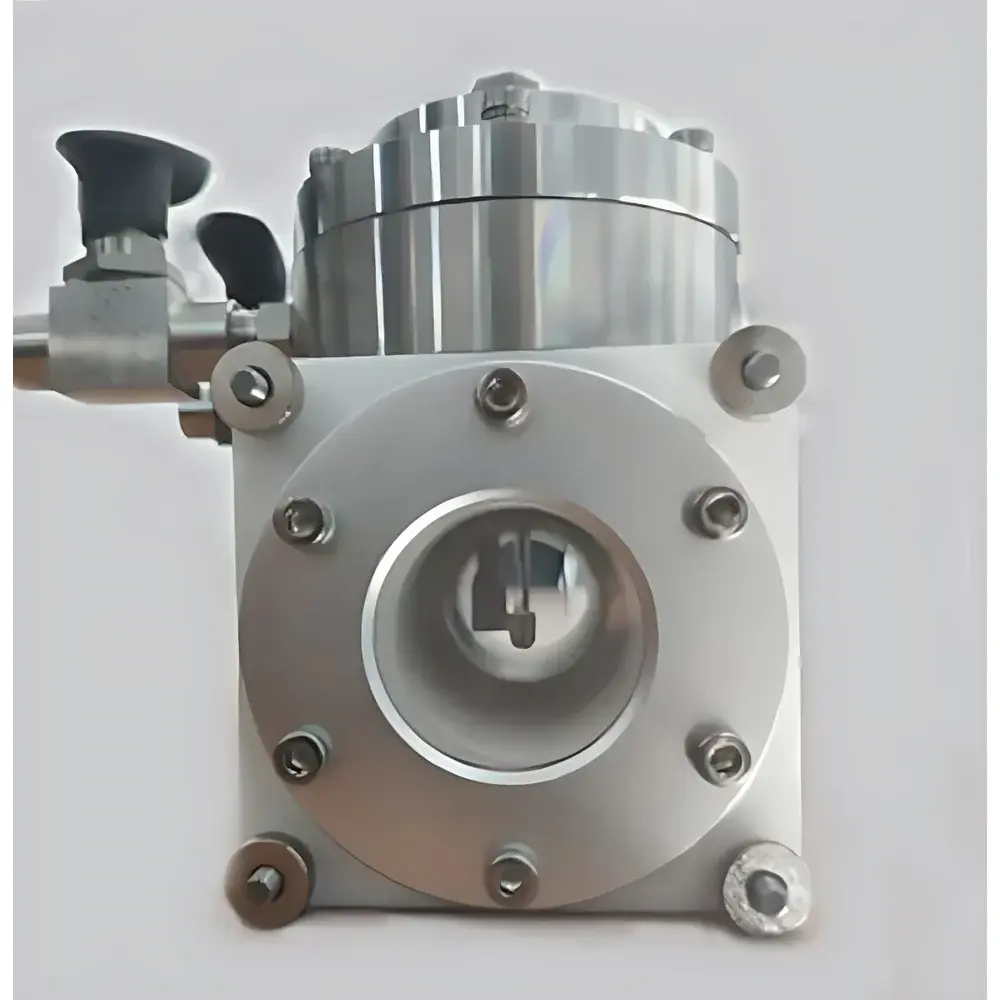
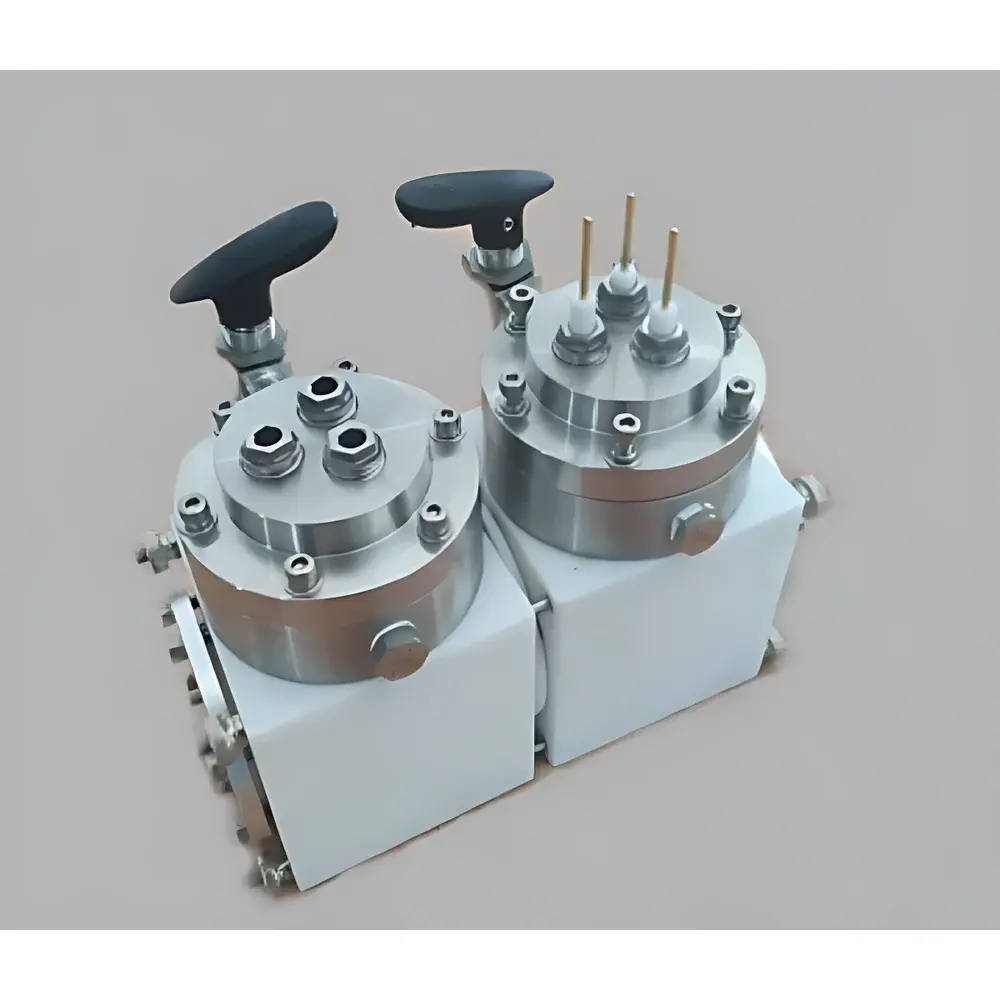
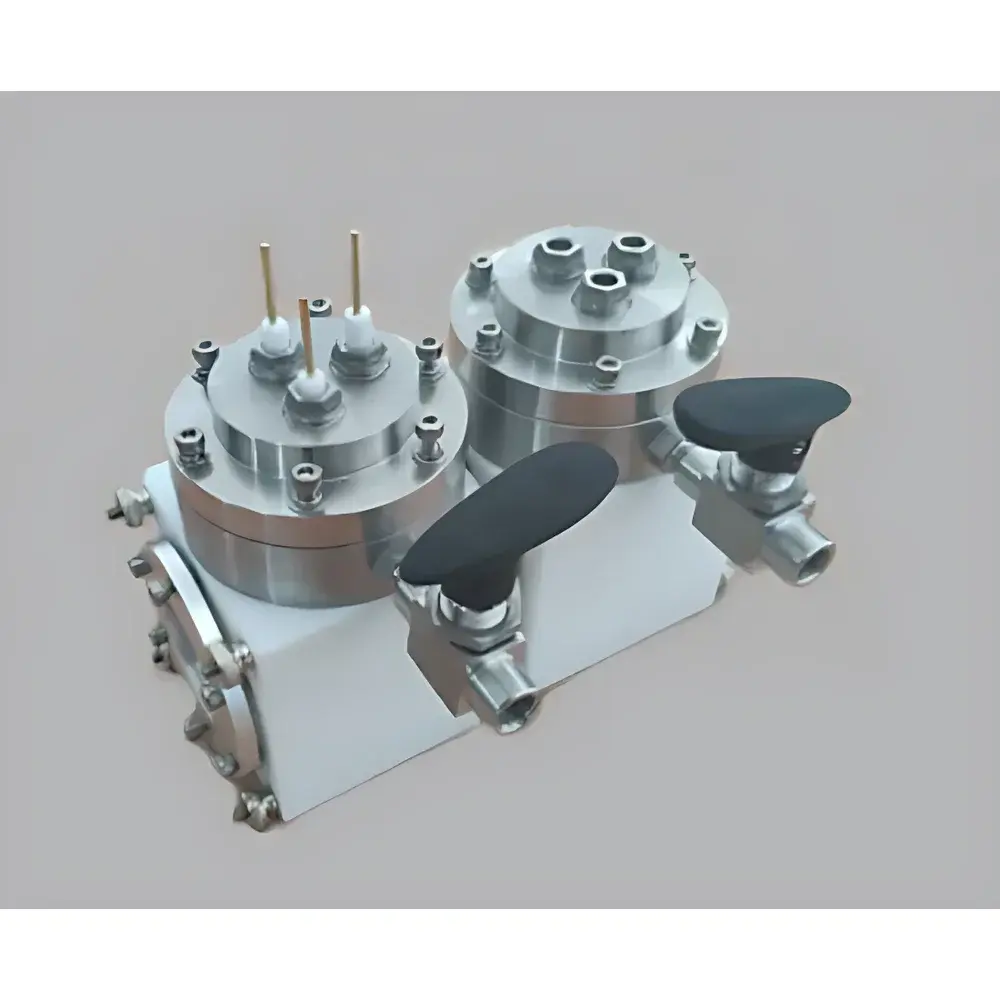
CEL-HT5 Dual-Chamber Photoelectrochemical Reactor
| Brand | CEA-Light (CEL) |
|---|---|
| Model | HT5 |
| Type | Dual-Compartment Photoelectrochemical Reactor |
| Capacity | 100 mL (total, 50 mL per chamber) |
| Operating Pressure | Low-pressure / Ambient Pressure |
| Vacuum Capability | Atmospheric (no active vacuum system) |
| Window Material | Standard Quartz (25 mm diameter, ≥185 nm UV transmission) |
| Optional Windows | CaF₂ (down to 125 nm), KBr (IR-transmissive) |
| Electrode Compatibility | External electrodes with 6 mm outer diameter |
| Membrane Integration | Compatible with ion-exchange membranes (e.g., Nafion™) |
| Connection | DIN 25/35 ISO-K flange interface |
| Construction Material | Borosilicate glass body with PTFE-sealed stainless steel flanges |
| Application Domain | In situ photoelectrochemical (PEC) characterization, dual-compartment redox coupling, controlled potential electrolysis under illumination |
Overview
The CEL-HT5 Dual-Chamber Photoelectrochemical Reactor is an engineered platform for fundamental and applied research in photoelectrocatalysis, solar fuel generation, and interfacial charge-transfer kinetics. Designed around the principle of spatially segregated half-reactions under controlled illumination, it implements a true two-compartment configuration—each chamber independently sealable, optically addressable, and electrochemically addressable via standardized electrode ports. The reactor operates at ambient pressure and temperature, eliminating high-pressure safety constraints while maintaining rigorous control over mass transport, light penetration, and electrode potential. Its core architecture supports simultaneous or sequential irradiation of photoanode and photocathode compartments, enabling quantitative investigation of Faradaic efficiency, charge separation lifetime, and membrane-mediated ion selectivity—critical parameters in water splitting, CO₂ reduction, and pollutant degradation studies.
Key Features
- Dual independent chambers (50 mL each) with fully isolatable optical and electrical pathways—enabling asymmetric illumination, differential biasing, and selective product collection.
- Standard quartz optical windows (25 mm Ø, high-purity synthetic fused silica, UV-VIS transparent from 185 nm to 2.5 µm) mounted via metal-gasketed ISO-K flanges for leak-tight, reproducible alignment.
- Interchangeable window options: CaF₂ (deep-UV transmission down to 125 nm) and KBr (broadband IR transparency up to 25 µm) for spectroelectrochemical applications across multiple spectral ranges.
- Integrated ion-exchange membrane slot compatible with commercially available proton-exchange (e.g., Nafion™ 117) or hydroxide-conducting membranes—ensuring precise ionic coupling without cross-contamination.
- Electrode port geometry optimized for standard 6 mm OD rod-type working, counter, and reference electrodes—supporting both three-electrode and two-electrode configurations.
- Modular flange interface enables direct coupling with gas chromatography sampling loops, online liquid injection manifolds, or external potentiostat/galvanostat systems via standardized BNC and LEMO connectors.
Sample Compatibility & Compliance
The CEL-HT5 accommodates aqueous, non-aqueous, and mixed-solvent electrolytes—including acidic (0.5 M H₂SO₄), alkaline (1 M KOH), and organic media (acetonitrile/LiClO₄). Its borosilicate glass construction ensures chemical resistance to most common electrochemical solvents and reagents. All wetted surfaces are inert to photogenerated radicals and oxidative species under typical operational conditions (≤2.5 V vs. RHE, ≤1 sun AM 1.5G illumination). The reactor conforms to ISO 8573-1 (compressed air purity classes) for optional gas-purging setups and supports GLP-compliant documentation when used with validated electrochemical workstations (e.g., BioLogic SP-300, Metrohm Autolab PGSTAT302N). No internal heating or cooling elements are integrated; thermal management relies on external jacketed baths or Peltier stages.
Software & Data Management
The CEL-HT5 is hardware-agnostic—it interfaces seamlessly with industry-standard electrochemical software platforms (EC-Lab®, NOVA, GPES) and data acquisition systems supporting analog voltage/current input (±10 V, 16-bit resolution). When paired with time-resolved illumination sources (e.g., LED drivers with TTL synchronization), it supports transient photocurrent analysis, intensity-modulated photocurrent spectroscopy (IMPS), and chopped-light chronoamperometry. All experimental metadata—including light source calibration (W/cm²), electrode positioning, window type, and membrane batch number—can be logged externally in accordance with FDA 21 CFR Part 11 requirements when using compliant LIMS or ELN environments.
Applications
- Quantitative photoelectrochemical water oxidation and reduction kinetics under segmented illumination.
- In situ spectroelectrochemical monitoring (UV-Vis, FTIR) of surface-bound intermediates during catalytic turnover.
- Membrane-dependent selectivity studies in CO₂ electroreduction (e.g., C₂+ vs. C₁ product distribution).
- Stability assessment of photoanodes (e.g., BiVO₄, Fe₂O₃) and photocathodes (e.g., Cu₂O, Si) under prolonged bias-assisted illumination.
- Development and validation of tandem PEC devices requiring physical separation of redox products (e.g., H₂ and O₂ evolution in distinct chambers).
FAQ
Can the CEL-HT5 be used under inert atmosphere?
Yes—via Schlenk-line purging through dedicated gas inlet/outlet ports; recommended for O₂-sensitive catalysts.
Is the quartz window thickness customizable?
Standard thickness is 5 mm; custom options (3 mm for enhanced UV throughput or 8 mm for mechanical robustness) are available upon request.
Does the reactor support rotating disk electrode (RDE) integration?
No—the design prioritizes static, optically coupled compartments; however, magnetic stirring is compatible in each chamber using PTFE-coated stir bars.
What is the maximum operating temperature?
Borosilicate glass limits continuous operation to ≤120 °C; short-term exposure up to 150 °C is permissible with reduced mechanical load.
Are OEM integration services available for automated liquid handling?
Yes—CEA-Light provides mechanical and electrical interface specifications (CAD models, pinout diagrams) for third-party automation integration.



