
CEM MARS 6 High-Throughput Closed-Vessel High-Pressure Microwave Digestion System
| Brand | CEM |
|---|---|
| Origin | USA |
| Model | MARS 6 |
| Batch Capacity | 0–40 samples |
| Microwave Source | Single or Dual Magnetron |
| Max Temperature | 260 °C / 330 °C |
| Temp Accuracy | ±0.1 °C |
| Temp Stability | ±0.1 °C |
| Temp Uniformity | ±0.1 °C |
| Max Pressure | 500 psi / 2200 psi |
| Cavity Volume | 66 L |
| Microwave Output Power | 1800 W (IEC 705:1988) |
| Operating Voltage | 220 VAC, 50 Hz, 15 A |
Overview
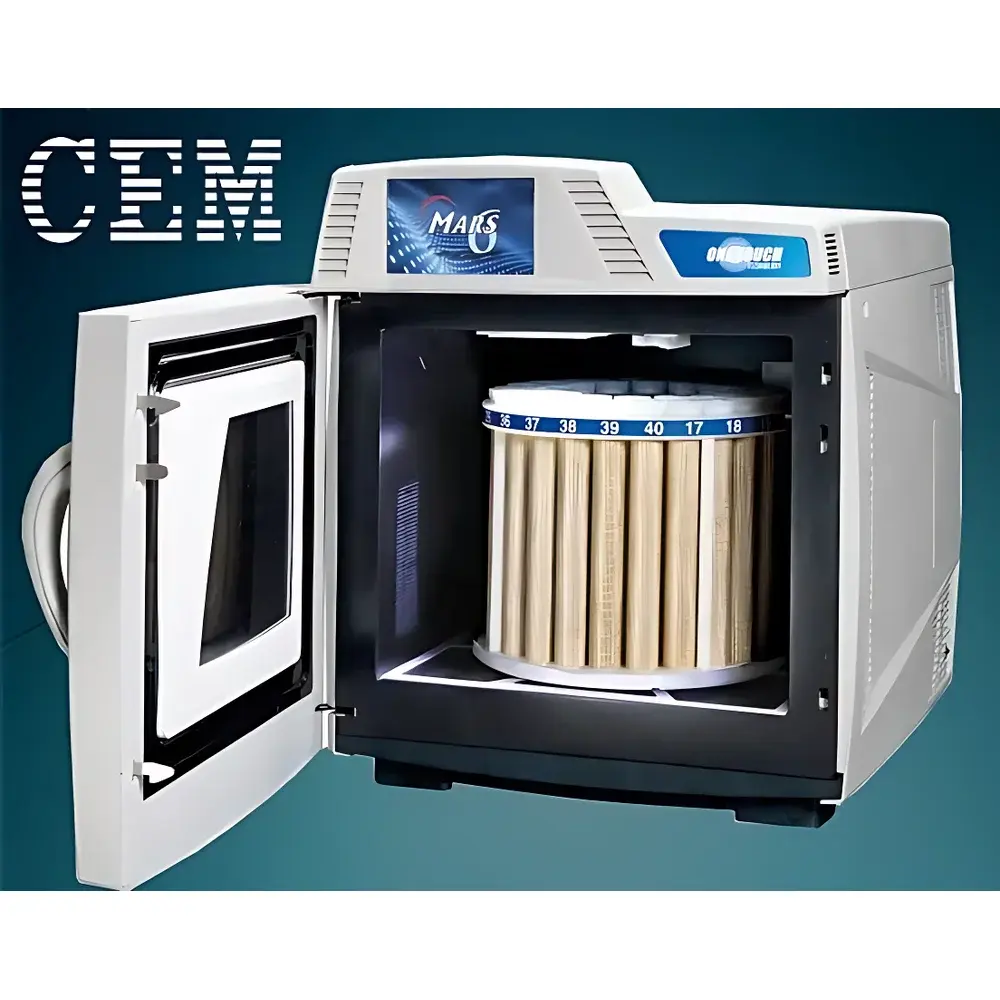
The CEM MARS 6 High-Throughput Closed-Vessel High-Pressure Microwave Digestion System is an ISO 9001-certified, industrial-grade platform engineered for trace-element sample preparation in compliance with globally recognized regulatory frameworks—including U.S. EPA Methods 3015A, 3051A, 3052, and 3546; AOAC Official Methods; ASTM D5511/D5512; and NIST-traceable protocols. Built upon CEM’s foundational expertise in microwave chemistry—backed by over 300 issued patents and 11 R&D 100 Awards—the MARS 6 implements a non-pulsed, continuous-wave microwave delivery architecture (U.S. Pat. Nos. 6,288,379 and 6,084,226) to ensure precise kinetic control of acid digestion reactions under fully sealed conditions. Its core function is the quantitative, reproducible mineralization of solid and semi-solid matrices—including soils, sediments, biological tissues, polymers, and geological samples—prior to elemental analysis by ICP-OES, ICP-MS, AAS, or HG-AFS. Unlike open-vessel or vented systems, the MARS 6 eliminates analyte loss via volatilization or uncontrolled venting, preserving stoichiometric integrity and enabling sub-part-per-trillion detection limits in regulated laboratories operating under GLP, GMP, or ISO/IEC 17025 requirements.
Key Features
- One-Touch Intelligent Recognition: Automatically detects vessel type, quantity (up to 40), position, and installed sensor configuration (IR, fiber-optic, or piezoelectric), then retrieves and executes pre-validated methods from an embedded library of >100 EPA, ASTM, and AOAC protocols.
- PowerMAX Dynamic Energy Control: Proprietary real-time power modulation (U.S. Pat. No. 6,917,023) dynamically adjusts microwave output in response to evolving reaction thermodynamics—enabling robust digestion of recalcitrant matrices such as coal fly ash, high-silica ceramics, or carbon-rich botanicals.
- Triple-Layer Safety Architecture: Integrates active controls (real-time full-vessel pressure/temperature monitoring, automatic microwave cutoff at threshold violation) with passive protections (NASA-derived composite fiber outer vessels, 3D directional burst containment, auto-locking safety door with interlock validation) and engineered fail-safes (non-metallic rupture discs + controlled pressure relief).
- Thermal & Field Uniformity Engineering: 66 L cavity constructed from electropolished 316 stainless steel with multi-layer PTFE coating; dual vertical waveguide feed with harmonic resonance tuning ensures ±0.1 °C spatial temperature uniformity across all vessel positions.
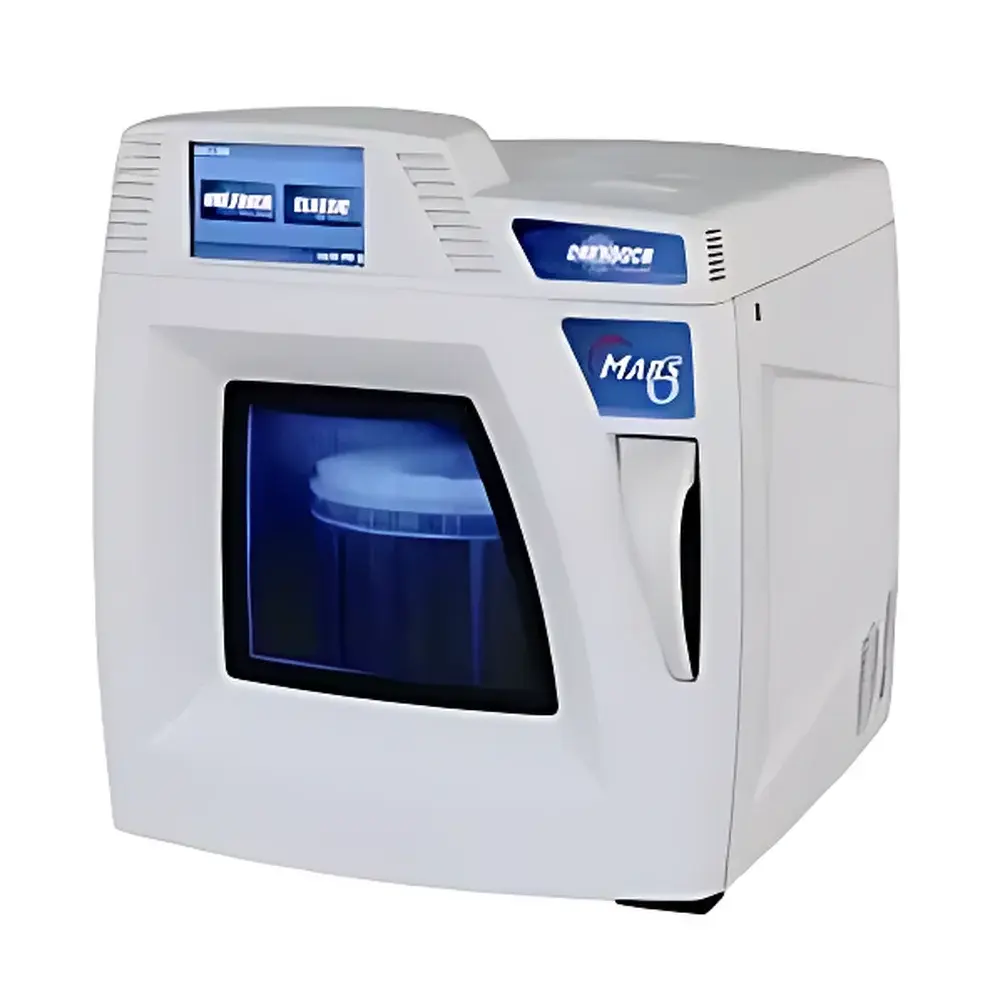
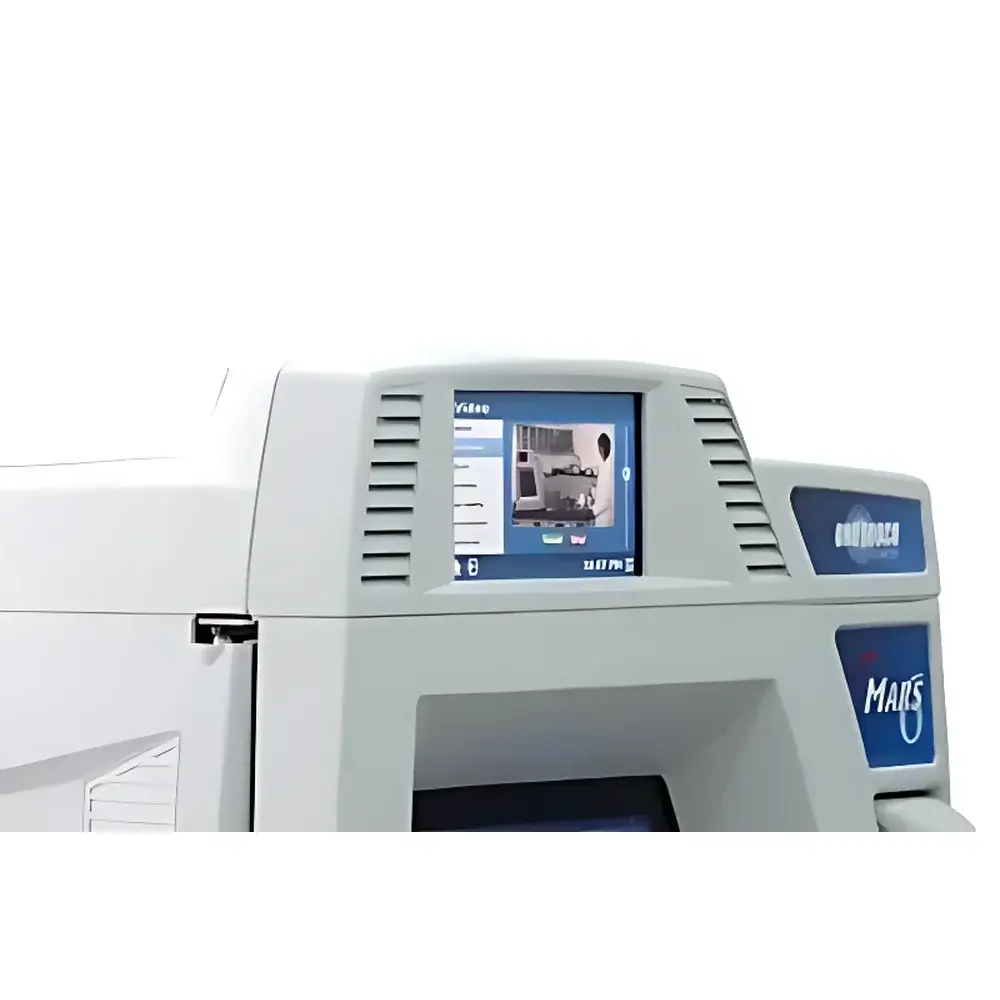
- Integrated Process Monitoring: 7″ capacitive touchscreen with Linux-based OS (700 MHz dual-core CPU, 8 GB RAM); built-in HD network camera for remote visual verification; color-coded LED status lighting for reaction phase identification (preheat, ramp, hold, cool); optional SynergyPrep PC software for audit-ready method export and instrument fleet management.
Sample Compatibility & Compliance
The MARS 6 accommodates a broad spectrum of sample types—from environmental solids (EPA SW-846 3050B/3051A-compliant) to clinical biospecimens (CLIA- and CAP-aligned workflows) and industrial catalysts. Vessel options include PFA, TFM, and quartz inner liners, paired with reinforced polymer outer vessels rated to 2200 psi and 330 °C. All configurations maintain complete chemical isolation between samples, eliminating cross-contamination risk in high-throughput QA/QC labs. The system meets UL 61010-1 (electrical safety), IEC 61000-4 (EMC), and FDA 21 CFR Part 11 requirements when configured with electronic signature-enabled software and audit trail logging. It supports full traceability per ISO/IEC 17025:2017 Clause 7.7 (result reporting) and is routinely validated in laboratories undergoing CAP, CLIA, or NELAC accreditation audits.
Software & Data Management
The embedded Linux platform provides secure, deterministic execution of method sequences with timestamped parameter logging (power, temperature, pressure, time) for every vessel. Data are stored locally on removable SD cards or exported via six USB ports, dual Ethernet interfaces, or RS-232. Method files include user-modifiable parameters (ramp rate, hold time, max temp/pressure), with version-controlled editing and password-protected administrator access. Audit trails record all operator actions—including method changes, calibration events, and emergency stops—with immutable timestamps. When paired with SynergyPrep software, the system enables centralized method deployment, remote diagnostics, and automated report generation compliant with FDA 21 CFR Part 11 Annex 11 and EU GMP Annex 11 requirements.
Applications
- Regulatory environmental testing (soil, sludge, wastewater solids per EPA 3052/3051A)
- Food and agricultural safety (heavy metals in grains, seafood, infant formula per AOAC 999.10)
- Clinical and forensic toxicology (tissue, hair, bone digests for Pb, Cd, As, Hg quantification)
- Geochemical exploration (rock, ore, sediment digestion for multi-element ICP-MS screening)
- Materials science (catalyst recovery, battery electrode analysis, polymer ash content determination)
- Pharmaceutical excipient testing (USP heavy metals, residual catalysts in APIs)
FAQ
What regulatory standards does the MARS 6 support out-of-the-box?
The system ships with preloaded methods compliant with U.S. EPA 3015A, 3051A, 3052, and 3546; ASTM D3682, D5511, D5512; AOAC 999.10 and 2007.01; and ISO 11885. All methods are validated per ISO/IEC 17025:2017 Section 7.2.2.
Can the MARS 6 be integrated into a LIMS environment?
Yes—via Ethernet or RS-232, using ASTM E1384 or HL7-compliant data export templates. SynergyPrep supports direct LIMS synchronization with configurable field mapping and digital signature handshaking.
How is temperature accuracy verified during operation?
Dual independent measurement paths: infrared pyrometry (Dual IR) for surface temperature tracking and fiber-optic probes (RTP-330 Plus) for internal solution-phase measurement—both traceable to NIST SRM 1484 and calibrated per ISO/IEC 17025.
Is routine maintenance required for microwave cavity integrity?
No scheduled cavity recalibration is needed. The system performs automatic cavity resonance diagnostics before each run; only periodic inspection of waveguide seals and exhaust filters is recommended per manufacturer guidelines (every 6 months under continuous use).
What documentation is provided for 21 CFR Part 11 compliance?
CEM supplies a Validation Support Package including IQ/OQ protocols, electronic signature configuration guides, audit trail specifications, and a Risk Assessment Report aligned with GAMP 5 principles—all available upon request for qualified laboratories.



