
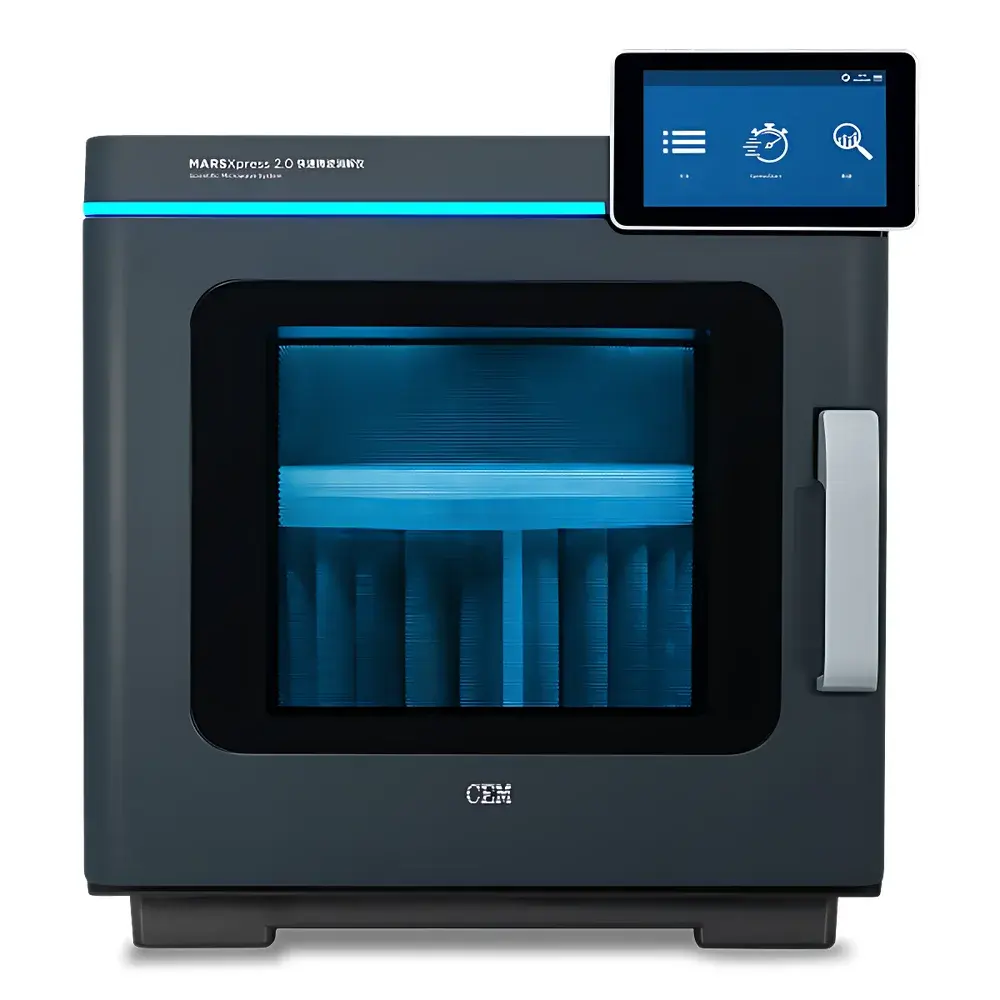
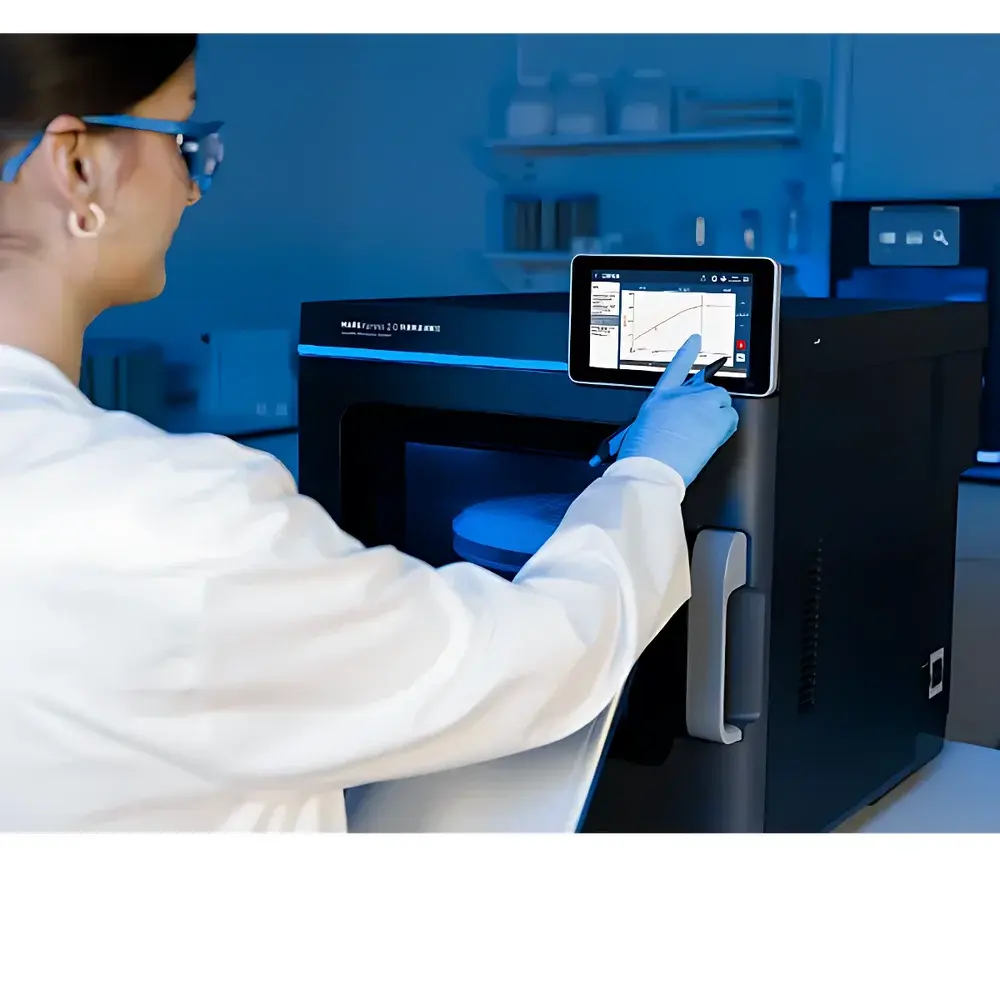
CEM MARS Xpress 2.0 Industrial-Grade Microwave Digestion System
| Brand | CEM |
|---|---|
| Origin | Beijing, China |
| Manufacturer Status | Authorized Distributor |
| Product Origin | Domestic (China) |
| Model | MARS Xpress 2.0 |
| Price | Upon Request |
| Cavity Class | Industrial-Grade |
| Sample Capacity | 1–40 |
| Microwave Source | Dual Magnetron |
| Maximum Temperature | 330 °C |
| Maximum Pressure | 1500 psi |
| Temperature Measurement Accuracy | Contact manufacturer |
| Temperature Control Stability | Contact manufacturer |
| Temperature Uniformity | Contact manufacturer |
Overview
The CEM MARS Xpress 2.0 Industrial-Grade Microwave Digestion System is an engineered solution for rapid, reproducible, and compliant sample preparation in analytical laboratories. Built upon CEM’s legacy in microwave-assisted digestion technology, the system employs closed-vessel microwave heating to achieve complete acid decomposition of organic and inorganic matrices under controlled temperature and pressure conditions. This principle—governed by dielectric heating of polar solvents (e.g., HNO₃, HCl, HF, and H₂O₂) within sealed quartz or high-performance polymer vessels—enables rapid energy transfer directly into the sample, minimizing reagent consumption, reducing contamination risk, and improving analyte recovery for downstream elemental analysis (e.g., ICP-OES, ICP-MS, AAS). Designed for routine and high-throughput applications, the MARS Xpress 2.0 delivers consistent thermal profiles across heterogeneous sample loads while maintaining strict adherence to regulatory expectations for method validation and data integrity.
Key Features
- Industrial-grade cavity with reinforced stainless-steel construction and active cooling airflow management for extended operational durability and thermal stability.
- Dual magnetron power delivery (up to 1600 W total output) ensures uniform microwave field distribution and precise power modulation during ramp-and-hold temperature programs.
- Non-contact iWave infrared temperature sensor provides real-time, vessel-specific temperature monitoring without physical probe insertion—eliminating cross-contamination and calibration drift concerns.
- XpressIntelligence (X.I.) platform integrates hardware-level control logic with intuitive software architecture, enabling one-touch method execution (XpressStart), voice-command operation (XpressCommand), and adaptive power/temperature profiling based on real-time feedback.
- Modular rotor design supports interchangeable vessels (20–110 mL capacity) and accommodates 1–40 samples per run—scalable from single-sample R&D screening to full-batch environmental or food safety compliance testing.
- Integrated pressure monitoring via piezoresistive transducers with automatic safety interlocks; system halts operation if pressure exceeds 1500 psi or airflow falls below required thresholds.
- Large front-access viewport (largest in its class) combined with multi-color status LEDs enables visual process verification without opening the cavity or interrupting digestion cycles.
Sample Compatibility & Compliance
The MARS Xpress 2.0 is validated for digestion of diverse sample types including soils, sediments, biological tissues, food products, polymers, and pharmaceutical excipients. Its rotor and vessel configuration complies with standardized methodologies published by the U.S. Environmental Protection Agency (EPA Methods 3051A, 3052), ASTM International (D5511, D5512), and ISO (ISO 11466, ISO 17294-2). All digestion protocols are fully traceable through user-defined access levels, electronic signatures, and audit-ready reporting—supporting GLP and GMP environments. The system meets mechanical and electrical safety requirements per IEC 61010-1 and incorporates safeguards aligned with FDA 21 CFR Part 11 for electronic records and signatures when used with compliant software configurations.
Software & Data Management
Control and data acquisition are managed via the embedded MARS Touch™ interface—a 10.1-inch capacitive touchscreen running a deterministic real-time OS. Each run generates timestamped, vessel-specific datasets including temperature vs. time curves, power modulation history, pressure trajectories, and cooling phase profiles. Reports are exportable in PDF or CSV format and support customizable templates—including institutional logos, QA/QC metadata, and method versioning. Audit trails log all user actions (login/logout, parameter edits, method launches, report exports) with immutable timestamps. Optional integration with LIMS platforms is supported via standard OPC UA or HL7 interfaces for automated result handoff to analytical instrumentation workflows.
Applications
- Environmental testing: Total metal extraction from EPA-regulated solid matrices prior to ICP-MS quantification.
- Food and agricultural safety: Multi-element determination (As, Cd, Pb, Hg) in plant tissue, dairy, and seafood per EU Commission Regulation (EC) No 1881/2006.
- Clinical and forensic toxicology: Quantitative recovery of trace elements from hair, bone, and soft tissue specimens.
- Geochemical research: Silicate rock dissolution using HF-HNO₃ mixtures under inert atmosphere compatibility.
- Materials science: Characterization of catalysts, battery cathode materials, and nanocomposites requiring complete matrix breakdown.
FAQ
What safety certifications does the MARS Xpress 2.0 hold?
The system conforms to IEC 61010-1 for laboratory equipment safety and includes redundant hardware interlocks, pressure relief mechanisms, and continuous airflow monitoring per UL/CSA guidelines.
Can the system be integrated into a regulated QA/QC workflow?
Yes—when configured with administrator-controlled user roles, electronic signatures, and audit-trail-enabled reporting, it supports GLP, GMP, and 21 CFR Part 11 compliance.
Is remote monitoring or control supported?
Local network connectivity enables browser-based status viewing and limited remote diagnostics; full remote operation requires optional CEM Connect™ gateway and IT-approved firewall configuration.
What vessel types are compatible with the MARS Xpress 2.0?
Standard MARS Xpress vessels (20 mL, 40 mL, 70 mL, and 110 mL) made from reinforced PTFE/CF composite or quartz are certified for use up to 330 °C and 1500 psi.
How is temperature accuracy verified across multiple vessels?
The iWave sensor performs simultaneous non-contact measurement at each vessel position; calibration is factory-performed and traceable to NIST standards, with periodic verification supported via optional IR reference standards.
Related Products



