
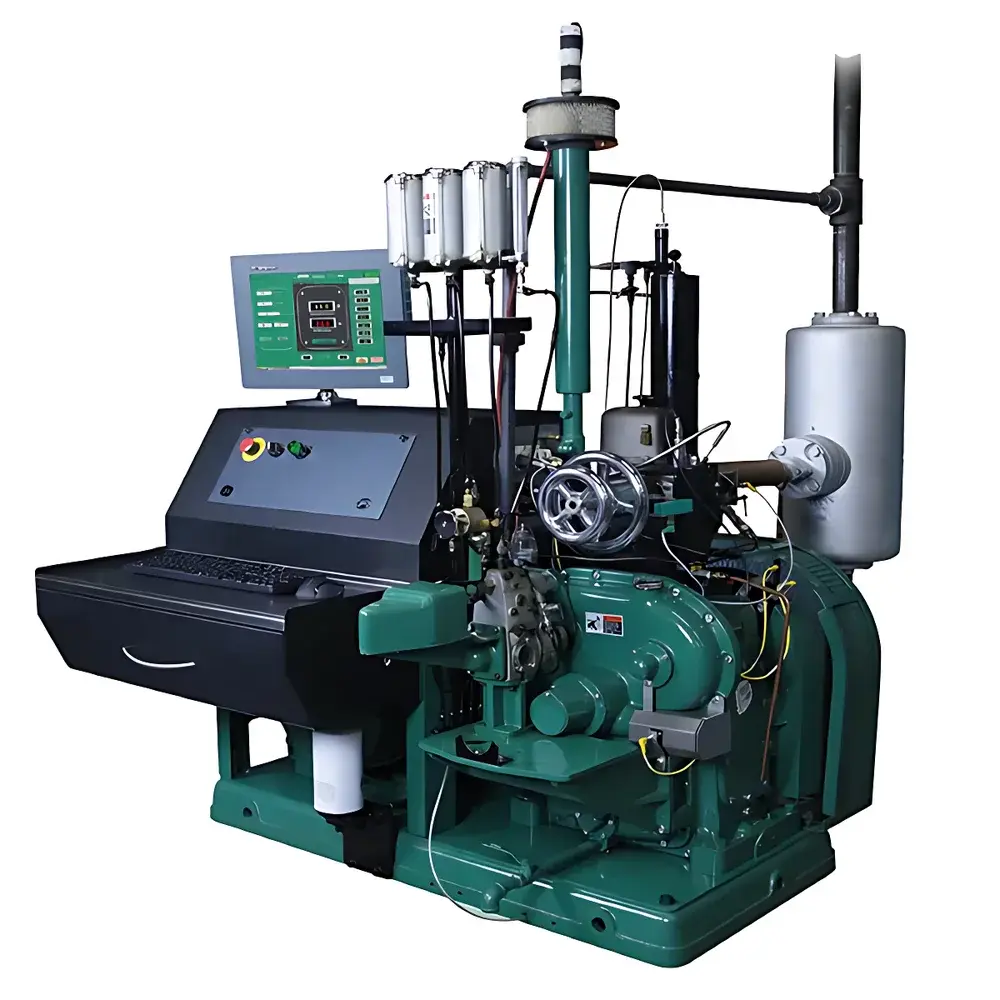
CFR F-5 Diesel Cetane Number Engine
| Brand | CFR |
|---|---|
| Origin | USA |
| Manufacturer Type | Authorized Distributor |
| Origin Category | Imported |
| Model | CFR F-5 |
| Configuration | Benchtop |
| Measurement Parameter | Diesel Cetane Number |
| Compliance Standard | ASTM D613, GB/T 386–1991, ASTM D975 (Arbitration Method) |
Overview
The CFR F-5 Diesel Cetane Number Engine is a precision-engineered single-cylinder, variable-compression-ratio research engine designed specifically for the standardized determination of diesel fuel ignition quality. It implements the fundamental combustion physics of compression-ignition engines to deliver authoritative cetane number (CN) measurements—serving as the globally recognized arbitration method per ASTM D613 and the mandatory reference instrument specified in China’s national standard GB/T 386–1991. As defined in ASTM D975, the CFR F-5 remains the benchmark for regulatory compliance, refinery certification, and fuel formulation validation. Its operational principle relies on controlled autoignition timing under precisely adjustable thermodynamic conditions: by systematically varying the compression ratio while maintaining constant injection timing and fuel delivery parameters, the engine identifies the compression threshold at which the test fuel achieves identical ignition delay characteristics to certified primary reference fuels (PRFs)—n-heptane (CN = 0) and cetane (CN = 100). This empirical correlation forms the basis of the standardized cetane scale.
Key Features
- Variable Compression Ratio Cylinder Head: A patented two-piece cylinder head assembly with manual fine-adjustment wheel enables continuous compression ratio tuning from 8:1 to 36:1 without component replacement—ensuring full-range coverage for all diesel fuels, including low-cetane blends, biodiesel, and synthetic diesel.
- Direct-Injection Fuel System: Comprising a precision nozzle and pressure-regulated fuel pump, the system supports real-time micro-adjustment of injection timing and mass flow rate, critical for replicating standardized injection characteristics per ASTM D613.
- Triple-Fuel Delivery Architecture: Integrated three independent fuel tanks and a motorized three-way valve allow seamless, contamination-free switching between test fuel, n-heptane reference fuel, and cetane reference fuel—minimizing cross-contamination and operator intervention.
- Robust CFR 48D Crankcase: Cast-iron, box-type monoblock construction with removable side and gear covers facilitates routine maintenance, bearing inspection, and timing verification—ensuring long-term mechanical stability and measurement repeatability.
- Dual Digital Cetane Meters: Two synchronized 115 V AC (50/60 Hz) digital readout units display ignition delay (in degrees crank angle), injection advance angle, and combustion phasing data derived from four calibrated transducers—providing traceable, high-resolution timing metrics essential for CN interpolation.
- Comprehensive Safety Architecture: Automatic shutdown triggers on low oil pressure, low coolant pressure, low battery voltage, or synchronous reluctance motor overload; fail-safe solenoid fuel cutoff prevents uncontrolled overspeed during power loss.
Sample Compatibility & Compliance
The CFR F-5 accommodates neat diesel fuels, fatty acid methyl ester (FAME) blends (B5–B20), hydroprocessed esters and fatty acids (HEFA), gas-to-liquid (GTL) synthetics, and oxygenated additives—provided samples meet ASTM D975 viscosity and distillation specifications. All testing procedures strictly adhere to ASTM D613 protocols, including prescribed intake air temperature (121 °C ± 2 °C), jacket water temperature (88 °C ± 2 °C), and injection timing (13° before top dead center). The instrument satisfies requirements for GLP-compliant laboratories and supports audit-ready documentation when paired with CFR-approved data acquisition systems. It is routinely deployed in refinery QC labs, fuel certification bodies (e.g., TÜV, SGS), and OEM engine development centers requiring legally defensible cetane data.
Software & Data Management
While the CFR F-5 operates as a hardware-defined standard method instrument, it interfaces with third-party data acquisition systems compliant with IEEE 1451.2 transducer standards. Optional CFR-supplied analog signal conditioning modules convert transducer outputs (cylinder pressure, crank angle, injection timing, coolant temperature) into calibrated voltage signals compatible with LabVIEW™, MATLAB®, or custom SCADA platforms. All raw timing and pressure waveforms support post-test analysis for ignition delay quantification, heat release rate calculation, and combustion efficiency assessment. When integrated with CFR’s certified calibration protocol and NIST-traceable reference fuels, the system meets FDA 21 CFR Part 11 requirements for electronic records and signatures—enabling secure, time-stamped, user-authenticated data archiving.
Applications
- Regulatory compliance testing for diesel fuel batches per ASTM D975 and EN 590
- Development and validation of advanced biofuels and renewable diesel formulations
- Correlation studies between laboratory-scale ignition metrics (e.g., Ignition Quality Tester, IQT) and engine-derived cetane numbers
- Investigation of additive efficacy on ignition delay and cold-start performance
- Calibration and verification of alternative cetane prediction models (e.g., NIR, GC-MS, chemometric regression)
- Technical arbitration in commercial fuel disputes involving cetane specification nonconformance
FAQ
Is the CFR F-5 suitable for testing biodiesel blends?
Yes—the engine accepts ASTM D6751–compliant B5 through B20 blends, provided kinematic viscosity and distillation endpoints remain within D975 limits.
Does the CFR F-5 require annual recalibration?
Per ASTM D613 Section 7.2, compression ratio verification and injector calibration must be performed quarterly; full system validation using certified PRFs is recommended before each test series.
Can the CFR F-5 be integrated into an automated lab information management system (LIMS)?
Yes—via analog output modules and RS-232/485 serial interface options, enabling direct data ingestion into LIMS platforms supporting ASTM E1384 or ISO/IEC 17025 workflows.
What maintenance intervals are recommended for the lubrication system?
Oil and filter changes every 25 operating hours; external oil cooler cleaning every 100 hours; full crankcase inspection and bearing clearance verification every 500 hours.
Is operator certification required to run ASTM D613 tests?
Yes—ASTM D613 mandates documented training in engine operation, fuel handling safety, compression ratio adjustment, and ignition delay interpretation per ASTM E29 and ISO/IEC 17025 competency requirements.





