
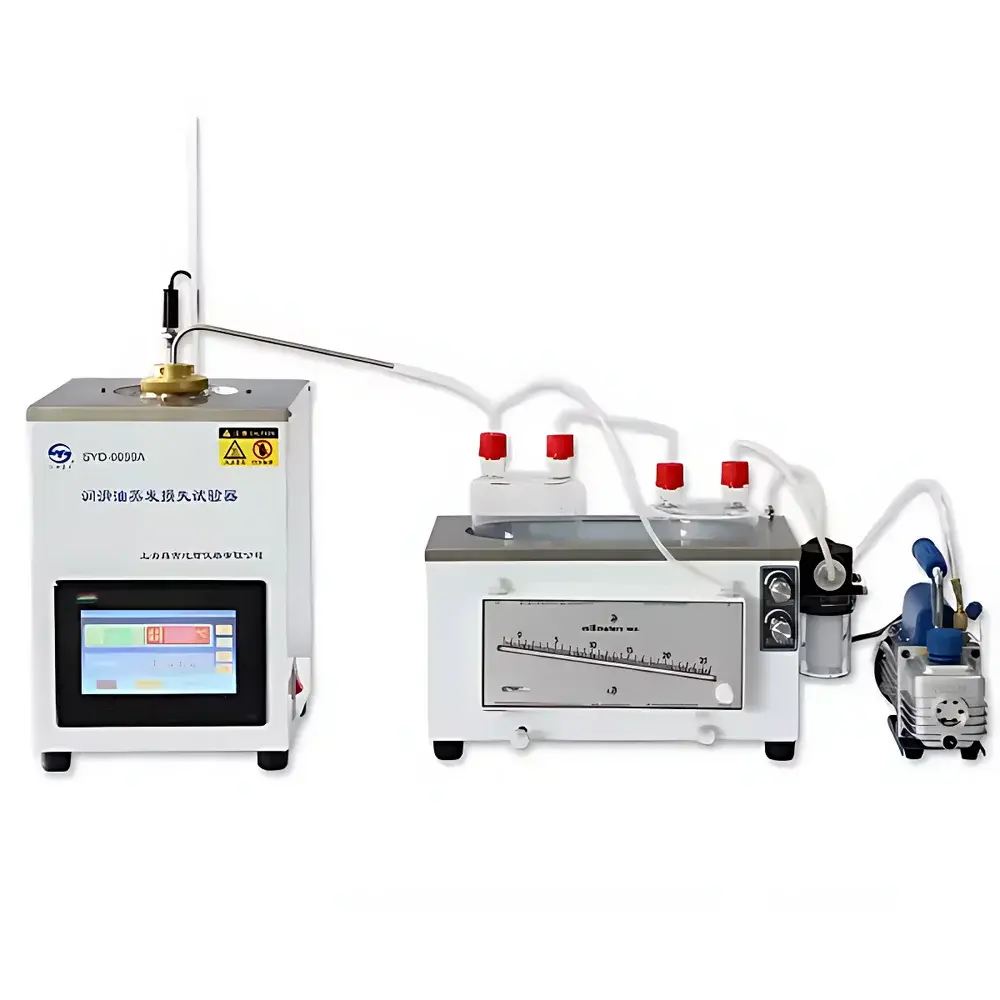
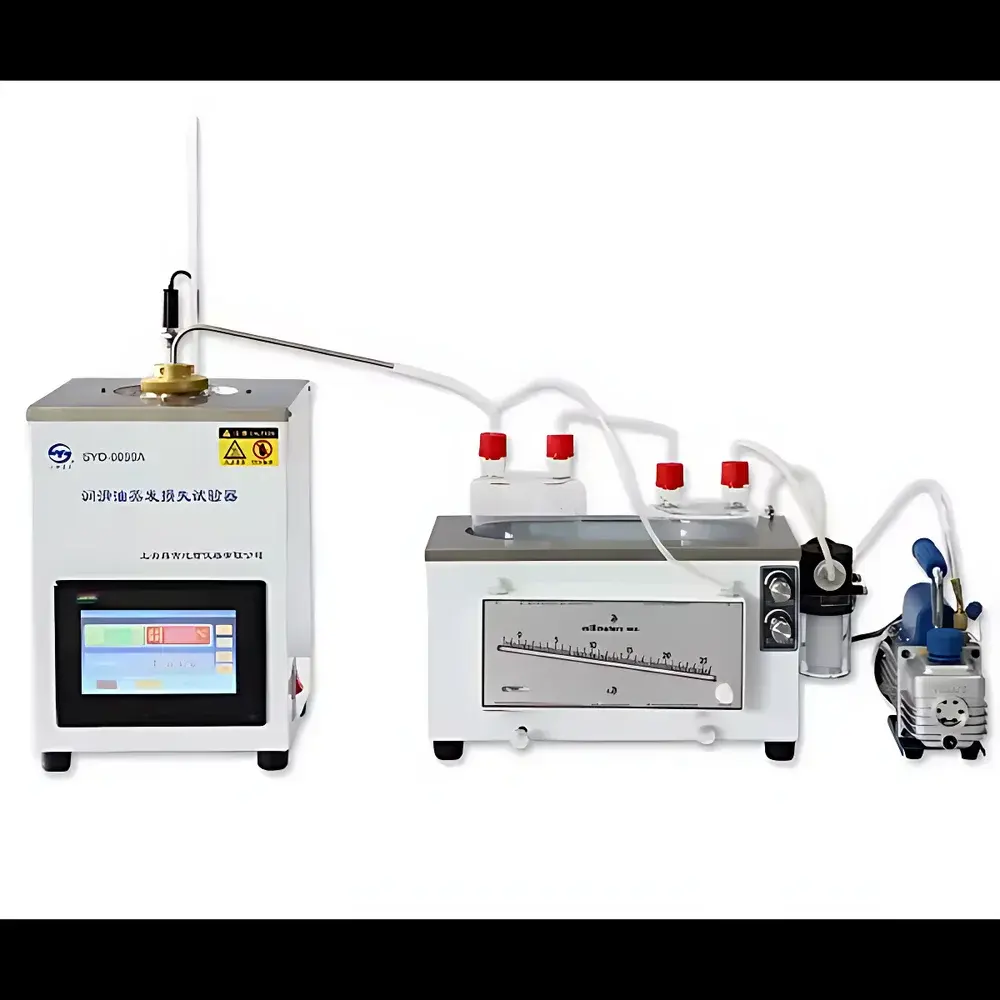
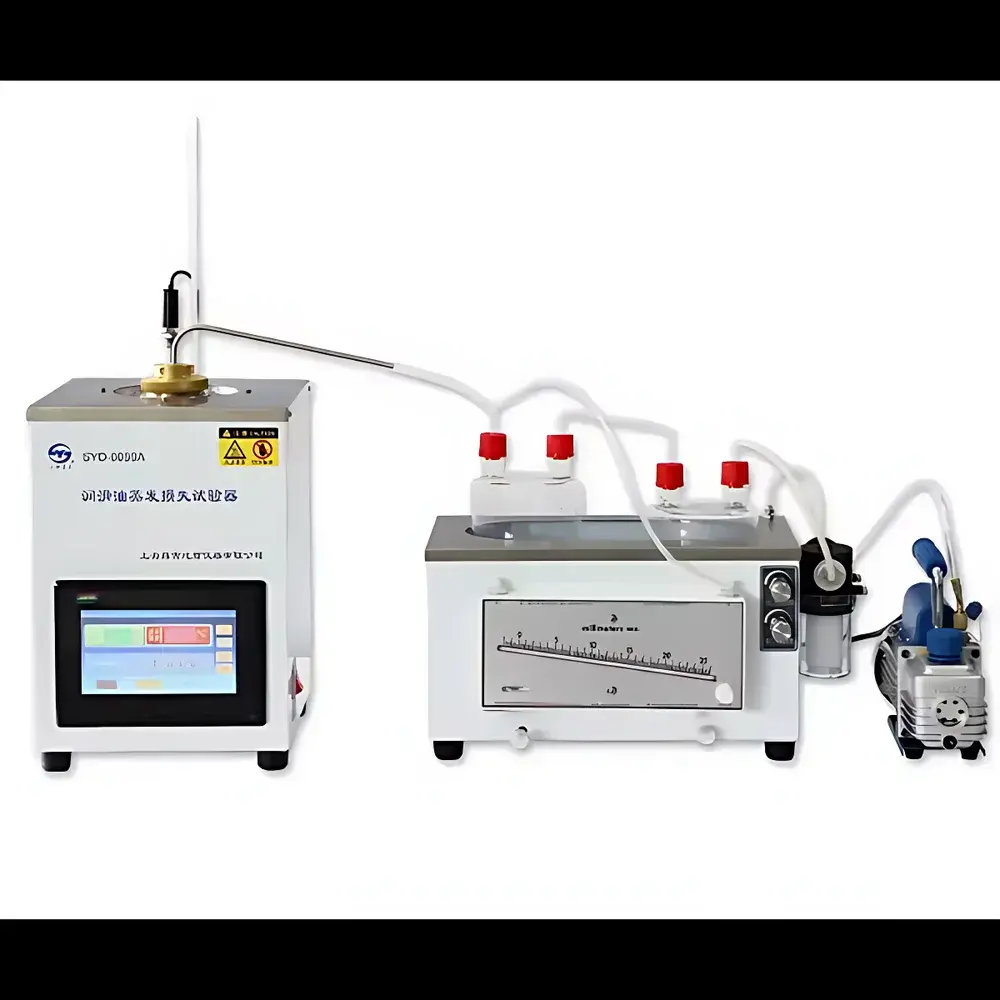
Changji Instruments SYD-0059A Noack Evaporation Loss Tester
| Brand | Changji Instruments |
|---|---|
| Origin | Shanghai, China |
| Model | SYD-0059A |
| Power Consumption | 1200 W |
| Temperature Control Range | Ambient to 250 °C |
| Temperature Accuracy | ±0.5 °C |
| Heating Method | Metal Bath |
| Pressure Regulation | Precision Needle Valve + Imported Differential Pressure Gauge |
| Vacuum System | Integrated Vacuum Pump with Buffer Chamber |
| Compliance | NB/SH/T 0059–2010 Method A, ASTM D5800 |
Overview
The Changji Instruments SYD-0059A Noack Evaporation Loss Tester is a laboratory-grade thermal evaporation analyzer engineered for precise determination of volatility-related mass loss in lubricating oils and base stocks under standardized high-temperature conditions. It operates on the principle of the Noack method — a gravimetric technique wherein a weighed oil sample is heated at 250 °C under controlled airflow and regulated vapor pressure for a fixed duration (typically 60 minutes), after which the residual mass is measured to calculate percentage evaporation loss. This test directly correlates with engine oil performance metrics such as oil consumption, deposit formation, and viscosity stability under high-temperature service conditions. Designed in strict accordance with NB/SH/T 0059–2010 Test Method A (the Chinese national standard equivalent to ASTM D5800), the instrument delivers reproducible, traceable results suitable for QC laboratories, formulation R&D, and regulatory compliance reporting in lubricant manufacturing and testing facilities.
Key Features
- Metal bath heating system with uniform thermal distribution and inherent safety advantages over open-flame or silicone oil bath alternatives — eliminates fire hazards and reduces maintenance requirements.
- High-stability temperature control architecture featuring a microcontroller-based PID algorithm and calibrated platinum resistance temperature sensor (PT100), ensuring ±0.5 °C accuracy across the full operating range (ambient to 250 °C).
- Integrated precision pressure regulation subsystem comprising an imported differential pressure gauge and fine-tuning needle valve, enabling stable and repeatable air flow rate control at the specified 6 L/min (±0.1 L/min) per ASTM D5800 and NB/SH/T 0059.
- Woods metal alloy filling within the bath block enhances thermal conductivity and minimizes axial/radial temperature gradients, critical for achieving consistent evaporation kinetics across multiple crucibles.
- Dual-standard compliant evaporation crucibles — manufactured to exact dimensional and material specifications required by both NB/SH/T 0059 and ASTM D5800, including nickel-chromium alloy composition, wall thickness, and geometry tolerances.
- Dedicated vacuum-assisted exhaust system with integrated buffer chamber and noise-dampened vacuum pump, ensuring smooth, pulse-free vapor extraction without disturbing sample integrity or weighing stability.
Sample Compatibility & Compliance
The SYD-0059A accommodates standard 30-mL nickel-chromium crucibles containing 6.5 g ± 0.1 g of sample, supporting a broad range of finished lubricants (e.g., API SP, CK-4, FA-4 engine oils), Group I–III base oils, and synthetic formulations (PAOs, esters). All mechanical, thermal, and pneumatic subsystems are validated against the procedural constraints defined in NB/SH/T 0059–2010 Method A and ASTM D5800. The unit meets general electrical safety requirements per IEC 61010-1 for laboratory equipment and is compatible with GLP-compliant workflows when paired with certified analytical balances and documented calibration records. While not intrinsically 21 CFR Part 11–compliant (as it lacks user authentication or electronic audit trail functionality), its analog/digital hybrid architecture supports manual SOP adherence and paper-based traceability in regulated environments.
Software & Data Management
The SYD-0059A employs an embedded microcontroller platform with a 7-inch color TFT touchscreen interface. Real-time parameters — including setpoint temperature, actual bath temperature, elapsed time, and pressure differential — are continuously displayed and logged internally at 1-second intervals. Data export is supported via USB flash drive in CSV format, enabling post-test analysis in Excel or LIMS-integrated platforms. No proprietary software installation is required; raw files contain timestamped columns for temperature, pressure, and system status flags (e.g., “Heating”, “Stabilizing”, “Test Running”). Optional RS-232 or Ethernet modules (available upon request) allow integration into centralized lab automation networks for remote monitoring and scheduled test initiation.
Applications
- Quality control of finished engine oils prior to release, verifying conformance to OEM volatility limits (e.g., GM dexos1, Ford WSS-M2C946-A).
- Base oil selection and blending optimization studies, where evaporation loss serves as a key indicator of molecular weight distribution and volatility profile.
- Regulatory submissions requiring NB/SH/T 0059 or ASTM D5800 data for product registration in China, North America, and ASEAN markets.
- Research into additive package thermal stability — particularly anti-wear and viscosity index improver degradation mechanisms under simulated crankcase conditions.
- Interlaboratory round-robin testing programs aimed at establishing measurement uncertainty budgets for Noack methodology in ISO/IEC 17025-accredited facilities.
FAQ
What standards does the SYD-0059A comply with?
It fully implements NB/SH/T 0059–2010 Method A and is functionally equivalent to ASTM D5800, including crucible geometry, airflow calibration, temperature ramping profile, and timing sequence.
Is the metal bath pre-filled with Woods metal from the factory?
Yes — each unit ships with the bath block pre-loaded with certified Woods metal alloy (Bi–Pb–Sn–Cd eutectic), optimized for thermal homogeneity between 200 °C and 250 °C.
Can the instrument operate continuously for extended validation runs?
Rated for continuous duty at 250 °C up to 8 hours; recommended cooldown interval of ≥30 minutes between consecutive tests to maintain long-term sensor stability.
Does it support automatic crucible identification or RFID tracking?
No — crucible handling and identity assignment remain manual per standard Noack practice; users must log crucible IDs separately in their LIMS or QC documentation system.
What maintenance is required for the vacuum system?
The oil-free diaphragm vacuum pump requires only periodic filter replacement (every 6 months under typical use); no oil changes or seal replacements are needed.






