
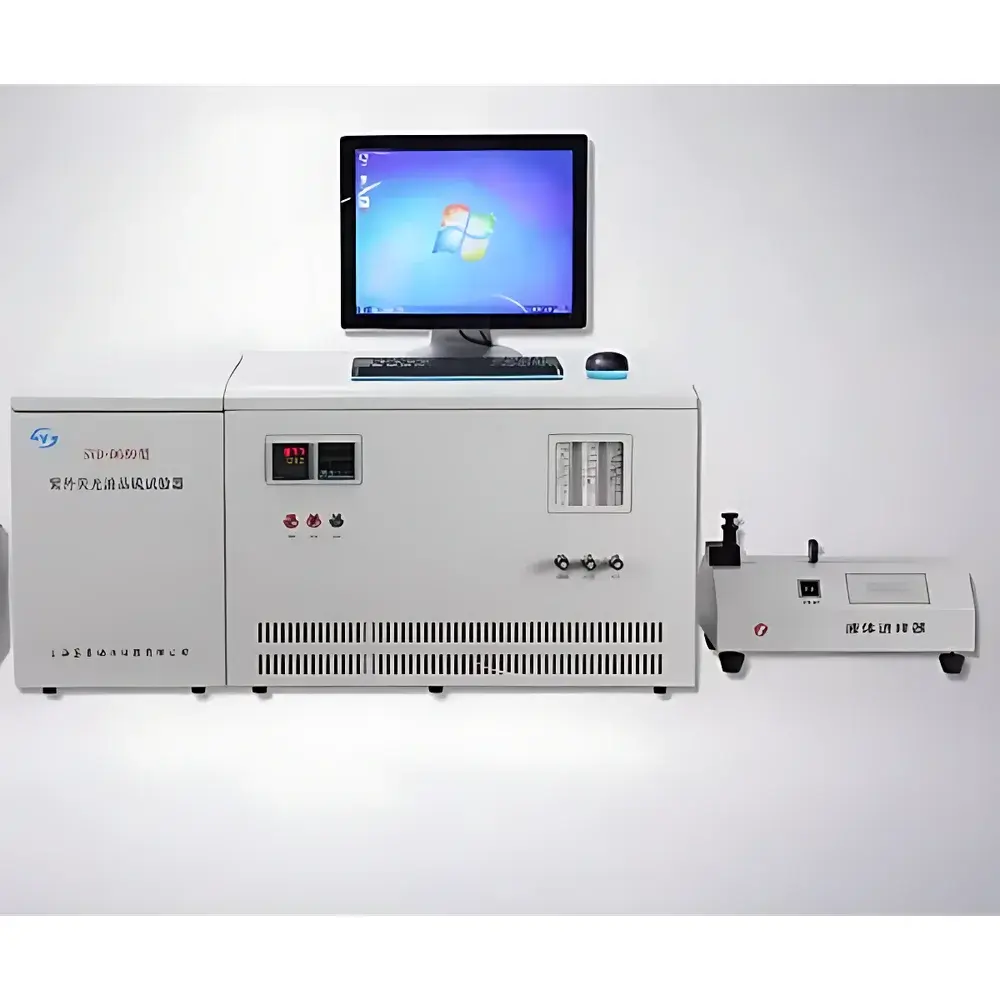
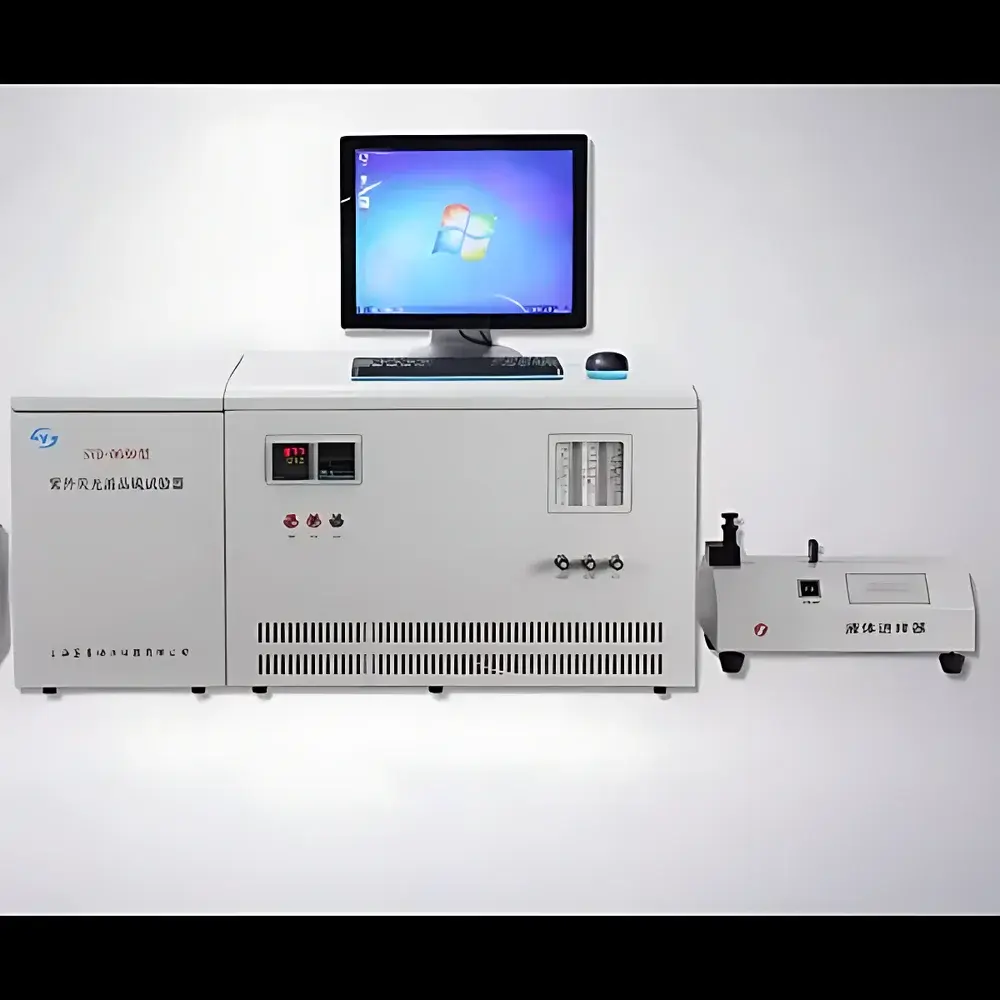
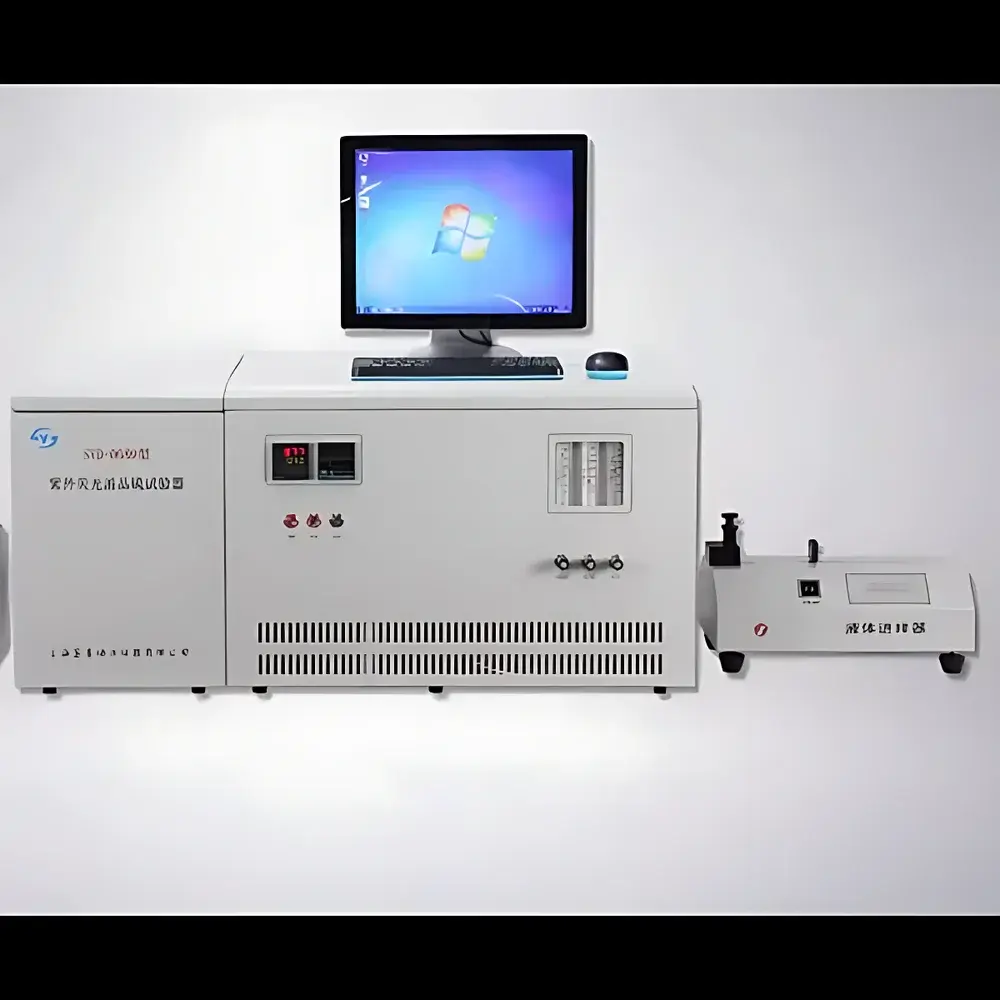
Changji Instruments SYD-0689A UV Fluorescence Sulfur Analyzer for Petroleum Products
| Brand | Changji Instruments |
|---|---|
| Origin | Shanghai, China |
| Manufacturer Type | Authorized Distributor |
| Product Category | Domestic |
| Model | SYD-0689A |
| Detection Type | Total Sulfur |
| Portability | Benchtop (Non-portable) |
| Detection Principle | Ultraviolet Fluorescence (UVF) |
| Measurement Range | 0.1 mg/kg to 10,000 mg/kg (equivalent to 0.00001–1.0 wt%) |
| Detection Limit | 0.05 mg/kg |
| Sample Forms | Liquid (standard), optional solid/gas with dual-furnace and nitrogen deactivation accessories |
| PMT Voltage Range | DC 400–900 V |
| Calibration Linearity | R² ≥ 0.9995 |
| Temperature Control Range & Accuracy | Ambient to 1300 °C, ±1 °C |
| Repeatability (RSD) | ≤3% across 0.2–5000 mg/kg range |
Overview
The Changji Instruments SYD-0689A UV Fluorescence Sulfur Analyzer is a benchtop laboratory instrument engineered for precise, trace-level quantification of total sulfur in petroleum-based liquid fuels—including gasoline, diesel, jet fuel, and lubricating oils—according to internationally harmonized test methods such as ASTM D5453, ISO 20846, and GB/T 11140. It employs the ultraviolet fluorescence (UVF) detection principle: samples are combusted in a high-temperature quartz furnace under controlled oxygen flow, converting all sulfur species into SO₂; the resulting SO₂ is carried into a reaction chamber where it is excited by pulsed 190–230 nm UV radiation from a stabilized xenon lamp. The emitted fluorescence at ~340 nm is detected by a low-noise photomultiplier tube (PMT), with signal intensity directly proportional to sulfur concentration. This method delivers high selectivity, minimal interferences from hydrocarbons or nitrogen compounds, and robust performance across the full dynamic range—from ultra-low-sulfur diesel (ULSD) compliant with China VI (<10 mg/kg) to high-sulfur residual fuels.
Key Features
- Advanced pulsed UV fluorescence detection architecture with modulated xenon lamp excitation, eliminating baseline drift caused by lamp aging and improving long-term signal stability.
- Automated 156-position liquid autosampler with sub-microliter injection precision, integrated bubble elimination, automatic rinse cycles, and positional repeatability <±0.1 mm.
- Mass-flow-controlled carrier and oxygen gas delivery system ensuring consistent combustion efficiency and minimizing pressure-induced variability in SO₂ transport.
- Dual-sealed reaction chamber fabricated using proprietary light- and gas-tight machining, reducing background noise and enhancing detection sensitivity and reproducibility.
- High-stability quartz combustion furnace with imported Kanthal heating elements rated for continuous operation up to 1300 °C and thermal accuracy of ±1 °C.
- Modular hardware design supporting optional dual-furnace configuration for simultaneous liquid/gas/solid analysis and nitrogen deactivation module for high-nitrogen, low-sulfur matrix correction.
- Core optical and detection components—including PMT, interference filter (340 nm ±5 nm), membrane dryer, and SGE-certified injection needle—sourced from original equipment manufacturers in the U.S., Japan, and Europe.
- Integrated safety protocols: real-time gas pressure monitoring with automatic shutdown upon deviation beyond ±10% setpoint to prevent cross-contamination or detector saturation.
Sample Compatibility & Compliance
The SYD-0689A is validated for liquid hydrocarbon matrices per ASTM D5453 and GB/T 17040. With optional accessories—including a second high-temperature furnace and nitrogen deactivation unit—it extends compatibility to solid samples (e.g., catalysts, bitumen) and gaseous streams (e.g., refinery off-gas). All critical analytical parameters—including calibration verification, system suitability testing, and data audit trails—are fully compatible with GLP and GMP environments. The instrument supports 21 CFR Part 11-compliant electronic signatures when deployed with validated LIMS integration, and raw spectral data, calibration logs, and run sequences are stored in an open SQL-based database structure for traceability and regulatory review.
Software & Data Management
Controlled via a dedicated Windows-based application, the SYD-0689A software provides real-time status visualization of furnace temperature, gas flow rates, PMT voltage, and UV lamp output. Analytical workflows support automated single-point recalibration, multi-point standard curve generation, and retrospective reprocessing of chromatographic-like fluorescence decay profiles. All results—including concentration, RSD, retention time-equivalent peak area, and QC flagging—are exportable in CSV, PDF, or XML formats. The system implements role-based user access control, immutable audit trails for method changes and result edits, and seamless interfacing with enterprise LIMS platforms through ODBC and HL7-compatible drivers.
Applications
- Refinery quality assurance: routine monitoring of gasoline and diesel sulfur content to meet China VI, Euro 6, and EPA Tier 3 specifications.
- Fuel additive development: evaluation of sulfur-scavenging efficacy in detergent packages and stabilizers.
- Environmental compliance testing: analysis of bunker fuel, marine distillates, and bio-blendstocks per IMO 2020 and MARPOL Annex VI requirements.
- Research laboratories: kinetic studies of sulfur compound decomposition pathways under varying oxidative conditions.
- Third-party testing labs: accredited sulfur testing for certification bodies requiring ISO/IEC 17025 traceability and uncertainty budgeting.
FAQ
What sulfur species does the SYD-0689A detect?
It measures total sulfur—regardless of chemical form (e.g., mercaptans, sulfides, thiophenes, sulfoxides)—by quantitative oxidative conversion to SO₂.
Is the instrument suitable for ultra-low-sulfur diesel (ULSD) analysis?
Yes; with a detection limit of 0.05 mg/kg and RSD ≤2% at 10 mg/kg, it meets the repeatability and sensitivity requirements of ASTM D5453 for ULSD.
Can the system be validated for regulated environments?
Yes; full IQ/OQ/PQ documentation templates, calibration certificate traceability to NIST SRMs, and 21 CFR Part 11-ready software modules are available upon request.
What maintenance intervals are recommended for the xenon lamp and PMT?
Xenon lamp lifetime exceeds 5 years under normal operation; PMT gain calibration is recommended every 6 months or after 500 runs, whichever occurs first.
Does the analyzer require external cooling water or compressed air?
No; it operates with ambient air cooling and uses internal pressure regulators—only purified oxygen and zero-air or nitrogen carrier gases are required.
Related Products





