
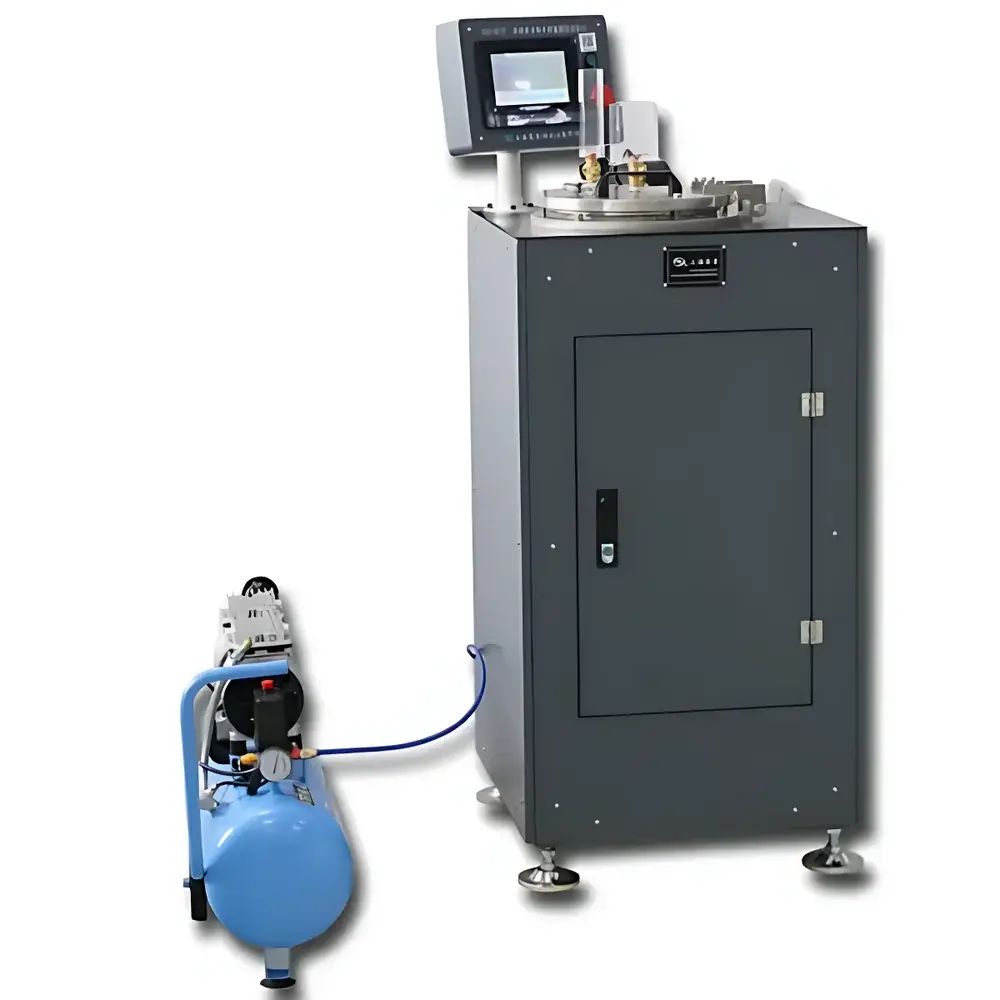
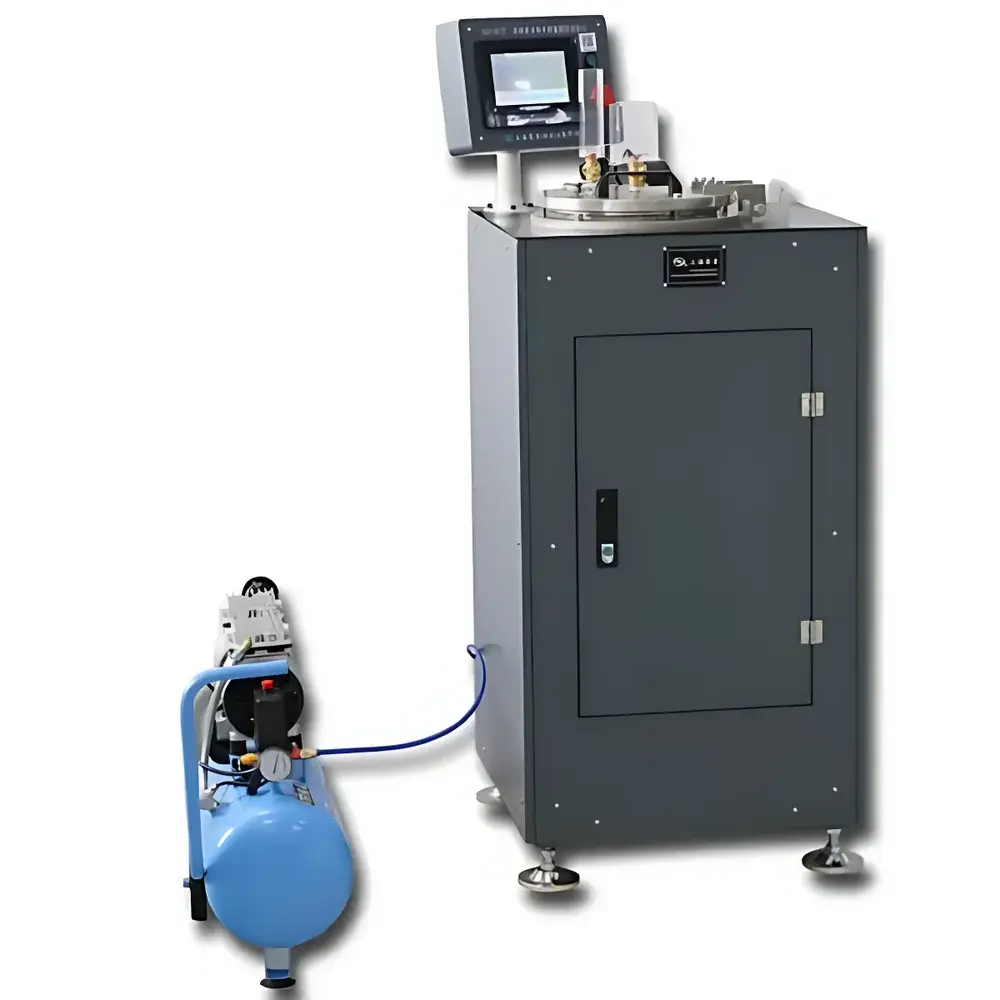
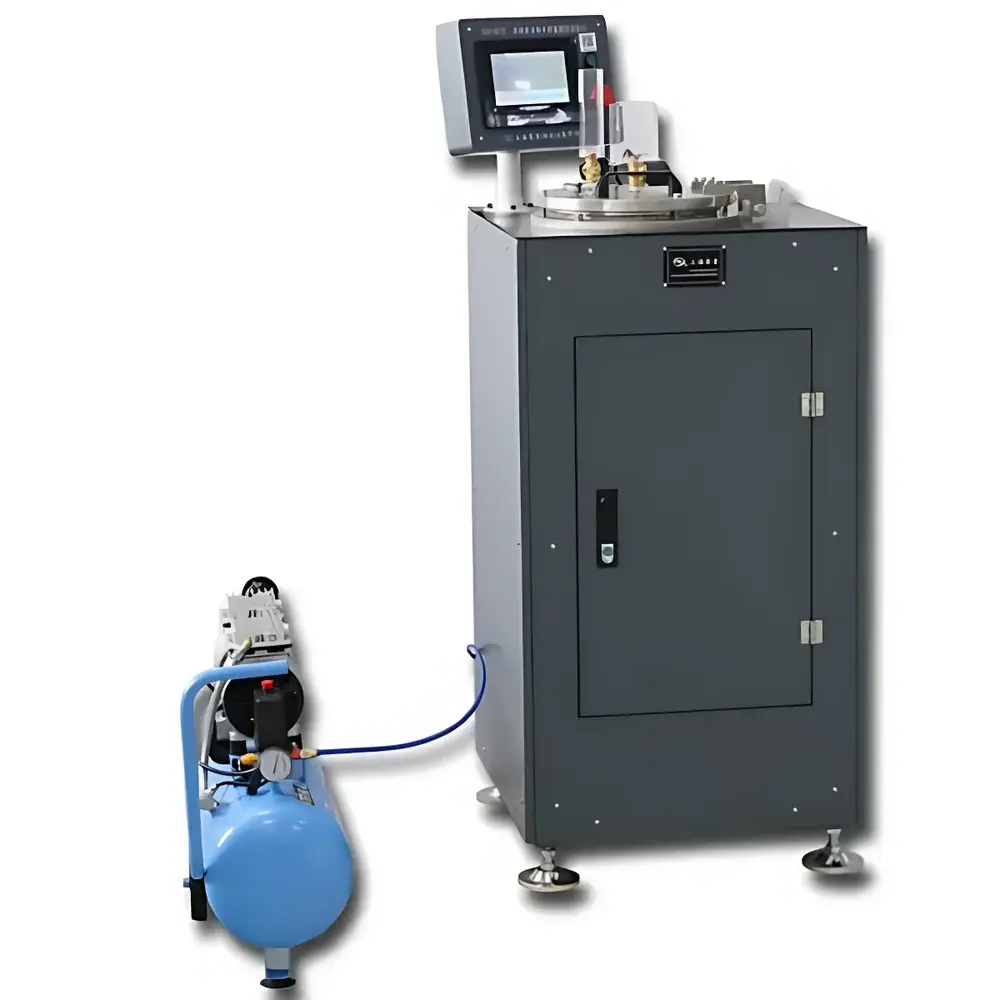
Changji Instruments SYD-0777 Asphalt Mixture Moisture-Temperature Sensitivity Tester
| Brand | Changji Instruments |
|---|---|
| Origin | Shanghai, China |
| Model | SYD-0777 |
| Test Temperature Range | 30–60 °C (±1 °C) |
| Applied Pore Water Pressure | 200–400 kPa (±30 kPa) |
| Sample Dimensions | Ø100–150 mm × 25–150 mm (diameter × height) |
| Power Supply | AC 220 V ±10%, 50 Hz, 1500 W |
| Operating Environment | 5–35 °C, RH ≤80% |
| Dimensions (L×W×H) | 530 × 530 × 1200 mm |
| Net Weight | 260 kg |
Overview
The Changji Instruments SYD-0777 Asphalt Mixture Moisture-Temperature Sensitivity Tester is an engineered laboratory system designed to evaluate the susceptibility of compacted asphalt mixtures to moisture-induced damage under controlled thermal and hydraulic stress conditions. It implements the standardized high-temperature dynamic water-pressure scouring method specified in JTG E20—T 0777, the official Chinese industry standard for highway engineering asphalt and asphalt mixture testing. The instrument replicates field-relevant hydro-mechanical loading by applying regulated pore water pressure within a sealed test chamber while maintaining precise temperature control. This simulates the transient pressurization of asphalt mixture voids during vehicle tire passage over wet pavements—a key mechanism underlying stripping, rutting, and loss of interfacial adhesion between aggregate and bitumen. Unlike empirical immersion tests, the SYD-0777 quantifies performance degradation through measurable mechanical responses—including tensile strength loss, modulus reduction, or density change—enabling objective ranking of binder-aggregate compatibility and moisture resistance across formulation variants.
Key Features
- Industrial-grade 7-inch capacitive touch interface with intuitive HMI navigation and non-volatile parameter storage for repeatable test setup
- Real-time digital display of chamber temperature, applied water pressure, elapsed time, and system status indicators
- Integrated PID-controlled heating system with dual-zone thermal regulation to ensure uniform sample temperature distribution (±1 °C accuracy)
- High-fidelity pressure regulation module featuring stainless-steel diaphragm transducers and proportional solenoid valves (±30 kPa stability over 2–6 h cycles)
- Modular test chamber with quick-release clamping and O-ring-sealed acrylic viewport for visual monitoring without compromising pressure integrity
- Configurable test protocols supporting variable ramp rates, dwell times, and multi-step pressure/temperature profiles per ASTM D7346 and ISO 19203 alignment principles
Sample Compatibility & Compliance
The SYD-0777 accommodates standard Marshall-compacted specimens (Ø100 mm or Ø150 mm, height 25–150 mm), as well as gyratory-compacted cores meeting EN 12697-30 and AASHTO TP 67 specifications. All wetted components are constructed from corrosion-resistant 316 stainless steel and food-grade EPDM elastomers compliant with USP Class VI requirements. The system meets electromagnetic compatibility (EMC) Class B per GB/T 18268.1 and conforms to general safety requirements outlined in GB 4793.1 for electrical equipment used in laboratory environments. While not certified to IEC 61000-4 series for full EMC immunity, its architecture supports integration into GLP-compliant laboratories when operated within validated environmental envelopes (5–35 °C, RH ≤80%). Documentation includes traceable calibration certificates for temperature and pressure sensors, aligned with ISO/IEC 17025 measurement uncertainty reporting conventions.
Software & Data Management
The embedded firmware logs all operational parameters—including timestamped temperature, pressure, and duration—at 1-second intervals to internal flash memory (≥10,000-cycle endurance). Export options include CSV via USB 2.0 port for post-processing in MATLAB, Excel, or custom QA/QC dashboards. Audit trails record user login events, parameter modifications, and test start/stop actions—supporting basic 21 CFR Part 11 readiness when paired with institutional identity management policies. Raw data files retain metadata such as operator ID, sample ID, and calibration expiration dates. No cloud connectivity or remote access capabilities are implemented; data sovereignty remains fully on-site per client IT security protocols.
Applications
- Evaluation of anti-stripping agent efficacy in polymer-modified binders per JTG E20 Annex G
- Comparative assessment of aggregate surface energy treatments (e.g., lime slurry, silane coupling agents)
- Validation of moisture resistance claims for warm-mix asphalt (WMA) formulations
- Supporting pavement design inputs for mechanistic-empirical (MEPDG) modeling under humid climate zones
- Quality assurance testing for asphalt plant production batches prior to paving
- Research into bitumen–aggregate interfacial debonding kinetics using synchronized tensile modulus tracking
FAQ
What standards does the SYD-0777 directly implement?
It complies with JTG E20–T 0777 (China), and its operational envelope aligns with core elements of ASTM D7346 (Standard Test Method for Moisture Susceptibility of Compacted Hot-Mix Asphalt) and ISO 19203 (Bituminous mixtures — Determination of moisture sensitivity).
Can the SYD-0777 be used with non-standard specimen geometries?
Yes—within mechanical limits. The clamping system accepts specimens up to Ø150 mm and 150 mm height, provided axial load transmission remains uniform. Custom adapters may be fabricated per client engineering review.
Is third-party calibration support available?
Changji Instruments provides factory calibration services traceable to CNAS-accredited national metrology institutes. Field verification kits (NIST-traceable RTD and pressure calibrators) are available upon request.
How does this system interface with other Changji instruments?
Raw density outputs from SYD-0705 or SYD-0711A can be manually imported into SYD-0777 test reports. No hardware-level integration exists; data correlation is performed externally using shared sample IDs and timestamp alignment.
What maintenance intervals are recommended?
Pressure transducer zero-check every 200 test cycles; O-ring inspection and replacement every 12 months or after 500 hours of cumulative operation; annual full-system calibration verification recommended.





