
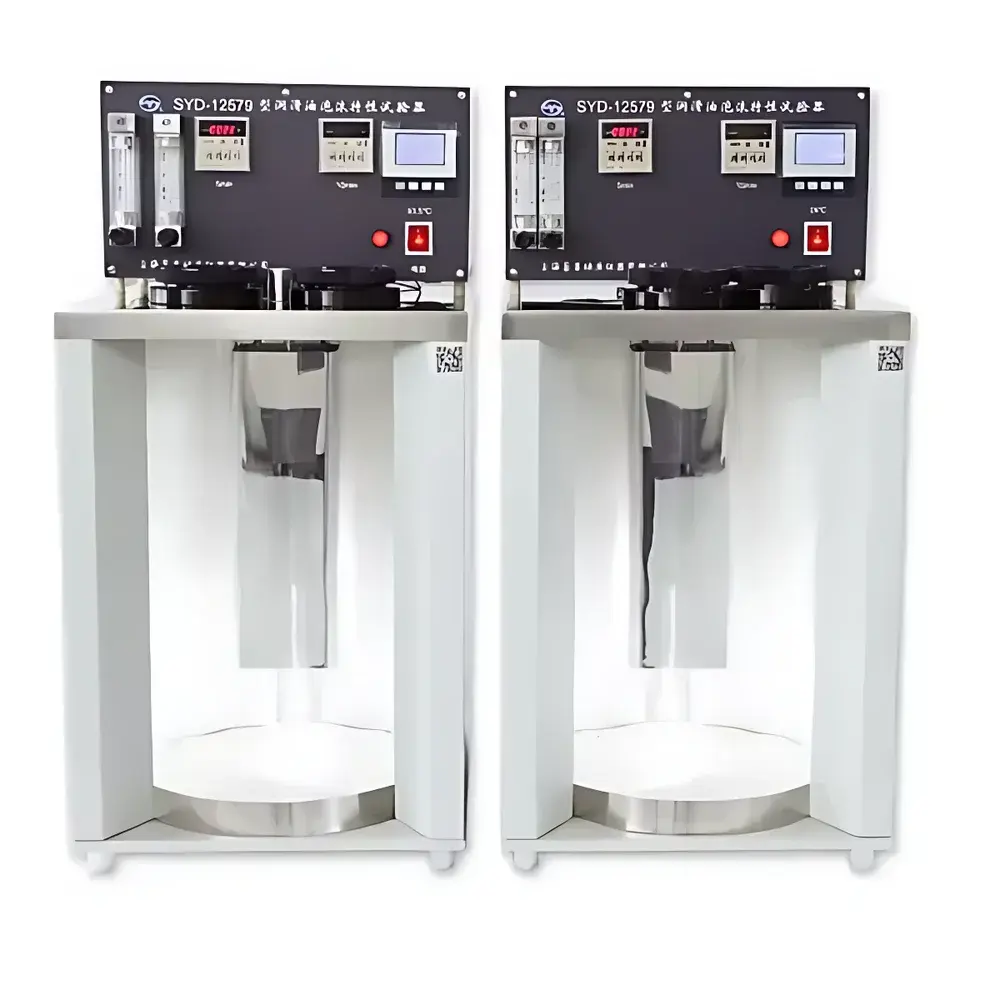
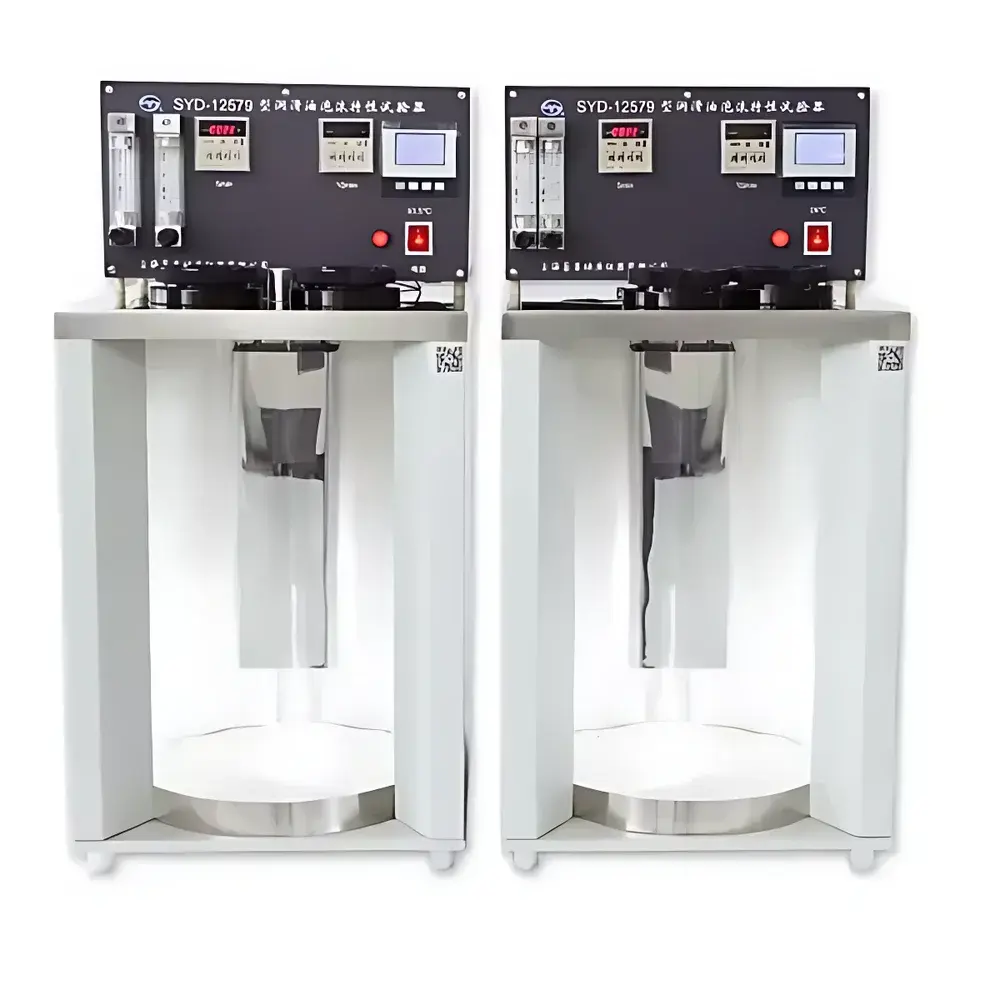
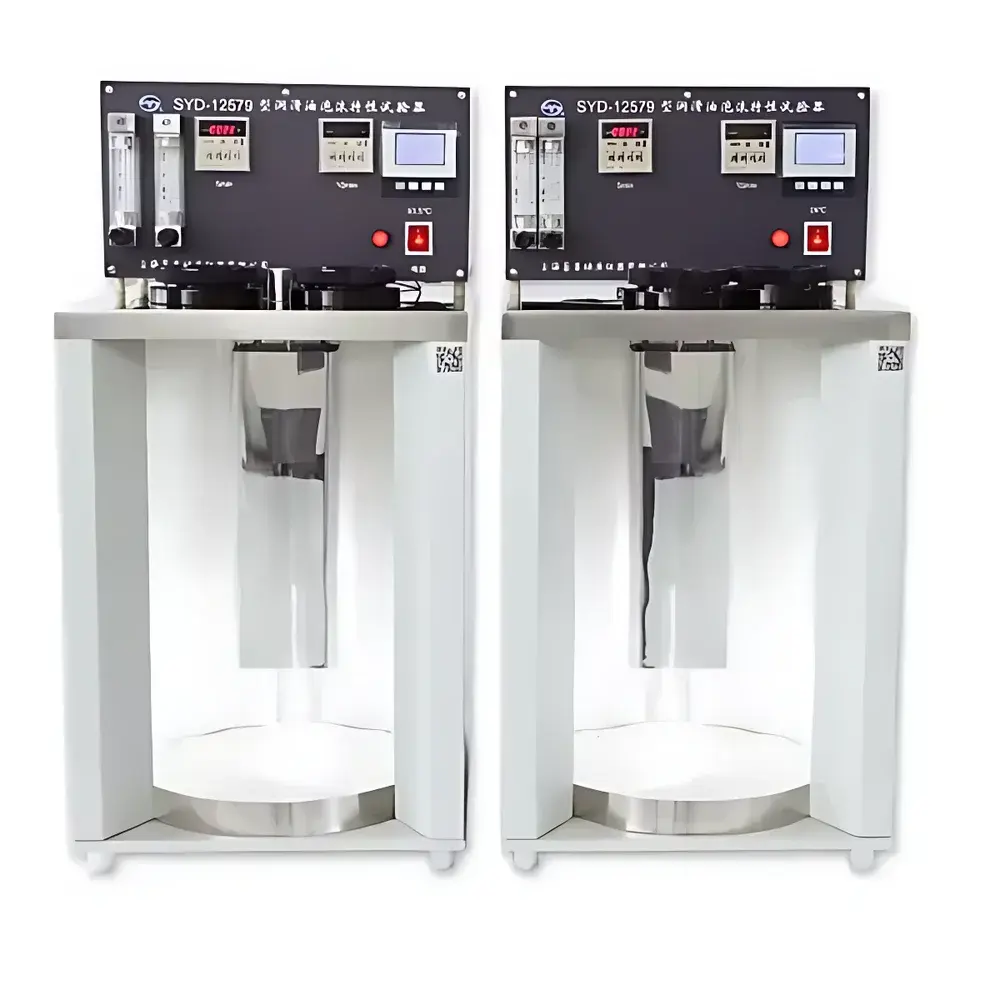
Changji Instruments SYD-12579 Lubricating Oil Foam Characteristics Tester
| Brand | Changji Instruments |
|---|---|
| Origin | Shanghai, China |
| Model | SYD-12579 |
| Power Supply | AC (220 ± 10%) V, 50 Hz |
| Air Flow Rate | (94 ± 5) mL/min (adjustable) |
| Temperature Control Range | 5–99.9 °C (low-temp bath) |
| Temperature Stability | ±0.5 °C |
| Timing Options | 5 min and 10 min |
| Operating Environment | 15–35 °C, ≤85% RH |
Overview
The Changji Instruments SYD-12579 Lubricating Oil Foam Characteristics Tester is a precision-engineered laboratory instrument designed in strict accordance with the requirements of GB/T 12579—Test Method for Foam Characteristics of Lubricating Oils. It quantitatively evaluates two critical performance indicators of lubricants: foam tendency (FT) and foam stability (FS), both of which are essential parameters in assessing formulation integrity, air entrainment resistance, and operational reliability under dynamic conditions. The instrument operates on the standardized gas-sparging principle: a controlled stream of dry, filtered air is introduced at a defined flow rate into a precisely temperature-regulated oil sample housed in a calibrated glass cylinder. Foam volume is measured visually at specified intervals (typically 5 and 10 minutes) following cessation of sparging. This methodology aligns with internationally recognized test logic found in ASTM D892 and ISO 6247, enabling cross-laboratory comparability when used within validated protocols.
Key Features
- Dual independent temperature-controlled baths: a low-temperature bath (5–99.9 °C) equipped with an integrated portable refrigeration unit, and a high-temperature bath (ambient to 99.9 °C), each with dedicated PID-based digital controllers for stable thermal management.
- Automated temperature stabilization: once setpoint is entered, the system achieves and maintains target temperature without manual intervention; controller includes offset calibration capability for traceable thermal accuracy verification.
- Precise air delivery system: mass-flow regulated air supply delivering (94 ± 5) mL/min—adjustable via calibrated needle valve—ensuring repeatability across sequential tests and inter-laboratory studies.
- Integrated timing module with dual preset intervals (5 min and 10 min), synchronized with air-on/air-off cycles and providing audible alerts to minimize operator dependency and reduce procedural variability.
- Robust mechanical architecture: stainless-steel frame, borosilicate glass test cylinders conforming to GB/T 12579 dimensional specifications, and corrosion-resistant fluid pathways suitable for mineral, synthetic, and additive-containing lubricants.
Sample Compatibility & Compliance
The SYD-12579 accommodates standard 100 mL and 200 mL cylindrical glass vessels as specified in GB/T 12579, supporting viscosity ranges typical of engine oils, hydraulic fluids, turbine oils, and gear lubricants (approximately 2–500 cSt at 40 °C). Its design facilitates direct correlation with ASTM D892 (Method A) and ISO 6247 procedures, making it suitable for quality control laboratories operating under ISO/IEC 17025-accredited frameworks. While not inherently 21 CFR Part 11 compliant (as it lacks electronic audit trail functionality), its analog-digital hybrid interface supports GLP-compliant documentation when paired with lab notebooks and SOP-controlled operation logs. Environmental operating limits (15–35 °C, ≤85% RH) ensure consistent performance in standard QC environments without requiring climate-controlled rooms.
Software & Data Management
The SYD-12579 is a standalone hardware platform with no embedded software or data export capability. All measurements—including foam height readings, time stamps, temperature records, and air flow verification—are manually recorded per established laboratory SOPs. For laboratories requiring digital traceability, integration with external LIMS or ELN systems is achieved through structured manual entry using standardized templates aligned with ASTM E2500 and ICH Q9 principles. Optional accessories include calibrated thermometers (traceable to NIM), certified airflow meters, and reference oil standards for routine performance qualification (PQ) and periodic verification (PV).
Applications
- Formulation development labs evaluating anti-foam additive efficacy (e.g., silicone-based or polyacrylate chemistries) under controlled thermal stress.
- Production QC testing of finished lubricants prior to release, verifying conformance to internal specifications and OEM requirements (e.g., OEM MS-12106, GM 6038M).
- Troubleshooting field-reported foaming issues by replicating service temperatures (e.g., 24 °C cold-start, 93.5 °C hot-operating conditions) and correlating FT/FS values with rheological and surface tension data.
- Third-party certification bodies conducting GB/T 12579-compliant testing for CNAS accreditation or export documentation (e.g., CE marking support dossiers).
- Educational institutions teaching tribology, lubricant chemistry, and standardized test methodology in materials science curricula.
FAQ
Does the SYD-12579 comply with ASTM D892?
Yes—the instrument’s core pneumatic and thermal architecture satisfies the physical requirements of ASTM D892 Method A; however, users must follow ASTM-specified vessel geometry, cleaning protocol, and reporting format separately.
Is calibration certificate included with shipment?
No—calibration is performed per user-defined schedule; optional NIST-traceable calibration services for temperature sensors and airflow meters are available upon request.
Can the unit operate continuously for extended test series?
Yes—designed for repeated daily use in QC environments; recommended maintenance includes weekly airflow verification and quarterly thermal uniformity mapping of both baths.
What safety features are built into the system?
Over-temperature cut-off, grounded chassis, insulated heating elements, and fail-safe air shut-off valves prevent thermal runaway or uncontrolled gas release during power interruption.
Is technical support available in English for international customers?
Yes—Changji Instruments provides English-language operation manuals, application notes, and remote troubleshooting assistance via email and video call, with response time guaranteed within one business day.







