
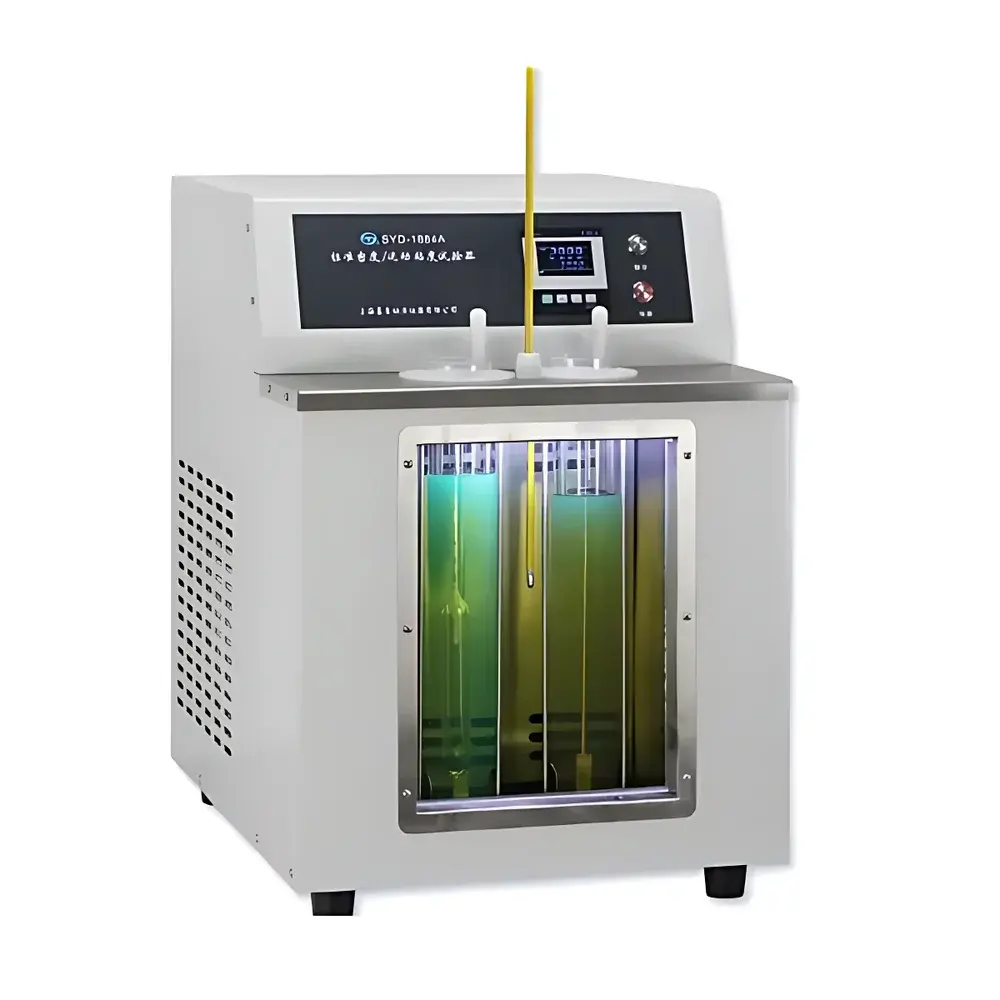
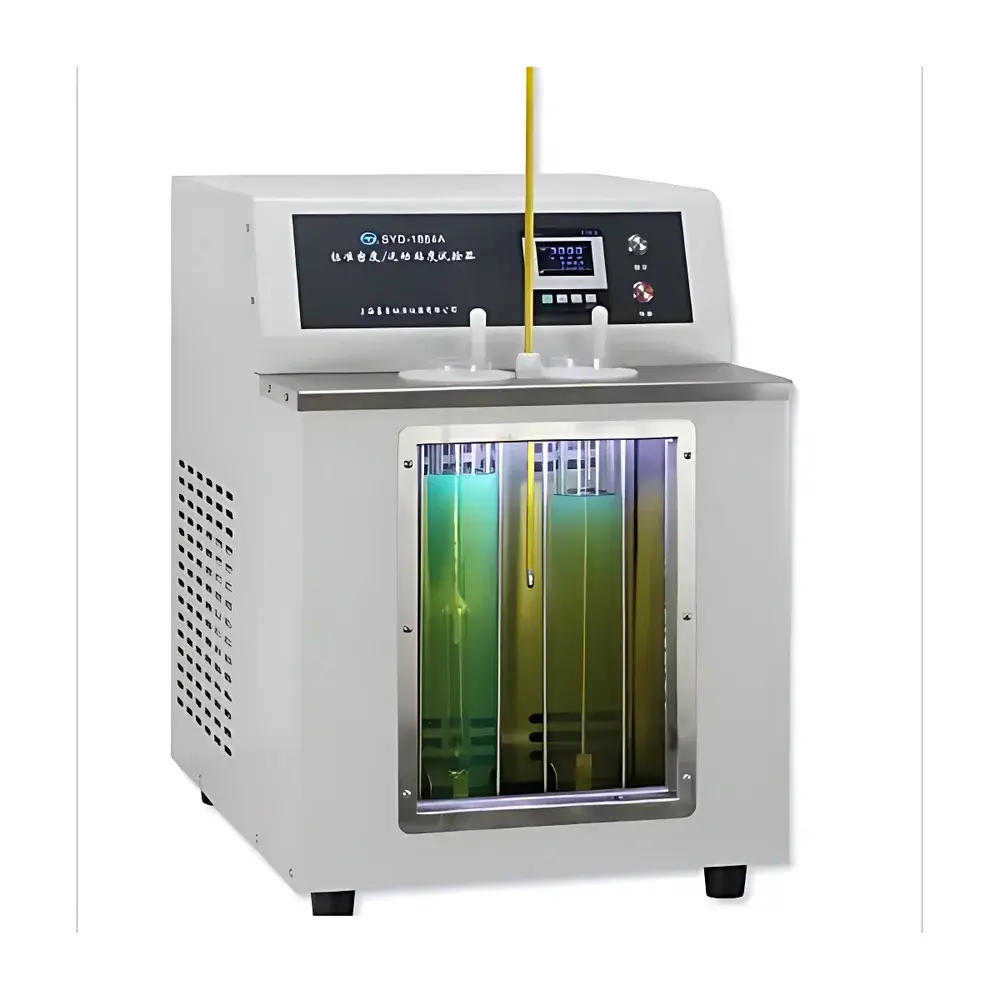
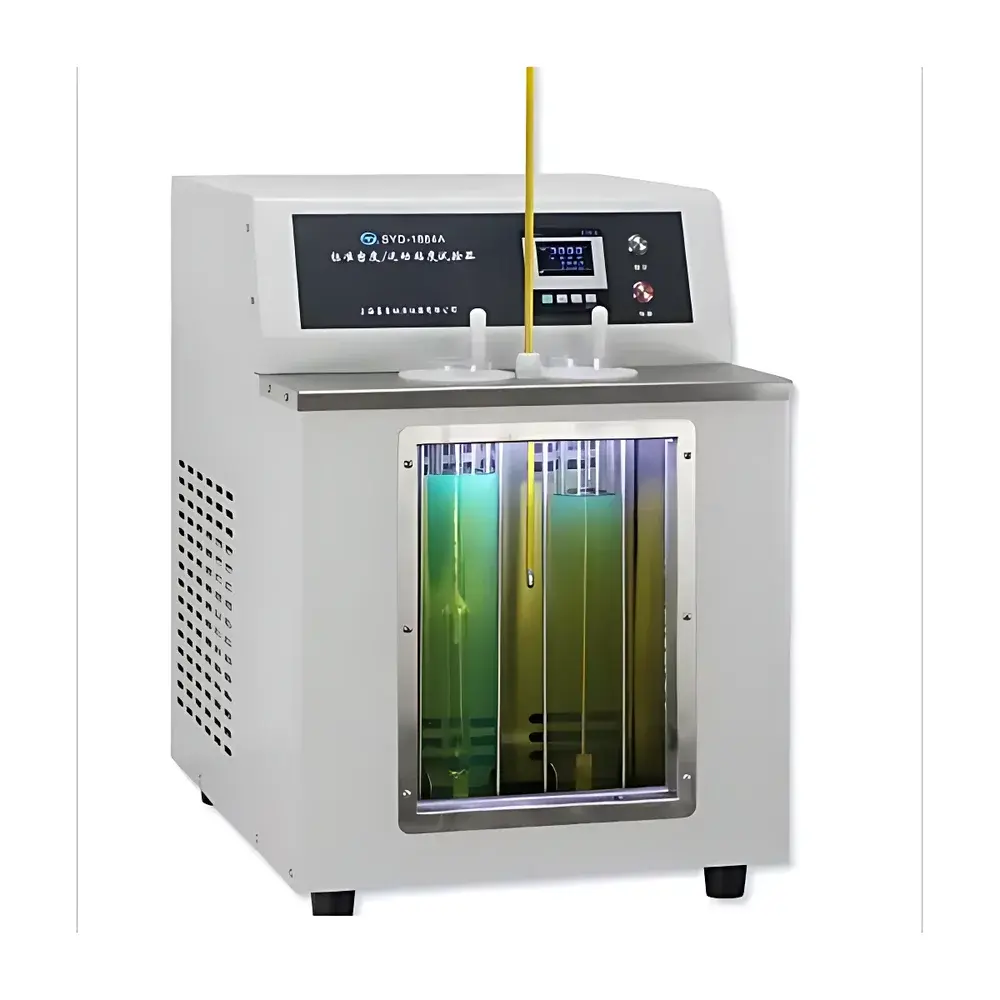
Changji Instruments SYD-1884A Standard Density and Kinematic Viscosity Tester
| Brand | Changji Instruments |
|---|---|
| Origin | Shanghai, China |
| Manufacturer Type | Authorized Distributor |
| Country of Origin | China |
| Model | SYD-1884A |
| Pricing | Available Upon Request |
Overview
The Changji Instruments SYD-1884A Standard Density and Kinematic Viscosity Tester is a dual-function laboratory instrument engineered for precise determination of both density (by hydrometer method) and kinematic viscosity of liquid petroleum products under controlled thermal conditions. It operates in strict compliance with GB/T 1884—2000 “Standard Test Method for Density of Crude Petroleum and Liquid Petroleum Products (Hydrometer Method)” and SY/T 5651—1993 “Technical Specifications for Kinematic Viscosity Testers for Petroleum Products”. Designed for Newtonian liquids—including crude oil, refined fuels, lubricants, and non-petroleum fluid mixtures—the SYD-1884A enables standardized measurements at constant temperatures ranging from 5 °C to 80 °C, with thermal stability maintained at ±0.1 °C. Its integrated thermostatic bath architecture eliminates inter-instrument variability between density and viscosity test setups, supporting reproducible, inter-laboratory comparable results required for quality control, regulatory reporting, and product specification verification in refining, trading, and R&D environments.
Key Features
- Integrated dual-mode design: single-unit platform supports both ASTM D1298 / GB/T 1884 density testing and ASTM D445 / SY/T 5651 kinematic viscosity testing without hardware reconfiguration.
- High-stability temperature control system featuring imported hermetic compressor refrigeration, enabling rapid cooling to sub-ambient setpoints (down to 5 °C) and maintaining uniform thermal distribution across dual 500 mL sample tubes.
- Front-access transparent acrylic observation window allows real-time visual monitoring of hydrometer immersion depth and capillary flow behavior during viscosity measurement—critical for operator verification of meniscus positioning and bubble detection.
- Compact footprint (510 × 400 × 600 mm) and ergonomic front-panel layout optimize benchtop utilization in ISO/IEC 17025-accredited laboratories with limited space.
- Dual independent tube holders accommodate simultaneous testing of reference and sample fluids, facilitating paired comparisons or duplicate analysis per ISO 4297 and ASTM D1298 repeatability requirements.
- Calibrated reference thermometer included: range –20 °C to 102 °C (0.2 °C graduation); supplementary high-precision thermometers (0–50 °C and 50–100 °C, 0.1 °C graduation) support traceable temperature validation per ILAC-G8 and CNAS-CL01 guidelines.
Sample Compatibility & Compliance
The SYD-1884A is validated for use with Newtonian liquid hydrocarbons and compatible non-petroleum fluids meeting the physical criteria defined in GB/T 1884 and SY/T 5651. It supports standard glass hydrometers (ASTM D1298 Type A, B, or C) and Ubbelohde-type viscometers (e.g., Cannon-Fenske Routine, ASTM D445 compliant). The instrument meets general electrical safety requirements per GB 4793.1 and electromagnetic compatibility standards applicable to Class I laboratory equipment. While not inherently 21 CFR Part 11 compliant (as it lacks electronic data capture), its analog operation aligns with GLP-compliant manual record-keeping workflows when used with bound logbooks, dated entries, and supervisor sign-offs—common practice in regional refinery QC labs operating under CNPC or Sinopec internal QA protocols.
Software & Data Management
The SYD-1884A is a fully manual, analog-operated instrument with no embedded microprocessor or digital interface. All measurements are recorded manually using calibrated glass thermometers and stopwatch timing (for viscosity flow time), followed by calculation using standard kinematic viscosity equations (ν = C × t, where C is viscometer constant and t is efflux time). This design ensures operational simplicity, zero firmware dependency, and full transparency in raw data generation—advantageous for audits requiring direct traceability from observed efflux time to final reported ν value (mm²/s). Laboratories integrating the SYD-1884A into LIMS or ELN systems typically digitize results via structured entry templates aligned with ISO/IEC 17025 clause 7.7 on result reporting.
Applications
- Refinery process control: monitoring density shifts in crude blends and distillate cuts to optimize fractionation efficiency.
- Fuel quality assurance: verifying compliance of diesel, jet fuel (Jet A-1), and marine gas oil with ASTM D975, D1655, and ISO 8217 specifications.
- Lubricant formulation development: assessing base oil density-temperature relationships and shear-stable viscosity profiles at standardized test temperatures (e.g., 40 °C and 100 °C).
- Third-party inspection labs: performing contract testing for import/export documentation under customs tariff codes requiring certified kinematic viscosity and density values.
- Educational laboratories: demonstrating fundamental principles of fluid statics (density) and laminar flow rheology (kinematic viscosity) in chemical engineering curricula.
FAQ
What standards does the SYD-1884A comply with?
It is designed and verified against GB/T 1884—2000 (density) and SY/T 5651—1993 (kinematic viscosity), which are technically equivalent to ASTM D1298 and ASTM D445 for routine laboratory applications.
Can the instrument be used for non-Newtonian fluids?
No. The SYD-1884A is intended exclusively for Newtonian liquids as defined in SY/T 5651; non-Newtonian behavior invalidates the capillary flow assumptions underlying kinematic viscosity calculations.
Is calibration certification provided with the unit?
The instrument ships with factory verification of temperature control performance (±0.1 °C at 20 °C and 40 °C); users must independently calibrate associated glassware (hydrometers, viscometers, thermometers) per JJG 42, JJG 155, and JJG 130 national metrological verification regulations.
What maintenance is required for long-term accuracy?
Routine tasks include periodic cleaning of the water bath reservoir, inspection of refrigerant charge integrity (every 24 months), and verification of heater/refrigeration cycle symmetry using NIST-traceable reference thermometers.
Does the SYD-1884A support automated data logging?
No. It is an analog benchtop instrument; all readings and calculations are performed manually. Integration with digital systems requires external transcription or optional third-party timer/data-entry modules.





