
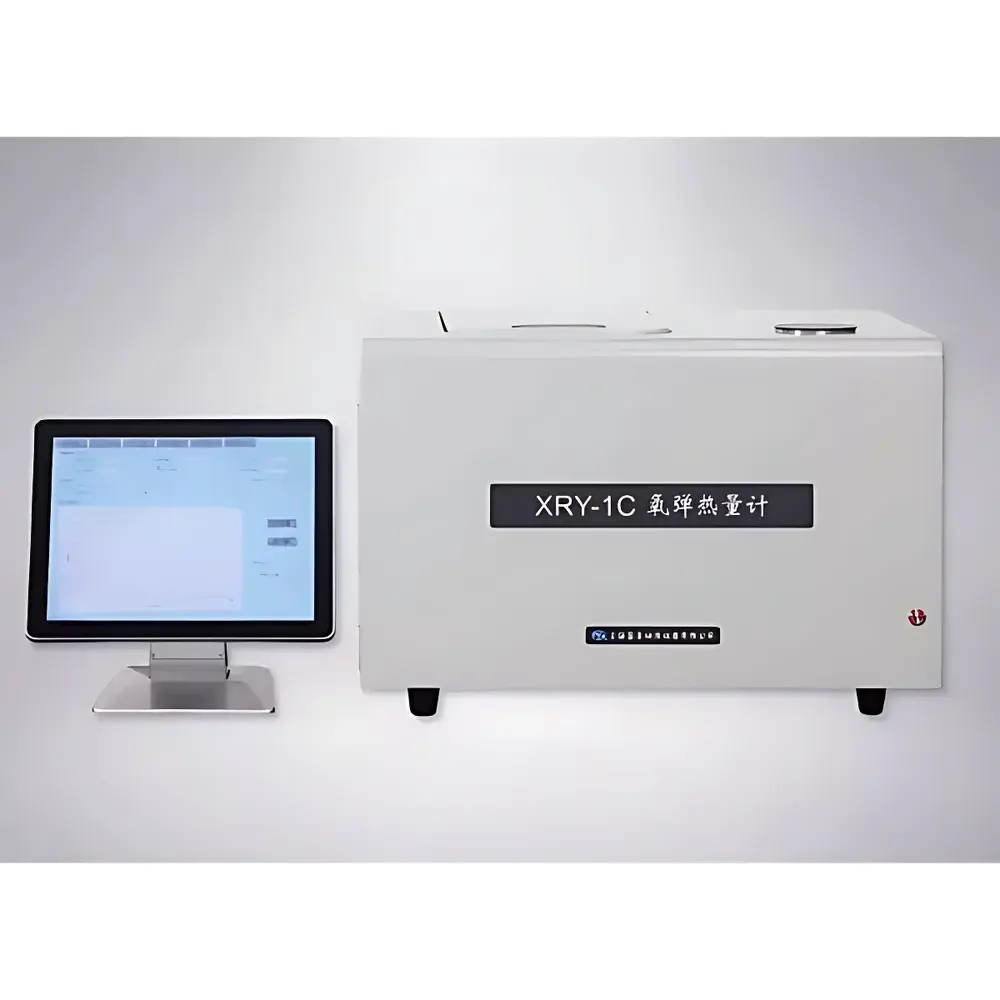
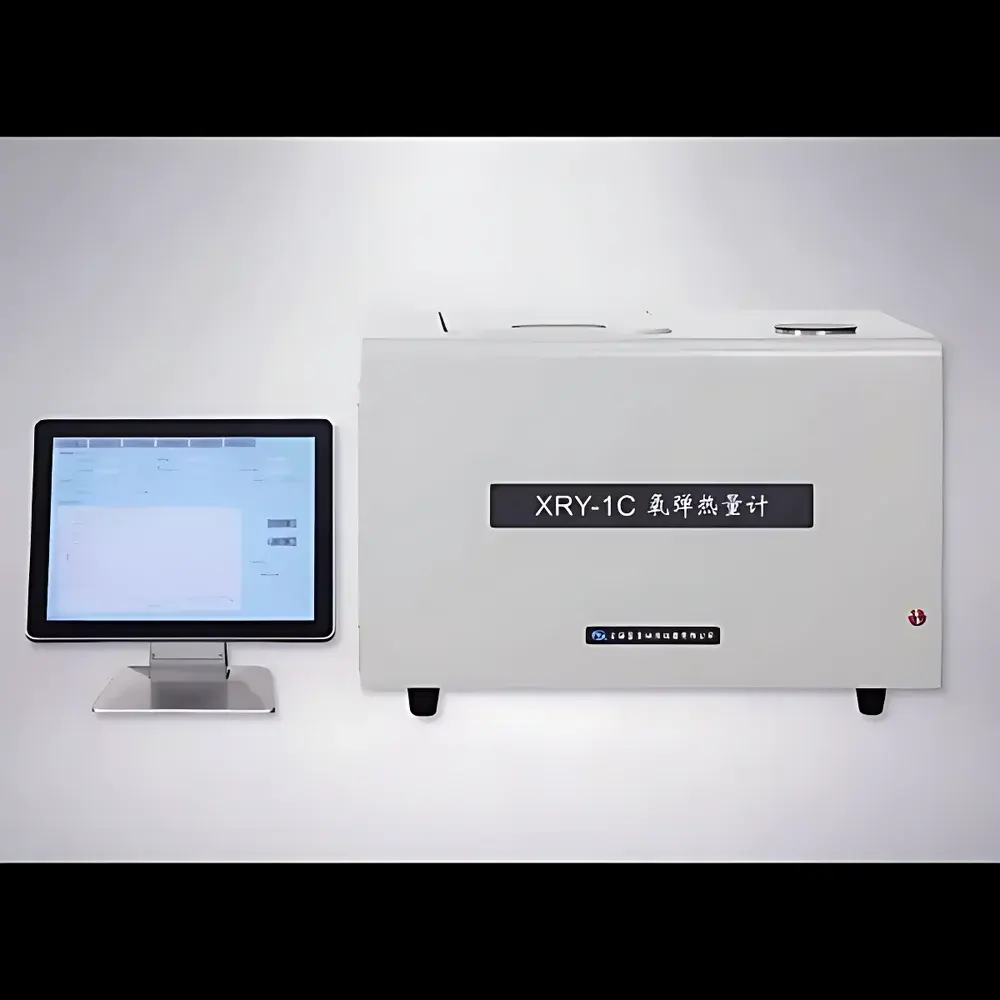
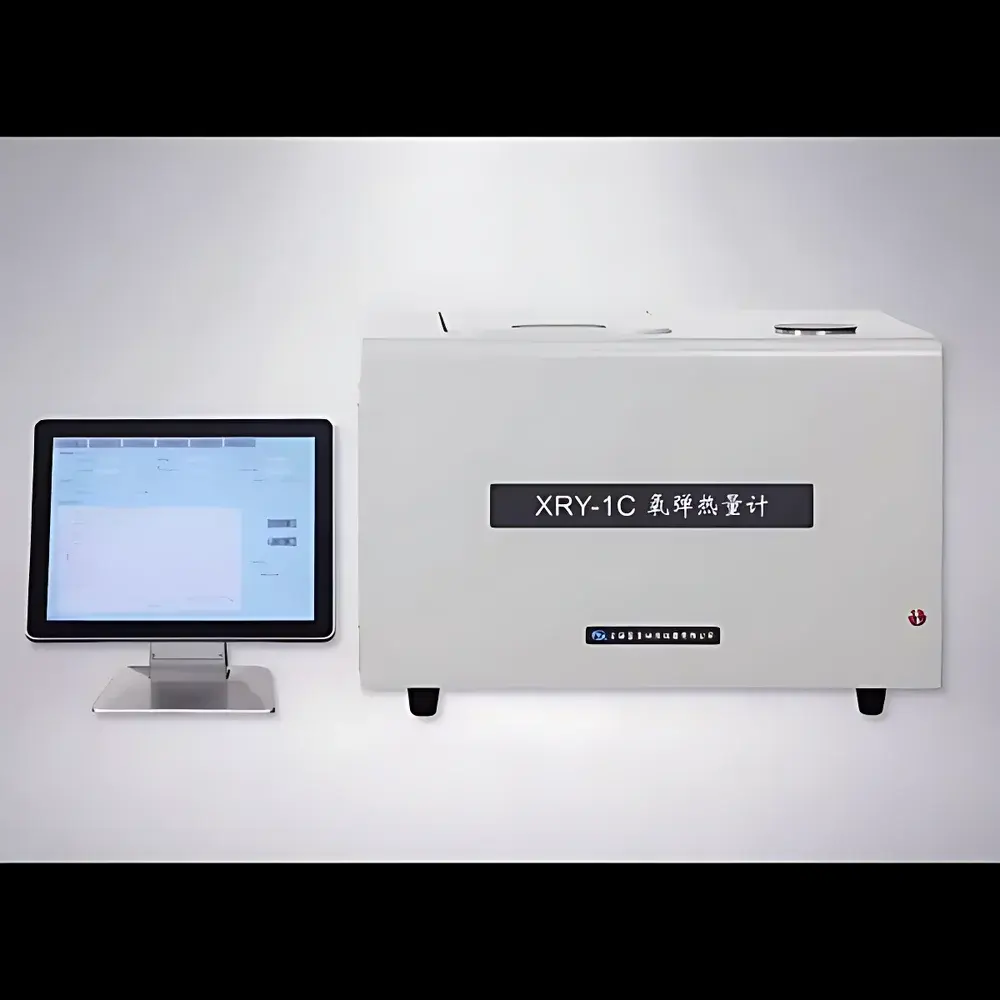
Changji Instruments XRY-1C Automated Oxygen Bomb Calorimeter
| Brand | Changji Instruments |
|---|---|
| Origin | Shanghai, China |
| Manufacturer Type | Authorized Distributor |
| Country of Origin | China |
| Model | XRY-1C |
| Measurement Mode | Isoperibol (Constant-Temperature Jacket) |
| Instrument Type | Oxygen Bomb Calorimeter |
| Intelligence Level | Fully Automated with PC Control |
| Temperature Range | 5°C to 35°C |
| Temperature Detection Threshold | 0.001°C – 0.01°C |
| Temperature Resolution | 0.0001°C |
| Temperature Stability | ≤0.001°C per 30 min |
| Temperature Tracking Rate | ~0.01°C/s – 0.05°C/s |
| Single-Sample Test Duration | ~8 min (Standard Mode), ~3 min (Rapid Mode) |
| Bomb Pressure Rating | 20 MPa |
| Pressure Resolution | 0.001 MPa |
Overview
The Changji Instruments XRY-1C Automated Oxygen Bomb Calorimeter is a precision isoperibol-type calorimetric system engineered for the accurate determination of gross calorific value (GCV) of solid and liquid combustible materials—including coal, coke, petroleum products, wax, biomass fuels, and industrial waste-derived fuels. It operates on the principle of complete combustion under high-purity oxygen pressure (up to 3.0 MPa typical operating pressure, with bomb rated to 20 MPa burst pressure) inside a sealed stainless-steel oxygen bomb, immersed in a thermally stabilized water jacket. Heat released during combustion is quantified via high-resolution temperature measurement (0.0001 °C resolution) of the surrounding water bath, with thermal equilibrium maintained through active semiconductor-based temperature regulation. The instrument conforms to the fundamental thermodynamic framework defined in ISO 1928:2020 and ASTM D5865–22 for solid fuel calorimetry, and its performance validation aligns with the repeatability and accuracy requirements specified in GB/T 213–2008—the Chinese national standard equivalent to ISO 1928.
Key Features
- Active semiconductor cooling/heating system dynamically adjusts thermal load based on sample energy content, enabling stable jacket temperature control (≤0.001°C drift over 30 min) across extended test sequences—critical for multi-sample batch analysis in QC laboratories.
- Integrated electronic water volumetric meter eliminates manual weighing of inner bucket water; volume is auto-determined with ±0.1 mL accuracy, reducing operator-induced variability and improving inter-test reproducibility.
- Automated ignition circuit diagnostics verify continuity and resistance of the ignition wire prior to each test, preventing failed ignitions and ensuring consistent energy input calibration.
- Optimized fluidic architecture features shortened, low-volume tubing paths and standardized quick-connect fittings—minimizing thermal lag, enhancing heat transfer fidelity, and supporting rapid water exchange between tests.
- USB 2.0 interface enables plug-and-play connectivity; a single Windows-based host PC can concurrently manage up to eight XRY-1C units via dedicated control software with independent session logging.
- Optional RS-232 or TCP/IP interface supports integration with laboratory balance systems (e.g., Mettler Toledo, Sartorius) for automated mass data ingestion, eliminating manual transcription errors and enabling full GLP-compliant audit trails.
Sample Compatibility & Compliance
The XRY-1C accommodates powdered, granular, and pelletized solid fuels (e.g., pulverized coal, activated carbon, refuse-derived fuel) as well as viscous liquids (e.g., heavy fuel oil, biodiesel blends) when prepared using certified crucibles and appropriate combustion aids (e.g., benzoic acid standard, nickel-chromium ignition wire). For fine powders prone to spattering, optional pelletization using Changji’s companion hydraulic briquetting press (XRY-PB series) is recommended to ensure complete, non-erratic combustion. All hardware components—including the oxygen bomb, inner/outer buckets, and ignition assembly—meet material compatibility requirements for oxidative environments per ASTM E1710 and are constructed from corrosion-resistant austenitic stainless steel (AISI 316). System-level compliance includes adherence to GB/T 213–2008, ISO 1928:2020, and ASTM D5865–22; raw data files retain full metadata (timestamp, operator ID, ambient conditions, calibration constants) to support FDA 21 CFR Part 11–aligned electronic records management when used with validated software configurations.
Software & Data Management
The embedded Windows application provides real-time thermal curve visualization, automatic baseline correction, and dual-mode calculation (standard 8-min main period or accelerated 3-min protocol). Each test generates a timestamped .CSV file containing raw thermistor readings (10 Hz sampling), integrated heat flow, corrected GCV (MJ/kg), and uncertainty estimation per ISO/IEC 17025:2017 Annex A. Audit log entries record user actions, parameter modifications, and calibration events with immutable timestamps. When configured with optional network licensing, the software supports centralized database archiving (SQL Server or PostgreSQL), role-based access control, and export to LIMS via HL7 or ASTM E1384-compliant interfaces. Electronic signature capability and full 21 CFR Part 11 compliance—including electronic audit trail, operator authentication, and data integrity safeguards—are achievable under validated deployment protocols.
Applications
- Quality control of commercial coal shipments in power generation plants and cement kiln operations.
- Energy content certification of alternative fuels (e.g., torrefied biomass, tire-derived fuel) for regulatory reporting under EU RED II or US EPA Method 28.
- R&D screening of novel fuel formulations in chemical and petrochemical laboratories.
- Calorific value verification of municipal solid waste (MSW) pre- and post-processing for waste-to-energy facility feedstock qualification.
- Educational use in university thermodynamics and fuel science curricula, where robustness, safety interlocks, and pedagogical data transparency are essential.
FAQ
What standards does the XRY-1C comply with for coal calorimetry?
It meets the metrological and procedural requirements of GB/T 213–2008, ISO 1928:2020, and ASTM D5865–22 for gross calorific value determination.
Is the oxygen bomb certified for high-pressure operation?
Yes—the bomb body is hydrostatically tested to 20 MPa and carries third-party pressure vessel certification per GB/T 150.1–2011.
Can the system operate unattended overnight?
With proper ventilation, oxygen supply monitoring, and automated water replenishment (optional external reservoir), it supports unattended batch testing of up to 24 samples.
What is the minimum detectable energy change?
Based on 0.0001°C resolution and typical water equivalent (~2,200 J/K), the system achieves ~0.22 J detection limit—sufficient for <0.05% RSD in routine coal analysis.
Does the software support multi-language UI and report templates?
Yes—English, Chinese, Spanish, and Russian language packs are available; customizable PDF report templates include company branding, regulatory statement footers, and digital signature fields.



