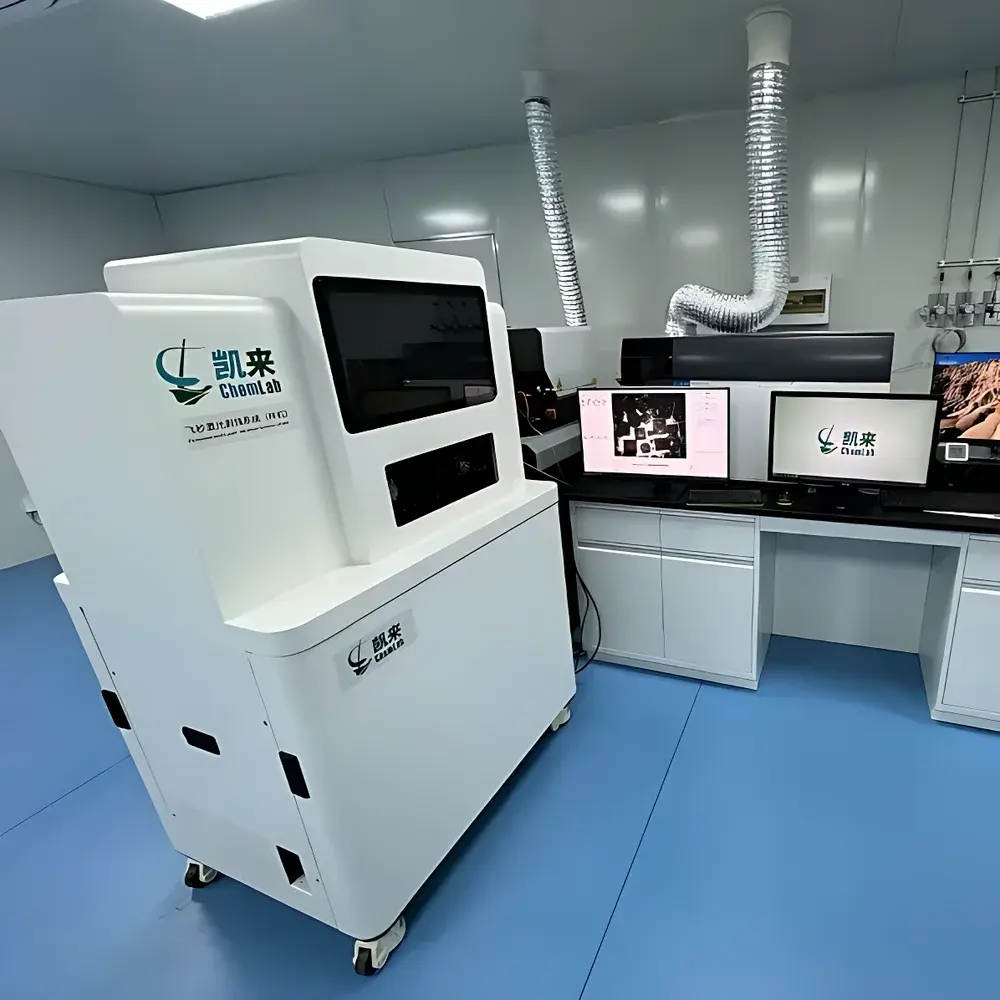
Chemlab Pro fsLA-ICP-MS/MS Service for Single-Fluid-Inclusion Trace Element Quantification
| Brand | Chemlab Pro |
|---|---|
| Origin | Shanghai, China |
| Manufacturer Type | Authorized Distributor |
| Origin Category | Domestic (China) |
| Model | fsLA-ICP-MS/MS |
| Quotation | Upon Request |
| Service Experience | 3–5 Years |
Overview
This service provides quantitative trace element analysis of individual fluid inclusions using femtosecond laser ablation coupled to triple-quadrupole inductively coupled plasma mass spectrometry (fsLA-ICP-MS/MS). The methodology enables high-spatial-resolution, low-background elemental characterization of discrete inclusions hosted in transparent minerals—leveraging the superior ablation efficiency, reduced elemental fractionation, and minimized polyatomic interferences afforded by fs-laser excitation and MS/MS reaction cell technology. Designed for geochemical and economic geology laboratories, this service supports petrogenetic modeling, ore deposit genesis studies, hydrothermal fluid evolution tracking, and crustal fluid–rock interaction investigations. The analytical workflow is grounded in strict microanalytical best practices, requiring prior microthermometric characterization and precise inclusion localization to ensure stoichiometric linkage between thermodynamic and compositional data.
Key Features
- Instrumentation: Agilent 8900 ICP-MS/MS interfaced with GenesisGEO fs-laser ablation system (Chemlab Pro, Shanghai)
- Laser parameters: Wavelength 1030 nm, pulse duration <400 fs, repetition rate up to 1 kHz; selectable circular or rectangular beam profiles (1–500 µm nominal spot size)
- Carrier gas: Ultra-high-purity helium (99.999%), optimized for aerosol transport efficiency and signal stability
- Detection capability: Sub-ppt (pg/g) detection limits for most transition metals, rare earth elements (REEs), and high-field-strength elements (HFSEs) in fluid phases
- Internal standardization: NaCl-equivalent salinity derived from microthermometry on the *same* inclusion serves as the primary internal reference
- External calibration: NIST SRM 610, 612, and 614 glass standards used for quantification; matrix-matched calibration strategies applied where appropriate
Sample Compatibility & Compliance
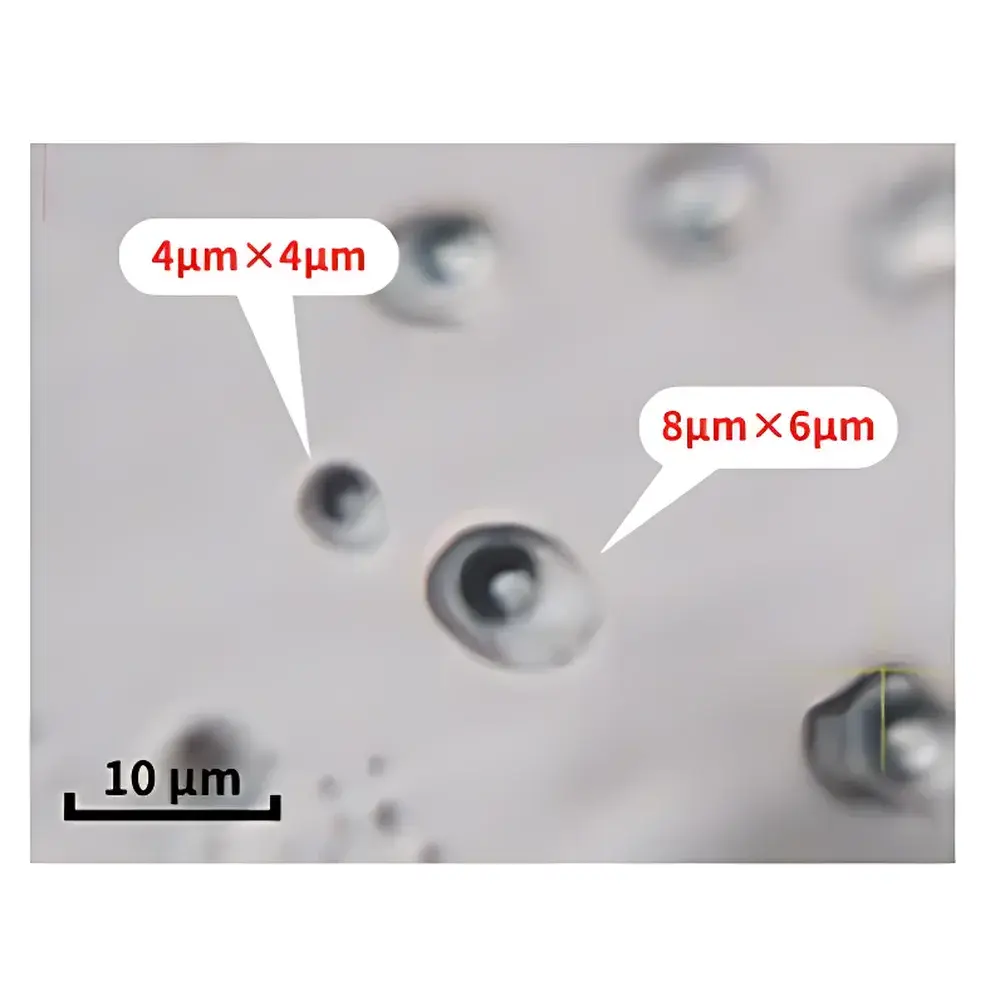
Compatible host minerals include optically transparent silicates (quartz, fluorite, garnet, beryl, pyroxene, olivine) and transparent ore minerals (sphalerite, scheelite). Carbonates, sulfates, and fluorides are excluded due to thermal instability and volatile-induced signal suppression under fs-LA conditions. Samples must be prepared as polished thin sections, fluid inclusion mounts, or mineral-embedded epoxy targets with surface roughness <5 nm RMS. Maximum dimensions: 25 × 25 × 8 mm. Target inclusions must be 10–50 µm in diameter and located 20–50 µm below the polished surface. All submissions require comprehensive petrographic documentation—including photomicrographs with scale bars, inclusion typology classification (e.g., Type I, II, III), phase assemblage, and precise spatial coordinates referenced to stage micrometers. This protocol aligns with ISO/IEC 17025:2017 requirements for competence in testing laboratories and supports GLP-compliant reporting for regulatory or publication-grade datasets.
Software & Data Management
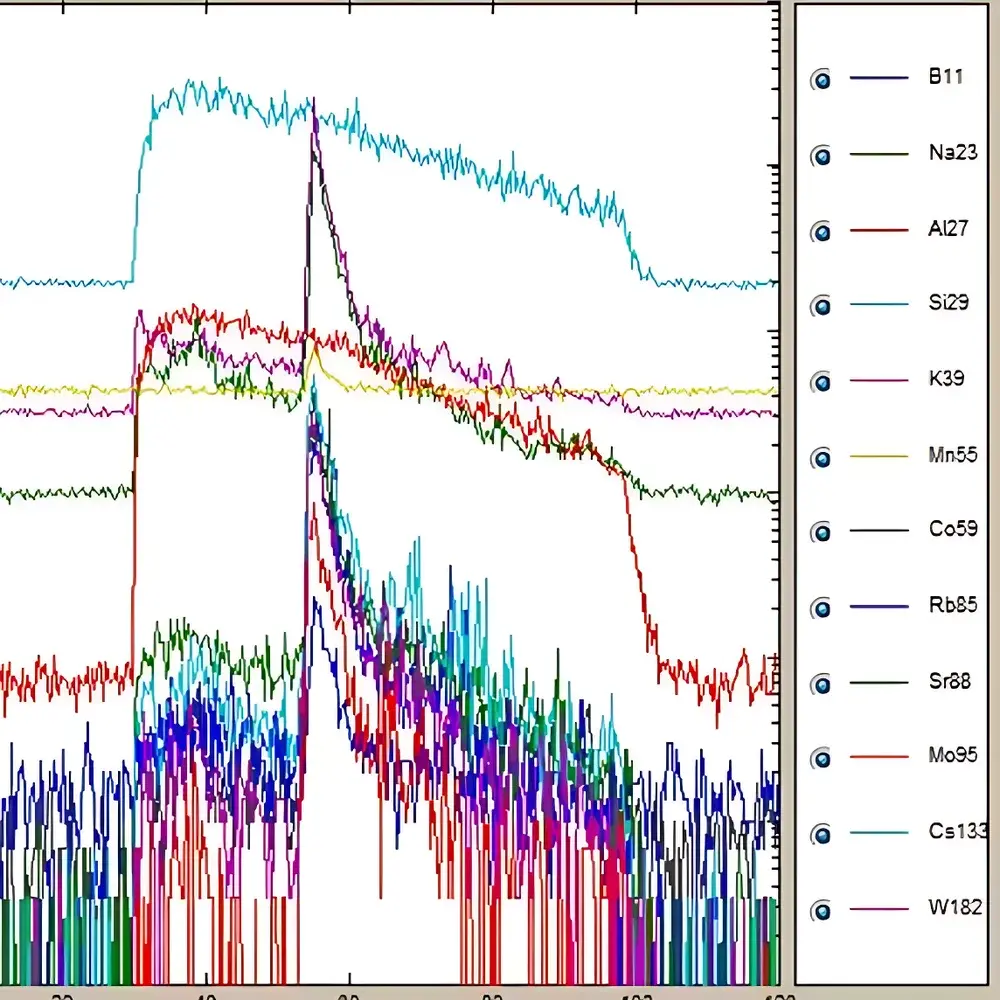
Data acquisition is performed using Agilent MassHunter software v10.2+, configured for time-resolved analysis (TRA) with dwell times optimized per isotope (10–100 ms). Real-time background subtraction, peak integration, and interference correction (e.g., 40Ar35Cl+ on 75As+) are executed within the MS/MS reaction cell using O2 or NH3 gases. Raw .d files are archived in secure, encrypted storage with full audit trails. Clients receive calibrated concentration tables (ng/g or ppmw), TRA plots, inclusion location maps, and uncertainty estimates (2σ, propagated from counting statistics, calibration drift, and salinity error). Data packages comply with FAIR principles (Findable, Accessible, Interoperable, Reusable) and may be formatted for submission to EarthChem or GEOROC repositories.
Applications
- Discrimination of magmatic vs. metamorphic fluid sources in porphyry Cu–Mo systems
- Quantifying REE fractionation patterns during fluid–mineral equilibration in epithermal veins
- Tracking redox-sensitive element ratios (e.g., V/Sc, U/Th) across hydrothermal alteration halos
- Constraining metal transport mechanisms (e.g., chloride vs. sulfate complexing) via ligand-sensitive element ratios
- Validating thermodynamic models (e.g., SUPCRT92, CHNOSZ) with empirical fluid composition constraints
FAQ
Is remote or unattended analysis available?
No. Client participation during instrument setup, inclusion targeting, and real-time signal optimization is mandatory to ensure analytical fidelity and minimize misalignment errors.
Can carbonate-hosted inclusions be analyzed?
Not currently. Thermal decomposition and CO2 release during fs-ablation generate severe matrix effects and spectral interferences incompatible with robust quantification.
What is the minimum required microthermometric documentation?
A complete microthermometric report—including homogenization temperature (Th), ice melting temperature (Tm,ice), and calculated NaCl wt%—must be provided for each targeted inclusion, verified on the same mount used for LA analysis.
Are detection limits reported for all elements?
Yes. Method detection limits (MDLs) are determined per-element from 10–15 blank acquisitions and are provided in the final report alongside measured concentrations and associated uncertainties.
How long are raw data files retained?
Raw .d files and processed results are archived for a minimum of seven years in accordance with ISO/IEC 17025 data retention guidelines and geological data stewardship best practices.