
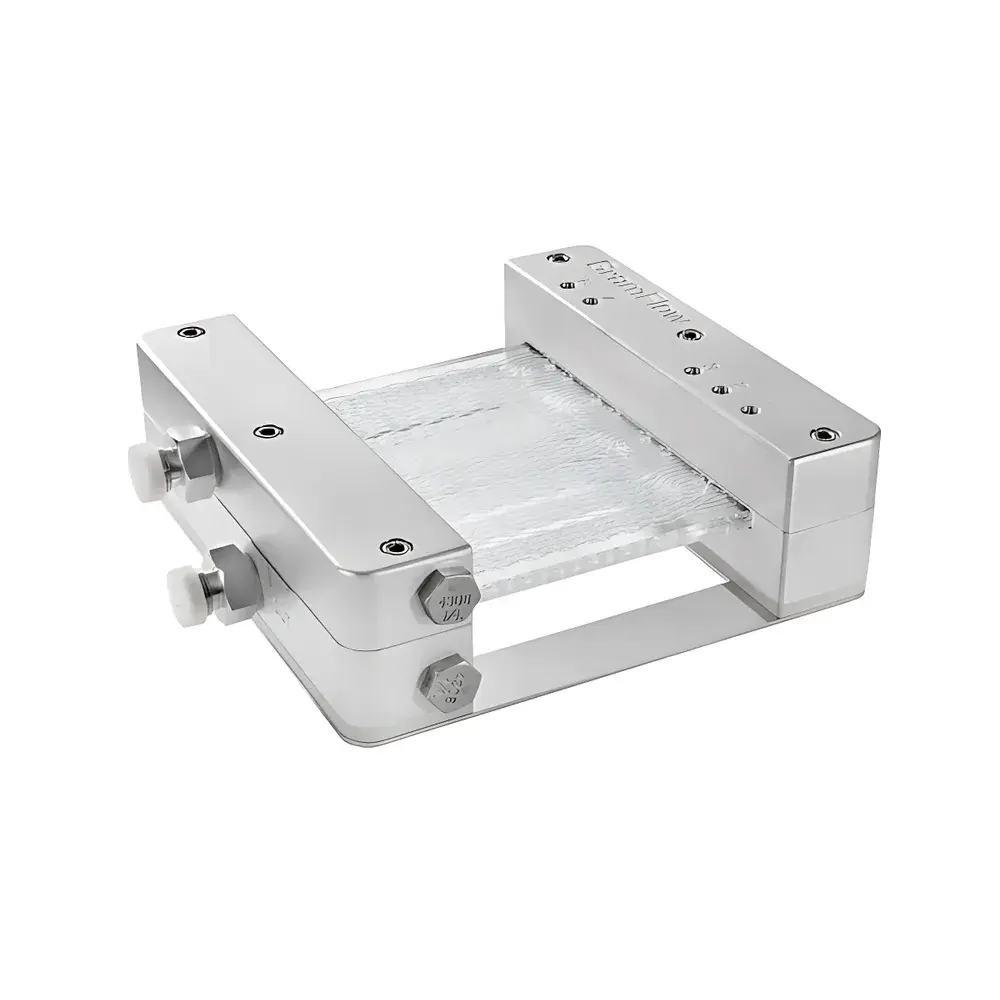
Chemtrix GramFlow® Microchannel Reactor
| Brand | Chemtrix |
|---|---|
| Origin | Netherlands |
| Model | GramFlow® |
| Temperature Range | -20 – 150 °C |
| Temperature Control Accuracy | ±0.1 °C |
| Reaction Volume | 1 mL |
| Flow Rate | 0.2 – 10 mL/min |
| Maximum Pressure | 20 bar |
| Wetted Materials | Borosilicate Glass, PTFE, FFKM |
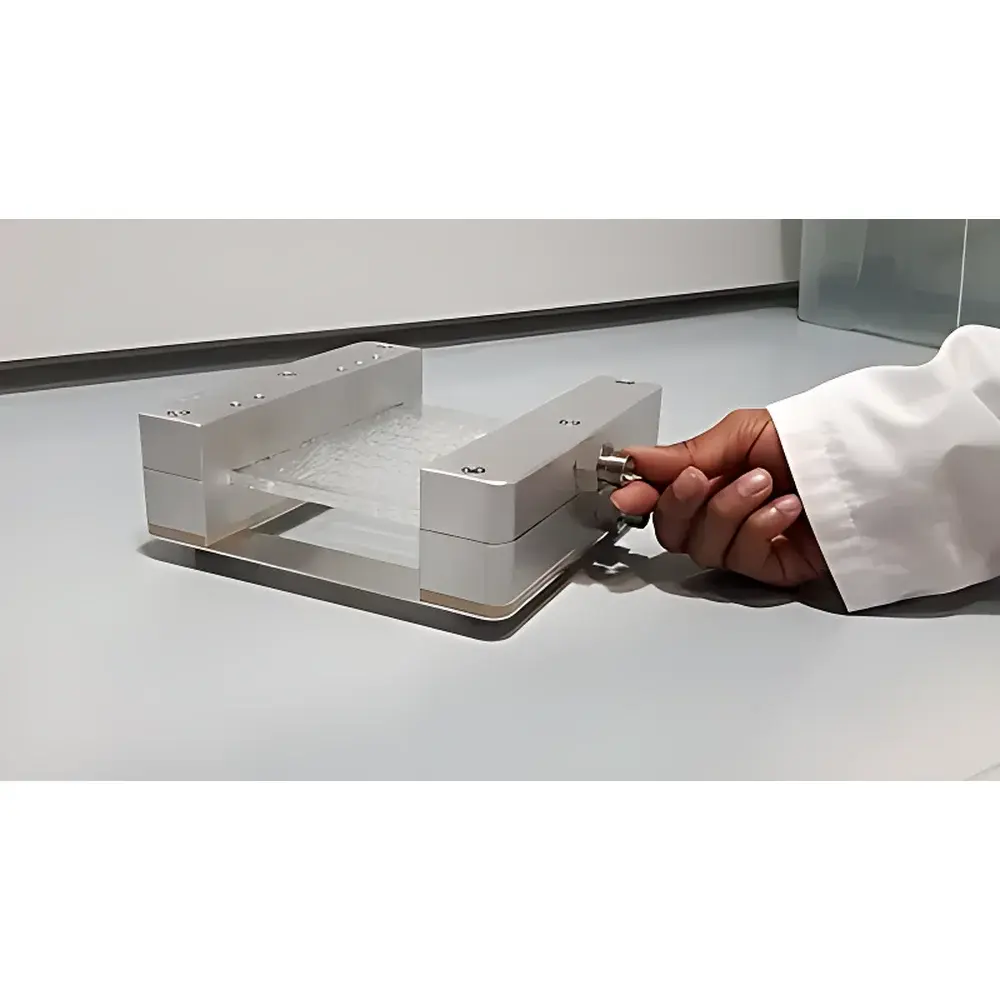
| Dimensions (W×D×H) | 126 × 61 × 46 mm |
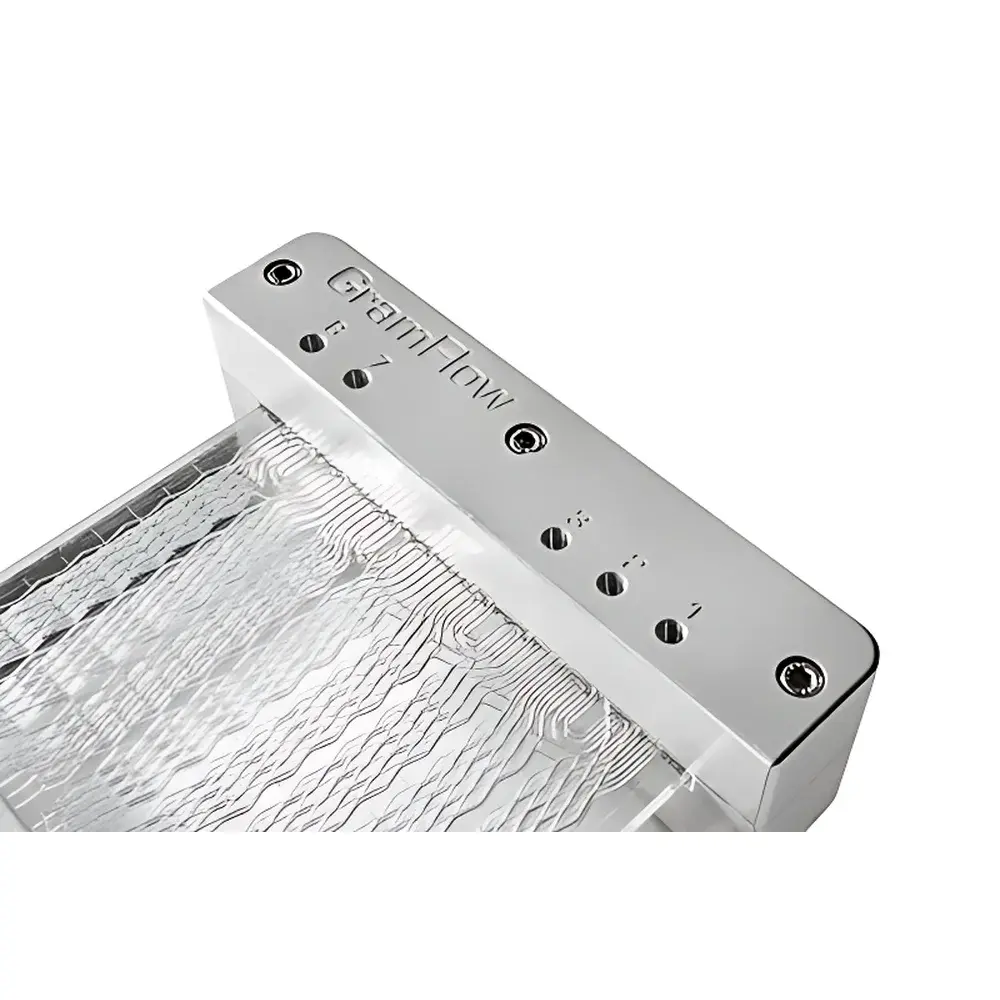
| Channel Architecture | Zig-zag microstructure for enhanced mixing |
| Reactor Type | Integrated continuous-flow microreactor for liquid-phase A + B → P synthesis and nanoscale flow chemistry |
Overview
The Chemtrix GramFlow® Microchannel Reactor is an integrated, benchtop-scale continuous-flow chemical reactor engineered for precision-controlled liquid-phase synthesis and nanomaterial generation. Based on microfluidic principles, it leverages a borosilicate glass microstructured flow path with a zig-zag geometry to achieve rapid, uniform mixing and highly efficient heat and mass transfer. Unlike conventional batch reactors, the GramFlow® operates under laminar flow conditions with residence times precisely defined by flow rate and fixed 1 mL reaction volume—enabling reproducible kinetic control, minimized thermal gradients, and inherent safety advantages for exothermic or hazardous transformations. Its design adheres to fundamental principles of process intensification: high surface-area-to-volume ratio (>10,000 m²/m³), short diffusion distances (<100 µm), and near-instantaneous thermal equilibration via direct contact with integrated Peltier-based temperature control modules. The system is intended for laboratory-scale reaction screening, parameter optimization, and gram-scale production under GMP-aligned workflows.
Key Features
- Monolithic borosilicate glass reaction chip with chemically resistant PTFE/FFKM fluidic seals and fittings
- Integrated thermal management: dual-zone Peltier elements enabling precise temperature control from –20 °C to +150 °C (±0.1 °C stability)
- Zig-zag microchannel architecture promoting turbulent-like mixing at low Reynolds numbers (Re < 200) without moving parts
- Modular, compact footprint (126 × 61 × 46 mm) designed for fume hood integration and multi-unit parallelization
- Pre-mixing zone upstream of reaction channel ensures homogeneous reagent introduction prior to thermal activation
- Pressure-rated up to 20 bar for elevated-temperature reactions and volatile solvent handling
- Scalable platform: identical fluidic behavior validated across GramFlow®, KiloFlow®, and larger industrial Chemtrix systems
Sample Compatibility & Compliance
The GramFlow® supports a broad range of organic, inorganic, and organometallic transformations—including nitration, sulfonation, esterification, cyclization, azidation, diazotization, oxidation, hydrogenation, alkylation, amination, chlorination, Beckmann rearrangements, Michael additions, photocatalysis, and Grignard reactions. Its all-glass/fluoroelastomer wetted path ensures compatibility with aggressive reagents (e.g., concentrated HNO₃, Cl₂, SO₃, LiAlH₄ slurries) and common solvents (THF, DMF, DCM, MeOH, EtOAc, acetonitrile). The device complies with ISO 8573-1 (compressed air purity), ASTM E2500-13 (verification of laboratory equipment), and supports GLP/GMP documentation requirements through traceable calibration records and audit-ready operation logs. While not certified as intrinsically safe, its low hold-up volume (≤1 mL), pressure relief design, and closed-loop thermal control meet IEC 61010-1 criteria for laboratory electrical equipment safety.
Software & Data Management
The GramFlow® operates via Chemtrix’s proprietary FlowManager™ software (Windows-based), providing real-time monitoring and control of flow rates (via connected syringe or HPLC pumps), temperature setpoints, pressure feedback (optional sensor), and runtime logging. All parameters are timestamped with millisecond resolution and exported in CSV/Excel format for statistical analysis (e.g., DoE, PCA, kinetic modeling). The software enforces user-level access controls, electronic signatures, and 21 CFR Part 11-compliant audit trails—including immutable records of parameter changes, start/stop events, and calibration history. Raw data files are SHA-256 hashed and stored locally; optional integration with LIMS or ELN platforms is supported via RESTful API.
Applications
- Rapid exploration of novel reaction space under varied stoichiometry, residence time (0.1–5 min), and thermal profiles
- Systematic optimization of yield, selectivity, and impurity profile for API intermediates and fine chemicals
- Process validation studies supporting tech transfer to pilot or manufacturing scale
- Gram-per-hour synthesis (up to 600 g/h) of nanoparticles, metal–organic frameworks (MOFs), and functional polymers
- Feasibility assessment of continuous manufacturing routes prior to CAPEX commitment
- Hands-on training in flow chemistry fundamentals, reaction engineering, and process safety for academic and industrial users
FAQ
What types of pumps are compatible with the GramFlow®?
Standard configurations interface with third-party syringe pumps (e.g., Harvard Apparatus, Chemyx) or HPLC pumps capable of delivering stable flow between 0.2–10 mL/min with pulse dampening.
Can the GramFlow® handle solid-containing slurries or heterogeneous catalysis?
Yes—when paired with ultrasonically assisted feeding or pre-filtered catalyst suspensions (particle size <20 µm); optional inline filters and back-pressure regulators are available to prevent clogging.
Is the glass microchip replaceable, and what is its service life?
Each GramFlow® chip is serialized and calibrated; typical lifetime exceeds 500 operational hours under standard conditions. Replacement chips are supplied with factory calibration certificates.
How is temperature measured and controlled within the microchannel?
A platinum RTD sensor embedded in the aluminum heat block adjacent to the glass chip provides closed-loop feedback; thermal coupling is optimized via thermally conductive epoxy and clamping force calibration.
Does Chemtrix provide application support for method development?
Yes—Chemtrix offers remote and on-site technical assistance, including reaction scouting packages, kinetic modeling support, and regulatory documentation templates aligned with ICH Q5, Q7, and Q11 guidelines.



