
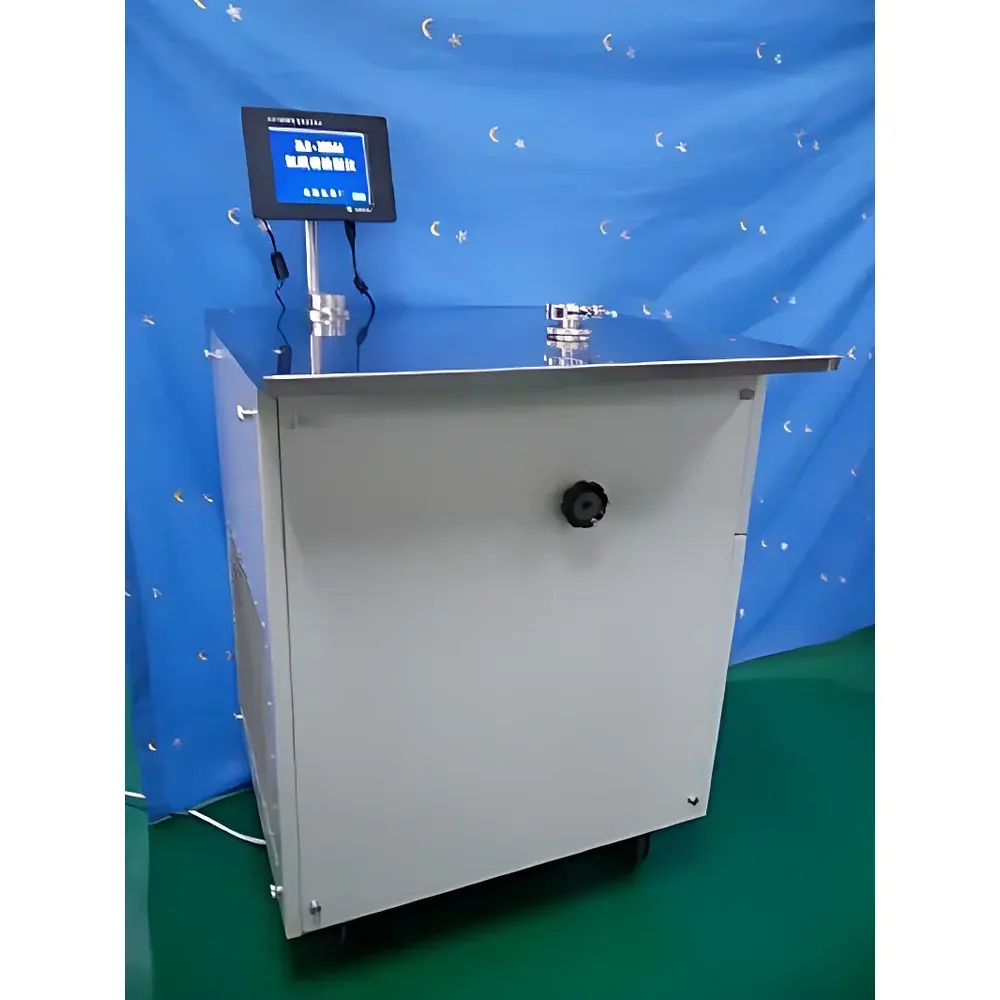
Chengyi ZLS-24D/M Helium Mass Spectrometer Leak Detector (Turbo-Molecular Pump Type)
| Brand | Chengyi / scchengyi |
|---|---|
| Origin | Sichuan, China |
| Manufacturer Type | Authorized Distributor |
| Origin Category | Domestic (China-made) |
| Model | ZLS-24D/M |
| Pricing | Available Upon Request |
| Startup Time | ≤5 min |
| Minimum Detectable Leak Rate | <1×10⁻¹¹ Pa·m³/s (Negative-Pressure Mode) |
| Response Time | ≤3 s |
| Maximum Operating Pressure in Mass Spectrometer Chamber | 1×10⁻² Pa |
| Maximum Allowable Test Port Pressure | 1000 Pa |
| Leak Test Interface | KF25 |
| Dimensions (L×W×H) | 640×550×980 mm |
| Weight | ~75 kg |
| Power Supply | 220 V ±10%, ~2 kW |
Overview
The Chengyi ZLS-24D/M Helium Mass Spectrometer Leak Detector is a high-sensitivity vacuum-based leak detection system engineered for precision integrity verification in ultra-high vacuum (UHV) and high-vacuum (HV) applications. It operates on the principle of residual gas analysis using helium as a tracer gas, leveraging quadrupole mass spectrometry to selectively detect and quantify helium ions at mass-to-charge ratio (m/z) = 4. The instrument implements Chengyi’s proprietary “positive-flow” vacuum architecture—optimized for rapid system conditioning and stable ion current measurement—where a turbo-molecular pump serves as the primary high-vacuum pumping stage. This configuration enables fast startup (<5 minutes from cold start), robust signal stability under dynamic pressure conditions, and reliable operation across a wide test port pressure range—from rough vacuum (up to 1000 Pa) during gross leak screening via reverse diffusion mode, to high-vacuum regimes (<10⁻¹ Pa) for sub-pico-Pascal·m³/s sensitivity in conventional (non-bypass) detection mode.
Key Features
- Turbo-molecular pump–based vacuum architecture ensures rapid pump-down, low base pressure (<1×10⁻² Pa in the mass spectrometer chamber), and minimal vibration-induced signal drift.
- Dual-mode operational flexibility: reverse-diffusion mode for rapid gross leak identification at test port pressures up to 1000 Pa; conventional (full-sensitivity) mode optimized for fine leak detection below 10⁻¹ Pa.
- Automatic peak search and real-time ion current normalization eliminate manual tuning; integrated audio alarm triggers upon threshold-exceeding helium signal detection.
- KF25 standardized vacuum interface ensures compatibility with common flange systems used in semiconductor tooling, vacuum chambers, cryogenic systems, and aerospace components.
- Integrated industrial control computer running ZLS Helium Leak Detection Control & Analysis Software V1.0 provides intuitive parameter configuration, time-resolved signal logging, and export-ready data formatting (CSV/Excel).
- Comprehensive factory-configured hardware suite includes calibrated reference leak (certified traceable to national metrology standards), dual-stage mechanical backing pumps (roughing + pre-pumping), and OEM-manufactured quadrupole mass analyzer and control electronics.
Sample Compatibility & Compliance
The ZLS-24D/M is designed for non-destructive, quantitative leak assessment of sealed metallic, ceramic, and glass-encapsulated components operating under vacuum or pressurized helium environments. Typical sample geometries include vacuum chambers, electron beam welds, stainless steel bellows, getter-pumped vacuum tubes, and hermetic microelectronic packages. While not certified to ISO 10012 or ASTM E493 for metrological accreditation out-of-the-box, the instrument supports GLP-compliant workflows when operated with documented calibration procedures, audit-trail-enabled software settings, and traceable reference leaks. Its pressure tolerance profile (1000 Pa max at test port; 1×10⁻² Pa max in analyzer) aligns with standard UHV component acceptance criteria per ISO 20484 and SEMI F29 guidelines.
Software & Data Management
ZLS Helium Leak Detection Control & Analysis Software V1.0 provides full instrument control—including pump sequencing, valve actuation, mass filter tuning, and real-time spectrum display. All acquisition parameters (integration time, threshold levels, alarm hysteresis) are user-configurable and stored with timestamped metadata. Raw ion current data is logged at ≥10 Hz resolution and supports post-acquisition baseline correction, derivative analysis, and comparative trending across multiple test cycles. Export functions generate CSV files compatible with LIMS integration and statistical process control (SPC) platforms. Though not natively compliant with FDA 21 CFR Part 11, the software architecture permits implementation of electronic signature protocols and audit trail extensions via third-party validation packages.
Applications
- Leak integrity verification of vacuum furnaces, particle accelerators, and synchrotron beamline components.
- Quality assurance testing of hermetically sealed sensors, MEMS devices, and medical implant housings.
- Process validation for vacuum brazing, electron-beam welding, and thin-film deposition systems.
- Routine maintenance diagnostics for cryostats, superconducting magnet dewars, and fusion reactor first-wall modules.
- Research-grade leak mapping using handheld helium spray probe (included) with spatial correlation to CAD models.
FAQ
What is the minimum detectable leak rate under standard operating conditions?
The instrument achieves a minimum detectable leak rate of <1×10⁻¹¹ Pa·m³/s when operated in negative-pressure (vacuum-integrity) mode with test port pressure maintained below 10⁻¹ Pa.
Can the ZLS-24D/M be integrated into an automated production line?
Yes—the system supports RS-232 and optional Ethernet communication protocols for PLC handshake, external trigger input, and remote status reporting, enabling integration into semi-automated or fully automated leak test stations.
Is helium recovery supported?
No built-in helium recovery is provided; however, the instrument’s low helium consumption (<5 sccm typical during sniffer-mode operation) and compatibility with external recirculation manifolds allow for retrofit implementation in helium-conservation environments.
Does the system require annual recalibration?
Per ISO/IEC 17025 recommendations, annual functional verification using the supplied certified reference leak is advised; full recalibration of the quadrupole mass filter and electron multiplier is recommended every 24 months or after 5000 hours of cumulative operation.
What vacuum pump oil compatibility should be observed for the backing pumps?
Only ISO VG 68 or equivalent synthetic hydrocarbon-based rotary vane pump oils are recommended to minimize backstreaming contamination and ensure long-term stability of the turbo-molecular pump bearings.




