
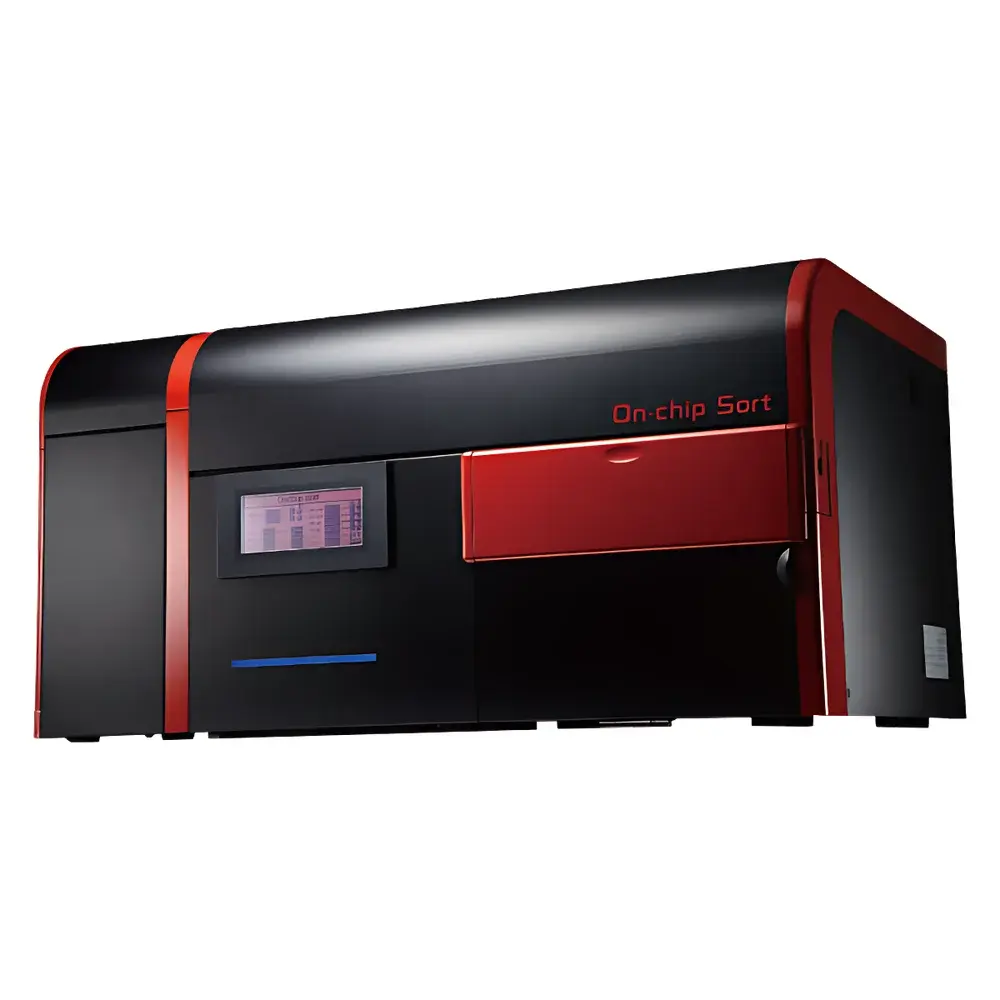
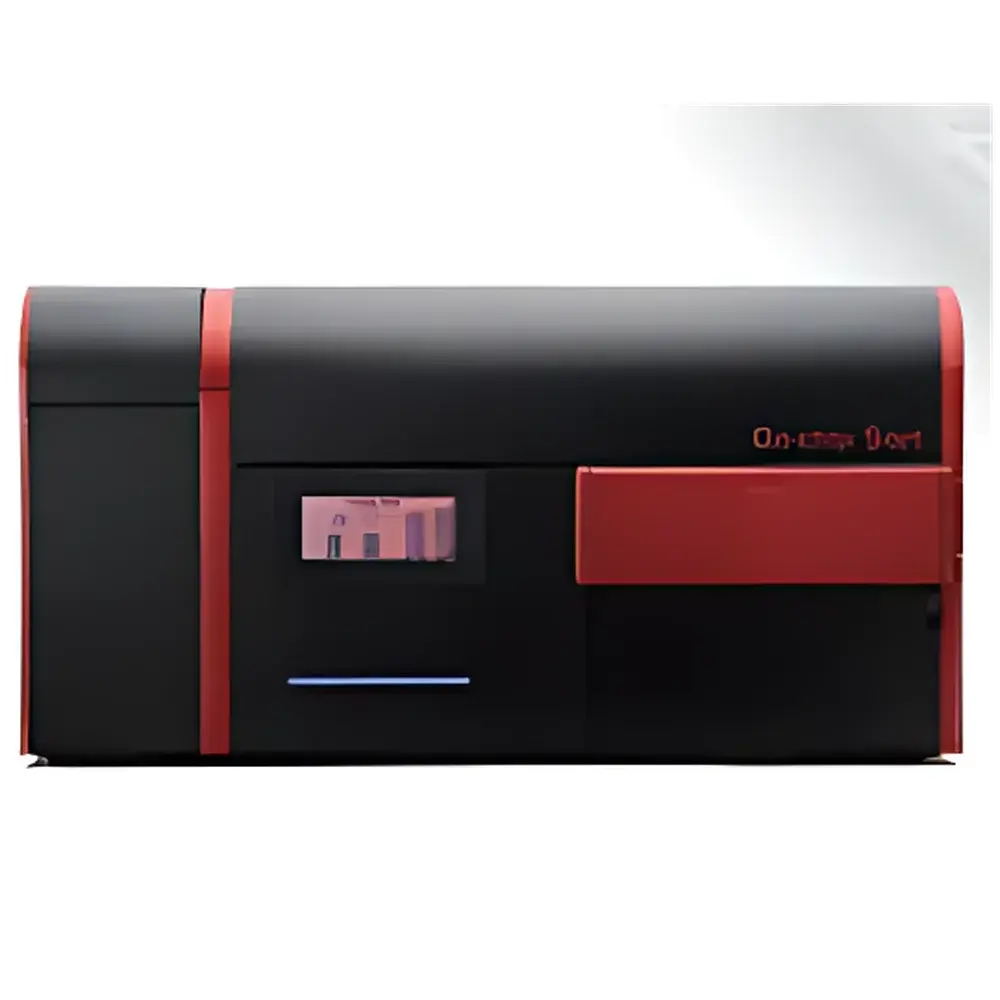
On-chip Sort Microfluidic Flow Cytometric Cell Sorter
| Brand | On-chip |
|---|---|
| Origin | Japan |
| Type | Fully Automated |
| Sorting Speed | 1,000 events/sec |
| Sortable Cell Range | 100 – 10,000,000 cells |
| Minimum Sorting Pressure | 0.3 PSI |
| Droplet Volume | Picoliter-scale |
| Compatible Sheath Fluids | Aqueous buffer or oil |
| Max Particle Diameter | >100 µm |
| On-Chip Integration | Detection, Separation, Recovery |
| Chip Format | Disposable, Single-Use Microfluidic Cartridge |
Overview
The On-chip Sort Microfluidic Flow Cytometric Cell Sorter is a fully automated, chip-based platform engineered for high-fidelity, low-stress cell and particle sorting in life science research and bioprocess development. Unlike conventional electrostatic or acoustic droplet sorting systems, the On-chip Sort employs a proprietary microfluidic architecture grounded in laminar flow control and pressure-driven actuation (Flowshift™ technology). Its core measurement principle relies on real-time optical interrogation—typically via integrated laser-induced fluorescence (LIF) and side-scatter (SSC) detection—within a monolithic, disposable microfluidic cartridge. This enables label-free or fluorescently labeled analysis and deterministic sorting of heterogeneous populations at single-cell or single-droplet resolution. Designed for minimal sample perturbation, the system operates at ultra-low hydraulic pressures (as low as 0.3 PSI), making it uniquely suited for fragile biological entities—including primary immune cells, spheroids, bacteria-laden emulsions, and stress-sensitive stem cell derivatives—where mechanical integrity and viability post-sort are critical performance criteria.
Key Features
- Patented Flowshift™ pressure-actuated sorting mechanism ensures non-invasive, shear-minimized separation with no electrical charging or acoustic cavitation.
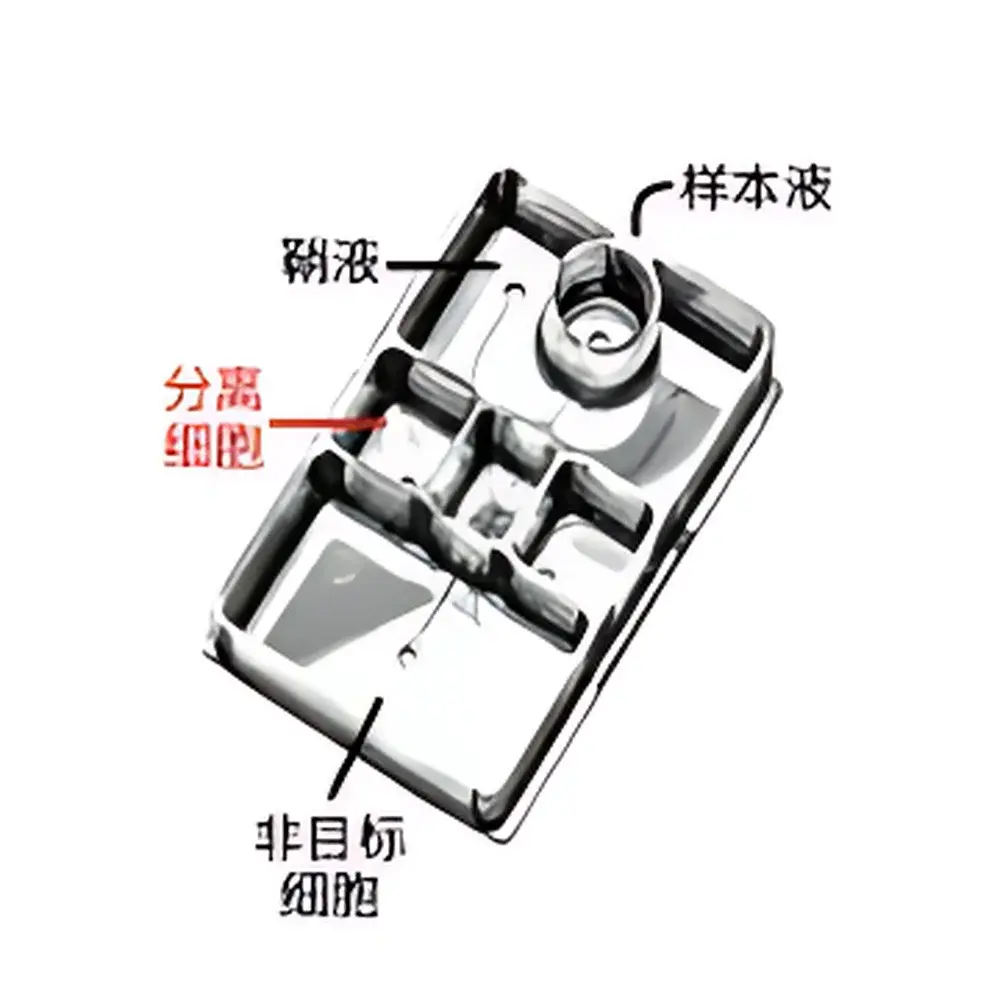
- Fully integrated on-chip workflow: sample introduction, hydrodynamic focusing, optical interrogation, decision logic, and physical sorting occur within a single-use microfluidic cartridge.
- Sorting throughput up to 1,000 events per second—optimized for rare-event enrichment without compromising recovery fidelity or purity.
- Modular chip design supports multiple channel geometries and nozzle configurations, accommodating particles from sub-micron bacteria (0.5 µm) to large aggregates (>100 µm) including tissue fragments and synthetic microcapsules.
- Flexible sheath fluid compatibility: aqueous buffers (e.g., PBS, HBSS) or immiscible oils (e.g., fluorinated oils) enable both cellular suspension and water-in-oil droplet-based assays (e.g., microbial single-cell culturing, antibody-secreting cell screening).
- Rapid system readiness: full startup and priming completed in under five minutes; no daily calibration or fluidic line cleaning required.
- Integrated side-scatter (SSC) acquisition directly from the microfluidic channel—enabled by proprietary optical path design—providing morphological contrast independent of fluorescent labeling.
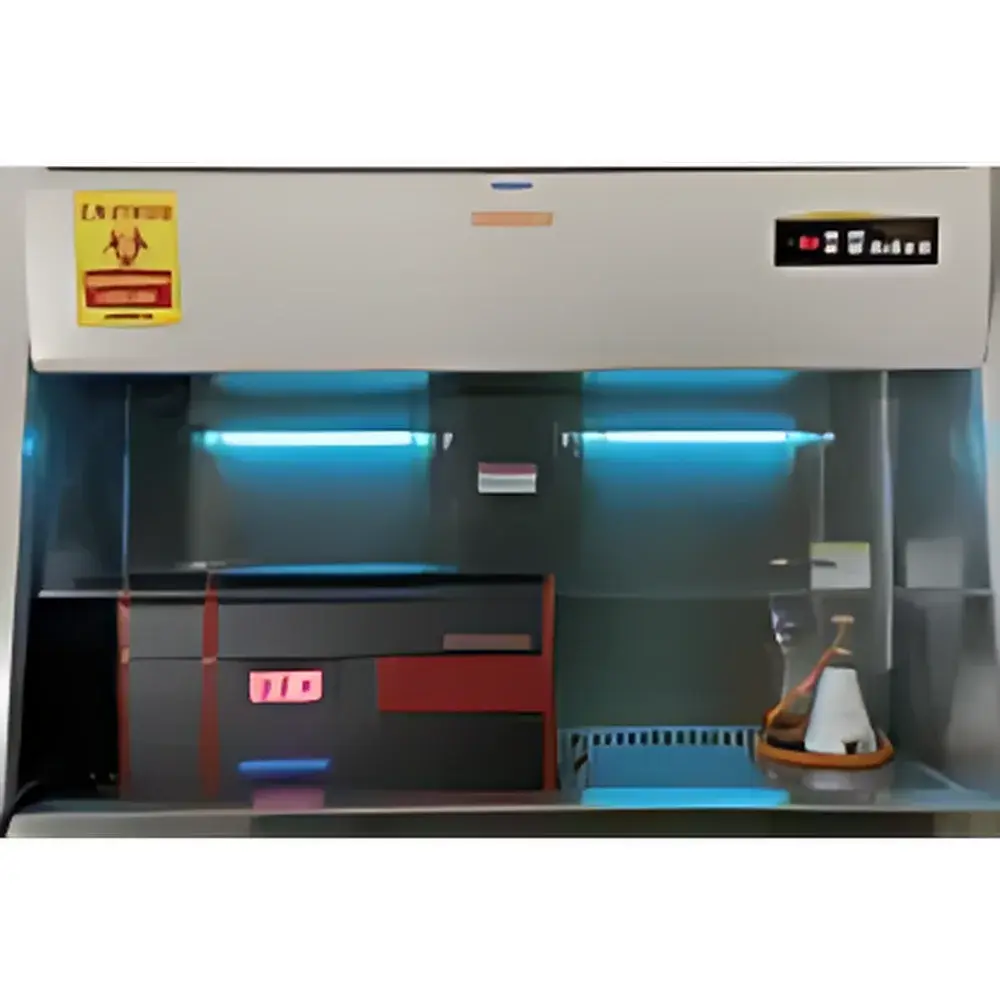
- Biosafety-compliant footprint: compact dimensions allow seamless integration into Class II biological safety cabinets or glovebox environments.
Sample Compatibility & Compliance
The On-chip Sort accommodates a broad spectrum of biological and synthetic samples, including but not limited to: mammalian suspension cells (T cells, PBMCs, hybridomas), adherent cell dissociates, yeast and bacterial cultures, microalgae, liposomes, polymeric microparticles, and picoliter-volume aqueous droplets in oil. Its disposable chip architecture eliminates carryover risk and satisfies stringent GLP/GMP-aligned workflows where cross-contamination must be excluded. While not certified for clinical diagnostic use under FDA 510(k) or CE-IVD, the platform supports research-use-only (RUO) applications compliant with ISO 13485–aligned laboratory practices and is routinely deployed in academic core facilities, biotech R&D labs, and industrial strain development programs requiring audit-trail-capable operation.
Software & Data Management
Control and analysis are managed through dedicated Windows-based software supporting real-time event visualization, gating strategy definition, sort logic configuration (including multi-parameter Boolean gates), and export of FCS 3.1-compatible data files. The software maintains full electronic records—including timestamped instrument logs, chip lot tracking, user authentication, and parameter change history—facilitating compliance with 21 CFR Part 11 requirements when deployed in validated environments. Export options include CSV, PNG, and PDF reports; raw scatter/fluorescence time-series data can be accessed programmatically via API for custom downstream analysis in Python or MATLAB.
Applications
- Rare cell isolation: recovery of antigen-specific B cells or circulating tumor cells (CTCs) from background populations exceeding 10⁷ total events.
- Single-cell microbiology: encapsulation, incubation, and phenotypic screening of unculturable environmental microbes in picoliter droplets.
- Cell line development: high-throughput sorting of antibody-secreting clones based on secreted protein capture and fluorescent detection.
- Soft biomaterial processing: gentle isolation of organoid fragments, embryoid bodies, or extracellular vesicles without fragmentation.
- Droplet-based directed evolution: iterative sorting of enzyme variants expressed in cell-free systems or compartmentalized E. coli lysates.
FAQ
What types of microfluidic chips are available for the On-chip Sort?
Standard chip formats include low-flow (10–50 µm channels) for single bacteria or small eukaryotes, medium-flow (50–100 µm) for standard mammalian cells, and high-capacity chips (>100 µm) for spheroids or large debris. Custom chip designs are available under NDA.
Can the system perform sterile sorting into culture plates?
Yes—when operated inside a biosafety cabinet with sterile chip handling and compatible collection vessels (e.g., 96-well plates, tubes), the system supports aseptic deposition for downstream expansion or functional assays.
Is SSC detection available on all chip configurations?
Side-scatter acquisition is enabled across all current-generation chips via an embedded optical interface; signal amplitude correlates with particle cross-sectional area and refractive index contrast relative to sheath fluid.
How is system performance validated?
Each chip batch undergoes factory QC for channel uniformity, pressure response linearity, and sorting accuracy using NIST-traceable polystyrene standards. Users receive certificate-of-conformance documentation with each shipment.
Does the platform support multi-color fluorescence detection?
The base configuration includes one excitation laser (488 nm) and three detection channels (e.g., FITC, PE, APC); optional upgrades support dual-laser (405/488 nm) and up to six-parameter detection with spectral unmixing capability.
Related Products





