
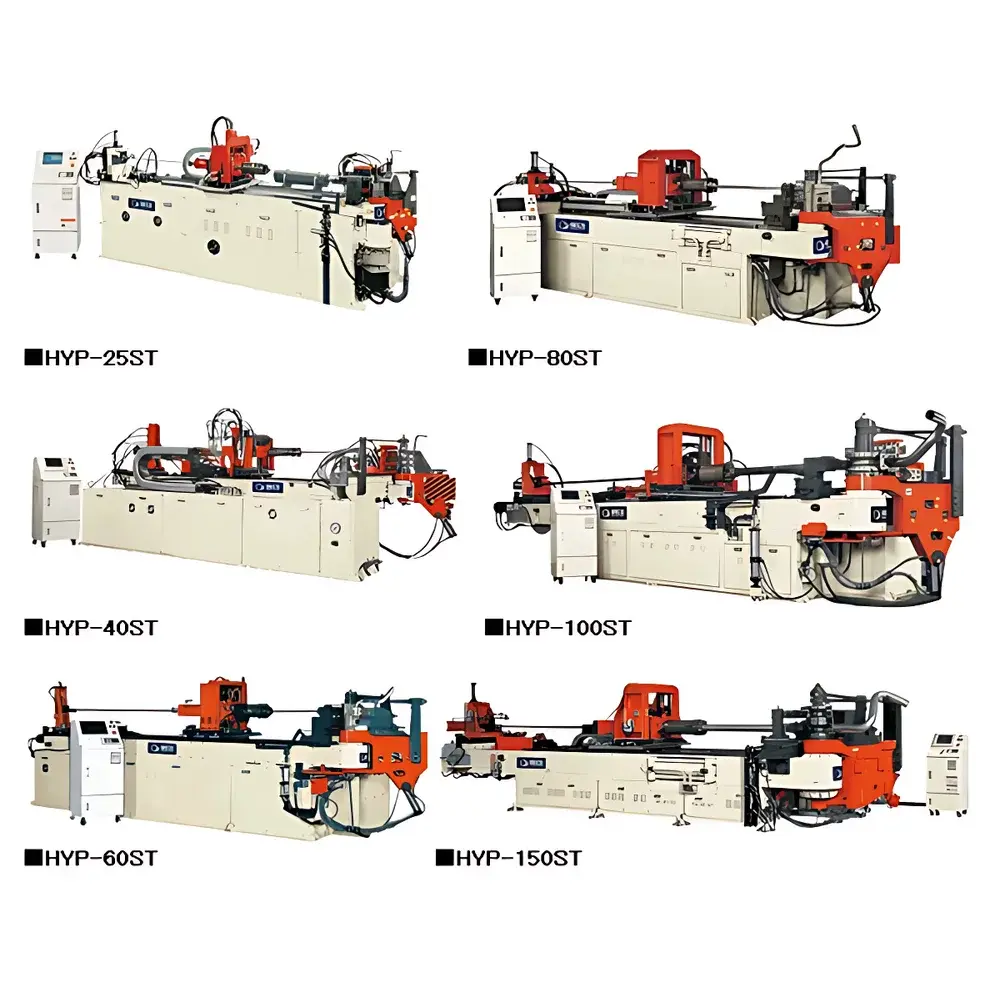
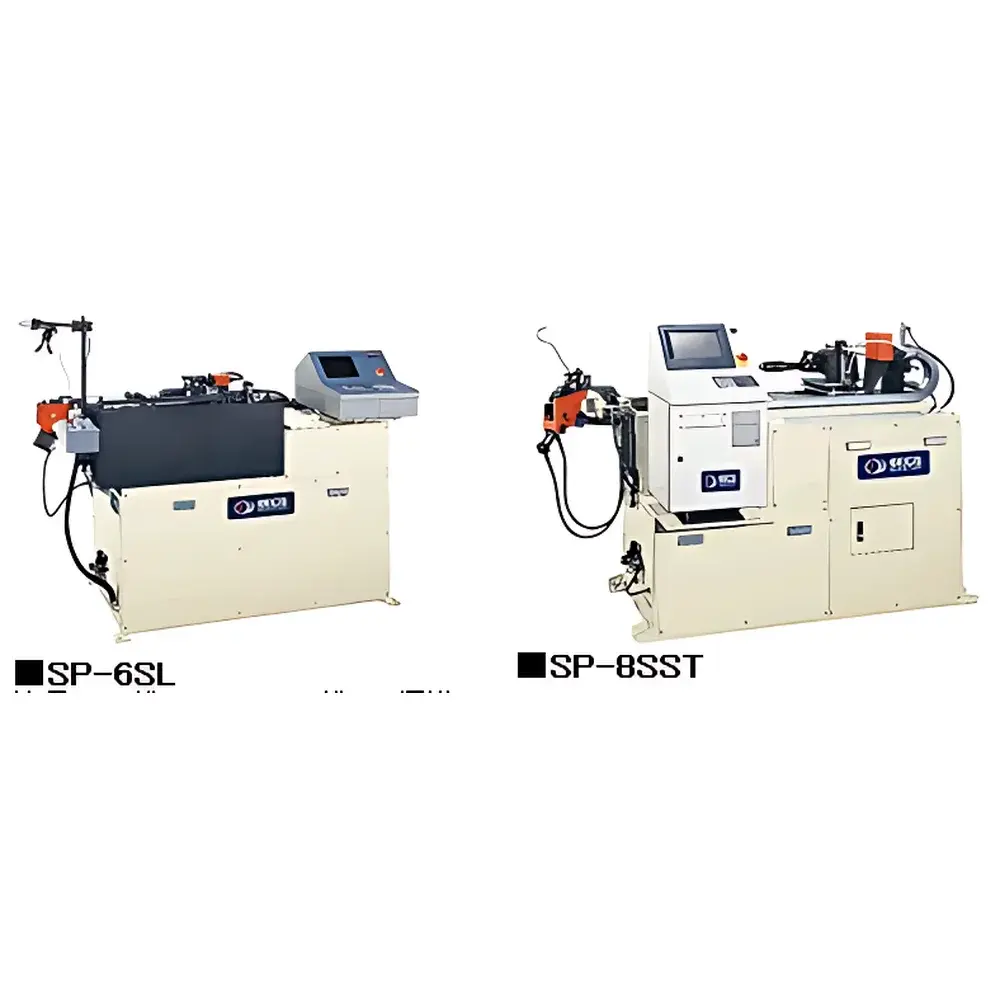
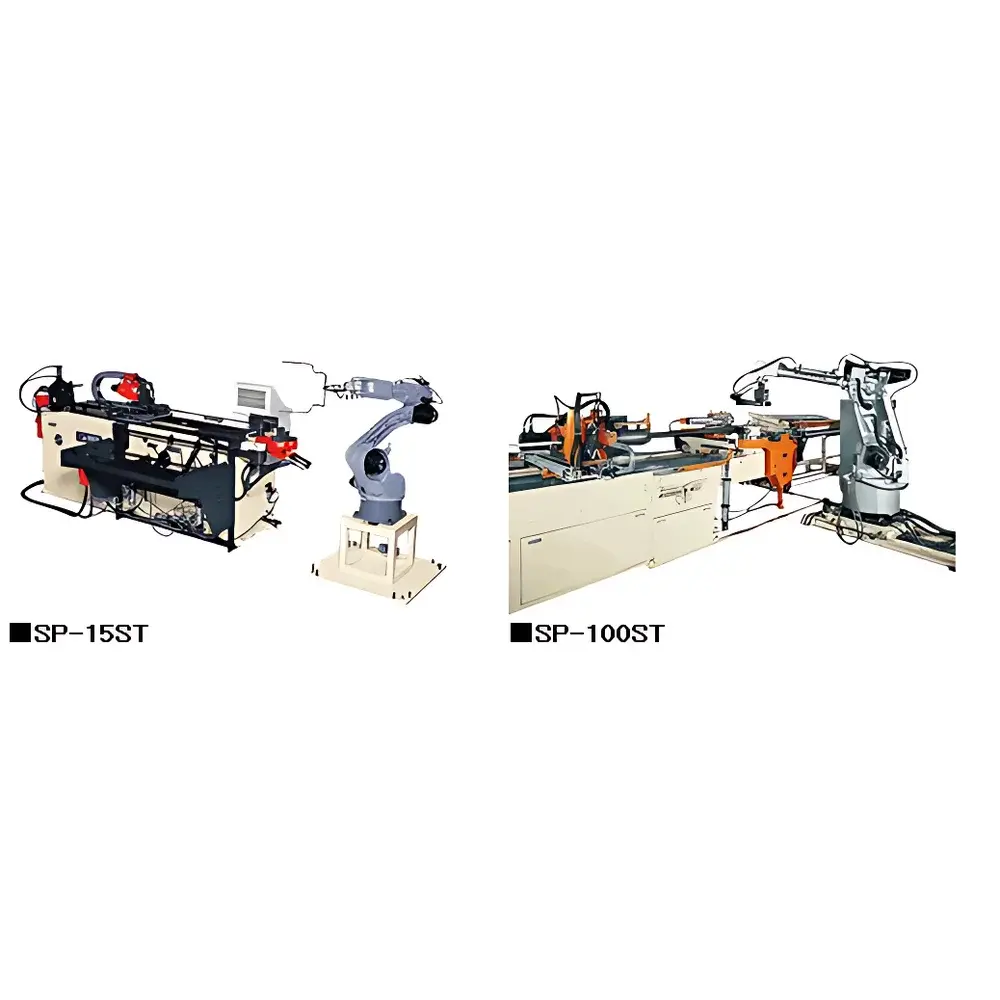
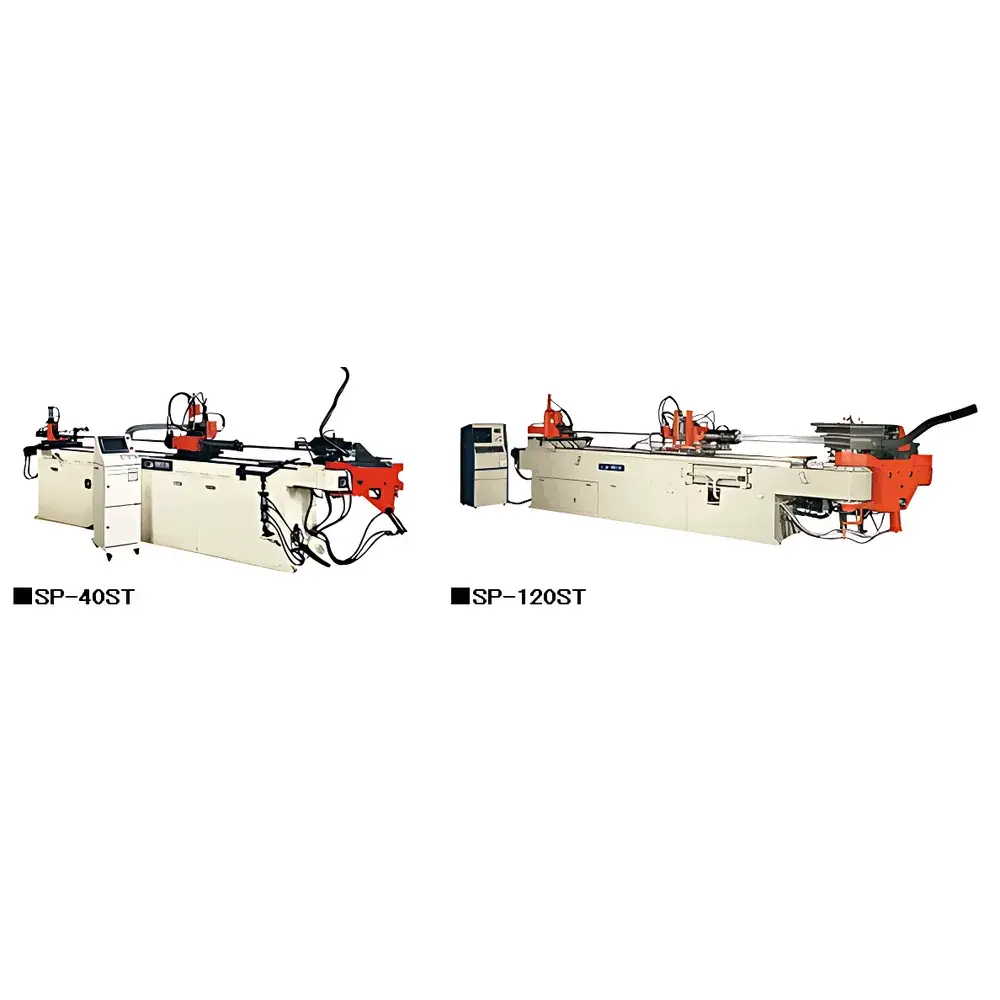
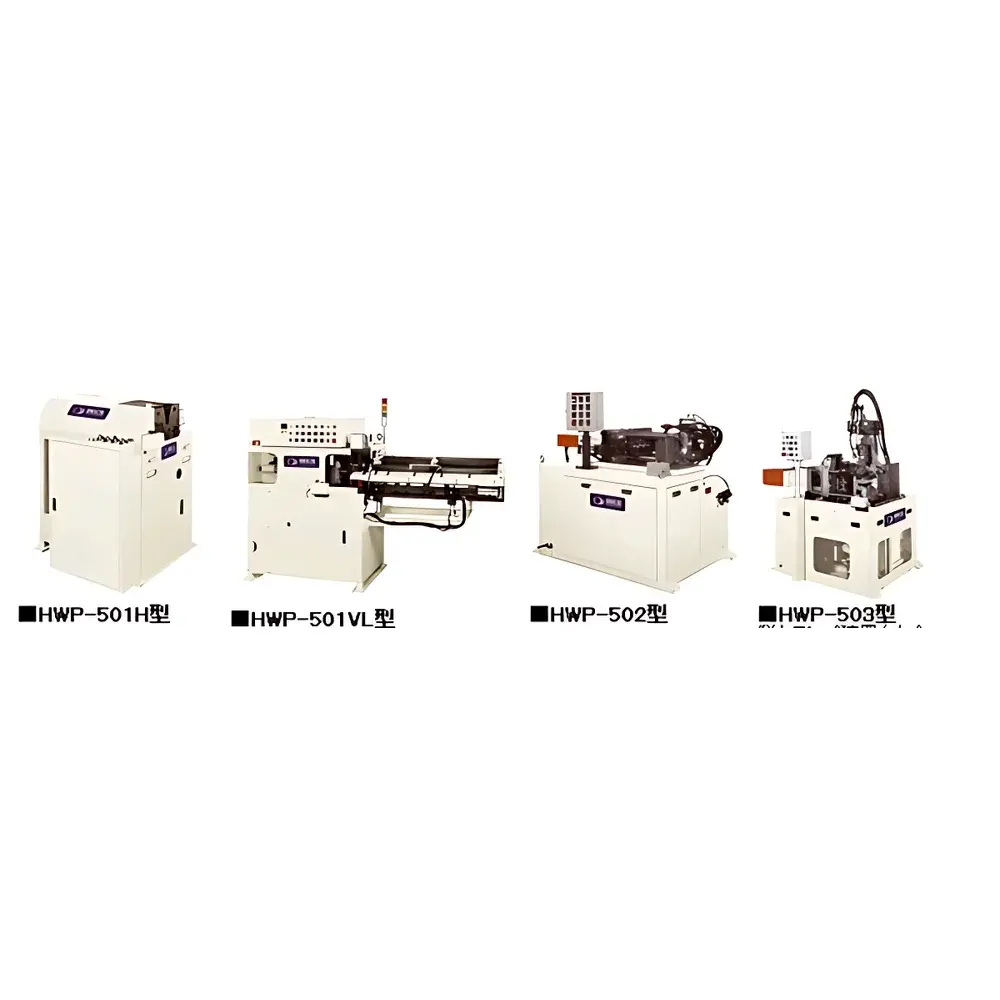
CHIYODA SP/HYP/HWP Series CNC Tube Bending Machine
| Origin | Japan |
|---|---|
| Manufacturer Type | Authorized Distributor |
| Origin Category | Imported |
| Model | SP / HYP / HWP |
| Pricing | Available Upon Request |
Overview
The CHIYODA SP, HYP, and HWP series CNC tube bending machines are precision-engineered industrial systems designed for cold-forming metallic tubular components in two-dimensional (2D) and three-dimensional (3D) configurations. Based on proven Japanese mechanical design principles and advanced servo-driven motion control architecture, these machines employ mandrel-assisted rotary draw bending—combined with optional pressure die augmentation—to achieve high repeatability, minimal wall thinning, and controlled ovality across a broad spectrum of tube geometries. Engineered for continuous-duty operation in Tier-1 automotive supply chains and heavy equipment manufacturing environments, the platform supports consistent bend accuracy within ±0.1° angular tolerance and ±0.2 mm positional deviation under standard calibration and maintenance protocols. The structural frame utilizes high-rigidity cast iron construction with reinforced cross-bracing to suppress vibration during high-torque bending cycles, thereby extending service life and sustaining geometric fidelity over extended production runs.
Key Features
- Multi-axis CNC control system with integrated touchscreen HMI interface supporting ISO 6983 (G-code) programming and real-time axis monitoring.
- Robust bending head assembly compatible with mandrel, wiper die, and pressure die configurations for diameters ranging from 10 mm to 250 mm (SP series up to 250 mm; HYP series optimized for 10–200 mm steel tubes).
- Dual-axis synchronized pressure die actuation (side and rear axes) on HYP-series models, enabling complex contour formation without kinking or buckling in thin-walled or high-strength alloys.
- Integrated post-bend cutoff module minimizes material waste by eliminating secondary trimming operations—reducing scrap rates by up to 12% compared to conventional offline cutting workflows.
- Standard RS-232/RS-485 serial interface and optional Ethernet/IP connectivity for CAM data import (e.g., from SolidWorks® Routing or Autodesk Inventor® Tube & Pipe), simulation file exchange, and coordinate measurement machine (CMM) feedback integration.
- Preloaded bending parameter libraries for common materials (carbon steel, stainless steel, aluminum, copper alloys) and standardized bend radii per DIN 2448, JIS G3444, and ASTM A53 specifications.
Sample Compatibility & Compliance
The CHIYODA tube benders accommodate round, square, rectangular, and oval cross-sections in seamless and welded tubing formats. Material compatibility includes ferrous and non-ferrous metals with tensile strengths up to 750 MPa and hardness values ≤ HB 280. All models comply with CE Machinery Directive 2006/42/EC, EN ISO 12100:2010 (risk assessment), and EN 60204-1:2018 (electrical safety). Optional factory-certified validation packages support IQ/OQ documentation for regulated industries, including automotive PPAP Level 3 submissions and ISO/TS 16949-aligned process capability studies (Cpk ≥ 1.33 demonstrated on representative bends).
Software & Data Management
The embedded CNC controller features built-in bend sequence simulation, collision detection, and toolpath optimization algorithms. Bend programs can be generated offline using third-party CAM software and imported via USB or network transfer. Audit-trail functionality logs all program edits, operator logins, and machine status events with timestamped records—supporting GLP/GMP traceability requirements where applicable. Data export options include CSV-formatted bend reports, DXF geometry files, and XML-based machine diagnostics for predictive maintenance analytics.
Applications
These systems serve critical fabrication roles across multiple sectors: automotive HVAC lines, brake and fuel hose assemblies, radiator core supports, and chassis-mounted fluid conduits; construction equipment hydraulic manifolds and boom arm piping; power generation turbine cooling loops; residential/commercial gas appliance flex lines; and architectural metalwork for façade and railing systems. Typical end parts include S-shaped coolant returns, U-joint feed lines, multi-plane exhaust headers, and robotic welding-ready subassemblies requiring zero-fit-up rework.
FAQ
What tube diameters and wall thicknesses are supported?
Standard configurations cover outer diameters from 10 mm to 250 mm, with wall thickness ratios (t/D) ranging from 0.02 to 0.15 depending on material grade and bend radius.
Is offline programming supported?
Yes—CAM-generated toolpaths in standard formats (IGES, STEP, DXF) can be imported directly into the controller; proprietary .BND files also enable native parameter retention.
Does the system support statistical process control (SPC) data output?
Real-time bend angle, springback compensation values, and cycle time metrics are exportable via Modbus TCP for integration with MES platforms such as Siemens Opcenter or Rockwell FactoryTalk.
Are validation documents available for FDA-regulated applications?
While not medical-device-specific, IQ/OQ templates and FAT/SAT protocols are provided; additional 21 CFR Part 11-compliant electronic signature modules are available as configurable options.
What maintenance intervals are recommended?
Lubrication of bending rolls and pressure die slides every 500 operating hours; full hydraulic oil analysis and filter replacement every 2,000 hours; annual laser alignment verification of the main bending axis.





