
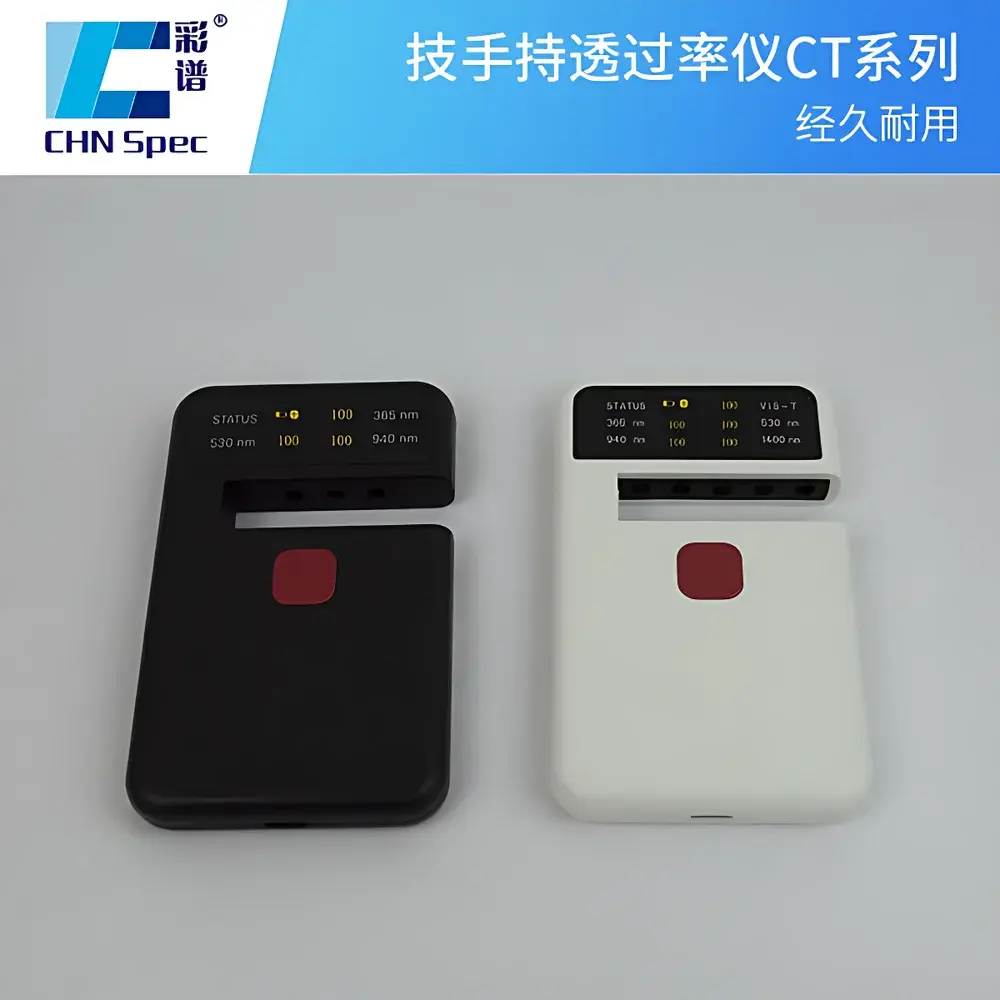
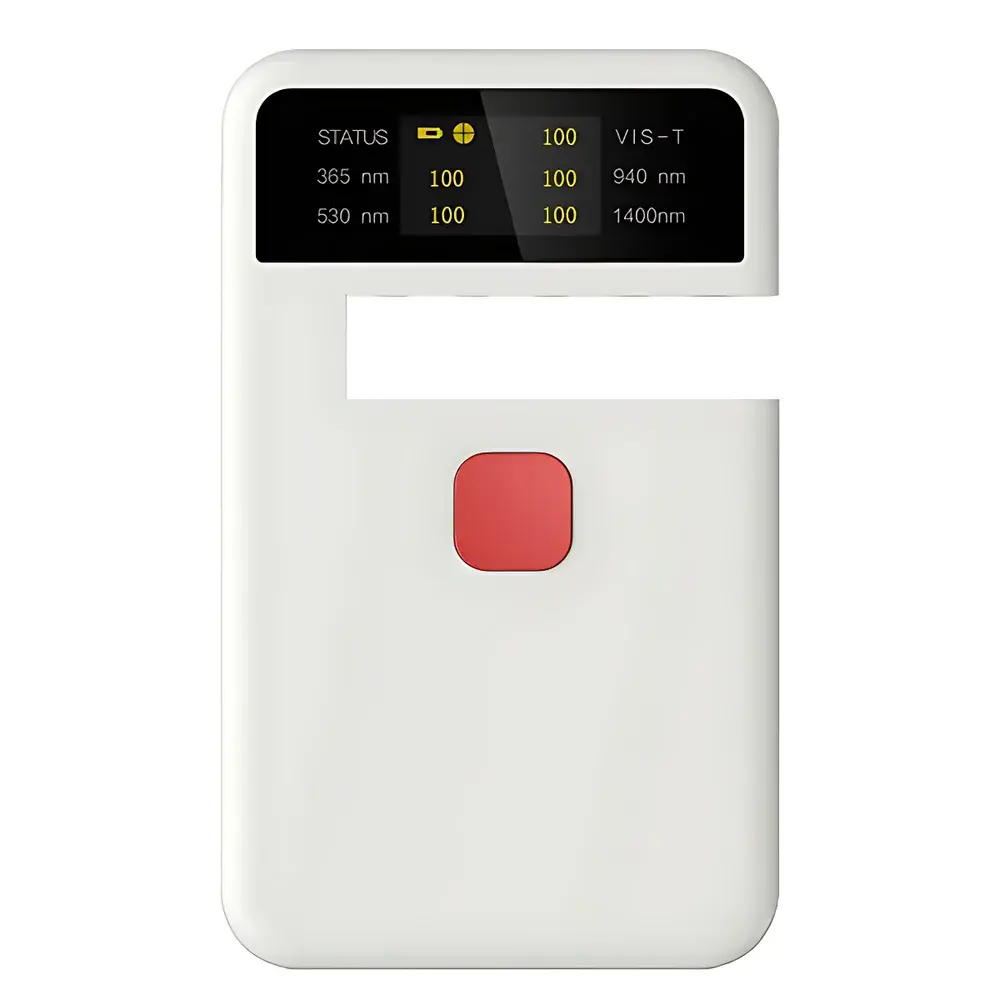
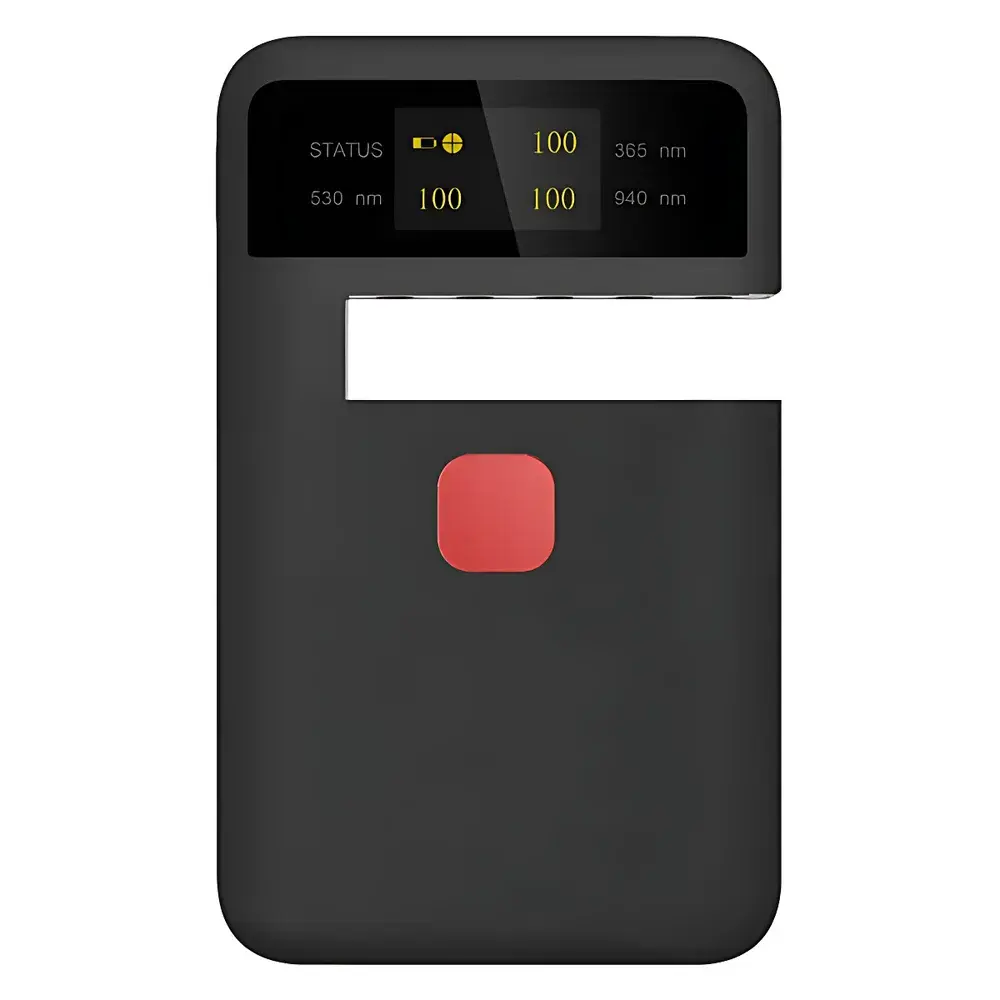
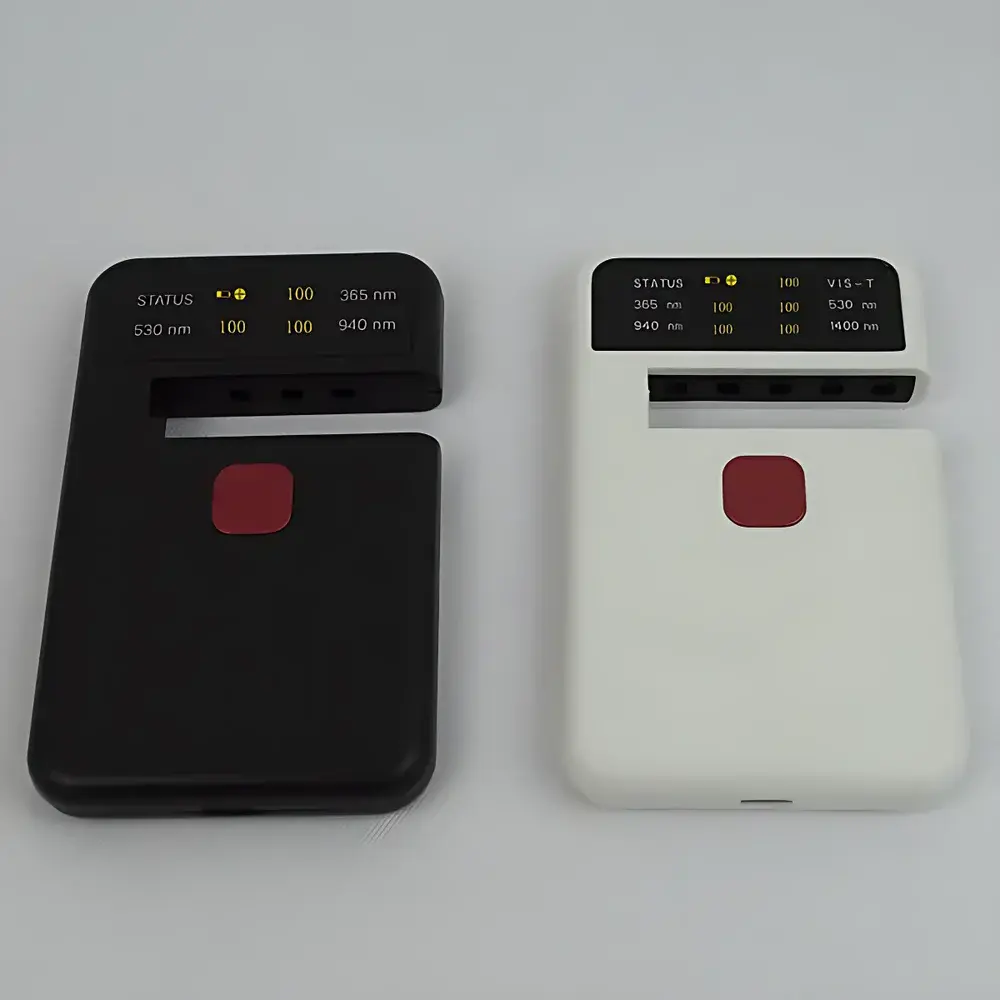
CHNSpec CT Series Handheld Transmittance and Haze Meter
| Brand | CHNSpec |
|---|---|
| Origin | Zhejiang, China |
| Manufacturer Type | Authorized Distributor |
| Country of Origin | China |
| Model | CT-23 / CT-25 |
| Product Type | Automatic Portable Meter |
| Transmittance Range | 0–100% |
| Transmittance Repeatability | ±2% |
| Spectral Channels | UV (365 nm), Visible (380–760 nm, CIE photopic luminosity function), IR (940 nm & 1400 nm) |
| Sample Thickness Capacity | ≤13 mm |
| Measurement Time | <1 s |
| Display | 1.14″ full-color TFT (135 × 240 px) |
| Power | Rechargeable 750 mAh Li-ion battery (USB charging) |
| Operating Temperature | 0–40 °C |
| Relative Humidity | <85% RH (non-condensing) |
| Dimensions | 115 × 70 × 14 mm |
| Compliance | CE-marked design principles |
Overview
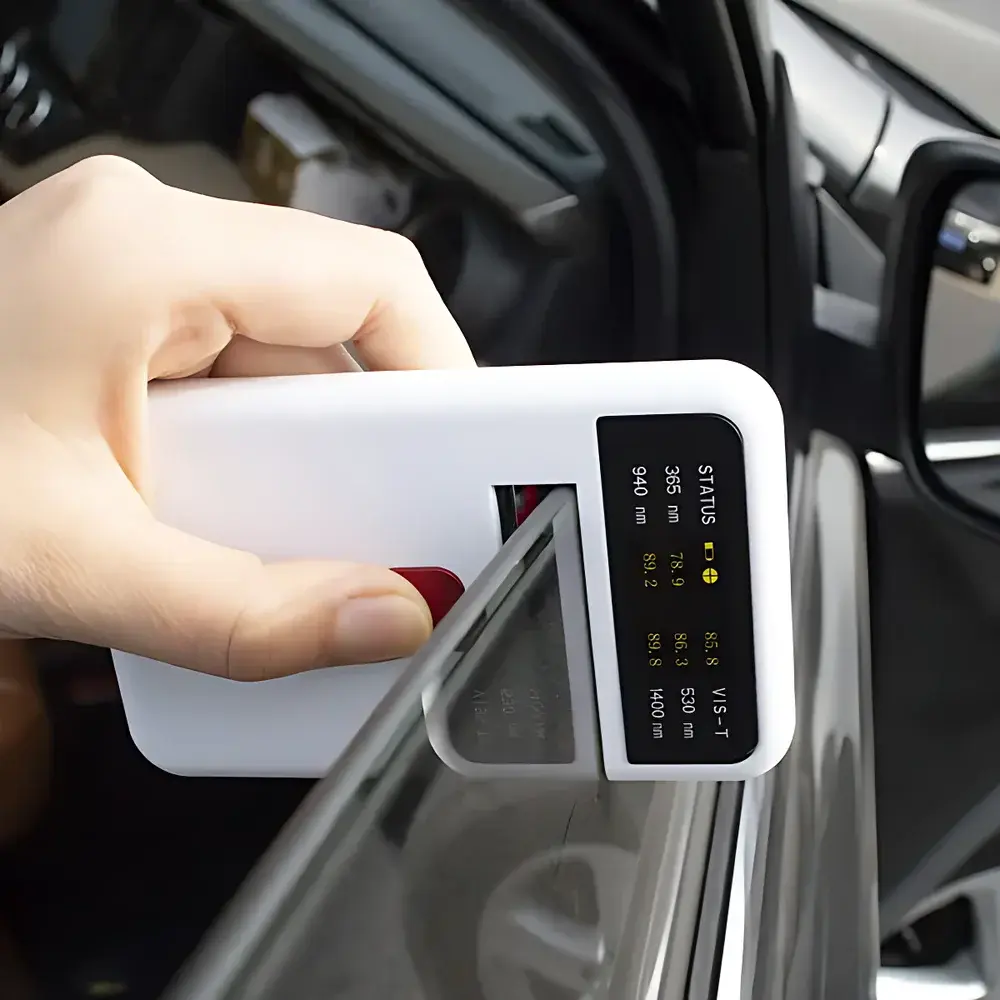
The CHNSpec CT Series Handheld Transmittance and Haze Meter is a compact, field-deployable optical measurement instrument engineered for rapid, non-destructive assessment of light transmittance across ultraviolet, visible, and near-infrared spectral bands. Unlike integrating sphere-based haze meters, the CT Series employs a collimated parallel-light optical path architecture—optimized for direct transmittance quantification rather than diffuse scattering analysis. It does not perform ASTM D1003-compliant haze measurement (which requires total/diffuse transmittance separation via dual-detector or integrating sphere geometry); instead, it delivers high-speed, repeatable transmittance values at discrete peak wavelengths (365 nm, 530 nm, 940 nm, and 1400 nm) and across the full CIE-standard visible spectrum (380–760 nm). Its 13 mm aperture accommodates thick substrates—including laminated automotive side windows, tempered glass panels, and multilayer polymer films—without requiring sample cutting or edge preparation. Designed for operational continuity in QC labs, production floors, and on-site field audits, the device powers on with automatic zero calibration and delivers results within one second of sample insertion.
Key Features
- Collimated parallel-beam optical path ensures minimal angular dependence and high measurement consistency across varying surface finishes and thicknesses up to 13 mm.
- Dual calibration modes: automatic self-zeroing on power-up and user-initiated manual calibration using supplied reference standards—supporting traceability under ISO/IEC 17025-aligned workflows.
- Multi-spectral capability: independent transmittance readouts for UV (365 nm), photopic-visible (CIE-weighted 380–760 nm), and two NIR bands (940 nm and 1400 nm), enabling material characterization for solar control films, agricultural greenhouse covers, and IR-filtering optics.
- HOLD function freezes real-time readings on-screen after measurement—critical for documenting results in environments where hands-free operation or sequential multi-point sampling is required.
- Rechargeable lithium-ion battery (750 mAh) with USB-C charging eliminates disposable battery dependency and supports >8 hours of continuous operation per charge.
- Ergonomic, anti-slip housing (115 × 70 × 14 mm) meets IEC 60529 IP52-level ingress protection for dust resistance and limited water exposure—suitable for factory floor or vehicle-mounted use.
- High-resolution 1.14″ full-color TFT display (135 × 240 px) provides clear numeric output with 0.1% resolution and intuitive icon-driven UI—no external software required for basic operation.
Sample Compatibility & Compliance
The CT Series is validated for flat, transparent, or semi-transparent planar samples including float glass, tempered safety glass, PET/PVC/PC films, coated solar control membranes, and agricultural polyethylene mulch. Curved or textured surfaces may yield attenuated accuracy due to beam deviation; flat-sample alignment is recommended per ISO 9050 Annex A guidance. While not certified to ASTM D1003 or ISO 14782 for haze, its transmittance measurements comply with the photometric definitions in CIE Publication 15:2018 and are suitable for in-process verification against internal specifications or customer-defined transmittance thresholds (e.g., ≥75% visible transmittance for architectural glazing per EN 410). Device firmware logs timestamps for each measurement, supporting audit-ready documentation in GLP and GMP environments where raw data integrity is required.
Software & Data Management
Data remains stored locally on the device’s embedded memory with time/date stamping. No proprietary PC software is bundled; however, exported CSV logs (via USB connection) include measurement ID, wavelength channel, transmittance value (%), operator ID (manually entered), and environmental timestamp. The system supports 21 CFR Part 11–compatible workflows when integrated with validated third-party LIMS platforms—enabling electronic signature capture, audit trail generation, and role-based access control for calibration records and test reports.
Applications
- Automotive glazing validation: rapid screening of side-window transmittance compliance with UNECE Regulation 43 and FMVSS No. 205.
- Solar film QA: batch verification of UV-blocking efficiency (365 nm) and visible light transmission (380–760 nm) in aftermarket window films.
- Agricultural film R&D: monitoring spectral selectivity of greenhouse covers for PAR (photosynthetically active radiation) transmission optimization.
- Optoelectronic component inspection: verifying IR transmittance of sensor cover glasses at 940 nm (e.g., proximity sensors) and 1400 nm (e.g., thermal imaging windows).
- Quality control in glass tempering lines: real-time pass/fail checks prior to packaging, reducing downstream rejection rates.
FAQ
Does this instrument measure haze according to ASTM D1003?
No. The CT Series measures total transmittance only. It lacks an integrating sphere and secondary detector required for haze calculation (diffuse transmittance / total transmittance). For ASTM D1003-compliant haze testing, a dedicated integrating sphere haze meter is required.
Can it measure curved or bent glass?
Flat-sample geometry is strongly recommended. Curvature introduces beam divergence and potential vignetting, which may reduce measurement repeatability beyond the stated ±2% specification.
Is calibration traceable to NIST or other national standards?
CHNSpec provides factory calibration using traceable reference standards. End users may perform periodic verification with certified neutral-density filters; full traceability documentation is available upon request for ISO 17025-accredited laboratories.
What is the warranty coverage?
One-year limited warranty covering material and workmanship defects. Does not include damage from misuse, unauthorized modification, or environmental exposure beyond specified operating conditions (0–40°C, <85% RH non-condensing).




