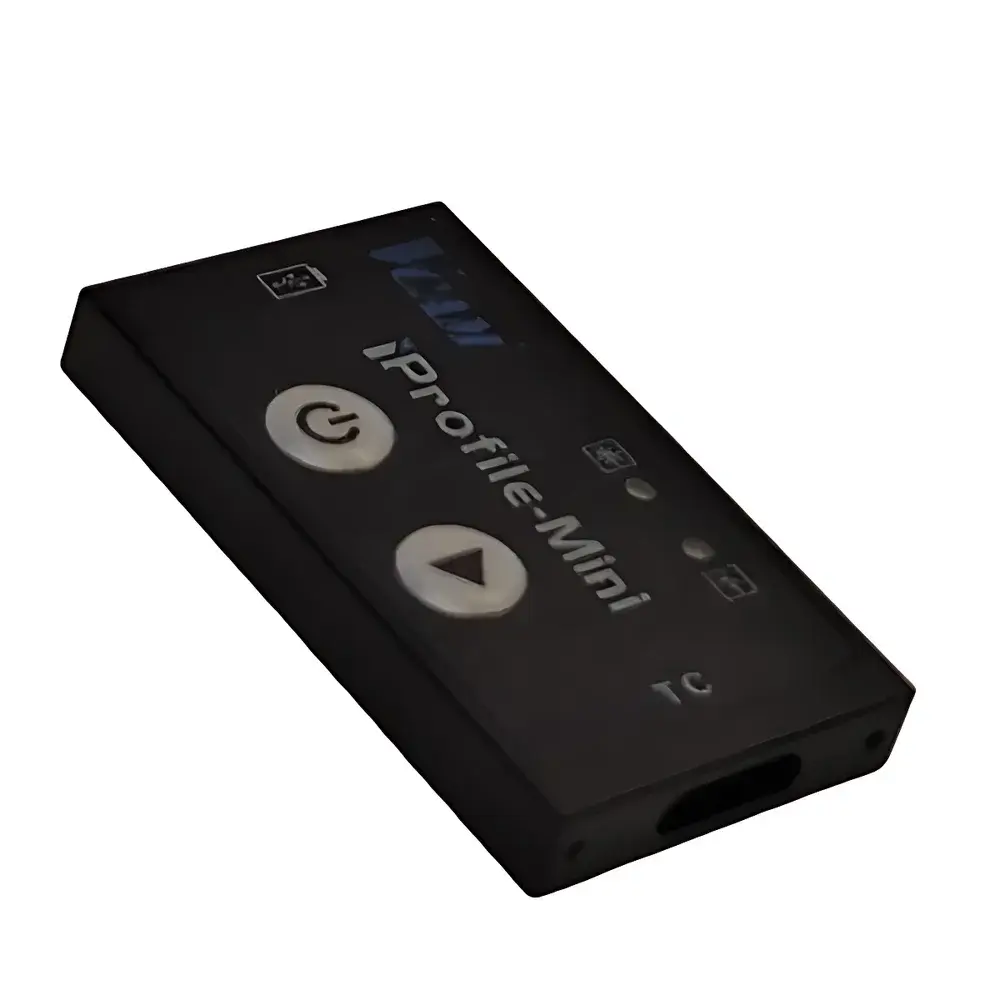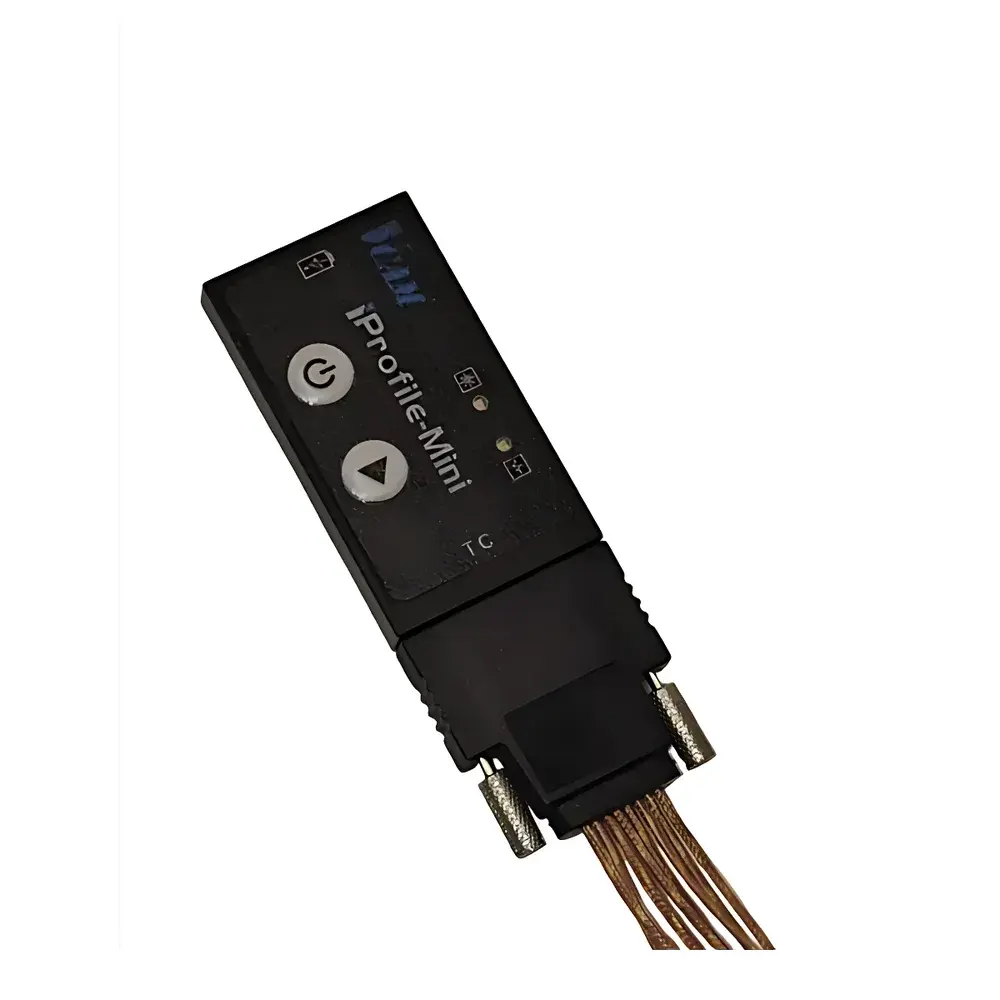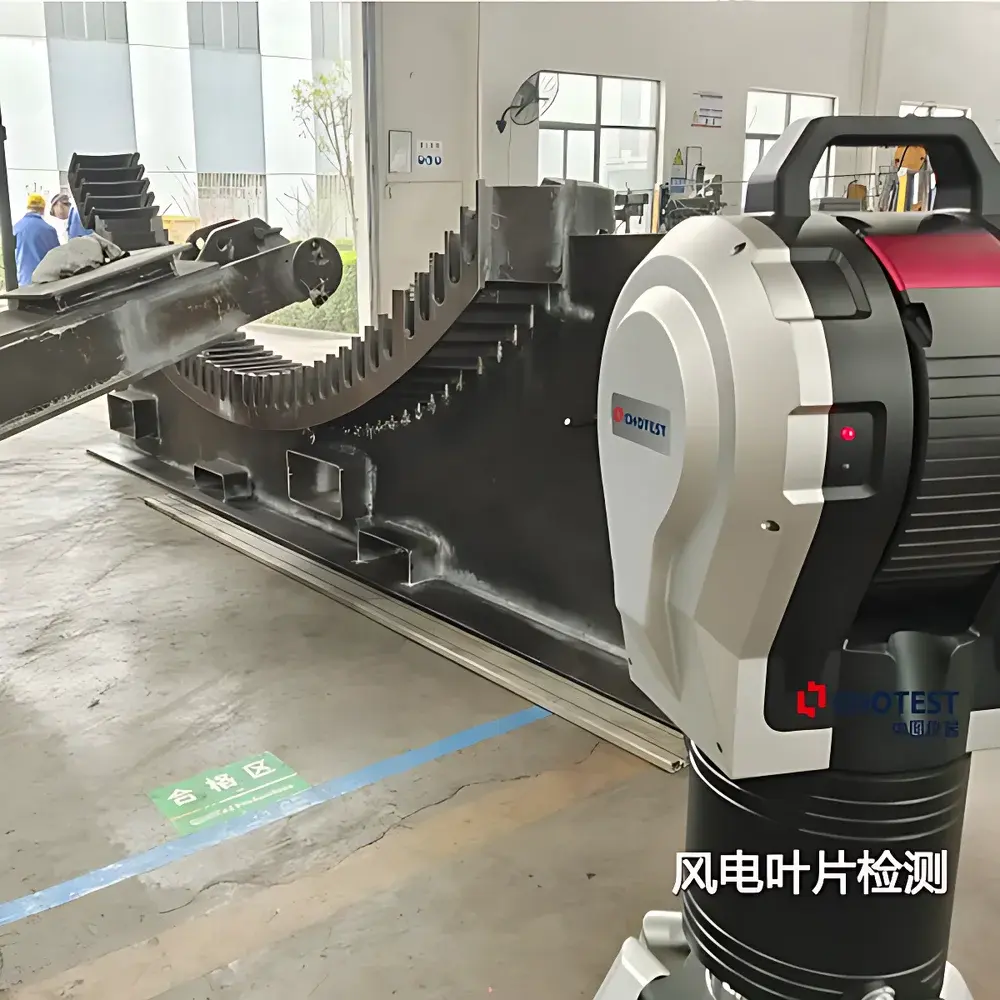
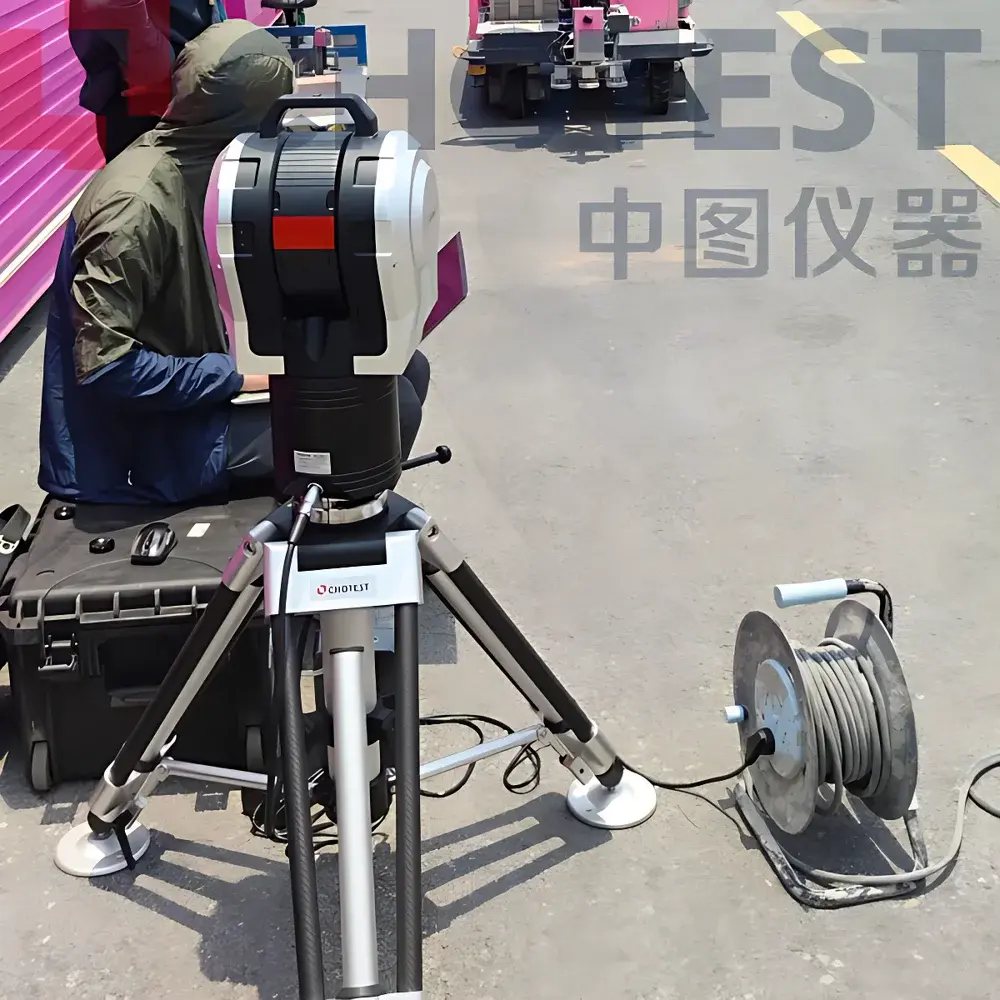
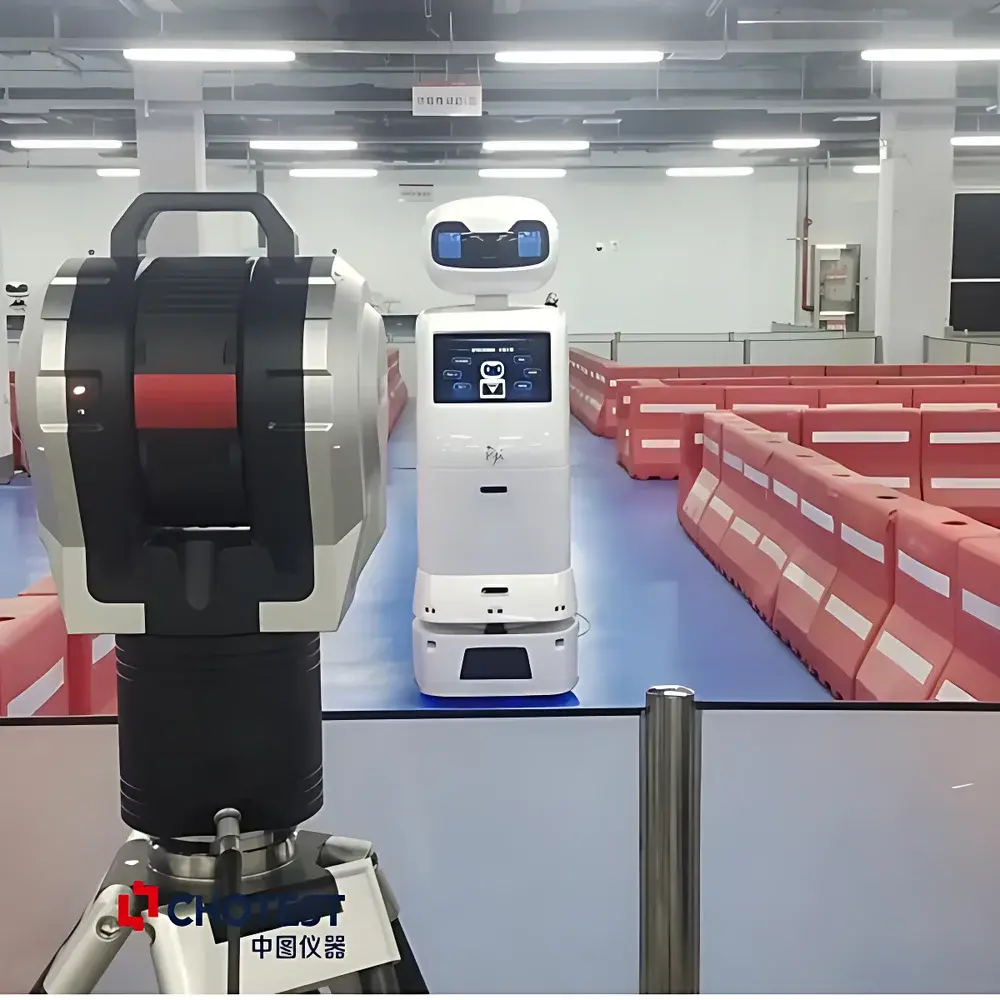
Chotest GTS6000 Robotic Motion Position Laser Tracker
| Brand | Chotest |
|---|---|
| Origin | Guangdong, China |
| Manufacturer Type | Authorized Distributor |
| Country of Origin | China |
| Model | GTS6000-456 |
| Price | USD 280,000 (FOB Shenzhen) |
| Max Measurement Range | 160 m |
| Horizontal Rotation | ±360° |
| Vertical Pitch | −145° to +145° |
| Volumetric Accuracy | 15 µm + 6 µm/m |
| Environmental Compensation | Integrated meteorological station (temperature ±0.1°C, pressure ±0.1 kPa, humidity ±6% RH) |
| Enclosure Rating | IP54 |
| Tracking Head Weight | 16 kg |
| Communication | Dual-mode WLAN IEEE 802.11n + Gigabit Ethernet |
Overview
The Chotest GTS6000 Robotic Motion Position Laser Tracker is a high-precision, large-volume coordinate metrology system engineered for industrial and scientific applications requiring traceable, six-degree-of-freedom (6DoF) spatial measurements at meter-to-hundred-meter scales. Based on interferometric and absolute distance measurement (ADM) principles—enhanced by Chotest’s proprietary HiADM (High-Accuracy Absolute Distance Measurement) fusion technology—the system delivers volumetric accuracy of 15 µm + 6 µm/m across its full 160 m operational range. Unlike conventional theodolite-based or single-beam trackers, the GTS6000 employs a coaxial laser path with real-time dynamic compensation for atmospheric refractive index variations, enabling stable performance under fluctuating workshop or outdoor environmental conditions without external calibration artifacts.
Key Features
- Integrated environmental metrology: Onboard meteorological sensor continuously monitors temperature (±0.1°C), barometric pressure (±0.1 kPa), and relative humidity (±6% RH), feeding real-time corrections into the ADM algorithm to maintain measurement fidelity in non-climate-controlled environments.
- Ruggedized industrial design: IP54-rated enclosure ensures reliable operation in dusty, oily, or splash-prone assembly areas—including aerospace hangars, shipyards, and nuclear facility staging zones—without auxiliary shielding or clean-room infrastructure.
- Modular mobility: The 16 kg tracking head mounts to an adjustable-height (63–110 cm) tripod with rapid-deploy leveling mechanism, enabling repositioning across multiple workstations within minutes—not hours.
- Dual communication architecture: Simultaneous support for secure wired Gigabit Ethernet (for GLP/GMP audit-trail compliance) and IEEE 802.11n WLAN (for flexible deployment in RF-restricted or cable-constrained facilities).
- Multi-sensor interoperability: Native compatibility with iProbe 6D tactile probes (wired/wireless variants), iTracker 6D intelligent sensors, and EyeScan laser scanning heads—all calibrated and managed within a unified SpatialMaster software environment.
Sample Compatibility & Compliance
The GTS6000 is designed for use with retroreflective spherically mounted retroreflectors (SMRs), corner cubes, and active targets compliant with ISO 10360-12 (coordinate measuring machines—acceptance and reverification tests). Its measurement uncertainty budget adheres to ISO 10725:2022 (statistical methods for acceptance sampling) and supports traceability to NIST-traceable length standards via internal laser wavelength stabilization. For regulated industries, the system meets data integrity requirements per FDA 21 CFR Part 11 when deployed with RobotMaster and SpatialMaster software configured for electronic signatures, audit trails, and role-based access control. All firmware and calibration certificates are version-controlled and archived per ISO/IEC 17025:2017 laboratory accreditation guidelines.
Software & Data Management
SpatialMaster serves as the core metrology platform, providing full 6DoF point cloud registration, geometric feature fitting (planes, cylinders, spheres, cones), GD&T evaluation (per ASME Y14.5–2018 and ISO 1101:2017), and automated report generation with PDF/X-3 export. RobotMaster extends this capability specifically for robotic kinematic calibration: it imports DH (Denavit–Hartenberg) parameter models, aligns measured end-effector poses against theoretical trajectories, computes residual error vectors, and iteratively refines joint offset, twist, and link length parameters until RMS positional deviation falls below user-defined thresholds (typically < 50 µm). All raw measurement logs, compensation histories, and calibration sessions are stored in encrypted SQLite databases with SHA-256 hashing for forensic reproducibility.
Applications
- Aerospace: In-process verification of wing spar alignment, fuselage section mating, and composite tooling registration—supporting AS9100D-compliant production workflows.
- Machine tool metrology: Volumetric error mapping of CNC gantries and five-axis machining centers, including thermal drift monitoring over multi-hour cycles.
- Automotive body-in-white inspection: Real-time comparison of stamped panel coordinates against CAD nominal surfaces using EyeScan for high-density surface capture.
- Robotics: Kinematic model validation and payload-dependent repeatability assessment for collaborative and heavy-payload industrial robots (e.g., KUKA KR ION, ABB IRB 8700).
- Large-scale science infrastructure: Alignment of particle accelerator beamlines, telescope mirror segments, and fusion reactor vacuum vessel subassemblies—where sub-100 µm global positioning tolerance is mandatory.
FAQ
Does the GTS6000 support automated target tracking during robot motion?
Yes—when paired with iTracker 6D smart sensors or active SMRs, the tracker maintains continuous lock-on during dynamic robot articulation up to 2 m/s, with latency < 10 ms and pose update rate configurable from 10 Hz to 200 Hz.
Can measurement data be integrated into existing PLM or MES systems?
SpatialMaster provides RESTful API endpoints and OPC UA server support for bidirectional exchange of metrology data with Siemens Teamcenter, PTC Windchill, and Rockwell FactoryTalk platforms.
Is factory calibration required annually?
Chotest recommends biannual verification using NIST-traceable gauge blocks and angular artifacts; full recalibration is performed only if volumetric accuracy deviates beyond 15 µm + 6 µm/m or after physical impact or environmental shock events.
What training and documentation are provided?
Customers receive ISO/IEC 17025-aligned operator certification, comprehensive technical manuals (including uncertainty budget breakdowns), and access to Chotest’s online Metrology Academy—featuring video modules on GD&T reporting, robot DH optimization, and environmental compensation diagnostics.