
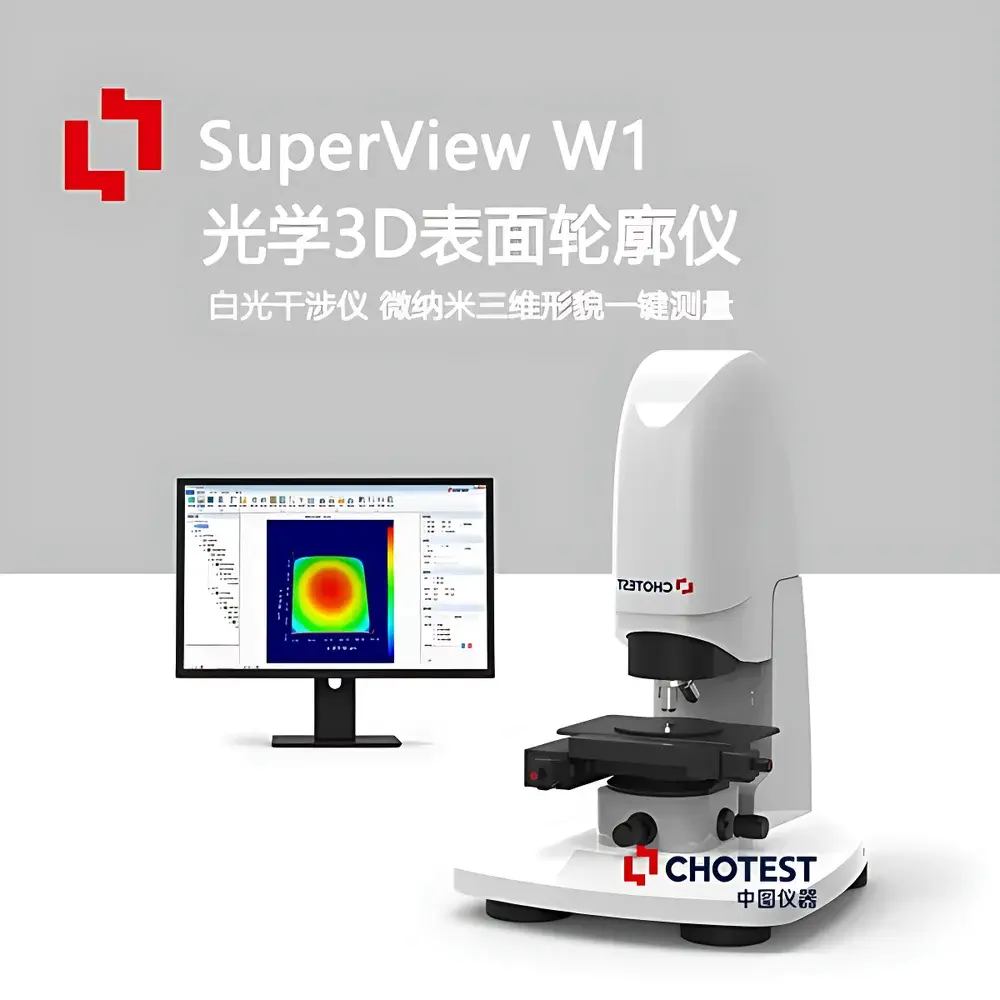
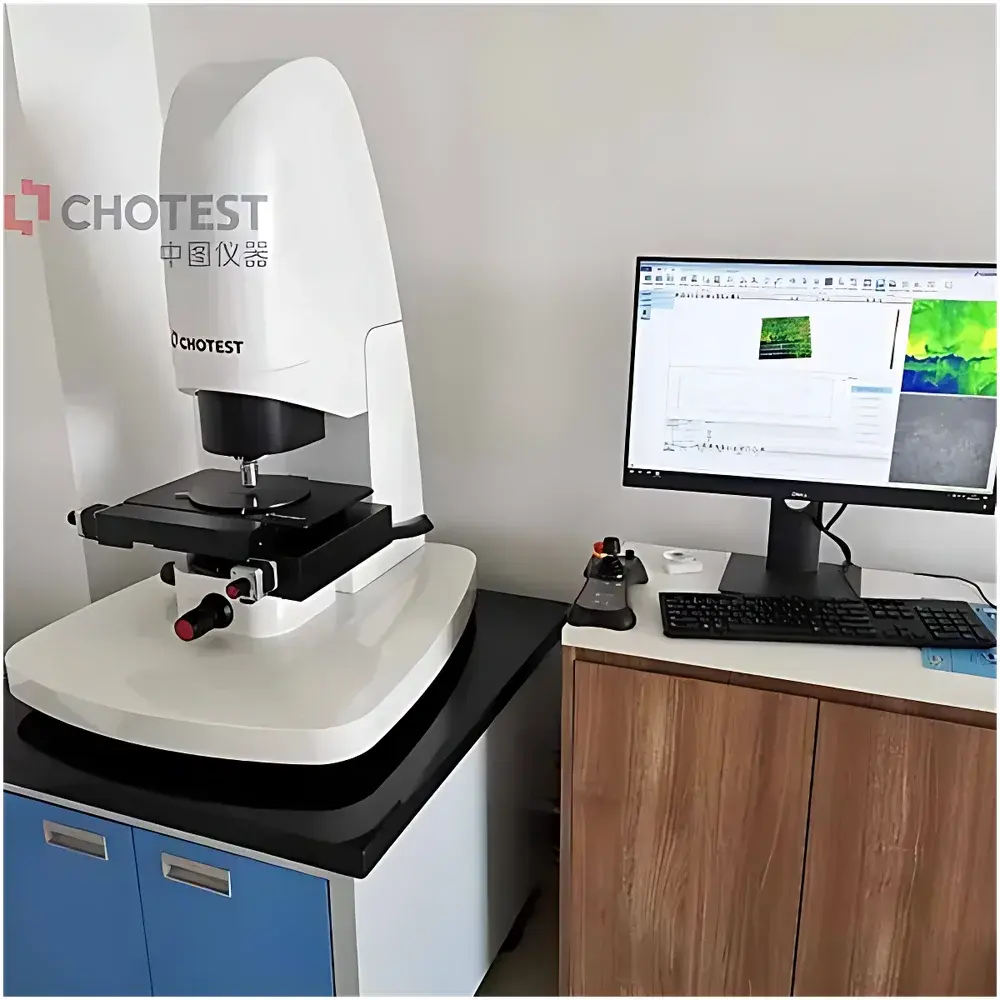
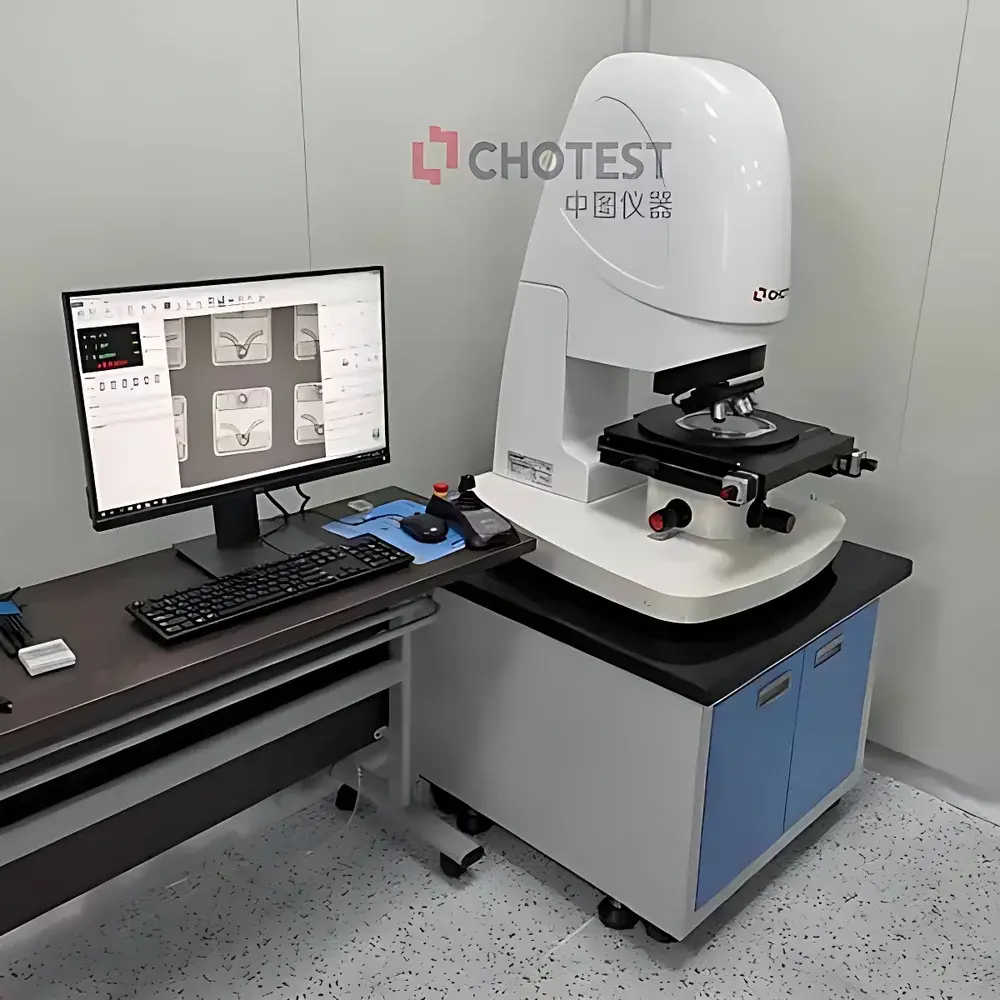
Chotest SuperView W1 White Light Interferometric Surface Topography Metrology System
| Brand | Chotest |
|---|---|
| Origin | Guangdong, China |
| Manufacturer Type | Authorized Distributor |
| Country of Origin | China |
| Model | W1 |
| Measurement Volume | 140 × 100 × 100 mm |
| Optical Configuration | White LED Illumination, 1024 × 1024 Imaging Sensor, Standard 10× Interference Objective (Optional: 2.5×, 5×, 20×, 50×, 100×), Standard 0.5× Optical Zoom (Optional: 0.375×, 0.75×, 1×), 3-Position Manual Objective Turret (Optional: 5-Position Motorized), XY Stage Travel: 140 × 100 mm (320 × 200 mm Platform), Z-Scan Range: 10 mm, Max. Sample Load: 10 kg, Host Dimensions: 700 × 606 × 920 mm |
Overview
The Chotest SuperView W1 is a high-precision, non-contact optical metrology system engineered for sub-nanometer 3D surface topography characterization. It operates on the principle of white light interferometry (WLI), leveraging broadband spectral coherence to resolve surface height variations with vertical resolution down to <0.1 nm and lateral resolution governed by the diffraction limit of the selected objective lens. Unlike contact profilometers or stylus-based systems, the W1 eliminates mechanical wear, sample deformation, and tip convolution artifacts—making it ideal for fragile, soft, or ultra-smooth surfaces such as silicon wafers, fused silica optics, MEMS membranes, and polished metal substrates. Its integrated Z-axis scanning module, combined with advanced EPSI (Enhanced Phase-Shifting Interferometry) reconstruction algorithms, overcomes the traditional trade-off between measurement range and axial resolution inherent in conventional PSI (Phase-Shifting Interferometry) and VSI (Vertical Scanning Interferometry) methods. This enables seamless, gap-free stitching of large-area scans while preserving nanoscale fidelity across curvature transitions—including concave spherical and aspheric surfaces common in optical manufacturing.
Key Features
- Sub-nanometer vertical resolution and repeatability (<0.05 nm RMS over 24 h under controlled lab conditions), validated per ISO 25178-601 and VDI/VDE 2634 Part 3 standards.
- Dual-stage vibration isolation: active pneumatic air-bearing platform (dual-channel) with optional silent built-in compressor; coupled with real-time environmental noise monitoring module that quantifies mechanical disturbances on the Z-scanner axis (frequency range: 1–200 Hz) and logs spectral amplitude data for GLP-compliant environmental qualification reports.
- Intuitive ergonomic hand controller integrating coordinated X/Y translation, Z-focus adjustment, and fringe search initiation—reducing operator training time and minimizing manual alignment errors.
- Hardware-enforced dual collision protection: software-configurable Z-STOP limit + physical contact-sensing electronic brake on the Z-actuator, triggering immediate motion halt upon objective-lens proximity detection.
- Fully automated workflow support: auto-focus, auto-fringe detection, auto-brightness optimization, region-of-interest (ROI) mapping, and multi-site sequential measurement with coordinate referencing—enabling unattended batch operation compliant with ISO/IEC 17025 calibration traceability protocols.
Sample Compatibility & Compliance
The SuperView W1 accommodates a broad spectrum of surface reflectivity (R = 0.1%–100%), roughness (Sa: 0.01 nm–50 µm), and geometry—from atomically flat Si(111) wafers to heavily textured cast alloys. Its non-destructive optical method meets ASTM E2923-22 (Standard Guide for Measuring Surface Topography Using Optical Interferometry) and supports regulatory documentation requirements for FDA 21 CFR Part 11 compliance when deployed with audit-trail-enabled software configurations. The system is routinely deployed in Class 1000 cleanrooms and production-floor environments meeting SEMI S2/S8 safety and emissions criteria. All hardware components comply with CE, RoHS, and IEC 61000-6-2/6-3 electromagnetic compatibility directives.
Software & Data Management
Chotest’s proprietary MetroX™ analysis suite provides full 3D surface data acquisition, processing, and reporting in accordance with ISO 25178-2 (areal surface texture parameters) and ISO 16610 (filtration standards). Core modules include planar and polynomial leveling, morphological filtering (Gaussian, robust Gaussian, spline), defect segmentation (threshold-based void/particle detection), and functional parameter extraction (e.g., bearing ratio, peak density, core fluid retention). Batch analysis supports up to 500 datasets per session with customizable report templates (PDF/Excel/XML), digital signature integration, and version-controlled project archiving. Raw interferogram stacks are stored in vendor-neutral HDF5 format for third-party algorithm validation and cross-platform interoperability.
Applications
- Semiconductor process control: gate oxide uniformity, CMP endpoint verification, via/trench profile metrology, and EUV mask defect review.
- Optical component certification: surface figure error (PV, RMS) of lenses, mirrors, and diffractive elements; scratch/dig assessment per MIL-PRF-13830B.
- Micromachined device inspection: MEMS actuator displacement, cantilever warpage, and packaging-induced stress relief patterns.
- Automotive powertrain QA: cylinder bore cross-hatch angle, piston ring land micro-texture, and coating thickness uniformity on thermal barrier coatings.
- Academic and national lab research: thin-film growth kinetics, tribological wear track evolution, and nanoscale corrosion pit morphology quantification.
FAQ
What is the maximum measurable step height without phase ambiguity?
The W1 achieves unambiguous step height measurement up to ±10 µm using its enhanced EPSI algorithm—exceeding the λ/4 limitation typical of standard PSI.
Can the system measure transparent thin films on silicon substrates?
Yes, through multi-layer interference modeling in MetroX™ software, enabling simultaneous extraction of film thickness, interface roughness, and substrate topography.
Is motorized objective turret control compatible with G-code or LabVIEW?
Motorized turrets support SCPI command set and NI-VISA drivers, enabling full integration into automated test benches and custom scripting environments.
How is calibration traceability maintained?
Each instrument ships with NIST-traceable step-height reference artifacts (SiO₂-on-Si, pitch standards), and software includes built-in calibration verification routines aligned with ISO 25178-701.
Does the system support real-time in-process monitoring during manufacturing?
With optional Ethernet/IP or OPC UA gateway modules, the W1 can stream processed surface metrics (e.g., Sa, Sq, Vmp) to MES/SCADA systems at ≤2 Hz update rates.



