
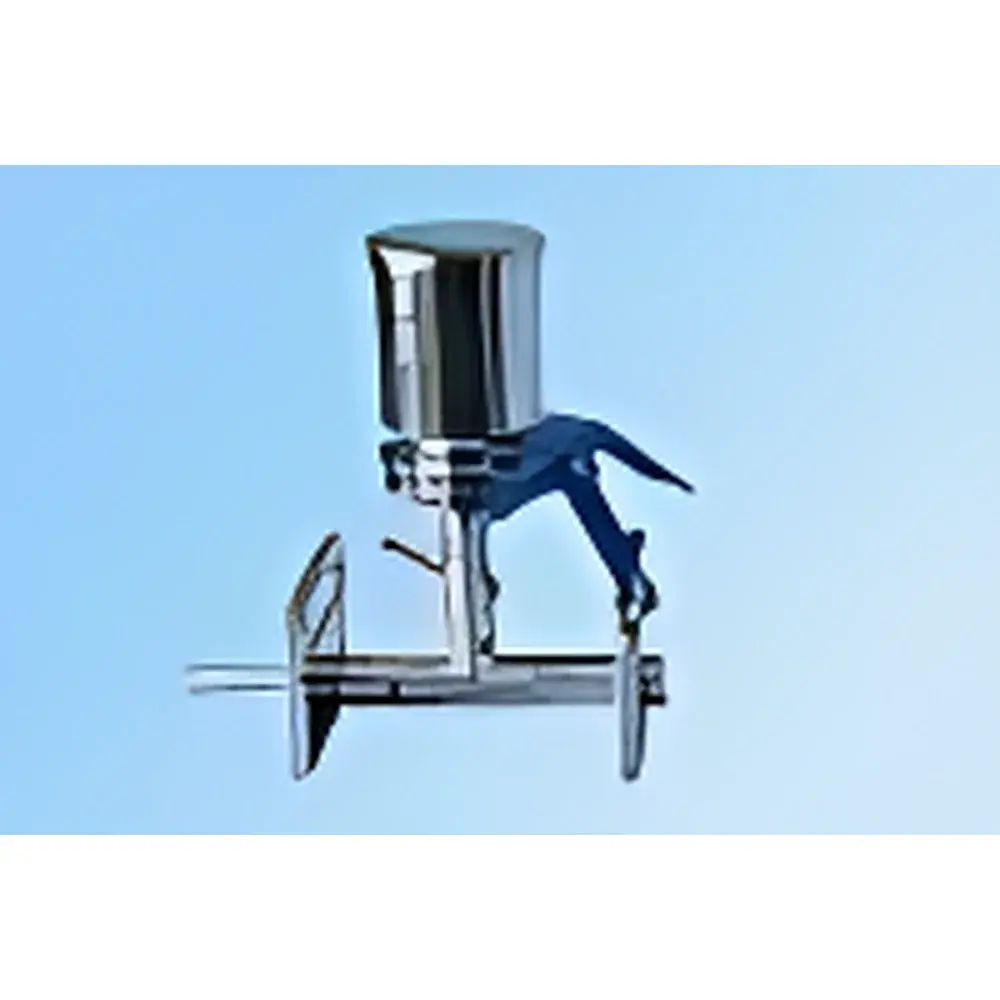
Chu Ding HSF-S1 Single-Station Stainless Steel Solution Filtration System (Microbial Testing Filtration Unit)
| Brand | Chu Ding Technology |
|---|---|
| Origin | Shanghai, China |
| Manufacturer Type | Authorized Distributor |
| Country of Origin | China |
| Model | HSF-S1 |
| Price | USD 950 (FOB Shanghai) |
Overview
The Chu Ding HSF-S1 Single-Station Stainless Steel Solution Filtration System is a precision-engineered vacuum-driven filtration platform designed for controlled, repeatable microbial and particulate analysis in regulated laboratory environments. Unlike traditional borosilicate glass sintered funnel assemblies—which are limited to single-sample processing, thermally fragile, and incompatible with autoclaving—the HSF-S1 implements a modular, sanitary-grade architecture based on ASTM F800-compliant 316L stainless steel construction. Its operational principle relies on controlled negative pressure (typically −0.08 to −0.1 MPa) applied across a user-selected membrane filter mounted on a precision-machined filtration head. This generates laminar flow through the membrane matrix, enabling quantitative recovery of retained analytes—including viable microorganisms, suspended solids, chlorophyll-a, or colloidal particles—while maintaining sample integrity and minimizing cross-contamination risk. The system is engineered for compliance with USP , ISO 8573-7, and ISO 11737-1 methodologies for microbiological enumeration and sterility testing.
Key Features
- 316L stainless steel wetted components—including filtration cup, head, support bracket, and ball valves—certified to EN 10204 3.1 material test reports; fully compatible with steam sterilization (121 °C, 20 min, 15 psi), dry heat (180 °C, 2 h), and chemical disinfection (e.g., 70% ethanol, 5000 ppm sodium hypochlorite).
- Modular single-station configuration supports scalable deployment: multiple HSF-S1 units can be operated in parallel under shared vacuum control, enabling flexible throughput from 1 to 6 samples per run without hardware modification.
- Integrated sanitary ball valves with PTFE-sealed stems provide precise, drip-free flow control per channel; each valve features tactile feedback and ≥10,000-cycle mechanical durability per ISO 5211.
- Aluminum clamping mechanism ensures uniform sealing force (±5 N) across the cup–head interface, eliminating membrane wrinkling and ensuring full active surface utilization (effective filtration area: 47 mm diameter standard).
- Non-pyrogenic, extractables-controlled design validated per USP and ; all gasket materials comply with FDA 21 CFR 177.2600 for repeated contact with aqueous and organic solvents.
Sample Compatibility & Compliance
The HSF-S1 accommodates standard 47 mm diameter membrane filters—including mixed cellulose ester (MCE), polyethersulfone (PES), nylon, polycarbonate (track-etched), and PVDF—enabling method-specific selection for bacterial retention (e.g., 0.45 µm for total viable count, 0.22 µm for sterile filtration), particle sizing, or pigment isolation. It is routinely employed in environmental water testing (EPA Method 1603), pharmaceutical water bioburden monitoring (Ph. Eur. 5.1.2), food & beverage challenge studies (ISO 4833-1), and academic phytoplankton research. The system conforms to GLP documentation requirements, supporting audit-ready operation when paired with calibrated vacuum gauges and temperature-monitored autoclave cycles. All stainless steel surfaces meet ASME BPE-2022 surface finish specifications (Ra ≤ 0.4 µm).
Software & Data Management
As a manually operated, non-automated filtration station, the HSF-S1 does not incorporate embedded electronics or proprietary software. However, its mechanical design facilitates seamless integration into digital lab workflows: vacuum source pressure logs (via external digital manometer), filtration duration timestamps, and membrane lot traceability can be recorded within LIMS or ELN platforms compliant with 21 CFR Part 11 (electronic signatures, audit trails). Optional accessories—including calibrated vacuum regulators, pre-sterilized membrane packs with CoA, and ISO/IEC 17025-accredited verification kits—are available to support IQ/OQ/PQ validation protocols.
Applications
- Quantitative microbial enumeration in purified water, WFI, and process streams per USP and EU GMP Annex 1.
- Environmental monitoring of potable water, wastewater effluents, and recreational waters using membrane filtration culture techniques.
- Pre-concentration of low-biomass samples (e.g., oligotrophic lake water, cleanroom rinse fluids) prior to qPCR or ATP bioluminescence assays.
- Filtration of viscous or particulate-laden solutions—such as cell culture supernatants, herbal extracts, or fermentation broths—where glass funnels would clog or fracture.
- Standardized preparation of filtered reference standards for spectrophotometric or chromatographic calibration (e.g., removal of turbidity prior to UV-Vis absorbance measurement at 254 nm).
FAQ
Is the HSF-S1 suitable for sterile filtration of media or buffers?
Yes—when used with certified 0.22 µm pore size membranes and validated sterilization procedures (autoclave cycle + post-sterilization integrity test), it meets ISO 13408-1 requirements for aseptic processing support equipment.
Can I use aggressive solvents such as acetone or THF with this system?
316L stainless steel is resistant to most organic solvents; however, avoid prolonged exposure to chloride-containing solvents (e.g., chloroform, DCM) above 60 °C due to pitting corrosion risk. Confirm membrane compatibility separately.
Does the system include a vacuum pump?
No—the HSF-S1 is supplied as a filtration manifold only; users must provide a compatible vacuum source (recommended: oil-free diaphragm pump with ultimate vacuum ≤5 kPa and flow rate ≥25 L/min).
What is the maximum operating temperature during filtration?
The unit is rated for continuous operation up to 80 °C; transient exposure to 121 °C is permitted only during validated sterilization cycles—not during active filtration.
How is leak integrity verified between filtration cycles?
A manual bubble point test can be performed by submerging the assembled cup-head unit in isopropyl alcohol and applying regulated vacuum; absence of continuous bubble streams at ≥80% of membrane manufacturer’s specified bubble point confirms seal integrity.



