
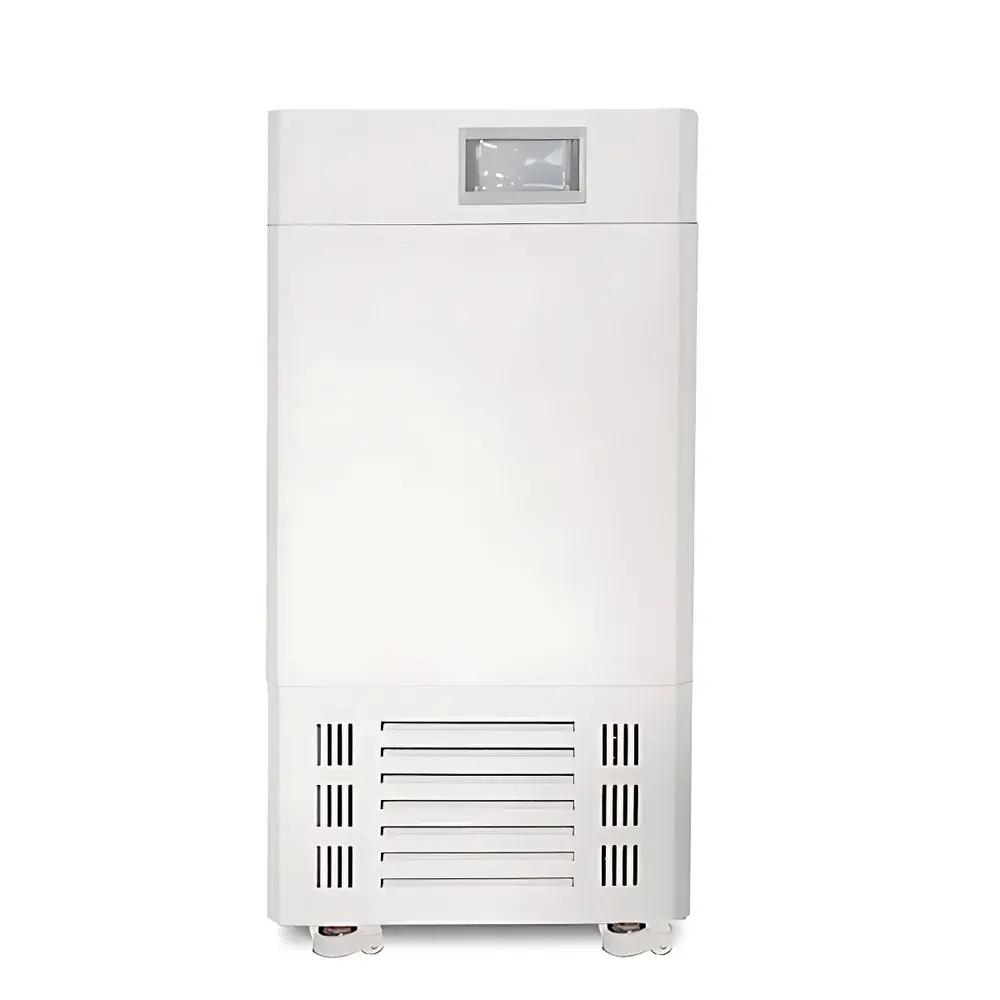
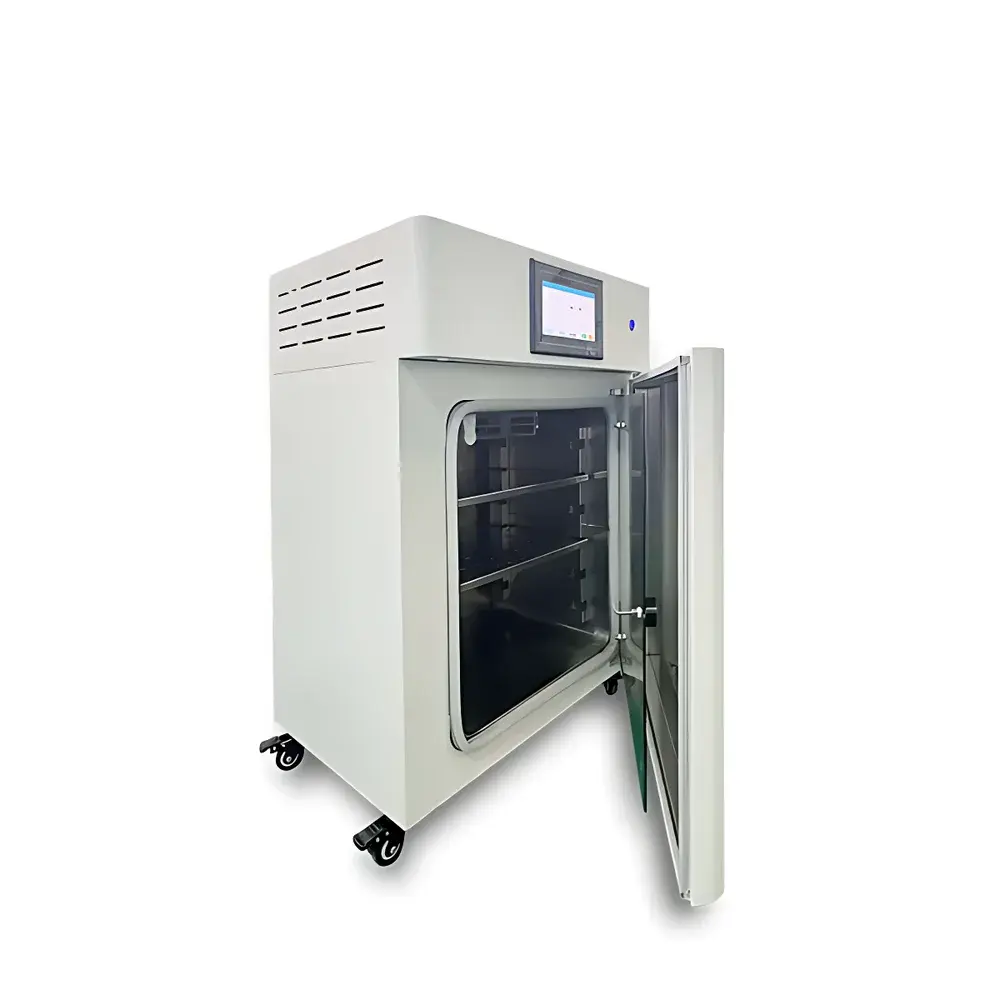
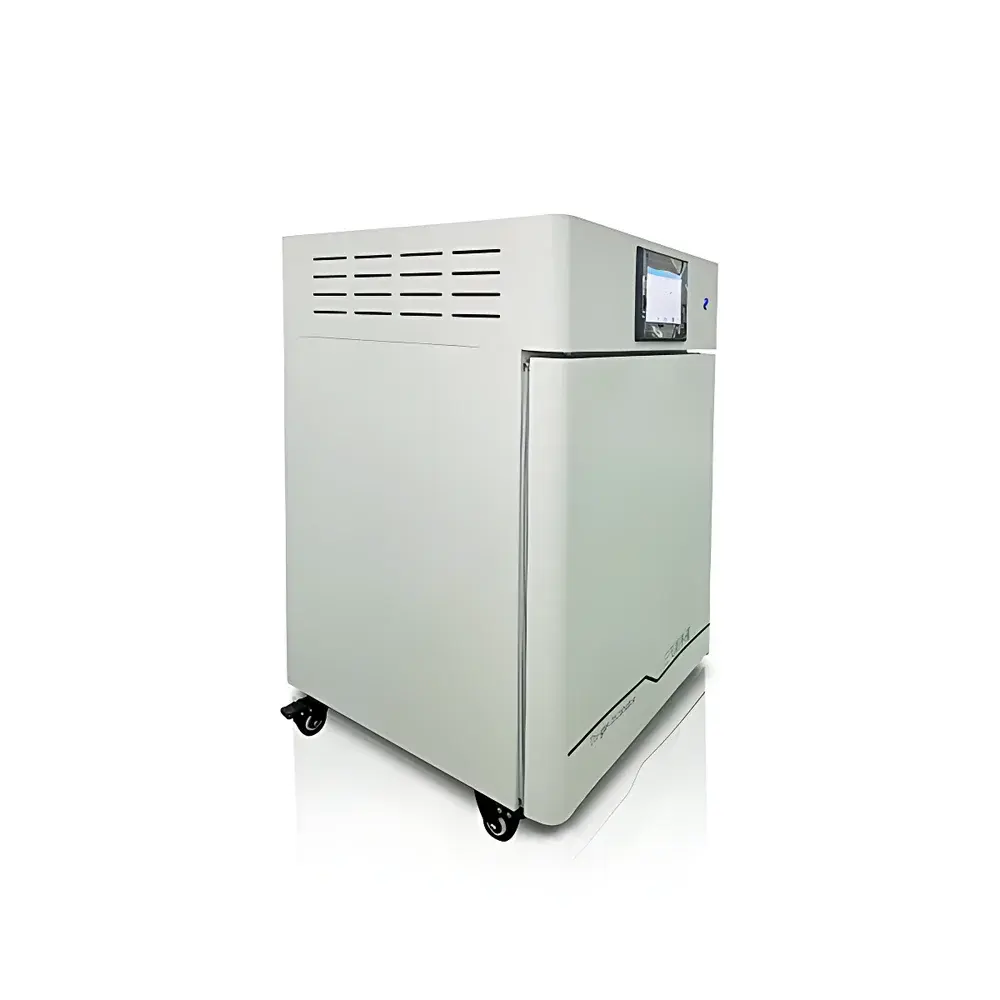
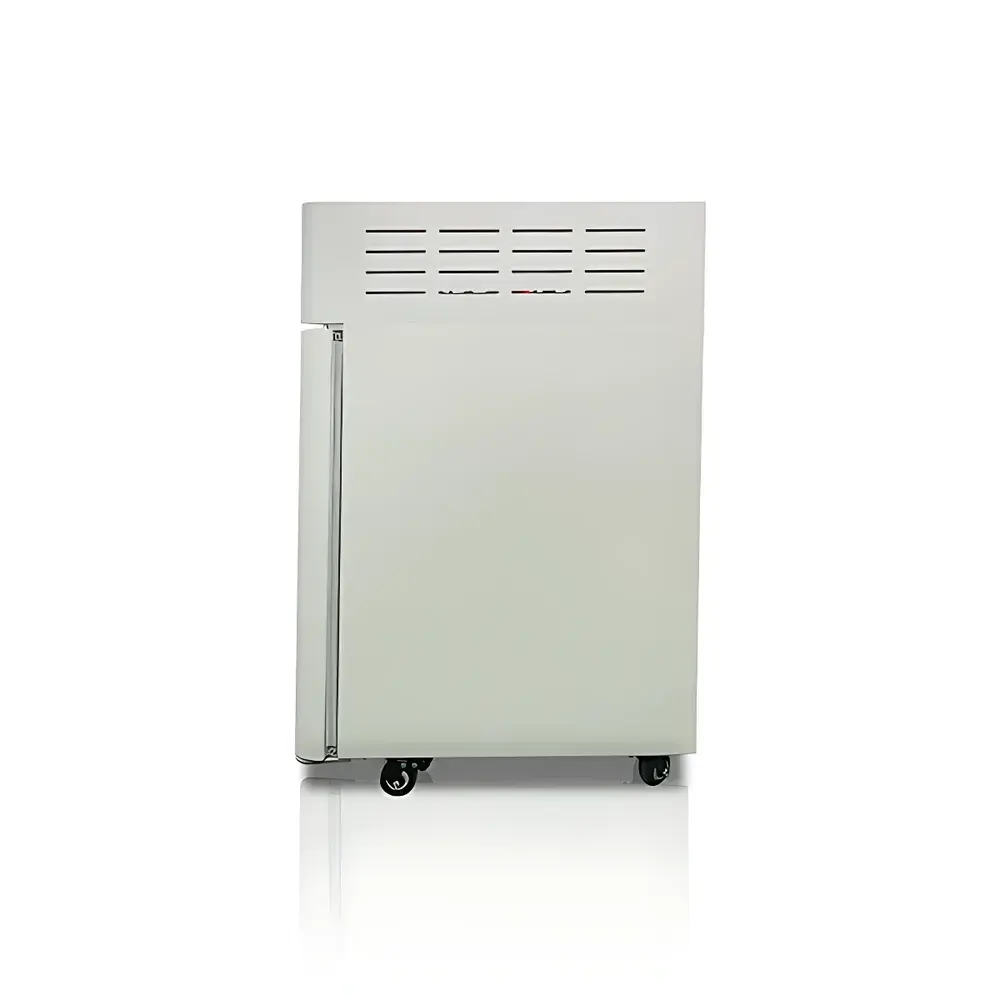
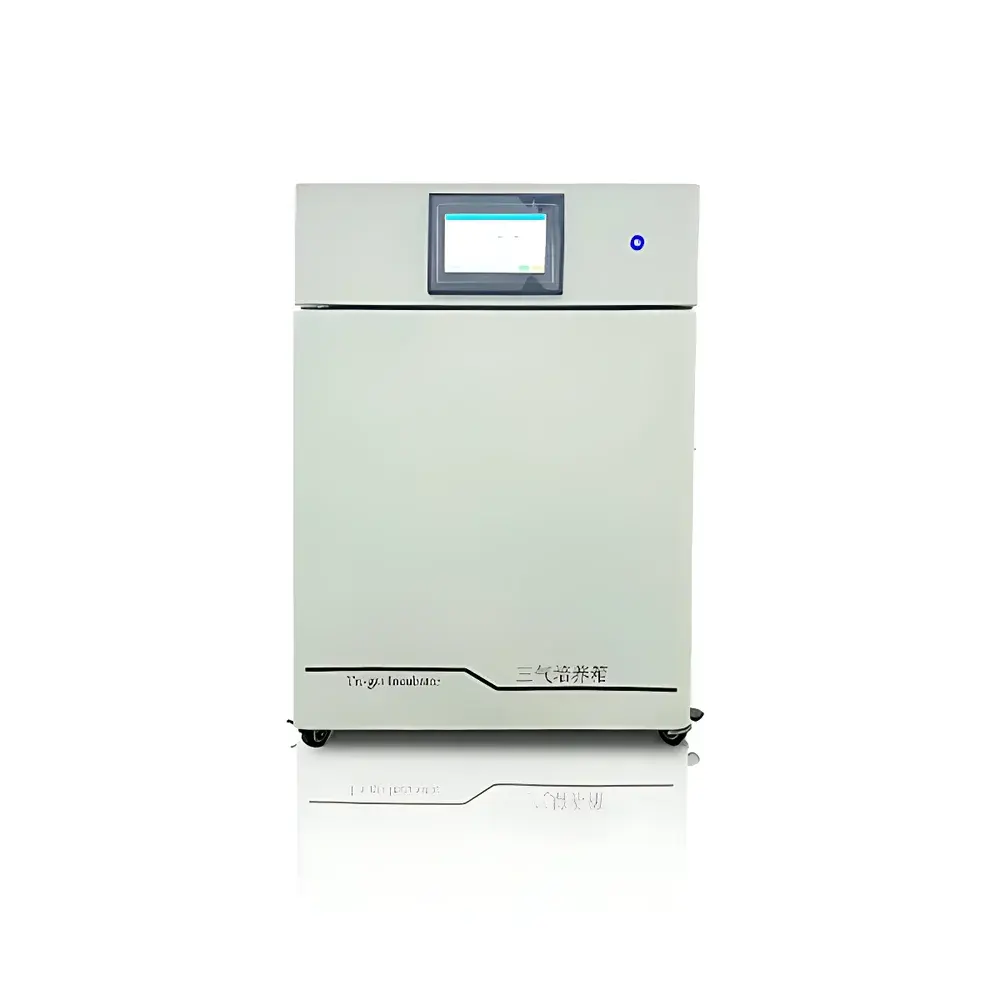
Chuanheng CN-SQ50D Tri-Gas Incubator with Hypoxic/Oxic Control and Low-Temperature/Low-Humidity Capability
| Brand | Chuanheng Instrument |
|---|---|
| Origin | Zhejiang, China |
| Manufacturer Type | Direct Manufacturer |
| Product Type | Air-Jacketed Tri-Gas Incubator |
| O₂ Range | 0.1–95% vol (±0.3% accuracy) |
| Temperature Range | 5–60°C (±0.2°C stability at 37°C, ±0.8°C uniformity) |
| CO₂ Range | 0–20% vol (±0.1% accuracy, IR sensor-based) |
| Humidity Range | 50–95% RH |
| Capacity Options | 50 L / 80 L / 100 L / 160 L / 200 L |
| Standard Configuration | UV Sterilization, PT100 Temperature Sensing, Electromagnetic Gas Valve Interlock, Micro-Circulation Airflow System, Touchscreen Interface (5″ LCD), Dual-Stage Overtemperature & Gas Safety Cutoffs |
Overview
The Chuanheng CN-SQ50D is an air-jacketed tri-gas incubator engineered for precise, reproducible control of oxygen (O₂), carbon dioxide (CO₂), and humidity within a thermally stable chamber—specifically optimized for hypoxic (1–19.8% O₂), normoxic (20–21% O₂), and hyperoxic (23–95% O₂) cell culture applications. Unlike standard CO₂ incubators, the CN-SQ50D integrates independent, closed-loop gas regulation systems for O₂ and CO₂ using electrochemical O₂ sensors and non-dispersive infrared (NDIR) CO₂ sensors—both calibrated to traceable standards and validated per ISO 13485-aligned internal protocols. Its micro-circulation airflow architecture mimics natural convection, minimizing thermal and gaseous stratification while accelerating recovery times (<3 min for O₂, <2 min for CO₂ post-door opening). The chamber operates across a broad temperature range (5–60°C), enabling not only mammalian cell culture but also microbiological studies requiring low-temperature adaptation or cold-stress modeling. All gas delivery pathways are constructed from chemically inert, ultra-low-permeability tubing compliant with USP Class VI elastomer specifications, ensuring long-term integrity under repeated sterilization cycles.
Key Features
- Air-jacketed thermal design with high-efficiency insulation and dual-stage overtemperature protection (independent PT100 sensing + mechanical cutoff)
- Real-time, feedback-controlled O₂ regulation via electrochemical sensor (0.1–95% vol, ±0.3% accuracy) with automatic N₂/CO₂ or O₂/CO₂ blending logic based on setpoint
- NDIR-based CO₂ monitoring (0–20% vol, ±0.1% accuracy) with auto-zero compensation and drift correction algorithm
- Humidity control (50–95% RH) achieved through integrated evaporative reservoir with PID-driven heating and condensation management
- 5-inch capacitive touchscreen interface supporting multi-user profiles, parameter logging, and alarm history with timestamped event records
- UV germicidal lamp (254 nm) mounted in ceiling panel; optional validation-ready configurations available for steam-in-place (SIP) or dry-heat sterilization (180°C, 2 h)
- Electromagnetic valve interlock system that halts gas flow and pauses fan circulation upon door opening—reducing cross-contamination risk and conserving gas supply
- 304 stainless-steel interior with seamless radius corners, electropolished finish, and removable perforated shelves for CIP compatibility
Sample Compatibility & Compliance
The CN-SQ50D supports diverse biological samples including primary human endothelial cells, neural stem cells, tumor spheroids, anaerobic bacteria (e.g., Clostridium difficile), and oxygen-sensitive organoids. Its gas control fidelity meets requirements for ISO 13408-1 (aseptic processing), ASTM F1980 (accelerated aging of sterile barrier systems), and USP <85> endotoxin testing environments where ambient O₂ must be suppressed below 5% to prevent oxidative artifact formation. The controller firmware implements audit-trail functionality compliant with FDA 21 CFR Part 11 Annex 11 principles—including user authentication, electronic signatures, and immutable log export (CSV/Excel). All electrical components conform to IEC 61010-1 safety standards, and gas fittings comply with CGA V-7.1 and ISO 8573-1 Class 2 purity specifications for medical-grade nitrogen and oxygen.
Software & Data Management
The embedded operating system provides local data storage (≥10,000 entries) with configurable sampling intervals (10 s–60 min). Exportable logs include temperature, O₂, CO₂, RH, door-open events, and error codes—each tagged with UTC timestamp, operator ID, and chamber location metadata. Optional Ethernet/Wi-Fi module enables remote monitoring via secure HTTPS API (TLS 1.2+), integration into LIMS platforms (e.g., LabVantage, STARLIMS), and automated report generation aligned with GLP/GMP documentation workflows. Firmware updates are delivered via signed .bin packages with SHA-256 verification; no cloud dependency or third-party telemetry is enabled by default.
Applications
- Hypoxia-inducible factor (HIF)-1α pathway studies in cancer biology and ischemic preconditioning models
- Stem cell differentiation under controlled O₂ tension (e.g., hematopoietic progenitor expansion at 5% O₂)
- Microaerophilic pathogen cultivation (e.g., Helicobacter pylori, Campylobacter jejuni) requiring 5–10% O₂
- Long-term neuronal culture where ambient O₂ (21%) induces oxidative stress and synaptic loss
- Bioprocess development for recombinant protein expression in CHO cells under variable gas regimes
- Environmental microbiology experiments simulating high-altitude or deep-sea oxygen gradients
FAQ
What safety mechanisms prevent O₂ or CO₂ over-concentration?
The system employs redundant hardware cutoffs: if O₂ exceeds 95.5% or CO₂ surpasses 20.5%, both gas valves close immediately and audible/visual alarms activate. A secondary thermal fuse disconnects power to all gas actuators if internal cabinet temperature exceeds 65°C.
How does the incubator maintain gas stability during frequent door openings?
Upon door actuation, airflow ceases and gas valves seal within 0.8 seconds. The micro-circulation restarts only after O₂ and CO₂ concentrations re-stabilize to ±0.5% of setpoint—verified by real-time sensor fusion algorithms.
Is the humidity system suitable for long-term low-RH operation (e.g., 50% RH for 72 h)?
Yes—the reservoir volume and PID-controlled evaporation rate are sized to sustain 50% RH continuously for ≥120 h without refill, verified per ISO 14644-3 particle-free environmental testing protocols.
Can the unit be validated for GMP-compliant use?
Yes—factory-installed IQ/OQ documentation packages are available, including as-delivered calibration certificates (NIST-traceable PT100, O₂, and CO₂ sensors), mapping reports (temperature/gas uniformity per ISO 14644-3), and software verification test scripts.
What maintenance intervals are recommended for sensor longevity?
O₂ sensors require annual recalibration against certified gas standards; CO₂ sensors are field-replaceable with factory pre-calibration and exhibit >24-month operational life under continuous use.
Related Products



