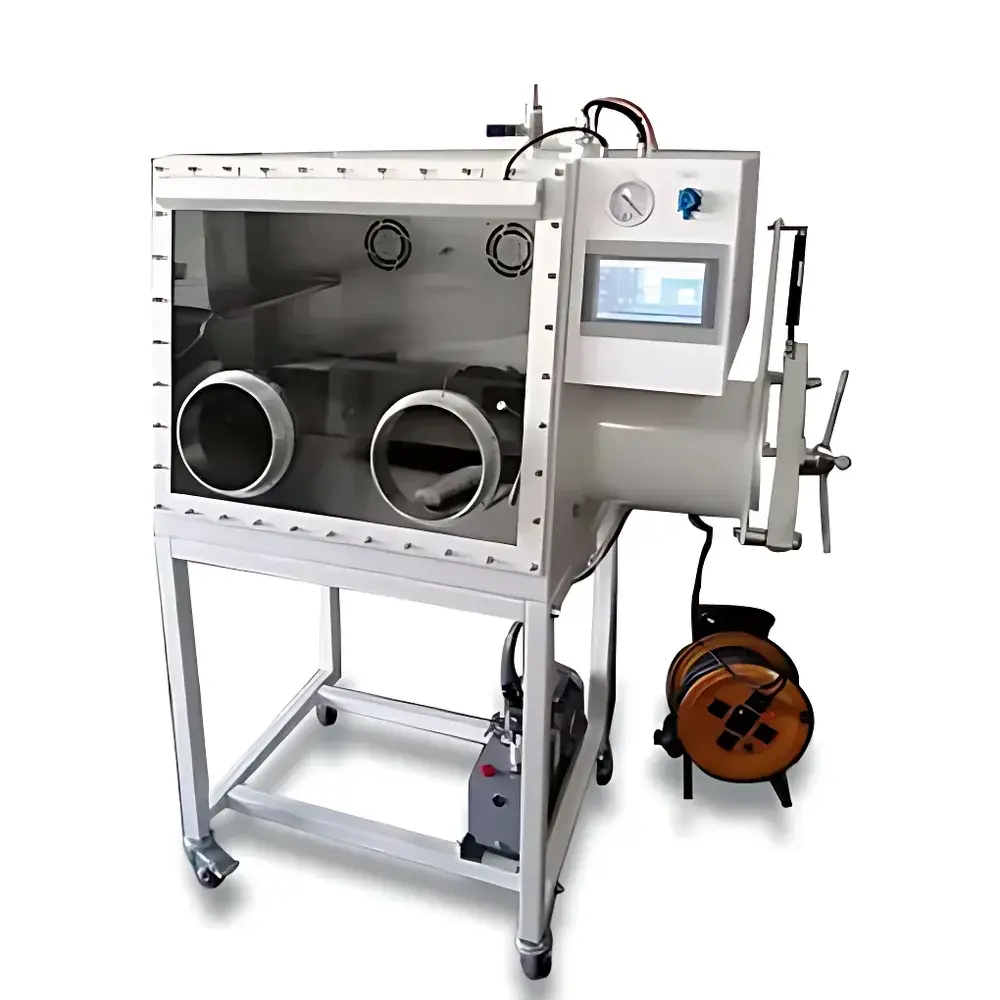
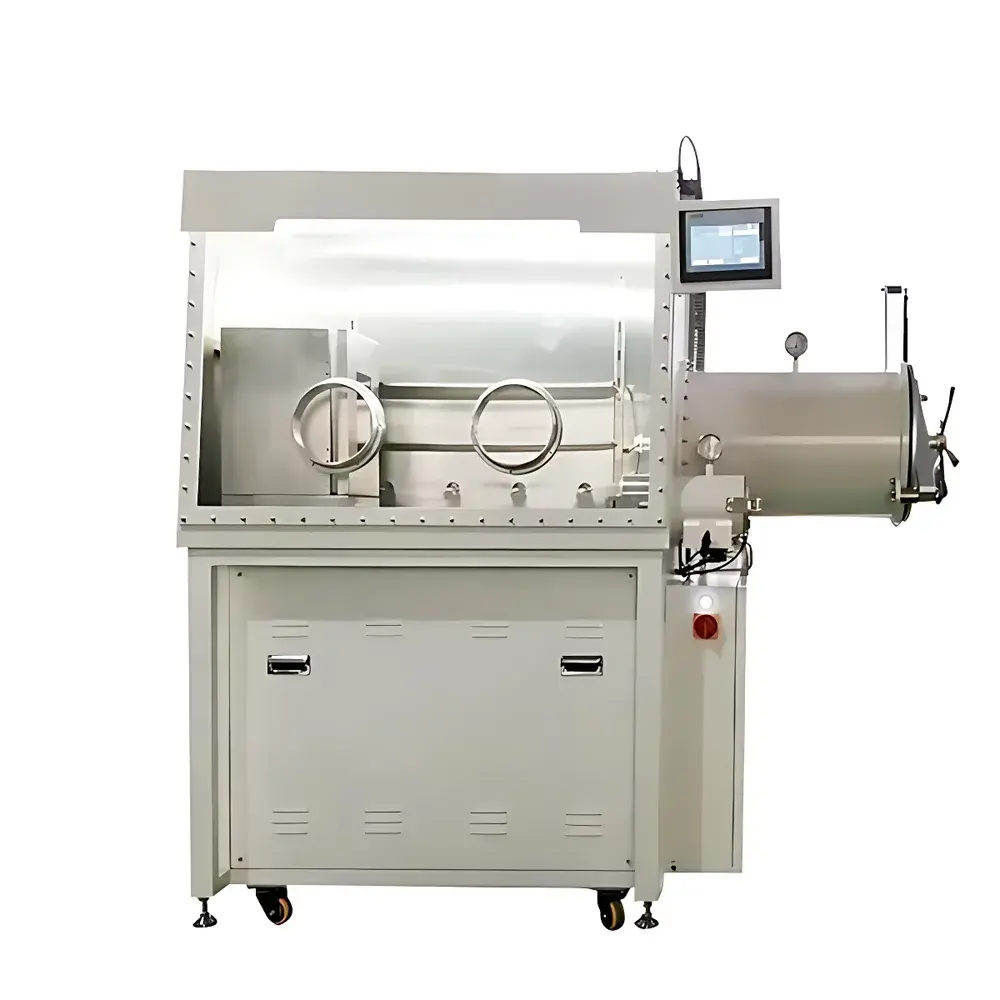
Chuanhong ZKST-2 Anaerobic Vacuum Glove Box
| Brand | Chuanhong |
|---|---|
| Origin | Shanghai, China |
| Manufacturer Type | Authorized Distributor |
| Country of Origin | China |
| Model | ZKST-2 |
| Price | Upon Request |
| Chamber Material | 3 mm SUS304 Stainless Steel |
| Viewing Window | 8–10 mm Tempered Glass |
| Gas Valves | 304 Stainless Steel Ball Valves with Integrated Inlet/Outlet Fittings |
| Internal Lighting | UV-Free White LED |
| Power Supply | Multi-Port Industrial Socket (220 V AC) |
| Gloves | Industrial-Grade Acid-Resistant Latex with O-Ring Seals |
| Optional Upgrades | KF-25/KF-40 Vacuum Flange Interfaces |
| Main Chamber Dimensions (W×D×H) | 600 × 450 × 420 mm |
| Transfer Airlock Options | Ø210 mm / 240 L / 260 L Cylindrical Designs |
| Door Mechanism | Semi-Automatic Hinged Door |
Overview
The Chuanhong ZKST-2 Anaerobic Vacuum Glove Box is a purpose-engineered containment system designed for the establishment and maintenance of strictly oxygen-free environments required in anaerobic microbiology, obligate anaerobe cultivation, and redox-sensitive biochemical synthesis. Unlike standard incubators, this system operates on a dual-stage gas management principle: initial high-purity nitrogen purging followed by catalytic deoxygenation using palladium-based hydrogenation catalysts under controlled H2/N2/CO2 atmosphere (85:10:5 v/v). The chamber achieves and sustains <5 ppm residual O2 after full conditioning—verified via methylene blue indicator strips and validated through repeated vacuum/nitrogen/mixed-gas cycling protocols compliant with ISO 11133 and CLSI M47-A guidelines for anaerobic culture systems.
Key Features
- Structural integrity ensured by 3 mm thick SUS304 stainless steel construction, electropolished interior surface for corrosion resistance and ease of sterilization
- Optical-grade 8–10 mm tempered glass viewport providing distortion-free, 180° field-of-view without blind spots
- Dual-stage gas handling system with independent nitrogen and mixed-gas (N2/H2/CO2) inlet manifolds, each equipped with precision needle valves and integrated flow meters calibrated to ±1 mL/min accuracy
- Integrated vacuum pump control interface with programmable vacuum hold and stepwise evacuation sequences (e.g., 66 kPa → 13 kPa verification cycles)
- Industrial-grade latex gloves mounted on O-ring sealed flanges—chemically resistant to common solvents, acids, and biological reagents; glove ports accommodate up to 300 mm wrist diameter
- Modular transfer airlock options (KF-25, KF-40 compatible) enabling future integration with inert-atmosphere sample introduction systems or analytical instrumentation
- UV-free white LED lighting positioned above each viewing panel to prevent photodegradation of light-sensitive cultures or reagents
Sample Compatibility & Compliance
The ZKST-2 supports routine handling of clinical isolates (e.g., Clostridium difficile, Bacteroides fragilis), fastidious oral anaerobes, gut microbiota consortia, and oxygen-labile metalloenzymes. Its operational workflow aligns with USP General Chapter <61> for microbial enumeration and CLSI M11-A9 for anaerobic susceptibility testing. All internal surfaces meet FDA 21 CFR Part 11 requirements for traceability when paired with optional audit-trail-enabled controllers. The system does not incorporate active temperature regulation; users must integrate external incubation modules or place pre-conditioned plates directly into the chamber—ensuring compatibility with ISO 13408-1 sterility assurance frameworks where thermal stability is decoupled from atmospheric control.
Software & Data Management
While the base ZKST-2 operates via manual pneumatic and vacuum controls, optional digital upgrade kits provide RS-485 Modbus RTU connectivity for integration into centralized laboratory monitoring networks. These modules log timestamped records of vacuum cycles, gas injection volumes, catalyst activation status, and indicator strip validation events—supporting GLP-compliant documentation per OECD Series on Principles of Good Laboratory Practice. All electronic components are CE-marked and comply with IEC 61000-6-3 electromagnetic compatibility standards. No proprietary software installation is required; data export is supported via CSV over USB or Ethernet.
Applications
- Routine isolation and subculture of obligate anaerobes from clinical, environmental, and food matrices
- Preparation of anaerobic culture media (e.g., reinforced clostridial medium, prereduced anaerobically sterilized media)
- Handling of oxygen-sensitive biocatalysts and Fe-S cluster proteins during purification and assay setup
- Long-term maintenance of anaerobic reference strains under continuous low-flow gas replenishment (10 mL/min mixed gas)
- Controlled introduction of samples into downstream instruments such as anaerobic HPLC autosamplers or microplate readers housed within adjacent inert enclosures
FAQ
Does the ZKST-2 include built-in temperature or humidity control?
No. The ZKST-2 is an atmospheric containment platform—not a climate-controlled incubator. Users must introduce pre-equilibrated samples or integrate external heating/cooling modules compatible with its chamber dimensions and gas-tight seals.
What is the recommended maintenance schedule for the palladium catalyst and desiccant?
Palladium pellets (1000 g) and silica gel desiccant (500 g) require replacement every 24 hours during continuous operation. Spent materials may be regenerated by drying at 200 °C for 2–3 hours under inert gas purge, provided no sulfur or halogen contamination has occurred.
Can the ZKST-2 be upgraded to support automated gas sequencing?
Yes. Optional firmware-enabled controller modules support programmable multi-step gas exchange routines—including timed vacuum hold, sequential N2/mixed-gas injection, and catalyst activation triggers—with event logging and remote status monitoring.
Is the glove box certified for use with hydrogen-containing atmospheres?
The ZKST-2 meets EN 1127-1:2011 explosion protection requirements for equipment operating in Group II (non-mining) hazardous areas with H2 concentrations up to 10% v/v, provided all electrical components remain outside the main chamber and proper grounding is implemented.