
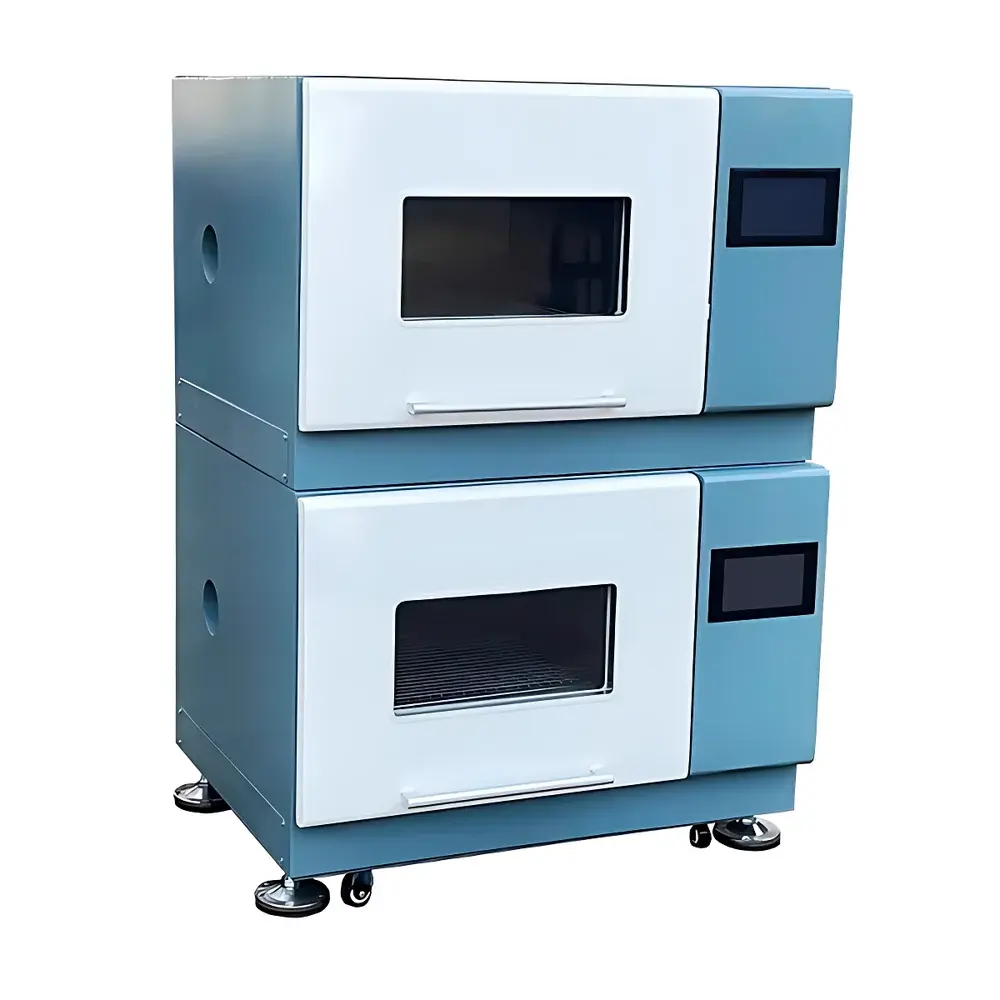
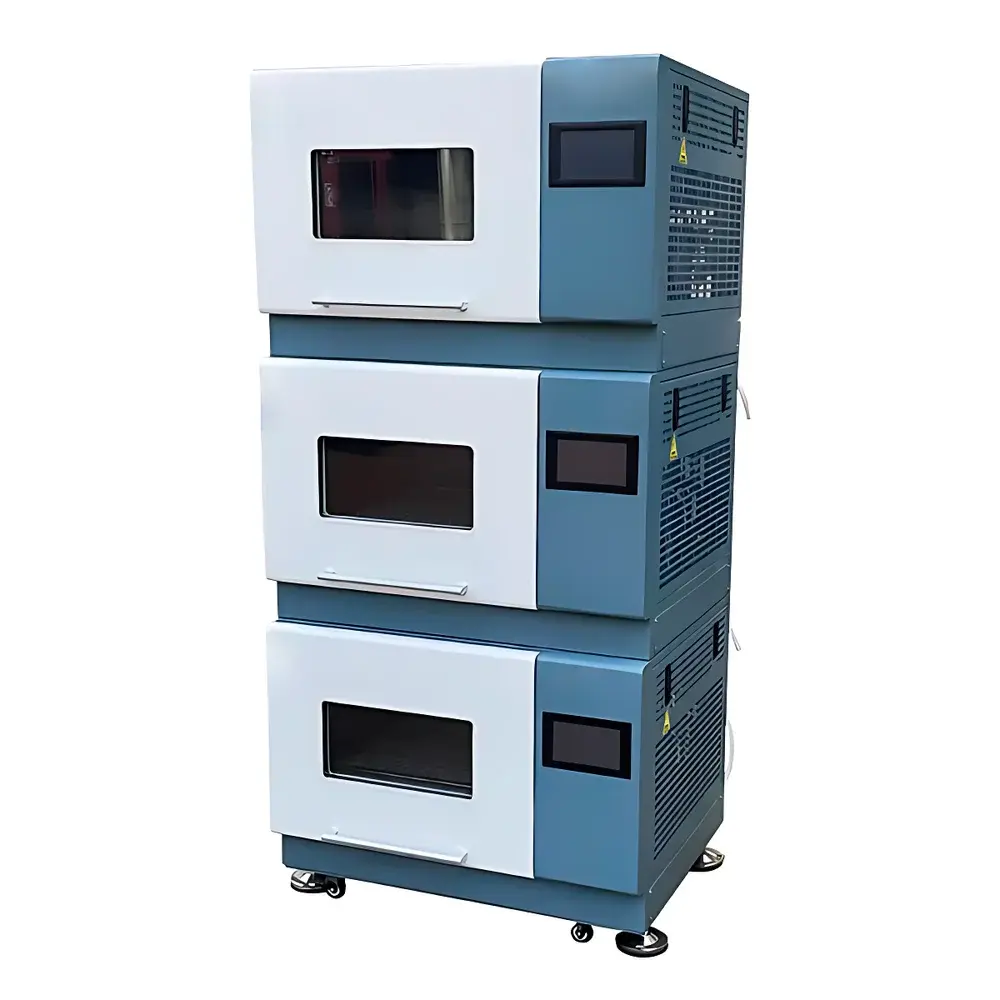
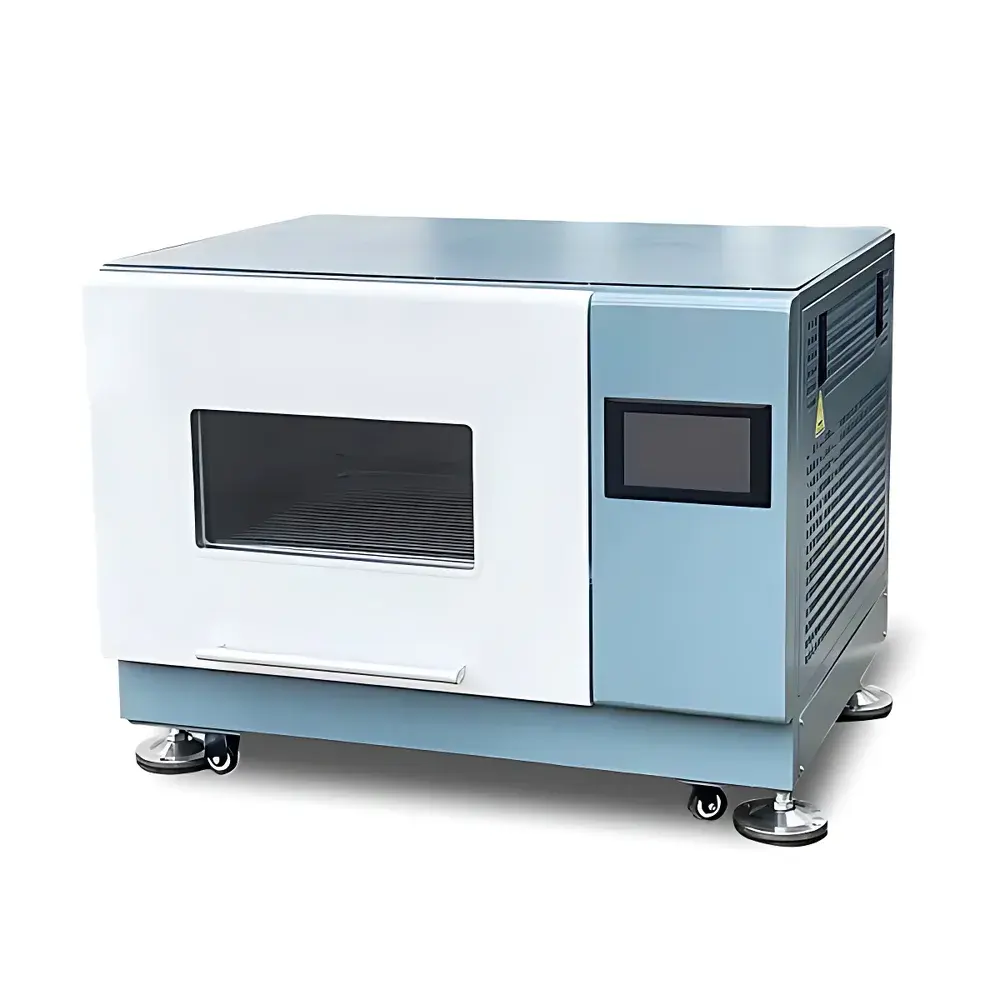
Chuanna CHNS-8EA High-Capacity Combinable CO₂-Enabled Temperature-Controlled Orbital Shaker with Servo Drive
| Brand | Chuanna Instrument |
|---|---|
| Origin | Zhejiang, China |
| Model | CHNS-8EA |
| Instrument Type | CO₂-Compatible Temperature-Controlled Orbital Shaker |
| Timer Range | 0–999.9 h |
| Oscillation Frequency | 10–300 rpm |
| Frequency Accuracy | ±1 rpm |
| Orbit Diameter | Ø35 mm (standard), Ø50 mm (optional) |
| Temperature Range | 4–60 °C (ambient: 23–25 °C) |
| Temperature Control Accuracy | ±0.1 °C |
| Temperature Uniformity | ±1 °C (at 37 °C) |
| Tray Dimensions | 928 mm × 530 mm |
| Max Capacity (Stainless Steel Clamps) | 250 mL × 66 / 500 mL × 45 / 1000 mL × 28 / 2000 mL × 15 |
| Data Logging | Continuous (1-min intervals), ≥90 days storage |
| Interface | LCD Touchscreen with Password Lock |
| Cooling System | Adjustable Refrigeration with Programmable Defrost (1–89 min duration |
| Humidity Control Option | Up to 95% RH (optional) |
| Viewing Window | Double-Layer Hollow Tempered Glass |
| Construction | Seamless Welded Stainless Steel Interior |
| Air Circulation | Forced Convection (fan mode: continuous or auto) |
| Power Input | Standard 220 V AC, 50 Hz |
Overview
The Chuanna CHNS-8EA is a high-capacity, single-tier, servo-driven orbital shaker engineered for precision-controlled cell culture, microbial fermentation, and biochemical reaction studies under stable thermal and mechanical conditions. Unlike conventional air-jacketed incubators or basic platform shakers, the CHNS-8EA integrates P.I.D.-based microcomputer temperature regulation with closed-loop servo motor control—enabling repeatable oscillation across its full 10–300 rpm range with ±1 rpm frequency accuracy. Its thermally insulated chamber maintains uniformity of ±1 °C at 37 °C—a critical specification for mammalian cell expansion and aerobic bacterial growth. The system supports optional CO₂ compatibility (via external gas inlet port and integrated humidity control up to 95% RH), making it suitable for long-term suspension cultures requiring pH stability. Designed for GLP-compliant laboratories, the unit meets structural and operational benchmarks aligned with ISO 13485 design principles for laboratory equipment and incorporates safety features consistent with IEC 61010-1 for Class II laboratory instruments.
Key Features
- Servo-driven oscillation mechanism ensures high torque delivery at low speeds and exceptional speed stability—even under variable load conditions (e.g., 2000 mL flasks filled to 70% capacity).
- Seamlessly welded 304 stainless steel interior eliminates crevices, enabling full-surface sanitization and supporting wash-down protocols required in bioprocess development labs.
- LCD touchscreen interface displays real-time setpoints and measured values (temperature, rpm, remaining time) on a unified screen; password-protected operation prevents unauthorized parameter changes.
- Programmable defrost cycle allows precise frost management during extended low-temperature operation (4–15 °C), minimizing evaporator ice accumulation without interrupting culture integrity.
- Double-layer hollow tempered glass door provides unobstructed visual monitoring while maintaining thermal insulation and condensation resistance.
- Forced convection airflow—configurable as always-on or demand-activated—ensures rapid thermal equilibration and minimizes vertical temperature gradients across the shaking plane.
- One-handed stainless steel clamp design accommodates standard Erlenmeyer flasks (250–2000 mL) and test tubes without tools; clamping force remains consistent across repeated cycles.
Sample Compatibility & Compliance
The CHNS-8EA accommodates heterogeneous vessel configurations via its 928 mm × 530 mm stainless steel tray, supporting up to 66 × 250 mL flasks or 15 × 2000 mL vessels per layer. Clamp geometry is optimized for ANSI/SLAS-compliant labware footprints. All wetted surfaces comply with USP Class VI biocompatibility requirements. While not certified for GMP manufacturing environments, the device satisfies essential verification criteria for analytical method validation (ICH Q2(R2)) when used in QC/QA workflows involving microbial enumeration, enzyme kinetics, or recombinant protein expression. Its data logging architecture—including timestamped temperature and rpm records stored onboard and exportable via USB—supports audit trails required under FDA 21 CFR Part 11 for electronic records in regulated research settings.
Software & Data Management
The embedded controller logs operational parameters at one-minute intervals, retaining ≥90 days of continuous history. Temperature and rotational speed curves can be visualized directly on the touchscreen or exported as CSV files for post-acquisition analysis in MATLAB, Python (Pandas), or LabChart. No proprietary software installation is required: exported datasets are natively compatible with Excel and statistical packages compliant with ASTM E2500-13 guidelines for data integrity in life science instrumentation. Audit log entries include operator ID (if configured), parameter changes, door-open events, and defrost triggers—supporting traceability in multi-user academic or contract research facilities.
Applications
- Mammalian and insect cell suspension culture under controlled CO₂/humidity conditions
- Aerobic bacterial fermentation (e.g., E. coli, Bacillus subtilis) with scalable vessel loading
- Enzyme activity assays requiring constant agitation and thermal stability
- Antibiotic susceptibility testing using broth microdilution formats
- Yeast transformation and plasmid propagation protocols
- Long-duration biofilm formation studies with periodic media refreshment
- Preparative-scale protein solubilization and refolding experiments
FAQ
Does the CHNS-8EA support CO₂ gas regulation out of the box?
No—the base model includes a sealed gas inlet port and internal humidification capability, but external CO₂ supply, pressure regulator, and IR-based gas sensor must be integrated separately per user-defined protocol.
Can multiple CHNS-8EA units be networked for centralized monitoring?
Not natively—the device lacks Ethernet or RS-485 interfaces; however, USB-exported logs may be aggregated via third-party lab information management systems (LIMS) using scheduled batch imports.
Is the defrost cycle active during temperature ramping?
Yes—defrost scheduling operates independently of temperature programming and remains functional across all setpoints within the 4–60 °C range.
What is the maximum allowable ambient temperature for continuous operation at 4 °C?
The unit is rated for ambient temperatures ≤30 °C; operation above this threshold may compromise refrigeration efficiency and extend cooldown time beyond specifications.
Are calibration certificates available for temperature and speed sensors?
Factory calibration reports are provided with each unit; NIST-traceable field recalibration services are available through authorized Chuanna service partners upon request.




